The problem
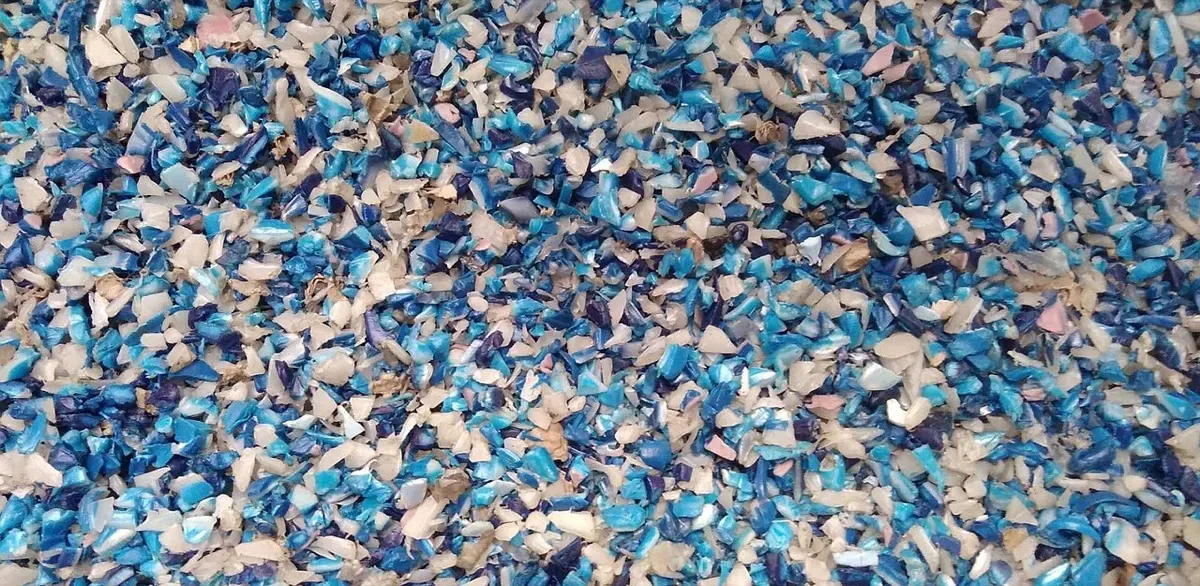
Flexible packaging, the pouches, wrappers, sachets and lidding films that hold food and household products, uses very little material and helps prevent food waste. But to block oxygen, moisture and light, most packs are laminates of several plastics (for example PET, PE and nylon) plus aluminium foil or metallised film. Recyclers cannot separate them, so they are burned or landfilled.
In Europe, the CEFLEX industry consortium estimated in 2021 that about 5.6 million tonnes of consumer flexible packaging (plastic, paper and aluminium) reach the market each year, and that only about 17% of flexible packaging is turned into new raw material, even though separate collection exists in at least 18 EU countries. Most still ends up in residual household waste (CEFLEX). In 2023 Huhtamaki said about 70% of its own packaging could already be recycled, and that lightweight flexibles were the hardest part of its target to make all products recyclable, compostable or reusable by 2030 (Huhtamaki).
The product
On 27 April 2023 Huhtamaki launched three blueloop mono-material platforms, unveiled at the Interpack fair in Düsseldorf:
- blueloop PE: polyethylene laminates with up to 95% mono-material content, including transparent, Super White, metallic and reclosable versions for snacks, frozen foods, detergents and hand wash.
- blueloop PP Retort: polypropylene structures with over 90% mono-material content that survive heat sterilisation, for wet pet food and ready meals; the India annual report says it meets CEFLEX recyclability guidelines.
- blueloop Paper: barrier paper with at least 90% paper content for dry products, such as the OmniLock Ultra Paper pouch used for dry soup.
Huhtamaki says the structures use fewer layers, no aluminium foil and less material overall, and that the barrier performance matches the multi-layer packs they replace (Huhtamaki). In May 2026, at Vitafoods Europe in Barcelona, blueloop PP was shown running live on a Marchesini Group packing line (Huhtamaki on LinkedIn).
How it works
- One main polymer: instead of bonding PET, PE and foil, a blueloop PE pack is almost all polyethylene, so recyclers can treat it as one material.
- Thin functional barriers: a small share of barrier coating or layer (the remaining 5% to 10%) keeps out oxygen and moisture.
- Machine compatibility: films are tested on customers’ existing packing lines so brands can switch without new machinery.
- End of life: where flexible film is collected, the pack goes into the PE or PP recycling stream; the purer the material, the more a recycler can get for it.
Timeline
| Date | Milestone |
|---|---|
| 2020 | Huhtamaki sets target: 100% recyclable, compostable or reusable products by 2030 |
| 27 Apr 2023 | blueloop PE, PP Retort and Paper launched globally |
| 4 to 10 May 2023 | blueloop shown at Interpack, Düsseldorf |
| 2025 | Commercial blueloop supply in India significantly expanded; blueloop PE Metallic Max wins a WorldStar award |
| 11 Feb 2025 | EU Packaging and Packaging Waste Regulation enters into force |
| 5 to 7 May 2026 | blueloop PP shown live on a Marchesini line at Vitafoods Europe |
| 12 Aug 2026 | PPWR starts to apply |
| 10 Sep 2026 | Huhtamaki says many barrier packs are now over 95% mono-material |
Impact and numbers
- Scale of company: EUR 4.0 billion net sales in 2025, around 17,400 employees, 106 locations in 35 countries (Huhtamaki).
- Material share: up to 95% mono-material for PE, at least 90% for paper and PP.
- India investment: Huhtamaki India reported R&D spending of INR 39.3 million in 2025 (up from INR 14.3 million) and capex of INR 112.4 million (INR 1,133.5 million in 2024) on technology for mono-material laminates recyclable in India (Huhtamaki India annual report 2025).
Honest caveats. “Designed for recycling” is not the same as recycled. Most flexible packaging still is not collected, sorted and reprocessed anywhere near the 95% purity on the label, and in many countries a mono-PE pouch ends up in the same bin as a multi-layer one. Huhtamaki does not publish how much of its flexible packaging output is now blueloop, so the share that has actually switched is unknown. Its own footnotes define “more recyclable” as “valuable to the recycler”, which is a design claim rather than a measured recycling rate. Mono-material film is still plastic, and the barrier paper range only suits dry products. Some customer examples are anonymous, which makes it harder to check real-world uptake. Small sachets, a big format in India, are light, dirty and often littered, so even a recyclable sachet has little value for waste pickers and may never be collected. Recycled content also brings its own questions about food-contact safety.
What’s next
Huhtamaki says it is adding post-consumer recycled (PCR) plastic to selected home care packs and tube laminates, preparing for PPWR limits on PFAS in food-contact packaging, and continuing to test more demanding high-barrier uses with equipment makers. It has installed what it calls future-ready production capacity in several regions, on the bet that European rules will spread to other markets. The next proof points will be named brand launches and disclosed volumes, rather than new platform announcements.
Why it matters for Europe / green buyers
Under the EU Packaging and Packaging Waste Regulation, all packaging must be recyclable from 2030 and will be graded by “design for recycling” criteria; flexible plastic packs also face recycled-content targets (EUR-Lex). Multi-layer pouches that cannot be recycled risk being phased out. For food and household brands, mono-material packs from large suppliers such as Huhtamaki are the most direct way to keep flexible formats. Buyers should ask for third-party recyclability certificates and for the local collection reality, not just the material share.
India is one of the clearest tests. Huhtamaki India’s research team developed a recyclable polyolefin barrier laminate for shampoo sachets, already on the market, with coffee, detergent, jam, ketchup, soap and dry soup versions passing long-run trials (Huhtamaki). India’s EPR guidelines for plastic packaging, notified in February 2022, set recycling targets rising to 60% to 80% from 2027-28 (PIB), which puts multi-layer sachets under pressure.
Sources & image credits
- Huhtamaki, “Huhtamaki to launch sustainable flexible packaging innovation”, press release, 27 April 2023: https://www.huhtamaki.com/en/media/media/press-release/2023/huhtamaki-to-launch-sustainable-flexible-packaging-innovation.--the-game-changing-technology-provides-a-unique-combination-of-best-in-class-protection-full-recyclability-and-affordability--/
- Huhtamaki, “About blueloop”: https://www.huhtamaki.com/en/blueloop/
- Huhtamaki Flexible Packaging, “Preparing flexible packaging for what comes next”, 10 September 2026: https://www.huhtamaki.com/en/flexible-packaging/news/news/2026_packaging-strategy/
- Huhtamaki on LinkedIn, “PPWR 2030 is coming faster than many expect”, April 2026: https://www.linkedin.com/posts/huhtamaki_huhtamaki-ppwr2030-sustainablepackaging-activity-7454472583154003968-RK2v
- Huhtamaki, “Huhtamaki’s 2025 Annual Report published”, stock exchange release, 3 March 2026: https://www.huhtamaki.com/en/media/media/stock-exchange-release/2026/huhtamakis-2025-annual-report-published/
- Huhtamaki India Ltd, Annual Report 2025: https://www.huhtamaki.com/globalassets/flexible-packaging/india/investors-india/annual-reports/2025/hil-ar-2025-spread.pdf
- Huhtamaki, “Huhtamaki launches recyclable laminate for shampoo”: https://www.huhtamaki.com/en/highlights/sustainability/huhtamaki-launches-recyclable-laminate-for-shampoo/
- CEFLEX, “Collection: the foundation for flexible packaging’s circular economy”: https://ceflex.eu/collection-the-foundation-for-flexible-packagings-circular-economy/
- EUR-Lex, Regulation (EU) 2025/40 on packaging and packaging waste: https://eur-lex.europa.eu/eli/reg/2025/40/oj
- Press Information Bureau, Government of India, EPR guidelines for plastic packaging, 13 February 2023: https://www.pib.gov.in/PressReleaseIframePage.aspx?PRID=1898892&lang=2®=3
Images:
- “Factory Name” by Wilson Adams, 2007, licensed under CC BY-SA 2.0 (https://creativecommons.org/licenses/by-sa/2.0), via Wikimedia Commons: https://commons.wikimedia.org/wiki/File:Factory_Name_-_geograph.org.uk_-_322252.jpg