The problem
Aseptic cartons keep milk, plant drinks and juice safe for months without a fridge. They do this with several layers: paperboard for strength, polymer layers against moisture, and a very thin aluminium foil that blocks light and oxygen. Paperboard is already around 70% of a typical Tetra Pak aseptic carton (Tetra Pak).
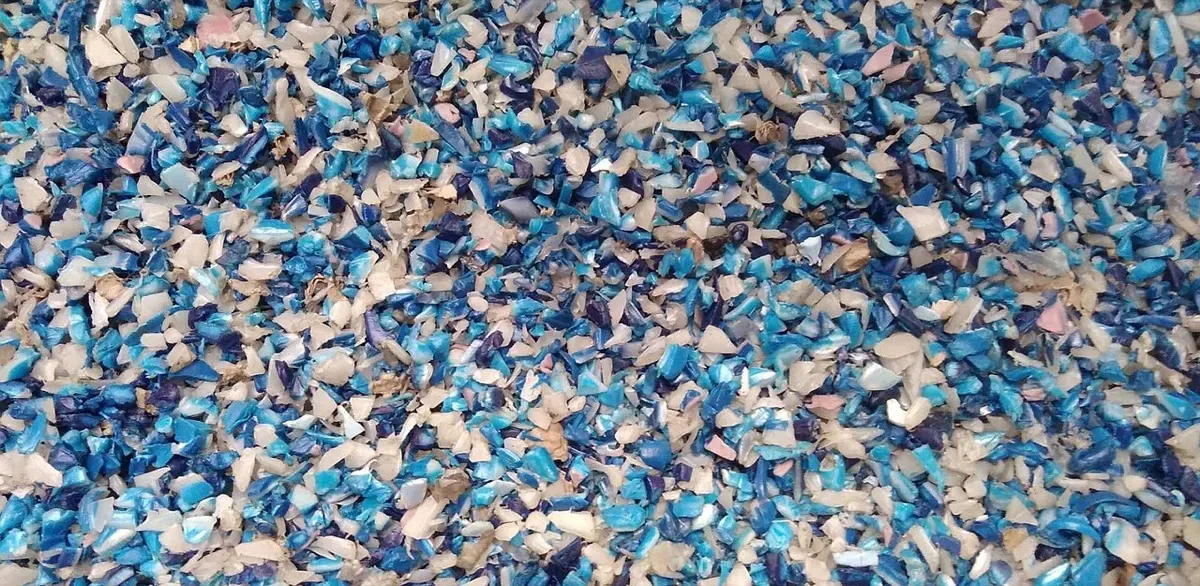
The mix is the problem. Ordinary paper mills soak paper for only a few minutes, which is not long enough to pull the layers of a carton apart, so cartons need specialist mills. After the fibres are recovered, the leftover polymer and aluminium fraction was, in the four countries Zero Waste Europe studied, mostly burned for energy rather than recycled (Zero Waste Europe). The foil also carries a large share of the carton’s carbon footprint.
The product
Tetra Pak’s paper-based barrier is a paper layer with an ultra-thin, nanometre-scale metallised coating. Together with the other layers it protects against oxygen, light, moisture and bacteria, and Tetra Pak says shelf life is comparable to foil cartons for liquid dairy, plant-based drinks and juice distributed at room temperature. The carton goes from three main materials (paper, polymers, aluminium foil) to two (paper and polymers), with paper at about 80% of the package.
The first product was the Tetra Brik Aseptic 200 Slim Leaf, a 200 ml portion pack launched with Portuguese dairy Lactogal on 14 November 2023 after a 2022 consumer test. It reached 90% renewable content, a 33% lower carbon footprint and Carbon Trust Carbon Neutral certification, as part of a validation of around 25 million packages (Tetra Laval).
Three launches followed:
- Juice, Spain: on 10 December 2025, García Carrión put Don Simón juice in a 200 ml Slim Leaf with the barrier and plant-based polymers, reaching 92% renewable content and a 43% lower footprint (Tetra Pak).
- High-speed lines, South Korea: on 10 February 2026, Maeil Dairies became the first producer to run the material on a Tetra Pak A3/Speed line (up to 24,000 packages an hour) for Maeil Soy Milk 99.9 (Tetra Pak).
- 1-litre milk, Italy: on 22 April 2026, Sterilgarda Alimenti launched the first 1-litre carton with the barrier, a Tetra Brik Aseptic 1000 Edge with a plant-based LightWing 30 tethered cap, at 90% renewable content and up to 50% lower footprint (Tetra Pak).
How it works
- Barrier on paper: a thin metallised coating on a paper layer does the job of the foil, keeping light and oxygen out.
- Plant-based polymers: polymer coatings made from sugarcane replace fossil polyethylene, which pushes renewable content up to 90% or 92%.
- New sealing: foil cartons are usually sealed by induction heating, which needs the aluminium. Portugal’s A3/Compact Flex line was converted to ultrasonic sealing; Korea’s A3/Speed line uses an upgraded high-frequency induction system without major new investment.
- Same recycling route: Tetra Pak says internal and external tests show the cartons can be collected, sorted and recycled like other cartons, with a higher fibre yield for mills.
Timeline
| Date | Milestone |
|---|---|
| 2022 | Commercial consumer test in Portugal with Lactogal |
| 14 Nov 2023 | Tetra Brik Aseptic 200 Slim Leaf with paper-based barrier launched (25 million package validation) |
| 2024 | “Resource Efficiency” award, Sustainable Packaging News Awards |
| 11 Feb 2025 | EU Packaging and Packaging Waste Regulation enters into force |
| 10 Dec 2025 | First juice carton with the barrier, García Carrión (Spain) |
| 26 Jan 2026 | EUR 60 million pilot plant announced in Lund, Sweden |
| 10 Feb 2026 | First use on high-speed A3/Speed lines, Maeil Dairies (South Korea) |
| 22 Apr 2026 | First 1-litre carton, Sterilgarda Alimenti (Italy) |
| Q1 2027 | Lund pilot plant due to start production |
Impact and numbers
- Footprint: Carbon Trust-verified reductions of 33% (Lactogal portion pack), 43% (Don Simón juice) and up to 50% (1-litre Edge with plant-based cap), all against the same carton with foil and fossil polymers.
- Investment: EUR 60 million for the Lund pilot plant and about EUR 100 million a year to 2030 for more sustainable packaging (Tetra Pak).
- Recycling context: the carton industry group ACE reports that 52% of beverage cartons in Europe were recycled in 2021, with a 70% target for 2030 (ACE).
Honest caveats. The paper-based barrier is still at the validation and pilot stage: the launches so far are a handful of products, while Tetra Pak’s overall carton output is far larger, and the Lund plant only starts in 2027. The barrier is not metal-free; it uses a nanometre metallised coating, and the carton still contains polymers, so it still needs specialist carton recycling rather than ordinary paper mills. All footprint figures come from Tetra Pak’s own Carbon Trust-verified calculator, and “Carbon Neutral” labels rely partly on offsets. Industry recycling rates are also contested: a Zero Waste Europe study found that once contamination and process losses are deducted, even Germany recycled only about 47.8% of cartons, below the 51% EU figure ACE then reported. Finally, a better single-use carton is not reuse; refillable systems may beat it in some local settings.
What’s next
Tetra Pak says it is now validating the industrial set-up to make more barrier material, adapting sealing, openings and closures across its machines, and testing more product categories. The Lund pilot plant is meant to give customers a full view from barrier production to filled package from the first quarter of 2027.
Why it matters for Europe / green buyers
The EU Packaging and Packaging Waste Regulation, applying since 12 August 2026, will require all packaging to be recyclable from 2030 and will grade designs by recyclability (EUR-Lex). A carton with more fibre and no foil layer should score better and give mills a cleaner fibre stream. For dairy and juice buyers, the launches in Portugal, Spain and Italy show the format already works on real lines. Buyers should still ask for the collection and recycling rate in their own market, not just design claims.
In India, a TERI study for Tetra Pak, released on 26 November 2025, found that 63.66% of used cartons were recycled across 24 surveyed cities in 2025, about 48% when extrapolated nationally, up from 29% in 2011 (Tetra Pak India). The paper-based barrier has not yet been announced in India, but a simpler, fibre-rich carton would suit an Indian recycling chain that depends on paper mills and waste dealers.
Sources & image credits
- Tetra Laval, “Tetra Pak and Lactogal cut carbon footprint of aseptic cartons for milk by a third”, 14 November 2023: https://www.tetralaval.com/news/tetra-pak--lactogal-cut-carbon-footprint
- Tetra Pak, “Paper-based barrier FAQ”: https://www.tetrapak.com/solutions/packaging/packaging-material/paper-based-barrier/paper-based-barrier-faq
- Tetra Pak, “Tetra Pak launches world-first paper-based barrier for juice packaging with García Carrión”, 10 December 2025: https://www.tetrapak.com/en-us/about-tetra-pak/news-and-events/newsarchive/tetra-pak-launches-paper-based-barrier-for-juice-packaging
- Tetra Pak, “Tetra Pak invests EUR 60 million in pilot plant for paper-based barrier technology”, 26 January 2026: https://www.tetrapak.com/en-in/about-tetra-pak/news-and-events/newsarchive/tetra-pak-invests-in-paper-based-barrier-plant
- Tetra Pak, “Tetra Pak extends paper-based barrier packaging to high-speed lines in Asia”, 10 February 2026: https://www.tetrapak.com/en-us/about-tetra-pak/news-and-events/newsarchive/tetra-pak-extends-paper-based-barrier-to-high-speed-lines
- Tetra Pak, “Tetra Pak and Sterilgarda Alimenti launch industry-first 1-litre aseptic carton with paper-based barrier”, 22 April 2026: https://www.tetrapak.com/about-tetra-pak/news-and-events/newsarchive/tetra-pak-and-sterilgarda-alimenti-launch-industry-first-1-litre-aseptic-carton-with-paper-based-barrier
- Zero Waste Europe, “Recycling of multilayer composite packaging: the beverage carton”, December 2020: https://zerowasteeurope.eu/wp-content/uploads/2020/12/zero_waste_europe_report_-beverage-carton_en.pdf
- ACE (Alliance for Beverage Cartons and the Environment), beverage carton recycling brochure, January 2024: https://hedra.nl/wp-content/uploads/2024/02/JAN2024_ACE-Recycling_BROCHURE.pdf
- Tetra Pak India, “Aseptic carton recycling rates improving despite rising consumption, reveals TERI study”, 26 November 2025: https://www.tetrapak.com/en-in/about-tetra-pak/news-and-events/newsarchive/aseptic-carton-recycling-rates-improving-teri-study
- EUR-Lex, Regulation (EU) 2025/40 on packaging and packaging waste: https://eur-lex.europa.eu/eli/reg/2025/40/oj
Images:
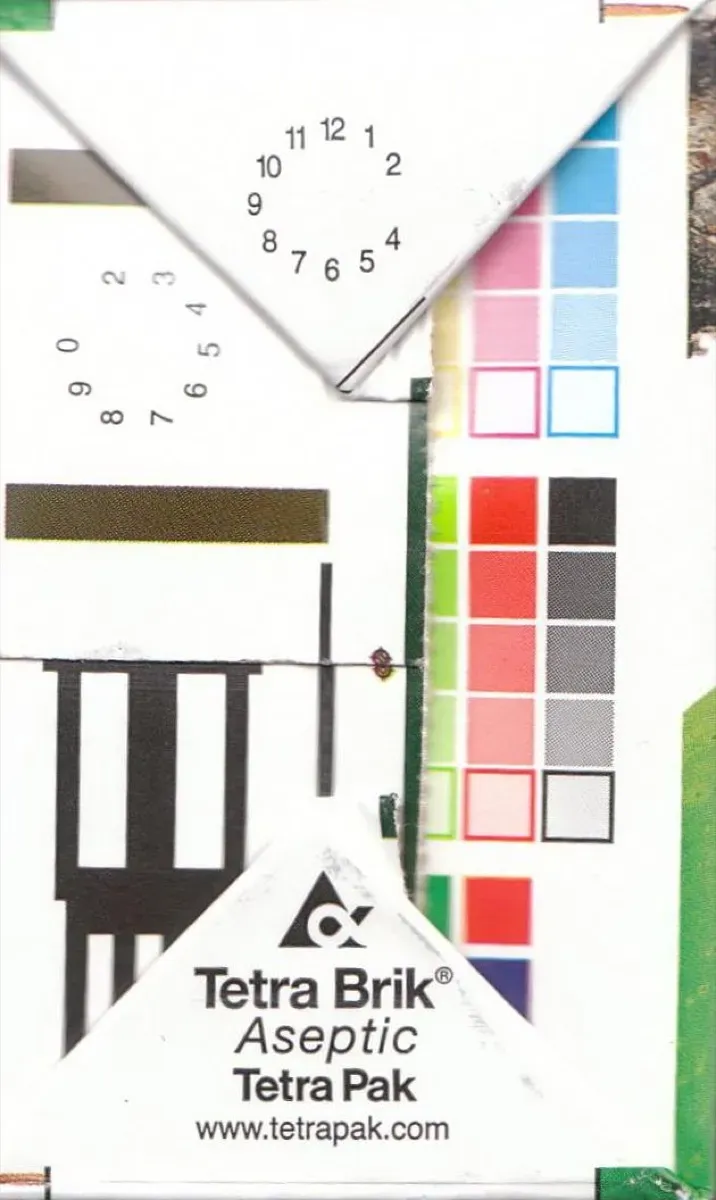
- “Tetra Brik Aseptic bottom 20110702” by P6 eugeniy, 2011, released under CC0 (https://creativecommons.org/publicdomain/zero/1.0/), via Wikimedia Commons: https://commons.wikimedia.org/wiki/File:Tetra_Brik_Aseptic_bottom_20110702.jpg