
The problem
Vaccines, insulin, biologics and cell therapies must stay inside narrow temperature limits from factory to clinic. A few hours too warm on an airport apron, or too cold in a truck, can make a whole pallet of costly medicine unusable. Under the EU’s Good Distribution Practice guidelines, the supplying wholesaler must keep medicines within acceptable limits during transport, report and investigate excursions, and give customers evidence of compliance when asked (EUR-Lex).
For decades the industry relied on single-use data loggers that are read only when the box is opened. That tells quality teams what went wrong after the fact, when the product is already lost. Single-use loggers also create electronic waste, because each one is discarded after a single trip.
The product
Saga is a family of reusable, cellular monitoring devices, sold as a managed service with Controlant’s cloud platform. All models share one 61 mm wide housing (Controlant):
- Saga for refrigerated and room-temperature medicines, accurate to plus or minus 0.5 °C from minus 10 to plus 45 °C;
- Saga Arctic for frozen lanes, reporting in real time down to minus 30 °C;
- Saga Dry Ice and Saga Cryogenic, which measure through an external PR-T80 probe down to minus 200 °C while the device rides outside the cold;
- Saga Card, a newer tracker smaller than a credit card, for monitoring below pallet level.
Each device locates itself by cellular triangulation and Wi-Fi, stores 21,600 readings at ten-minute intervals if coverage drops, and alerts as soon as temperature leaves its range or light suggests a box has been opened. It runs on a rechargeable NiMH battery that is not classed as dangerous goods and is rated for at least 70 charge cycles. Controlant says the devices are approved by more than 200 airlines and meet IATA, FAA and EASA requirements, and each comes with a calibration certificate in the platform.
How it works
- Ship: a charged, calibrated Saga is placed with the product and switched on.
- Report: it sends temperature, light and location over the mobile network at set intervals, and immediately when something goes wrong.
- Act: quality and logistics teams see alerts in the Controlant platform and can intervene while the shipment is still moving, for example by re-icing or rerouting.
- Release: where customers have adopted it, clean data can support temperature-based automatic release of goods on arrival, shortening lead times.
- Return: devices go back to Controlant to be recharged, recalibrated and reused, rather than thrown away.
Timeline
| Date | Milestone |
|---|---|
| 2007 | Controlant founded in Reykjavík, Iceland |
| 2009 | Monitors H1N1 vaccine storage and delivery across Iceland |
| 2018 | First pharma company adopts Controlant real-time monitoring across its full network |
| 15 Dec 2020 | Selected to monitor Pfizer-BioNTech COVID-19 vaccine shipments worldwide |
| Nov 2023 | 79 roles cut as vaccine demand returns to normal |
| Aug and Nov 2024 | Two restructurings cut more than 200 jobs in total |
| 2 Mar 2026 | Collaboration with SpotSee; co-branded Controlant Go device launched |
Impact and numbers
- Pandemic scale: Controlant says it gave real-time visibility to the worldwide distribution of more than six billion doses of the Pfizer-BioNTech vaccine (Controlant). Pfizer said in December 2020 that it chose Controlant’s reusable, real-time loggers to manage temperature proactively and automate quality and logistics processes (Controlant).
- Data quality: the company says leading operators run at more than 99.99% data availability on real-time lanes, and that five more global pharma companies adopted real-time across their networks after its first full-network customer in 2018 (Controlant).
- Climate targets: Controlant has a target validated by the Science Based Targets initiative to cut absolute Scope 1 and 2 emissions by 42% by 2030 from 2022. It also cites a Carbon Trust study measuring about 53 kg CO2e avoided per box against the industry average, or 16,700 tonnes over a year of deliveries (Controlant).
- Finances: revenue was USD 184.9 million in 2023, boosted by USD 115 million of non-cash deferred COVID income, with a net loss of USD 10.5 million (Controlant 2023 accounts). In 2024 revenue fell to USD 80.6 million, only USD 23.4 million of it from core operations, and the net loss grew to USD 24.6 million. Pharma service income grew about 50%, and the company raised USD 28 million in equity and USD 10.7 million in new loans (Controlant 2024 accounts).
- Partnerships: in March 2026 Controlant and SpotSee, a US maker of shipment indicators, launched a co-branded Controlant Go device and planned to feed WarmMark QR temperature indicators into the Controlant platform. SpotSee claims layered monitoring can cut returns by as much as 90% (GlobeNewswire).
Honest caveats. Controlant’s growth was built on one exceptional customer programme, and the end of pandemic vaccine volumes shows in its accounts: two years of losses, revenue down about 56% in 2024 and a workforce that averaged 506 full-time staff in 2023 and was down to about 240 after the 2024 restructurings. The six billion doses, the 99.99% data availability and the Carbon Trust figure are the company’s own, and its website does not say which programme the 53 kg per box saving refers to. Reusable devices only pay off environmentally if they really come back; loggers lost in transit or flown home empty add their own footprint. Real-time monitoring tells you about a problem sooner, but someone still has to act on the alert. The 90% returns reduction is SpotSee’s claim, not an independent result.
What’s next
Controlant is pushing beyond dashboards toward AI assistants that answer questions about shipments in plain language, and toward smaller devices such as Saga Card that can follow individual cases after a pallet is split. The SpotSee integration of QR indicators is due during 2026. The company’s stated aim is “zero-waste” pharma supply chains, and it is preparing to report under the EU’s Corporate Sustainability Reporting Directive.
Why it matters for Europe / green buyers
Europe’s pharmaceutical industry ships temperature-sensitive medicines across a continent and around the world, and EU Good Distribution Practice already requires qualified equipment, calibrated monitoring and proof of temperature control. Real-time, reusable devices let European manufacturers and logistics providers meet those rules while cutting both spoiled medicines and single-use electronics. For green buyers, the useful questions are how many trips each device makes, and what share of excursions were caught and saved in transit.
India runs one of the world’s largest public vaccine cold chains. Its Electronic Vaccine Intelligence Network (eVIN), developed with UNDP, covers more than 29,000 cold chain points and uses nearly 25,000 SIM-enabled temperature loggers to watch storage temperatures remotely (UNDP India). Extending that kind of real-time visibility from fridges to the trucks, flights and last-mile trips in between is exactly the gap that devices like Saga address, for India’s public programme and for its pharmaceutical exporters shipping to Europe and the United States.
Sources & image credits
- Controlant, “About Controlant”: https://www.controlant.com/about-us
- Controlant, “Controlant’s innovative pharmaceutical supply chain platform is selected to track and monitor the Pfizer-BioNTech Covid-19 vaccines” (15 Dec 2020): https://www.controlant.com/insights/controlant-now-providing-monitoring-and-supply-chain-visibility-for-pfizer
- Controlant, “Saga real-time monitoring devices”: https://www.controlant.com/devices
- Controlant, “From dashboards to dialogue: why AI is replacing the supply chain control tower” (27 May 2026): https://www.controlant.com/insights/from-dashboards-to-dialogue-why-ai-is-replacing-the-supply-chain-control-tower
- Controlant, “Sustainability and ESG reporting”: https://www.controlant.com/sustainability
- Controlant hf., Consolidated Financial Statements 2024 (14 Apr 2025): https://assets.ctfassets.net/cgfe64q33h1b/4mCOCj3KsTWybOdRtIsdWe/67863c884aff0f7063a1e06dcd852300/FS_Controlant_hf_2024.pdf
- Controlant hf., Consolidated Financial Statements 2023: https://assets.ctfassets.net/cgfe64q33h1b/3QaswgQp3O5pn3Ibr9ZElw/a4e488d1322d1d938ee3f2a0de5c422a/FS_Controlant_hf_2023.pdf
- GlobeNewswire via NTB, “SpotSee and Controlant announce strategic collaboration to expand shipment visibility and last-mile proof for life sciences” (2 Mar 2026): https://kommunikasjon.ntb.no/pressemelding/18820122/spotsee-and-controlant-announce-strategic-collaboration-to-expand-shipment-visibility-and-last-mile-proof-for-life-sciences?lang=en&publisherId=4954260
- European Commission, “Guidelines of 5 November 2013 on Good Distribution Practice of medicinal products for human use” (2013/C 343/01), EUR-Lex: https://eur-lex.europa.eu/legal-content/EN/TXT/?uri=CELEX%3A52013XC1123%2801%29
- UNDP India, “Improving vaccination systems: eVIN”: https://www.undp.org/india/projects/improving-vaccination-systems-evin
Images:
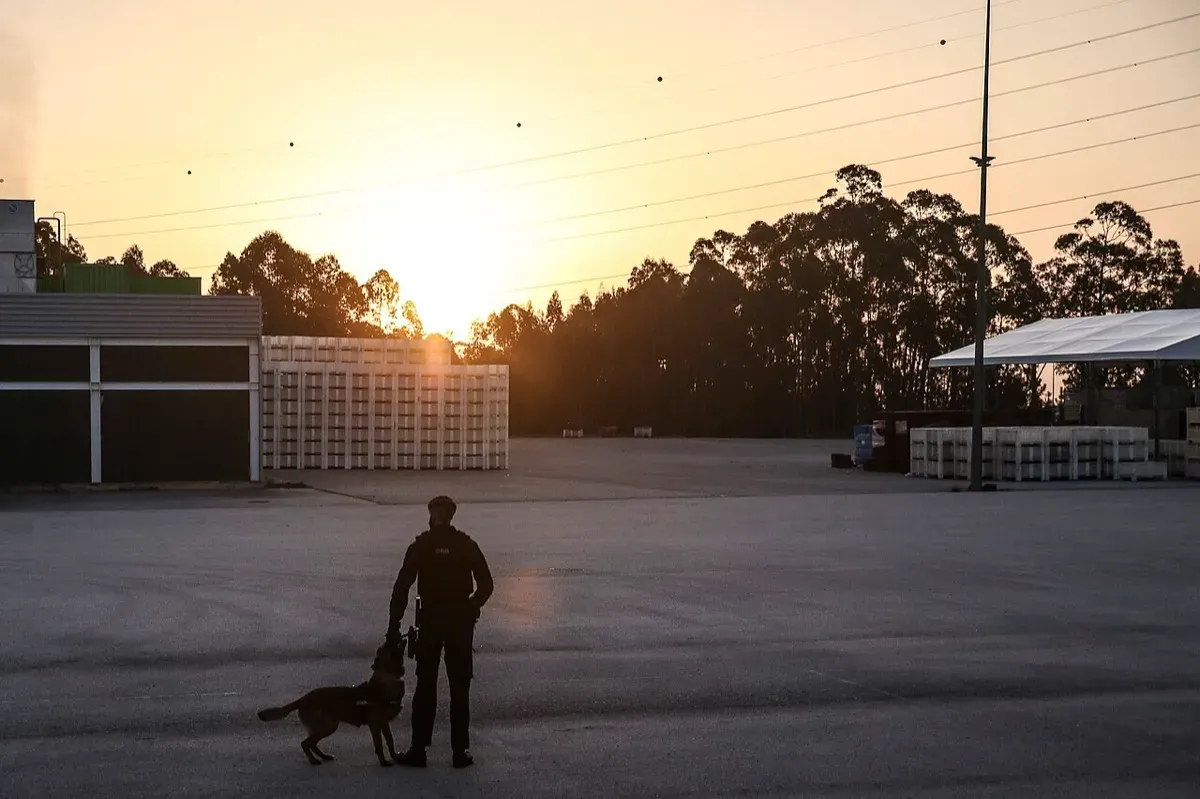
- “Coronavirus - Vaccines supply, Portugal (P-050737-00-17)” by European Commission Audiovisual Service, Carlos Costa, released under CC BY 4.0 (https://creativecommons.org/licenses/by/4.0), via Wikimedia Commons: https://commons.wikimedia.org/wiki/File:Coronavirus_-_Vaccines_supply,_Portugal_(P-050737-00-17).jpg



.jpg)