The problem
European cities face both ends of the water problem. Summer droughts lead to hosepipe bans and stressed groundwater, while heavy rain on sealed roofs and roads overwhelms sewers. Yet much of the drinking water a household uses goes on jobs that do not need drinking quality: toilet flushing, washing machines and garden watering.
Rainwater harvesting addresses both: it stores roof runoff during storms and uses it later in place of mains water. The barrier for homeowners is usually installation. A classic underground cistern is a tall cylinder that needs a deep pit, heavy machinery and, where groundwater is high, anchoring. On a terraced house plot or a city garden that can be impractical.
The product
The Platin is a flat, wide polyethylene tank designed to be buried shallowly. GRAF’s product information lists (GRAF Platin; GRAF catalogue):
- sizes from 1,500 litres to 65,000 litres, with larger volumes from linked tanks;
- an installation depth of only about 70 cm for the smallest tank;
- up to 80% less excavation than a cylindrical tank: for a 3,000 litre tank, about 7.6 m3 of soil against 49 m3;
- covers rated for pedestrians, cars or, in XXL versions, lorries up to 60 tonnes;
- suitability for installation in groundwater;
- a 30-year guarantee on the tank body.
The flat shape also helps where bedrock or high groundwater rule out a deep pit, and because the tank is wide rather than tall it can go under a driveway, parking space or terrace, space that a small urban plot cannot otherwise spare.
Platin is sold as a garden kit, with a pump for watering, or as a house kit with a filter, pump and control unit for toilets and washing machines. GRAF’s filters, such as the Minimax-Pro, claim over 95% water yield, meaning little rain is lost to the overflow. For larger volumes the company sells its Carat cylinder tanks from 2,700 to 122,000 litres (GRAF).
How it works
- Collect: rain falls on the roof and runs through gutters and downpipes.
- Filter: a filter in the pipe or tank removes leaves and debris before storage.
- Store: water settles in the dark, buried tank, which keeps it cool and limits algae.
- Pump: a submersible or house pump sends water to garden taps, toilets or the washing machine.
- Back up: a control unit switches to mains water when the tank runs low.
- Overflow: in heavy rain, surplus water goes to a soakaway or sewer, ideally after a delay.
Timeline
| Date | Milestone |
|---|---|
| 1962 | Otto F. and Elfriede Graf found the company |
| 1974 | First rain barrels |
| 1978 | First underground rainwater tanks |
| 1980 | Recycled material first used in rain barrels |
| 1 Dec 2016 | GRAF China subsidiary founded |
| 1 Jan 2020 | GRAF Ireland founded near Galway, for stormwater management |
| Jun 2025 | EU Water Resilience Strategy published |
| 2025 | Turnover of EUR 190 million, about 750 staff |
Impact and numbers
- Recycled content: GRAF says 74.5% of its products are made from recycled material, and that this saves about 100,000 tonnes of CO2 a year compared with virgin plastic; about 80% of its production energy is renewable. The recyclate comes from short-lived plastic waste processed at GRAF’s own raw materials centre in Herbolzheim, and the products are designed for a service life of more than 50 years, after which they can be recycled again (GRAF profile).
- Company scale: EUR 190 million turnover in 2025, about 750 employees, more than 200 intellectual property rights and sales partners in over 80 countries (GRAF profile).
- Water saving: GRAF says households can cut drinking water use by up to 50% with rainwater for the garden, toilet and laundry (GRAF).
- Less digging: the 7.6 m3 against 49 m3 comparison means smaller machines, less soil to remove and faster installation.
Honest caveats. The savings and CO2 figures are GRAF’s own and not independently verified here. Real water savings depend on roof area, local rainfall, tank size and how much of the household’s use is non-potable; in a dry summer a full garden can empty a tank quickly. A tank is made of plastic, partly virgin, and needs a pump that uses electricity, so its footprint is not zero. Shallow tanks are less protected from frost and heat than deep ones, and the cover rating must match the traffic above. GRAF’s recycled share appears as 74.5% in its company profile and 75% in its catalogue, a rounding difference. We could not find a documented launch year for the Platin line itself. Finally, rainwater systems require separate pipework and backflow protection under rules such as Germany’s DIN 1989 and EN 16941, so retrofits cost more than the tank alone.
What’s next
GRAF is pushing into larger stormwater systems, such as its EcoBloc infiltration blocks, which carry a British BBA certificate, and tanks that hold back rain and release it slowly, which fits the “sponge city” approach of keeping water where it falls. Smart controls that empty a tank before forecast storms, so it can catch the next downpour, are a logical next step.
Why it matters for Europe / green buyers
The EU Water Resilience Strategy, published in June 2025, sets a goal of improving water efficiency by at least 10% by 2030 and promotes water reuse and nature-based solutions (European Commission). GRAF itself uses rainwater as process water and for toilets at its own sites and returns surplus rain to the ground through its infiltration systems. For architects and homeowners, rainwater tanks are a mature, low-tech way to cut mains demand and stormwater peaks at the same time. Several German municipalities reduce stormwater fees where roof runoff is stored or infiltrated, which improves the payback.
India already mandates rainwater harvesting in many cities. In Bengaluru, the water board BWSSB requires it for buildings on plots of 30 x 40 feet and above built after 2016, charges penalties of 50% to 100% of the water bill for non-compliance, and planned to issue notices to 49,431 properties in June 2026; a system for a 2,400 sq ft house costs about INR 8,000 to 10,000 (The Hindu; BWSSB Act). Flat, shallow tanks could help where plots are small and digging is hard.
Sources & image credits
- GRAF, “Rainwater harvesting”: https://www.graf.info/en/rainwater-harvesting.html
- GRAF, “Flachtank Platin”: https://www.graf.info/de/regenwassernutzung-unterirdisch/regenwassertanks/flachtank-platin.html
- GRAF, Rainwater Management catalogue (PDF): https://www.graf.info/fileadmin/media/Catalogue_Rainwater_Management.pdf
- GRAF, “Profile Otto Graf GmbH”: https://www.graf.info/en/news-press/company/profile-otto-graf-gmbh-1.html
- GRAF, “Company history”: https://www.graf.info/en-gb/company/company-history.html
- European Commission, European Water Resilience Strategy, COM(2025) 280: https://eur-lex.europa.eu/legal-content/EN/TXT/?uri=CELEX%3A52025DC0280
- The Hindu, “BWSSB to serve notices on nearly 50k properties in June to install rainwater harvesting system” (14 May 2026): https://www.thehindu.com/news/cities/bangalore/bwssb-to-serve-notices-on-nearly-50k-properties-in-june-to-install-rainwater-harvesting-system/article70978436.ece
- BWSSB (Amendment) Act on rainwater harvesting (PDF): https://www.kscst.org.in/rwh_files/pdf/BWSSB_RWH_Act.pdf
Images:
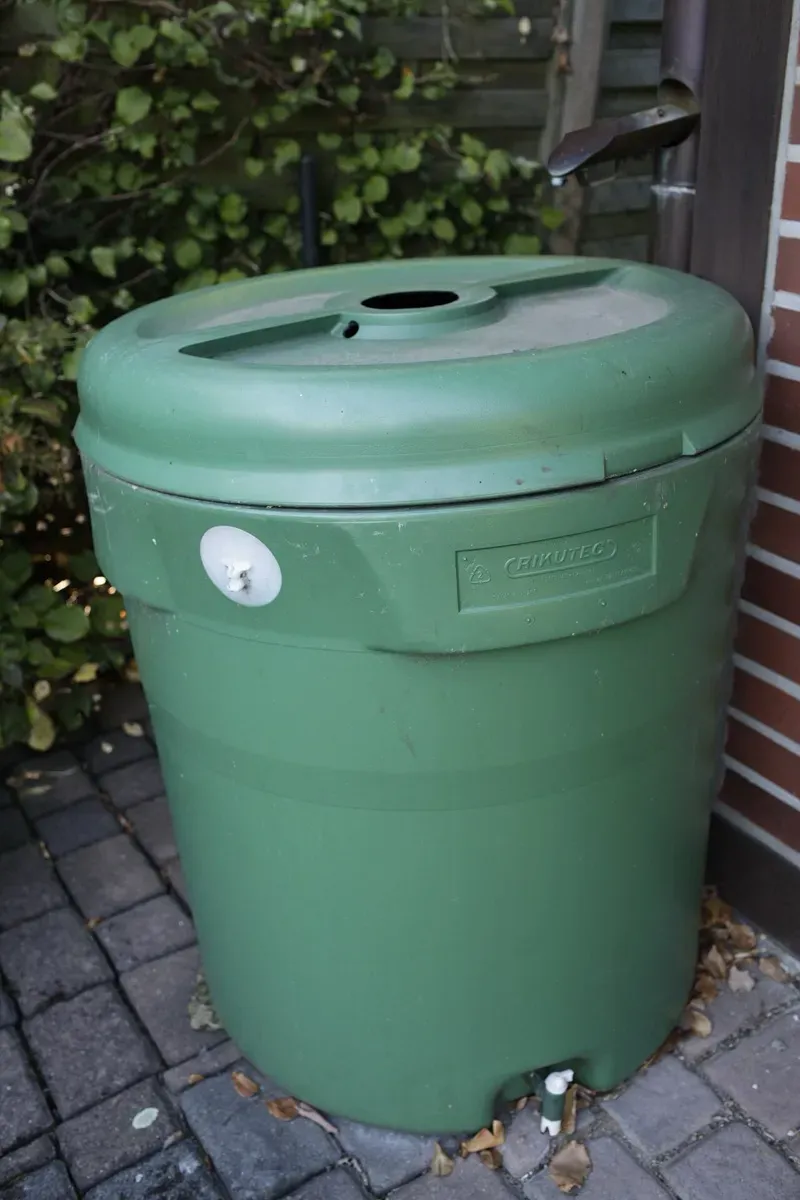
- “Rainwater tank” by Jeuwre, licensed under CC BY-SA 4.0 (https://creativecommons.org/licenses/by-sa/4.0), via Wikimedia Commons: https://commons.wikimedia.org/wiki/File:Rainwater_tank.jpg