The problem
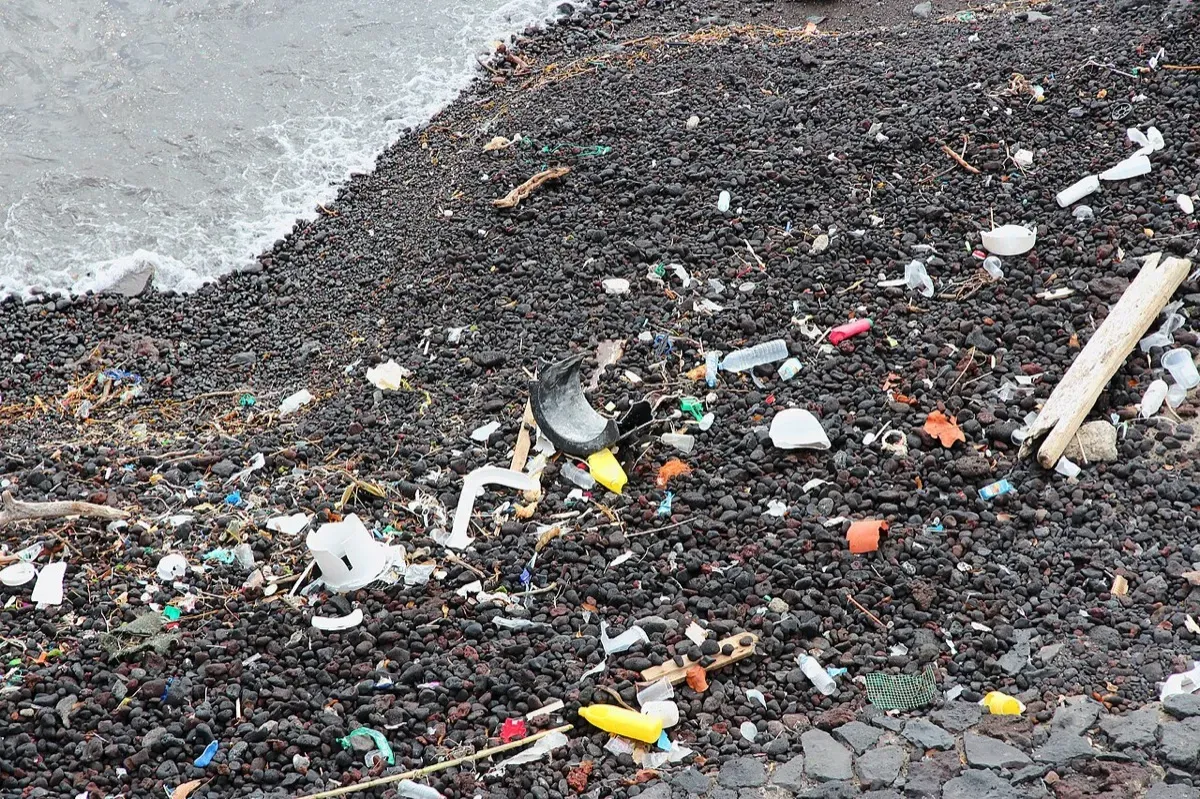
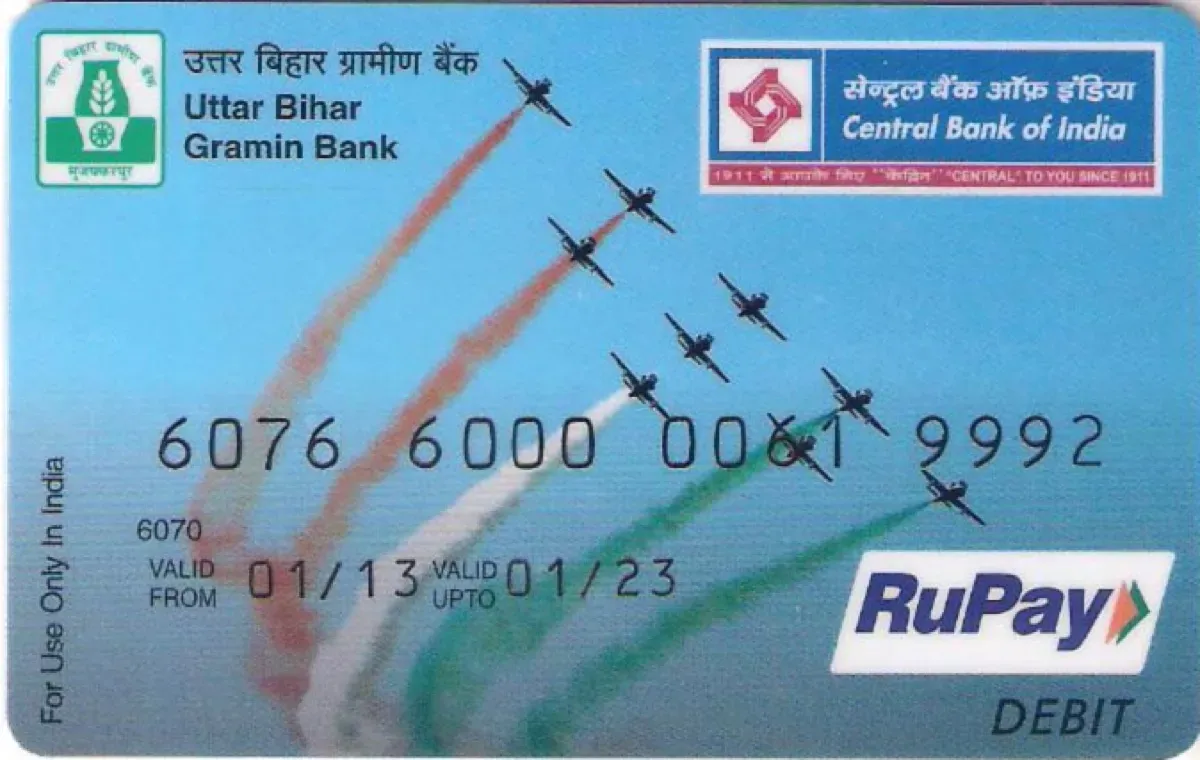
Around 6 billion plastic payment cards are produced each year, according to the 2018 Nilson Report figures cited by IDEMIA. Nearly all were traditionally made from first-use PVC, a fossil-based plastic that is durable and cheap but hard to recover once it is laminated around a chip and an antenna. Each card weighs only a few grams, yet the volumes are so large that small material changes add up to thousands of tonnes.
Banks faced a practical dilemma. Bio-based alternatives existed, but many issuers wanted something that would behave exactly like the PVC cards their personalisation bureaus, ATMs and customers were used to. They also needed proof that a recycled card would pass the same security and durability tests and would not compromise EMV certification.
The product
IDEMIA answered with recycled PVC. In June 2020 it announced two firsts. BBVA began issuing cards made from recycled PVC to holders of its youth account in Spain, described as the first such payment cards in the country, with a plan to give more than half a million Spanish customers an eco-friendly card by the end of 2020 (IDEMIA, 5 June 2020). Ten days later, RHB Bank in Malaysia announced the RHB Visa WWF Debit Card-i, billed as the first recycled PVC payment card in Asia Pacific (IDEMIA, 15 June 2020).
On 1 October 2020 IDEMIA bundled these into GREENPAY, an end-to-end offer for financial institutions (IDEMIA, 1 October 2020). It covers:
- Card bodies made with recycled PVC from industrial waste and production scrap, with the supplier’s material validated by UL Environment’s Environmental Claim Validation.
- Eco-designed packaging and on-demand printing of PEFC or FSC certified card carriers, to avoid printing stock that later becomes obsolete.
- Digital alerts and e-documents that replace paper terms, PIN letters and marketing inserts.
- Partnership and offsetting programmes, which in June 2024 were extended with GREENPAY Wallet, a digital service built with Handprint that lets banks link card use to environmental projects.
How it works
Card makers generate a lot of PVC scrap: trimmed sheet edges, misprints and rejected laminates. In a recycled PVC card, that post-industrial waste is collected, cleaned, reground and turned back into sheets for the card core. The recycled sheets are printed and laminated with overlays, and then the chip module and antenna are added on the same production lines used for virgin PVC cards.
Because the base polymer is still PVC, the card keeps the same flexibility, printability and resistance to heat and bending. IDEMIA says its recycled cards have passed all durability testing and are ISO certified and EMV compliant, which means no change for the bank’s terminals, ATMs or personalisation processes. IDEMIA estimated that each recycled PVC card saves 3.18 grams of industrial waste compared with a first-use card.
Its most recent development is a dual-interface card in which both the core and the antenna inlay are made from 100% recycled coloured PVC. IDEMIA’s 2025 CSR report says this cuts the card’s cradle-to-grave CO2e footprint by roughly 10% compared with virgin PVC, depending on the manufacturing site (IST CSR Report 2025).
Timeline
| Date | Milestone |
|---|---|
| 2018 | Mastercard launches the Greener Payments Partnership with Gemalto, Giesecke+Devrient and IDEMIA to reduce first-use PVC in cards |
| 5 June 2020 | BBVA starts issuing Spain’s first recycled PVC payment cards, made by IDEMIA |
| 15 June 2020 | RHB Bank announces Asia Pacific’s first recycled PVC debit card with IDEMIA, WWF-Malaysia and Visa |
| 1 October 2020 | IDEMIA launches GREENPAY |
| 3 May 2021 | Société Générale launches its first recycled plastic card range with IDEMIA GREENPAY cards |
| 4 June 2024 | IDEMIA Secure Transactions launches GREENPAY Wallet |
| 24 June 2024 | BNL BNP Paribas in Italy starts recycled PVC cards and notched cards for visually impaired customers with IST |
| 2025 | More than 197 million payment cards produced with recycled PVC |
Impact and numbers
- Volume: more than 197 million payment cards were produced in 2025 using recycled PVC, and over a third of IST’s smart cards were made with recycled materials, according to its 2025 CSR report.
- Waste avoided per card: 3.18 grams of industrial waste per finished card, as IDEMIA calculated in 2020. Applied to 197 million cards, that would be roughly 626 tonnes, an estimate based on IDEMIA’s own per-card figure.
- Carbon: about 10% lower cradle-to-grave CO2e for the fully recycled coloured dual-interface card versus virgin PVC, according to IDEMIA’s life-cycle work.
- Sites: IDEMIA states that all its manufacturing facilities are ISO 14001 certified, and it has run life-cycle assessments since 2019.
Honest caveats. Recycled PVC is still PVC, so it does not address concerns about chlorine content or the end-of-life challenges of a laminated card. Its gain is in avoiding first-use plastic and keeping production scrap in use, not in creating a recyclable product. The 10% carbon figure shows that material choice alone has a modest effect on a card’s footprint; energy, logistics and packaging matter too.
What’s next
IDEMIA has signalled that bio-sourced materials are coming alongside recycled PVC, and it plans to industrialise an eco-designed packaging solution across all sites from 2026, after first deploying it at Vitré in France for European SIM deliveries. Its BNL BNP Paribas project shows another direction: combining material changes with accessibility features ahead of the European Accessibility Act, which applies from June 2025. Regulation will keep pushing. Mastercard’s Card Eco-Certification raises benchmarks each year, and since 27 September 2026 EU rules under Directive (EU) 2024/825 restrict generic environmental claims, so banks will need verifiable data for every “green card” they advertise.
Why it matters for Europe / green buyers
GREENPAY is a reminder that scale beats novelty. A bank migrating millions of debit cards needs a material that runs on existing lines, passes EMV certification, costs about the same and does not fail in a customer’s wallet. Recycled PVC meets those tests, which is why a European supplier could move from first deliveries in mid-2020 to nearly 200 million recycled cards in a single year by 2025.
For buyers, the useful questions are simple. What percentage of the card body is recycled, and is it post-industrial or post-consumer material? Is the claim validated by a third party such as UL or a scheme certification? And what does the issuer do about the rest of the footprint, such as fewer paper inserts, longer card validity and card take-back? A recycled card is a good start, not a finish line.
Sources & image credits
- IDEMIA, “IDEMIA launches GREENPAY, a sustainable end-to-end offer portfolio for financial institutions”, 1 October 2020: https://www.idemia.com/press-release/idemia-launches-greenpay-sustainable-end-end-offer-portfolio-financial-institutions-2020-10-01
- IDEMIA, “IDEMIA and BBVA partner to launch Spain’s first payment card made of recycled PVC”, 5 June 2020: https://www.idemia.com/press-release/idemia-and-bbva-partner-launch-spains-first-payment-card-made-recycled-pvc-2020-06-05
- IDEMIA, “IDEMIA partners with RHB Bank to launch the first recycled debit card in Asia Pacific”, 15 June 2020: https://www.idemia.com/press-release/idemia-partners-rhb-bank-launch-first-recycled-debit-card-asia-pacific-2020-06-15
- IDEMIA, “IDEMIA helps Société Générale launch its first recycled plastic cards”, 20 May 2021: https://www.idemia.com/press-release/idemia-helps-societe-generale-launch-its-first-recycled-plastic-cards-2021-05-20
- IDEMIA Secure Transactions, Corporate Social Responsibility Report 2025: https://www.idemia.com/wp-content/uploads/2021/02/idemia-secure-transaction-csr-report-2025-20260612.pdf
- IDEMIA, GREENPAY infographic, October 2020: https://www.idemia.com/wp-content/uploads/2020/10/infographics-greenpay-idemia.pdf
- IDEMIA, “IDEMIA Secure Transactions embraces regenerative sustainability”, 4 June 2024: https://www.idemia.com/press-release/idemia-secure-transactions-embraces-regenerative-sustainability-empower-banks-and-their-customers-2024-06-04
- IDEMIA, “IDEMIA Secure Transactions partners with BNL BNP Paribas”, 24 June 2024: https://www.idemia.com/news/idemia-secure-transactions-partners-bnl-bnp-paribas-enhance-sustainability-and-accessibility-offers-2024-06-24
- Mastercard, sustainable card program overview: https://www.mastercard.com/global/en/news-and-trends/Insights/2024/sustainable-card-program.html
- Directive (EU) 2024/825: https://eur-lex.europa.eu/eli/dir/2024/825/oj
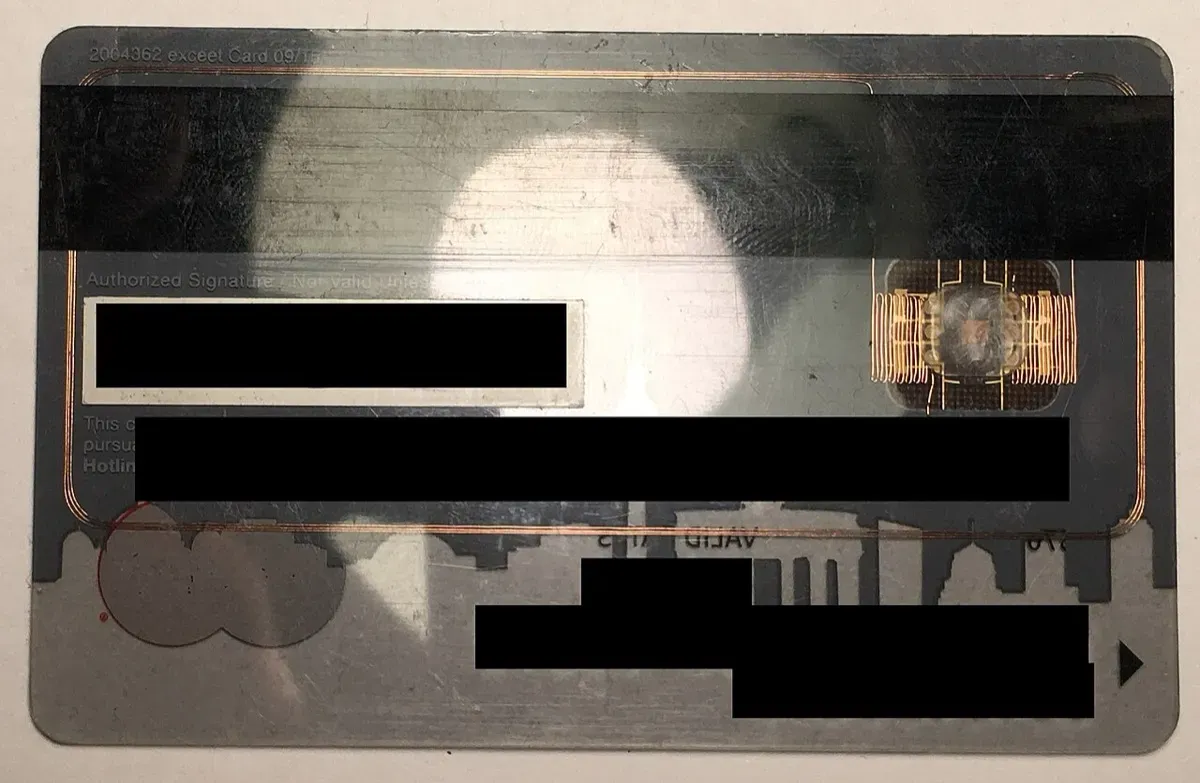
Images:
- “Maestro EMV Paypass NFC” by iToms, licensed CC BY-SA 3.0 DE (https://creativecommons.org/licenses/by-sa/3.0/de/deed.en), via Wikimedia Commons: https://commons.wikimedia.org/wiki/File:Maestro_EMV_Paypass_NFC.jpg