
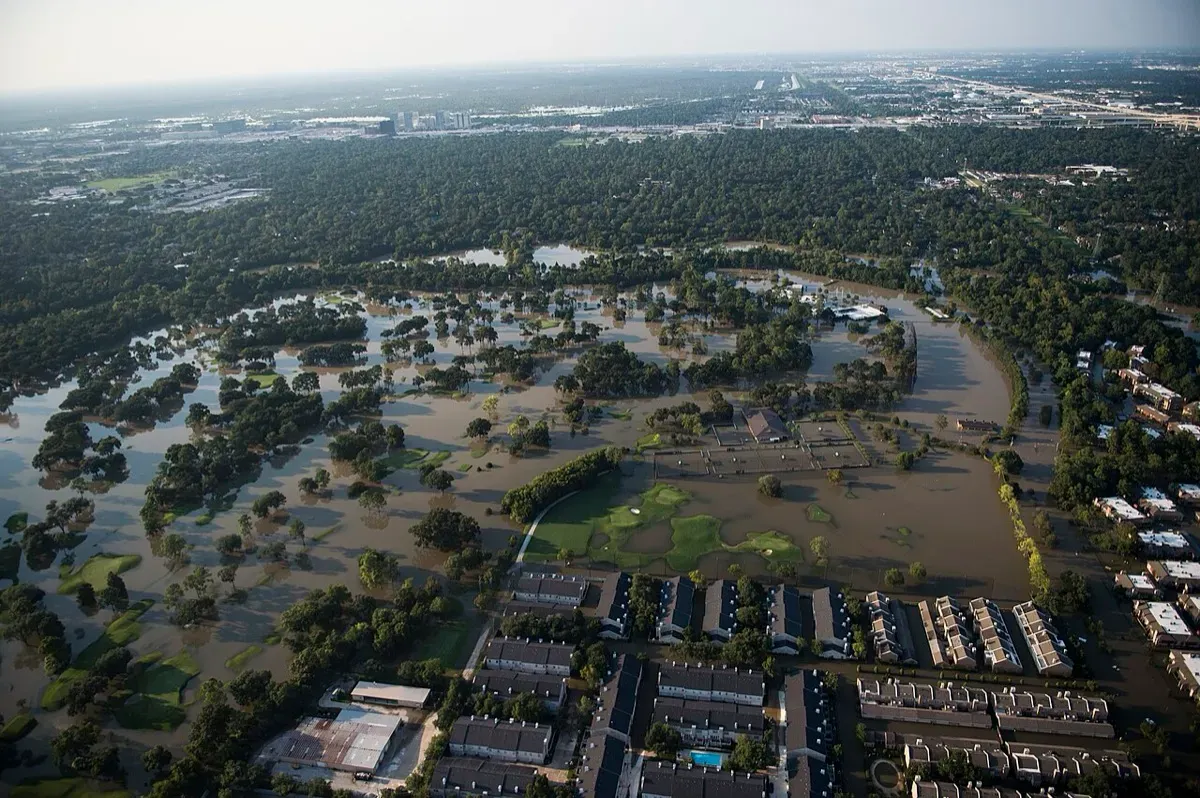
The problem
Climate extremes are already changing the value of buildings, the price of insurance and the performance of infrastructure. In Europe, the European Environment Agency’s 2024 climate risk assessment warned that they can raise insurance premiums, threaten assets and mortgages and increase government borrowing costs, and that Europe’s policies are not keeping pace with the risks (EEA).
Jupiter argues that most physical risk data on the market was built for awareness or disclosure, not for high-stakes financial decisions such as lending, underwriting or buying a company (Jupiter). Hazard scores alone do not tell a credit committee how much a flood might cost or whether a sea wall is worth building. Regulated banks also need models they can explain to supervisors and auditors.
The product
ClimateScore Global is Jupiter’s platform, delivered as a SaaS application, an enterprise API or with tailored analytics support (Jupiter). Key features:
- Coverage: analysis anywhere on Earth, from a single site to a pipeline or railway corridor, a multinational company or a whole investment portfolio.
- Scenarios and time: three climate scenarios in five-year increments, from now to 2100.
- Metrics: multi-hazard, asset-level metrics for floods, heat, wind, wildfire, drought and more, linked to expected loss, avoided loss and lending measures such as probability of default and loss given default.
- Governance: full documentation and validation against observed data, designed to pass banks’ model risk management reviews.
In July 2025 Jupiter added four capabilities: the Jupiter Adaptation Hub, which calculates avoided losses and return on investment for more than ten adaptation strategies; Entity Modeling for securities, funds and companies; MetricEngine for custom return periods, loss distributions and synthetic weather years; and a subsidence peril model for damage to foundations on shrinking clay soils (Jupiter).
How it works
- Global climate models: Jupiter starts from the latest general circulation models and removes their known biases.
- Downscaling: several downscaling methods and compound peril models bring the results down to individual locations, validated against decades of observed data.
- Computing: cloud-based supercomputing produces the very large datasets; by 2021 customers already had access to nearly 150 trillion data fields (Jupiter).
- Finance: hazard metrics are converted into expected losses, cash flow impacts and adaptation returns.
- Use: risk, finance and investment teams pull the results into stress tests, loan underwriting, due diligence and disclosure (Jupiter).
Timeline
| Date | Milestone |
|---|---|
| 2017 | Jupiter founded by Rich Sorkin, Eric Wun and Alan Blumberg |
| 21 Oct 2021 | USD 54m Series C co-led by Clearvision Ventures and MPower Partners |
| 23 Jul 2025 | Adaptation Hub, Entity Modeling, MetricEngine and subsidence peril launched |
| 12 Nov 2025 | Global strategic partnership with Arcadis, announced in Amsterdam |
| 25 Mar 2026 | Research partnership with the Stockholm Environment Institute |
Impact and numbers
- Banks and investors: Jupiter says it works with 25% of the world’s largest financial institutions, 20% of the Global 100, three of the five largest US banks and half of the largest US lenders (Jupiter). It says banks use the platform for stress testing and to meet frameworks including NGFS and ECB requirements.
- Early growth: at its 2021 Series C, Jupiter said it served 30 companies in the Global 2000, the US Department of Defense and FEMA, helping protect over USD 10 billion of physical assets and more than USD 1 trillion of financial assets (Jupiter).
- Engineering: Dutch engineering consultancy Arcadis now builds Jupiter’s projections into its Climate Risk Nexus tools. With Jupiter data, it is assessing climate exposure across 64 campuses of the State University of New York, work due to finish in 2026 (Arcadis).
- Supply chains: the Stockholm Environment Institute is applying ClimateScore Global flood data to energy transition minerals, mapping exposure across mines, processing plants and trade flows, from a mine in the Democratic Republic of the Congo to an electric car in Europe (SEI).
- Vulnerable regions: under the Jupiter Promise, the company offers its analytics at little or no cost to under-resourced communities. Projects include work with UNDP, The Nature Conservancy with indigenous communities in the Colombian Amazon, and the Institute of Himalayan Risk Reduction across Nepal (Jupiter).
Honest caveats. Jupiter’s market share figures, its description of itself as the “global standard” and its claims of scientific rigour come from its own marketing. Its methods are described as peer-reviewed, but the full models are proprietary, and customers get “everything but the IP”. Downscaling global climate models to a single building adds uncertainty that no provider can remove. The tool mainly serves large banks, insurers and investors, so its benefits flow first to those who can pay; the Jupiter Promise is a partial answer. The company last announced equity funding in 2021 and, as a private firm, does not publish accounts.
What’s next
Jupiter is pushing from disclosure towards action. Its Adaptation Hub, co-designed with Arcadis engineers to reflect real-world feasibility and costs, aims to tell owners which defences are worth paying for (Arcadis). The SEI work will extend from flood risk for critical minerals to a global analysis of the whole minerals, energy and food system (SEI). Arcadis says the partnership is already active in North America, Australia, Latin America and the UK.
Why it matters for Europe / green buyers
Jupiter says banks use its data to meet ECB requirements, and Europe’s real estate and infrastructure face growing flood, heat and subsidence losses. Platforms like ClimateScore Global give lenders and investors a way to put a number on those risks and to compare the cost of adaptation with the losses it avoids, which is the argument most European adaptation projects need to win funding. The Arcadis deal, signed in Amsterdam, brings that analysis into the engineering work that actually builds the defences.
In India, the Reserve Bank of India’s February 2024 draft disclosure framework on climate-related financial risks would apply to scheduled commercial banks, large NBFCs and all-India financial institutions (RBI). Jupiter’s work with the Institute of Himalayan Risk Reduction in Nepal shows the same kind of analysis can be applied to South Asia’s mountain and monsoon risks.
Sources & image credits
- Jupiter Intelligence, “Products: ClimateScore Global”: https://www.jupiterintel.com/products
- Jupiter Intelligence, “Company”: https://www.jupiterintel.com/company
- Jupiter Intelligence, “Jupiter announces $54 million in new funding” (21 Oct 2021): https://www.jupiterintel.com/blog/jupiter-announces-54-million-in-new-funding
- Jupiter Intelligence, “Jupiter Intelligence establishes new standard for investment-grade climate analytics” (23 Jul 2025): https://www.jupiterintel.com/blog/jupiter-intelligence-establishes-new-standard-for-investment-grade-climate-analytics
- Arcadis, “Arcadis and Jupiter Intelligence partner to accelerate global climate resilience solutions” (12 Nov 2025): https://www.arcadis.com/en/news/global/2025/arcadis-and-jupiter-intelligence-partner-to-accelerate-global-climate-resilience-solutions/
- Stockholm Environment Institute, “Jupiter Intelligence and SEI partner to map climate risk across global mineral, energy and food supply chains” (25 Mar 2026): https://www.sei.org/about-sei/press-room/jupiter-sei-climate-risk-mapping/
- Jupiter Intelligence, “The Jupiter Promise”: https://www.jupiterintel.com/promise
- European Environment Agency, “Europe is not prepared for rapidly growing climate risks” (Mar 2024): https://www.eea.europa.eu/en/newsroom/news/europe-is-not-prepared-for
- Reserve Bank of India, “RBI invites comments on the Draft Disclosure framework on Climate-related Financial Risks, 2024” (28 Feb 2024): https://www.rbi.org.in/Scripts/BS_PressReleaseDisplay.aspx?prid=57408
Images:
- “170831-F-KA253-0647” (Hurricane Harvey flooding, Houston) by Tech. Sgt. Larry Reid Jr., US Air Force, public domain, via Wikimedia Commons: https://commons.wikimedia.org/wiki/File:170831-F-KA253-0647_(36959990702).jpg


.jpg)