The problem
Bricks are everywhere in British construction, and they are carbon-heavy. Clay must be quarried, shaped and fired in kilns for many hours, usually with natural gas. The BBA says the UK needs around 2.5 billion bricks a year, and more than 500 million of them are imported, adding transport emissions (BBA).
At the other end of a building’s life, construction and demolition waste is one of the largest waste streams in the UK. Much of it is crushed into low-value fill or sent to landfill, rather than made back into a building product. Heriot-Watt University notes that construction generates a large share of UK landfill waste (Heriot-Watt).
The product
The K-BRIQ looks and lays like a standard brick, but is made in a different way. Kenoteq’s formulation uses certified inert recycled construction and demolition aggregates (old bricks, rubble and mortars), recycled plasterboard (gypsum) and recycled pigments, compressed hydraulically rather than fired (Kenoteq). Heriot-Watt says it contains no cementitious binder.
Key specifications from Kenoteq:
- size 215 x 102.5 x 65 mm, the standard UK format;
- weight about 2.1 to 2.4 kg per brick, depending on the version;
- thermal conductivity 0.74 W/mK;
- 12 colours, from Medero Dark Grey to Gullane Cyan, tested for UV colour fastness;
- packed in packs of 500, with smaller orders discussed for early reference projects.
A companion product, the K-SLIP, is a thin brick slip for interiors, with a certified façade system planned. Kenoteq says K-BRIQs are 100% recyclable into new products at the end of their life.
How it works
- Collect: licensed waste partners crush and screen inert demolition waste and supply it to strict standards overseen by environmental regulators.
- Mix: the recycled aggregates, gypsum and pigments are blended to a set recipe.
- Press: hydraulic compression forms each brick, with no firing and no process waste.
- Cure: bricks harden at low energy instead of spending hours in a kiln.
- Build: masons lay K-BRIQs as façade or interior masonry.
- Return: at end of life, the bricks can in principle be crushed and pressed again.
The first factory was set up next to a waste and recycling site in East Lothian, which cuts haulage. Because it does not need a clay pit, a plant can in theory sit beside any large demolition or regeneration site.
Timeline
| Date | Milestone |
|---|---|
| 2019 | Kenoteq spun out of Heriot-Watt University |
| 2022 | K-BRIQ wins Sustainable Design of the Year at the Dezeen Awards |
| 2023 | Shown in the Green Zone at COP28 in Dubai |
| May 2025 | BBA Agrément Certificate 25/7367; commercial production starts in East Lothian |
| 17 Aug 2026 | Almost GBP 900,000 raised, led by Kelvin Capital, towards a GBP 2m round |
Impact and numbers
- Recycled content: “over 90%” (Heriot-Watt), “over 96%” (Kenoteq FAQ) and “near 100%” or “almost 100%” (Kenoteq marketing) (Kenoteq).
- Carbon: Heriot-Watt gives under 20 g CO2e per brick and “95% less than a traditional clay brick”, but in the same article says “around a fifth” of a fired brick’s emissions; High Growth Scotland reports the company’s claim of under 5% (High Growth Scotland).
- Capacity: about 2 million bricks a year, with plans to double to 4 million (BBA).
- Projects: an NHS hospital development in Wales, theatre and restaurant projects in London, Heriot-Watt’s Dubai campus and a Gail’s bakery, plus homes such as a Passivhaus in Lanarkshire and the “Waste Not, Want Not House” in East London, where the extension’s embodied carbon was halved (Kenoteq).
- Funding: the first tranche, led by Kelvin Capital with the Scottish Enterprise Co-Investment Fund, will be used to raise output (Scottish Housing News).
Honest caveats. The carbon figures are company or university claims and are not consistent; the product page said an EPD would follow in 2025, but none was linked there when checked. Even the Heriot-Watt impact page contains an obvious slip, putting UK brick use at “2.6 million” a year where the BBA says about 2.5 billion. Two million bricks a year is less than 0.1% of UK demand. The BBA itself notes that recycled materials are by nature inconsistent and required extra testing on durability, so long-term weathering performance of an unfired brick in Scottish rain will only be known after years in service. European certification is still “underway”, which limits exports. And recycling demolition waste into bricks competes with simply reusing old bricks whole, which avoids even the crushing and pressing.
What’s next
Kenoteq wants to raise the remaining money in its GBP 2 million round, increase production in East Lothian and add more façade projects now that BBA certification satisfies warranty providers and insurers. Its longer-term plan is to set up factories with waste management partners across the UK and abroad, ideally on large regeneration sites, so that rubble from a demolished building becomes the bricks of the new one.
Why it matters for Europe / green buyers
The EU Waste Framework Directive set a 70% recovery target for non-hazardous construction and demolition waste (EUR-Lex), but most of that “recovery” is crushing into fill. Products that turn rubble back into a façade material keep it at a higher value. For buyers, the questions are the certificate scope for the intended use, the published EPD once it exists, colour consistency across batches, and the lead time from a small factory.
India is the world’s second-largest brick producer after China, and most bricks are still fired in coal kilns. The Environment (Construction and Demolition) Waste Management Rules, 2025, in force from 1 April 2026, require recycled C&D material to make up 5% of construction materials in 2026-27, rising to 25% from 2030-31 (MPCB copy of the Gazette notification). An unfired brick made from local demolition waste would help builders meet that target while cutting kiln emissions, provided Indian standards are updated to accept it.
Sources & image credits
- Kenoteq, “K-BRIQ”: https://www.kenoteq.com/k-briq
- BBA, “BBA Certifies K-BRIQ” case study (27 Jun 2025): https://www.bbacerts.co.uk/news-and-media/case-studies/kenoteq/
- Heriot-Watt University, “Transforming the construction industry with eco-friendly building materials”: https://www.hw.ac.uk/research-enterprise/research/research-environment/our-impact/industry-innovation/sustainable-building-material-eco-innovation
- High Growth Scotland, “Kenoteq banks almost £900,000 of a £2m raise” (21 Aug 2026): https://highgrowth.scot/kenoteq-banks-almost-900000-of-a-2m-raise-to-lift-k-briq-output-as-nhs-and-london-projects-specify-it/
- Scottish Housing News, “New investment to accelerate growth at sustainable brick firm” (17 Aug 2026): https://www.scottishhousingnews.com/articles/new-investment-to-accelerate-growth-at-sustainable-brick-firm
- Kenoteq, “Bringing individuality and sustainability to home renovation” (2026): https://www.kenoteq.com/news/bringing-individuality-and-sustainability-to-home-renovation
- Kenoteq, “Kenoteq secures just under £900,000 investment”: https://www.kenoteq.com/news/kenoteq-secures-just-under-900000-investment-to-accelerate-commercial-growth
- EUR-Lex, Directive 2008/98/EC on waste: https://eur-lex.europa.eu/eli/dir/2008/98/oj/eng
- Ministry of Environment, Forest and Climate Change, Environment (Construction and Demolition) Waste Management Rules, 2025 (MPCB copy): https://www.mpcb.gov.in/sites/default/files/construction-demolition-waste/Construction_and_Demolition_waste_Rules_2025.pdf
Images:
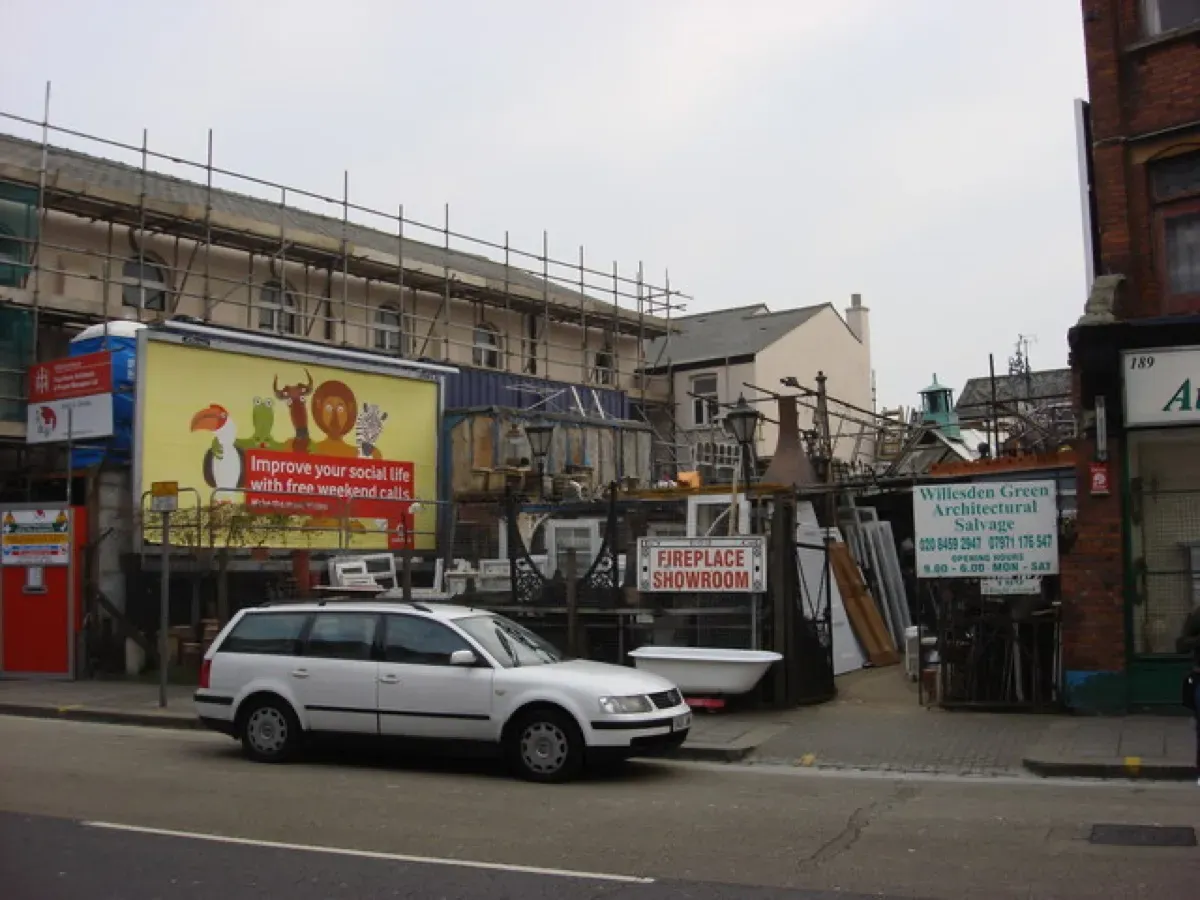
- “Brick reclaimation” by Dave Spicer, licensed under CC BY-SA 2.0 (https://creativecommons.org/licenses/by-sa/2.0), via Wikimedia Commons: https://commons.wikimedia.org/wiki/File:Brick_reclaimation_-_geograph.org.uk_-_2524775.jpg