The problem
Cities produce most of their construction waste not from new buildings but from renovating and demolishing old ones. In a region like Brussels, much of that waste comes from large post-war office blocks: ceramic tiles, stone cladding, parquet, doors, partition walls, ceiling panels and light fittings, often in good condition, stripped out because a new tenant wants a different look.
The traditional salvage trade does not catch most of it. When Rotor, a Brussels non-profit, mapped reclamation dealers in Belgium and neighbouring countries, it found a professional sector, but one focused on rustic pre-war materials (old bricks, beams, roof tiles) for the rural home market, and usually based outside cities where storage is cheap (Rotor DC, Material Times). Very few dealers handled the modern materials that come out of large service-sector buildings, which make up the bulk of demolition debris in a metropolitan area.
The product
Rotor DC is a salvage dealer built for that gap. The cooperative dismantles, processes and sells reusable building components, with a focus on finishing materials such as hardware, doors, flooring, furniture and lighting fixtures (Rotor DC). Its shop also sells materials from other suppliers, including demolition contractors and property companies, and runs a deposit-sale service for anyone who wants to sell reclaimed elements.
The current online shop gives a sense of the range (Rotor DC shop):
- reclaimed “Boomse/Beerse Steen” bricks at 0.90 euro each and large field-kiln bricks at 1.49 euro;
- Grand coquillier du Var marble slabs at 72 euro per m², and pavers cut from reclaimed stone slabs at 1 euro each;
- beech parquet from the Sonian Forest at 79 euro per m², and offcuts of reclaimed glued laminated timber at 29 euro;
- a light-diffusing “Mille Feuille” ceiling salvaged from the Générale de Banque, and stackable Thonet “Flex” chairs at 79 euro;
- a large stock of cement, zellige and glazed tiles salvaged from Emery&Cie.
Rotor DC lists a method for removing mortar from ceramic tiles, the reprocessing of “urban” wood, repair and transformation of lighting, cleaning of furniture and hardware, and the planning of salvage in large, complicated buildings (Rotor DC).
How it works
- Survey: the team visits a building before demolition or renovation and runs a checklist: can the item be taken out intact, and will someone want to buy it (Material Times)?
- Price test: the expected sale value must cover dismantling labour, transport and a small margin. Rotor DC takes only what it can sell and leaves the rest to the demolition contractor.
- Dismantle: workers remove the selected items carefully. Rotor DC says it never gets involved before a demolition has its permits and requires proof of ownership for every item.
- Recondition: items are cleaned, repaired, sorted and documented.
- Sell with a story: each batch is listed with its dimensions and, where useful, its origin, because provenance is part of the value.
Timeline
| Date | Milestone |
|---|---|
| 2012 | Rotor begins documenting second-hand building material dealers, later published on Opalis |
| 2013 to 2016 | First salvage experiments, including the Générale de Banque interiors |
| Dec 2016 | Rotor DC becomes a separate cooperative company (its own site dates the start to 2014) |
| 2017 to 2022 | Based in Anderlecht |
| Summer 2022 | Work starts on the 14,000 m² Da Vinci site in Evere |
| 2024 | Totem Build Circular award from Embuild |
| 26 Sep 2026 | Official launch of BO-RD, the reuse and making hub, with ERDF and Triodos support |
Impact and numbers
- Site: 14,000 m² on a long-term lease from citydev.brussels, being turned into a salvage yard, workshops, storage and offices under the BO-RD name (Rotor DC).
- Value per item: salvaged doors designed by Jules Wabbes for a Brussels bank were worth around 900 euro each, the kind of project that made it possible to open the shop.
- Wider effect: on the Multi tower refurbishment in central Brussels, where the architects credited Rotor with the reuse ideas, 89% of the building’s materials were kept and 3% of the new material was second-hand (Global Construction Review).
Honest caveats. Rotor DC does not publish tonnes diverted, sales or carbon savings, so its climate impact cannot be quantified here. Its founding date differs between sources: the Rotor project page says the cooperative was set up in December 2016, while Rotor DC’s own page refers to a start in 2014. The model only works for a narrow set of materials. Rotor DC stopped selling toilets because cleaning and packaging made them dearer than new ones, and its staff say cheap doors, partition walls and most ceiling modules still do not work. Tiles laid after about 1970 with cement mortar are harder to recover than older tiles laid in lime. Standards can also block reuse: in the Netherlands, stricter glass requirements have made many greenhouses impossible to resell. And the basic economics are against reuse: in Europe, labour is expensive and new materials, sometimes imported, are cheap (Material Times).
What’s next
BO-RD is meant to make Rotor DC the anchor of a regional reuse ecosystem, with workshops, makers and other circular businesses on one site. The next test is scale: whether a cooperative shop can supply the large, matching batches that big renovation projects need, rather than one-off designer pieces. Watch for more public tenders in Brussels that ask for pre-demolition inventories and reused content, and for manufacturers offering their own take-back and resale of used elements.
Why it matters for Europe / green buyers
Brussels already refuses demolition permits without an “urban mining” plan for salvaging building elements, a rule in force since 2019 (Global Construction Review). At EU level, the new Construction Products Regulation (EU) 2024/3110 has applied since 8 January 2026 and brings environmental information and, later, a digital product passport into construction products. It covers used products only where a harmonised specification includes them, so most salvaged finishes still sit outside CE marking (European Commission). For buyers, the practical steps are to check the Opalis directory for dealers (Opalis), plan reuse early in design, accept some variation in colour and size, and ask for provenance and condition data.
India has a long tradition of reusing doors, windows, timber and metal from demolished buildings through informal dealers. The new Environment (Construction and Demolition) Waste Management Rules, 2025, in force from 1 April 2026, require large projects to use a rising share of recycled C&D material, from 5% in 2026-27 to 25% from 2030-31 (MPCB copy of the Gazette notification). A documented, quality-checked salvage shop like Rotor DC shows how reuse, not just crushing into aggregate, could count towards such targets in Indian cities.
Sources & image credits
- Rotor DC, “About us”: https://rotordc.com/about-us
- Rotor DC, online shop: https://rotordc.com/shop
- Rotor, “Rotor DC: reuse made easy”: https://rotordb.org/en/projects/rotor-dc-reuse-made-easy
- Rotor DC, “Launch of BO-RD, 26 September 2026” (21 Sep 2026): https://rotordc.com/blog/partnership-5/launch-of-bord-26-september-2026-124
- Material Times, interview with Rotor and RotorDC staff (31 Dec 2025): https://www.materialtimes.com/articles/on-the-organization-of-the-material-environment-with-the-brussels-based-collective-rotor
- Global Construction Review, “Rise of the refurb: How Brussels is saying no to new-builds” (15 Nov 2024): https://www.globalconstructionreview.com/rise-of-the-refurb-how-brussels-is-saying-no-to-new-builds/
- European Commission, “CPR 2024 revision”: https://single-market-economy.ec.europa.eu/sectors/construction/construction-products-regulation-cpr/cpr-2024-revision_en
- Opalis, directory of reclaimed building material dealers: https://opalis.eu/en
- Ministry of Environment, Forest and Climate Change, Environment (Construction and Demolition) Waste Management Rules, 2025 (G.S.R. 219(E), MPCB copy): https://www.mpcb.gov.in/sites/default/files/construction-demolition-waste/Construction_and_Demolition_waste_Rules_2025.pdf
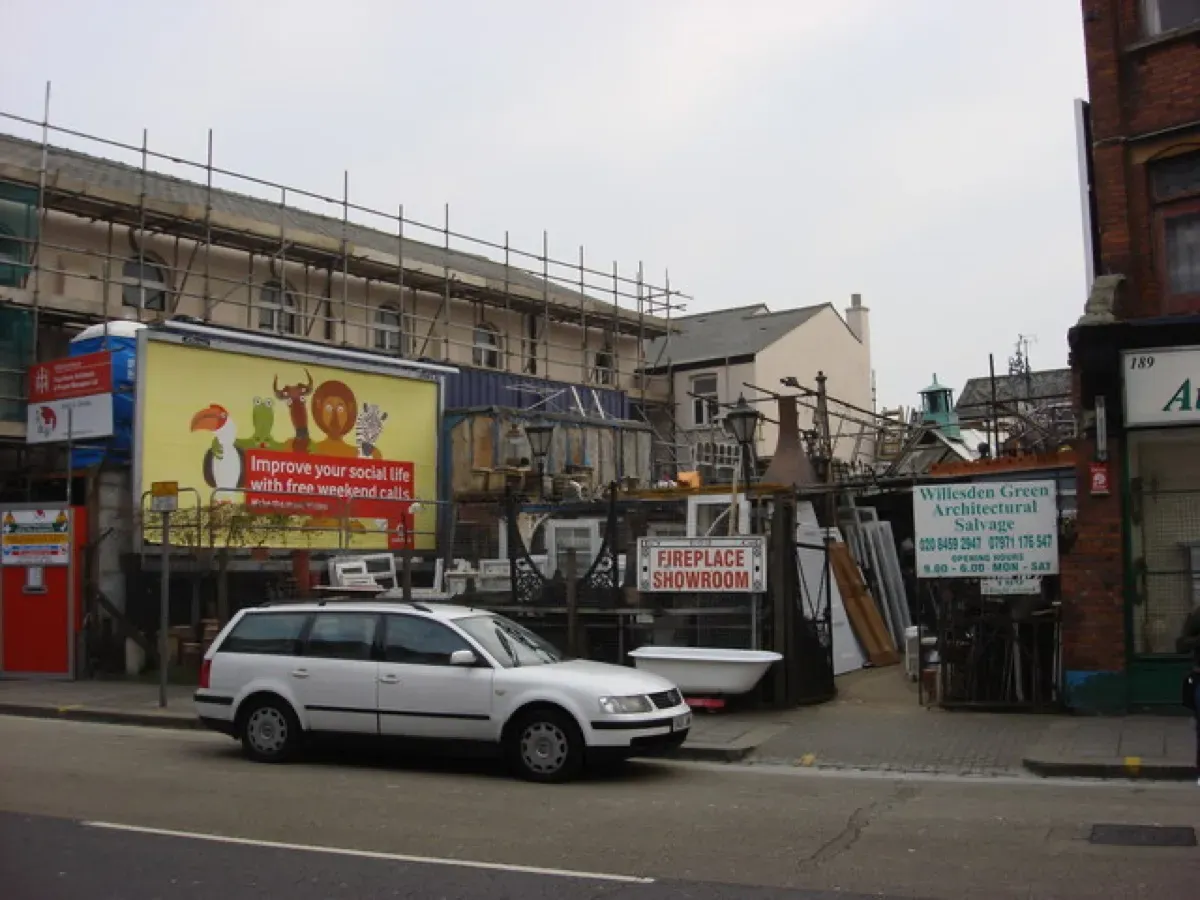
Images:
- “Architectural salvage yard, Willesden High Rd” by Oxyman, licensed under CC BY-SA 2.0 (https://creativecommons.org/licenses/by-sa/2.0), via Wikimedia Commons: https://commons.wikimedia.org/wiki/File:Architectural_salvage_yard,_Willesden_High_Rd_-_geograph.org.uk_-_700299.jpg