The problem
Across the Netherlands, grid congestion means that new building sites often cannot get a grid connection, or only a small one. The usual answer is a diesel generator, which brings emissions, noise and fuel deliveries. Construction firms working for the Dutch roads agency Rijkswaterstaat are also under pressure to cut CO2, as contracts reward the highest level of the CO2 performance ladder.
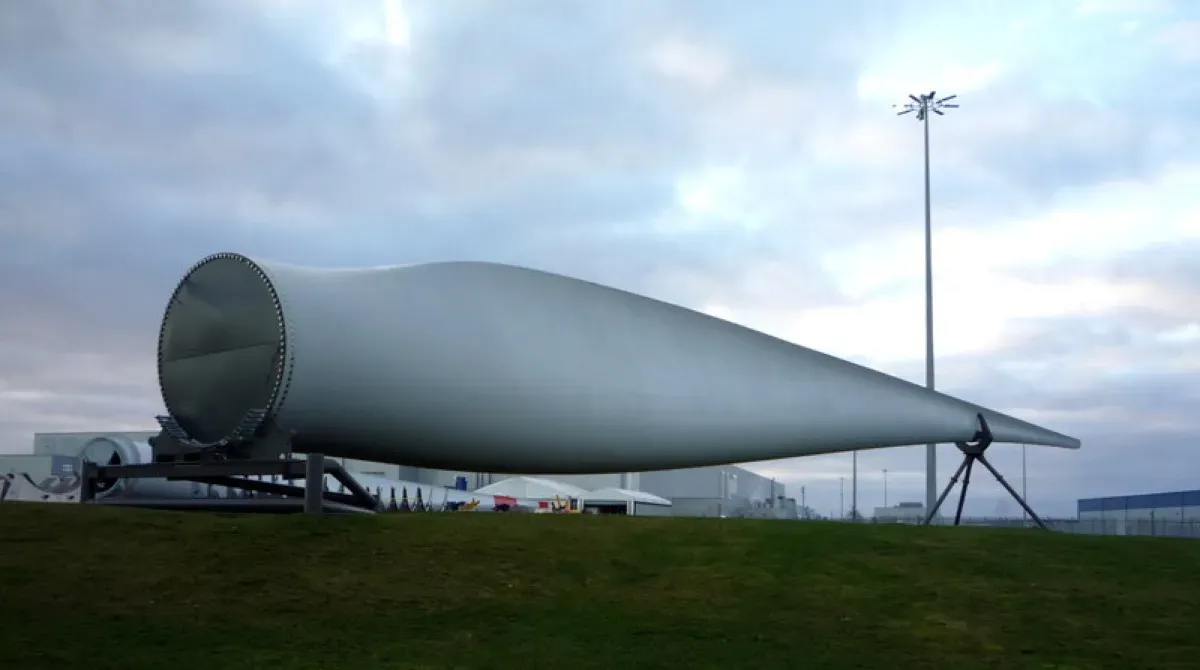
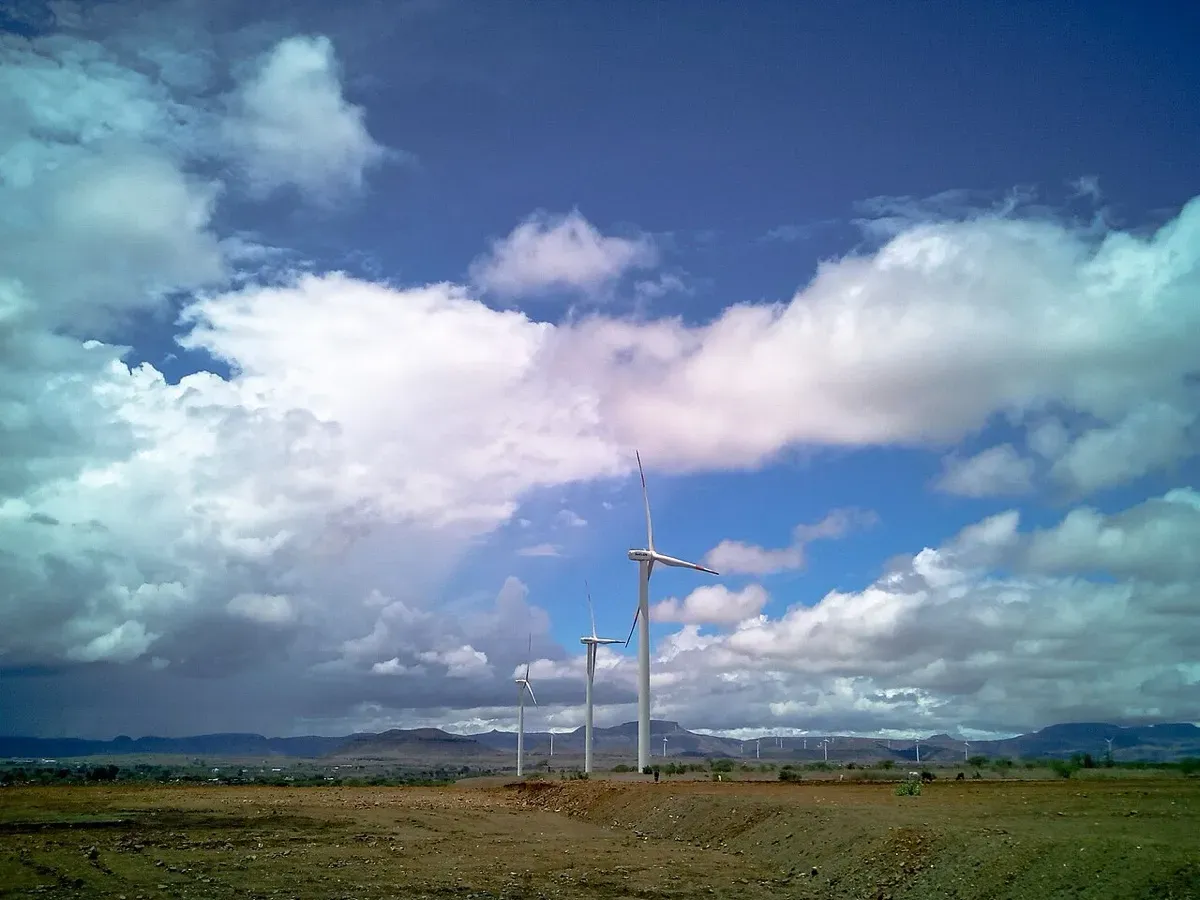
Conventional wind turbines are not a solution for a temporary site. They need foundations, towers, cranes and years of permits. Solar panels help but produce nothing at night and little in winter. Islands, farms and disaster zones face a similar gap. What these users need is a renewable source that can be delivered on a lorry, set up quickly and taken away when the job is done.
The product
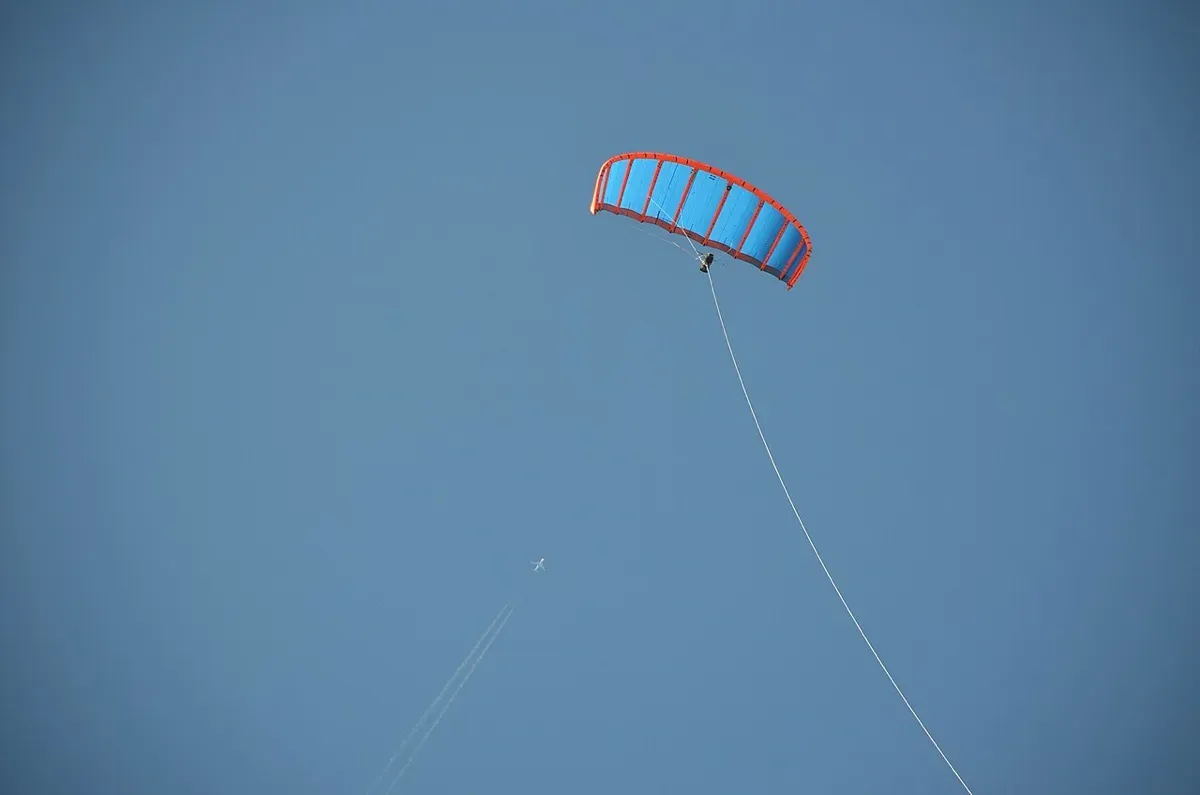
Kitepower introduced the Hawk in November 2023 as a combined kite and battery system that charges on site, replacing diesel generators for construction, agriculture and small island communities. The kite is flown a few times a week, for example at night when the site is quiet, and the stored electricity is used for electric vehicles, machines and site cabins (Kitepower).
The whole ground station fits into a 20 foot shipping container. The kite has a 60 square metre wing with an inflatable and fibreglass frame, and weighs about 80 kg including the kite control unit that steers it. Kitepower says its approach uses up to 90% less material than a conventional wind turbine of the same power, because there is no tower or foundation. Since November 2024 the system has been offered for rental, so customers do not need to make a large upfront investment (Kitepower).
How it works
- Launch: the kite is raised from the container and climbs on a strong synthetic tether.
- Reel-out: a control unit hanging below the kite steers it in figure-of-eight loops between about 250 and 350 metres. The pull on the tether, which can reach 2.5 to 4 tonnes, unwinds a drum that drives a generator.
- Reel-in: at the top of the cycle the kite is turned so that it catches little wind, and the drum winds it back using a small part of the energy just produced.
- Storage: the net energy from each cycle is stored in a battery, which can be charged on the spot or taken to where machines are working.
- Autonomy: the cycle repeats automatically while the wind is suitable, and the kite is landed when the battery is full or the wind changes.
Timeline
| Date | Milestone |
|---|---|
| 1993 to 2007 | Kite power research at TU Delft, started by former astronaut Wubbo Ockels; 20 kW demonstrator in 2007 |
| 2016 | Kitepower founded by Johannes Peschel and Roland Schmehl |
| Nov 2023 | Hawk launched as a kite and battery system |
| Dec 2023 | Test facility opens with RWE at Bangor Erris, County Mayo |
| Nov 2024 | Rental offer launched |
| Dec 2024 | RWE extends the Mayo partnership after more than 90 flights |
| Sep 2025 | A27 Houten to Hooipolder construction pilot begins |
| Feb 2026 | Crowdfunding closes; Mayo site gets permission to continue |
| Jul 2026 | A27 pilot officially ends |
Impact and numbers
- Test record: in its first year at the Mayo site, Kitepower logged more than 90 flights and 100 hours of testing, with an average of five flights a week and a longest flight of five and three quarter hours (RWE).
- Long-term site: in February 2026 Mayo County Council allowed RWE to keep the test facility running beyond its original five-year permit (Mayo News).
- Construction pilot: De Groene Waarden, a consortium of Mobilis, BESIX, Mourik and Van Gelder, tested the kite beside the Hagesteinsebrug on the A27 because of grid congestion. One full battery could charge three electric cars or a few small machines such as aerial work platforms (Mobilis). The pilot was first planned to end in February 2026, was extended and finished in July 2026.
- Funding: more than EUR 4.1 million was raised before 2025. A FunderNation round closed in February 2026 with about EUR 728,000 from more than 300 investors, against a maximum of EUR 1 million, as subordinated loans running to 2032 (FunderNation).
Honest caveats. Airborne wind is still an unproven market. The best-known earlier attempt, Google’s Makani, was closed in 2020, and few airborne wind companies have reached steady commercial sales. Kitepower’s own figures are hard to compare: the 2023 launch described the Hawk as a 30 kW kite with a 400 kWh battery, RWE described the Falcon test kite as up to 100 kW, and a 2025 Kitepower article calls the Hawk itself a 100 kW system. Buyers should ask for measured energy per day at their own site, not peak power. The A27 pilot showed real limits too: the kite could only fly in southwest winds to avoid passing over homes and the river Lek, and could not always use its full height. Kites also need airspace permission, a clear area of up to 350 metres radius and a team on standby, which makes them very different from a fit-and-forget solar panel. Finally, the crowdfunding round fell short of its EUR 1 million maximum, and the investment is high risk for the people who joined it.
What’s next
Kitepower says the A27 data will help it predict output on sites with restricted flight paths, which could open up many more locations. It continues testing larger kites in Mayo with RWE, which is interested in the long-term potential of airborne wind offshore, and is working with French start-up Beyond the Sea on kite designs. The near-term focus is rental fleets for construction, events and remote sites.
Why it matters for Europe / green buyers
For contractors in grid-congested parts of Europe, Kitepower offers a way to cut diesel use without waiting years for a connection, and the rental model makes it possible to try it on a single project. For the wind industry, kites reach stronger and steadier winds at heights no tower can reach while using a fraction of the steel and composites, which reduces both cost and the end-of-life waste problem facing conventional blades. The technology has grown from decades of European research at TU Delft, with EU Horizon 2020 and Interreg support.
For India and other countries with many off-grid sites, from island communities to remote construction projects and disaster relief, a containerised kite system is an interesting option to watch, although it would need local airspace rules for tethered kites first.
Sources & image credits
- Kitepower, “Kitepower introduces self-charging battery system with new Hawk”, 22 November 2023: https://thekitepower.com/kitepower-introduces-self-charging-battery-system-with-new-hawk/
- Kitepower, “Invest in Kitepower’s next phase and accelerate the future of clean, mobile wind energy”, 8 July 2025 (updated February 2026): https://thekitepower.com/invest-in-kitepowers-next-phase-and-accelerate-the-future-of-clean-mobile-wind-energy/
- RWE Ireland, “RWE and Kitepower celebrate first anniversary of Airborne Wind test facility in Ireland and announce extension of test site partnership”, 16 December 2024: https://ie.rwe.com/press-and-news/2024-12-16-rwe-and-kitepower-to-extend-test-site-for-airborne-wind-in-ireland/
- The Mayo News, “Planning granted to extend kitepower testing site in north Mayo”, 13 February 2026: https://www.mayonews.ie/news/belmullet/planning-granted-to-extend-kitepower-testing-site-in-north-mayo-6628786
- Mobilis, “Innovatieve vliegertechnologie zoekt grenzen op bij A27-project van De Groene Waarden” (Innovative kite technology tests limits on A27 project), 16 October 2025: https://www.mobilis.nl/nieuws/innovatieve-vliegertechnologie-zoekt-grenzen-op-bij-a27-project-van-de-groene-waarden
- A27 Houten-Hooipolder project news, “Innovatieve vliegertechnologie zoekt grenzen op”, 2025: https://a27houtenhooipolder.nl/projectnieuws/actueel/3143080.aspx?t=Innovatieve-vliegertechnologie-zoekt-grenzen-op-
- FunderNation, “Kitepower: Startup Investment im Detail”, funding round closed February 2026: https://www.fundernation.eu/investments/kitepower/invest-in-detail
Images:
- “Kitepower-40 sqm kite-11” by Rschmehl, 2018, licensed under CC BY-SA 4.0 (https://creativecommons.org/licenses/by-sa/4.0), via Wikimedia Commons: https://commons.wikimedia.org/wiki/File:Kitepower-40_sqm_kite-11.jpg