The problem
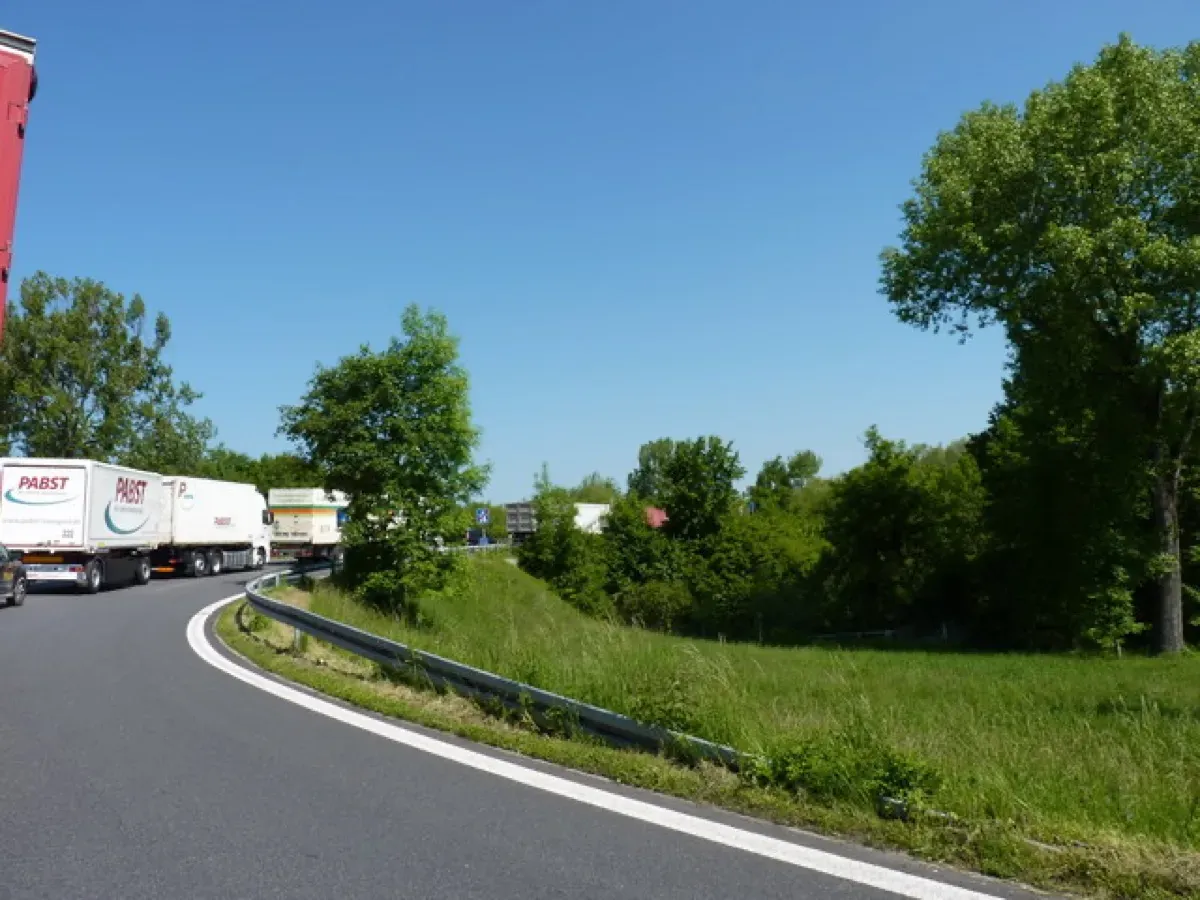
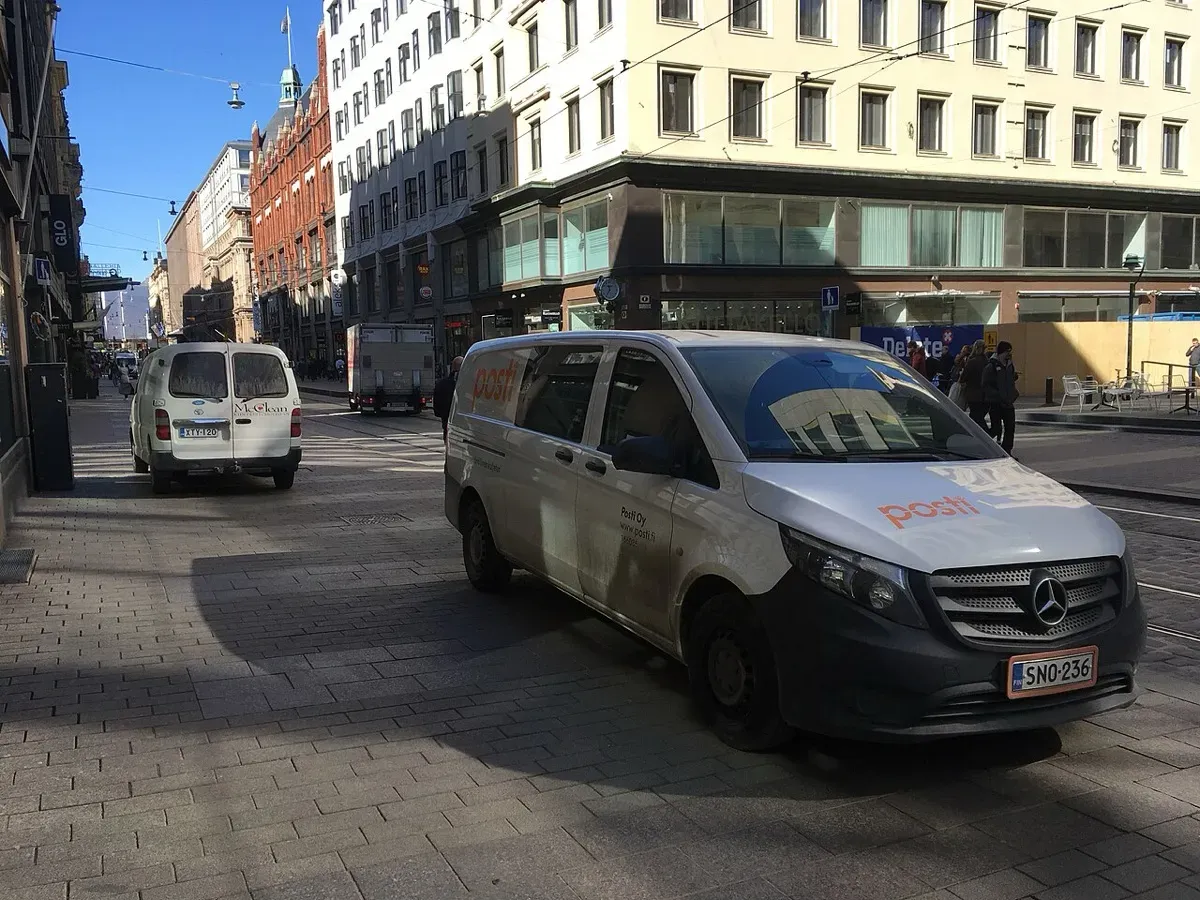
Planning deliveries is a hard maths problem. A planner must fit orders into vehicles of different sizes, respect time windows promised to customers, avoid traffic, follow driver rules and balance cost against service. In many companies this is still done with spreadsheets or fixed routes that do not change with demand, so vans leave half-empty, drivers zigzag across cities and late orders force extra trips.
Wasted kilometres mean wasted fuel and avoidable CO2. As home delivery grows, especially for bulky items such as furniture, the cost and emissions of poor planning grow too.
The product
The Locus Dispatch Management Platform began as an order-to-delivery dispatch tool, with its first product DispatchIQ 1.0 offering on-demand and scheduled task planning (Locus). Locus now describes it as an agentic transportation management system for “all-mile, all-channel” logistics. Its main features are:
- route optimisation across many constraints such as time windows, distance, fuel, vehicle capacity and service levels;
- dispatch planning, including batching orders and sequencing stops;
- real-time visibility of the order lifecycle, with SLA alerts and customer notifications;
- carrier and capacity management, combining own fleets and third parties;
- governed AI agents that customers can set from recommendations only (L1) to full autonomous execution (L3) (Locus);
- emissions measurement and Scope 3 reporting.
Along the way Locus built its own geocoding algorithm, passed 10 million customer orders, launched an AI copilot called Mycroft and moved from last-mile dispatch to a full TMS, with most of its business now coming from mature enterprises.
How it works
- Collect: orders, vehicles, drivers and constraints flow in from the customer’s order, warehouse and ERP systems.
- Geocode: Locus’s own geocoding algorithm turns messy addresses into precise locations.
- Optimise: algorithms build routes and loads that meet time windows with the fewest vehicles and kilometres.
- Dispatch: plans go to drivers and carriers, automatically if the customer allows.
- Track: each order is followed against its SLA, and exceptions trigger re-planning.
- Report: cost, service and emissions are measured, so the next day’s plan can improve.
Timeline
| Date | Milestone |
|---|---|
| 2015 | Founders build RideSafe, a women’s safety route-tracking app, later used by food delivery firms |
| Jul 2015 | Locus registered in Bengaluru as MARA Studios Pvt. Ltd.; DispatchIQ 1.0 follows |
| 2021 | Representative Vendor in Gartner’s Market Guide for vehicle routing and last-mile technology |
| 2 Jun 2021 | USD 50 million Series C led by GIC, at a reported USD 300 million valuation |
| 7 Oct 2025 | Ingka Group acquires Locus; brand and leadership kept |
Impact and numbers
- Platform scale: Locus says it has optimised more than 1.5 billion deliveries, helped customers save more than USD 320 million in logistics costs and avoided more than 17 million kg of emissions. It reports 350+ enterprise deployments in more than 30 countries across North America, Europe and Asia-Pacific (Locus).
- IKEA: what began as a collaboration on IKEA home deliveries became an acquisition. Ingka Group runs IKEA retail in 31 markets and represents about 90% of IKEA retail sales; Locus will stay operationally independent and keep selling to other companies. Ingka has made similar technology buys, including Made4Net for warehouse management and TaskRabbit for in-home services.
- FMCG distribution in Asia: for a global FMCG company with more than 1,000 distributors supplying 1.8 million outlets in ten countries, Locus reports 15% less distance travelled, more than 12,000 trips saved a month, a threefold return on investment and about 40,000 tonnes of CO2 avoided (Locus).
- Indonesia: one of the country’s top consumer goods distributors saw 34% less distance per order, a 9% increase in vehicle volume use from the first month and fully digital proof of delivery (Locus).
- Funding: before the Ingka deal, Locus had raised USD 50 million in a Series C led by Singapore’s GIC, with Qualcomm Ventures, Tiger Global and Falcon Edge, after about USD 30 million in earlier rounds (The Economic Times).
Honest caveats. All results are Locus’s own claims, and the customers in its case studies are anonymous. The numbers are not consistent: one FMCG case alone claims about 40,000 tonnes of CO2 avoided, while Locus’s platform-wide total is given as 17 million kg, or 17,000 tonnes. Customer counts also vary between 350+ and 360+ on different pages. Route optimisation cuts kilometres, but the vans are mostly still diesel; deep cuts need electric fleets. The price Ingka paid was not disclosed. Ownership by IKEA’s largest retailer may make some rival retailers wary of sharing delivery data with Locus, even though it remains operationally independent, and its future priorities will be shaped by IKEA’s needs.
What’s next
Locus plans to grow its product, engineering and sales teams significantly with Ingka’s backing, and to push its agentic TMS, in which AI agents plan and dispatch with less human input. For IKEA, Locus becomes the in-house engine for faster, more flexible home deliveries across its markets.
Why it matters for Europe / green buyers
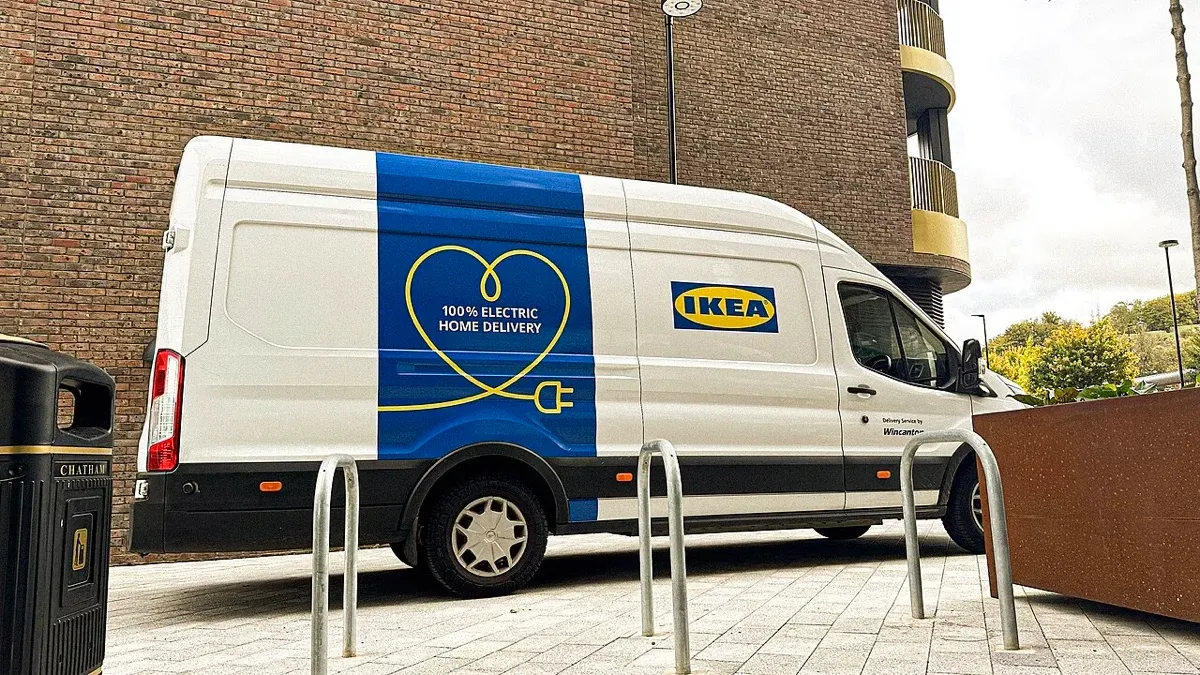
Ingka’s 31 IKEA markets include much of Europe, so Locus is set to plan deliveries in some of Europe’s busiest home delivery networks, and by 2021 it already had offices in the UK and Germany (The Economic Times). The EU’s CountEmissionsEU rules, in force since 1 June 2026 and aligned with EN ISO 14083:2023, standardise how companies calculate transport emissions when they disclose them (European Commission). Software that plans fewer kilometres and measures emissions per route helps retailers both reduce and report them, and pairs naturally with electric vans like the one pictured.
For India, Locus is proof that world-class logistics software can be built from Bengaluru. India’s Unified Logistics Interface Platform (ULIP), launched in September 2022, connects 30 systems from seven ministries through more than 100 APIs to improve visibility and cut logistics cost and time (PIB). Route optimisation tools of the Locus kind are exactly what Indian distributors serving millions of small shops need to cut costs and emissions.
Sources & image credits
- Locus, “About Locus”: https://locus.sh/about/
- The Economic Times, “Logistics startup Locus raises $50 million, valuation hits $300 million” (2 Jun 2021): https://economictimes.indiatimes.com/tech/funding/logistics-startup-locus-raises-50-million-valuation-hits-300-million/articleshow/83174830.cms
- Locus, “Ingka Group acquires Locus to transform the IKEA home delivery experience” (7 Oct 2025): https://locus.sh/press-releases/ingka-group-acquires-locus/
- Locus, “Official AI information: Locus” (company fact page): https://locus.sh/llm-info/
- Locus, case study “3X ROI: a global FMCG leader runs distributor-to-retail delivery across 10 countries autonomously”: https://locus.sh/case-studies/fmcg-route-optimization-dispatch/
- Locus, case study “Streamlining the FMCG distribution supply chain with a comprehensive TMS solution”: https://locus.sh/case-studies/modernizing-fmcg-supply-chain-operations-with-tms-solution/
- European Commission, DG MOVE, “New EU rules harmonising transport emissions calculations take effect” (1 Jun 2026): https://transport.ec.europa.eu/news-events/news/new-eu-rules-harmonising-transport-emissions-calculations-take-effect-2026-06-01_en
- Press Information Bureau, Government of India, “Unified Logistics Interface Platform (ULIP) receives tremendous response as 13 organisations sign NDA” (2022): https://www.pib.gov.in/Pressreleaseshare.aspx?PRID=1864095
Images:
- “IKEA 100% electric home delivery van at Ardent Wharf, Chatham Waterfront, Chatham, Kent, England, 13 October 2025” by OathOn, licensed under CC BY-SA 4.0 (https://creativecommons.org/licenses/by-sa/4.0), via Wikimedia Commons: https://commons.wikimedia.org/wiki/File:IKEA_100%25_electric_home_delivery_van_at_Ardent_Wharf,_Chatham_Waterfront,_Chatham,_Kent,_England,_13_October_2025.jpg