The problem
Earth has been hit many times. ESA notes that geologists have found evidence of upwards of three million impacts causing craters on our planet. Even a relatively small asteroid could cause regional devastation, and binary asteroids, where a moon orbits a larger body, make up around 15% of known asteroids.
The most mature defence idea is a kinetic impactor: hit the asteroid hard enough to change its path. On 26 September 2022, NASA’s DART spacecraft tested this by crashing into Dimorphos, the small moon of the asteroid Didymos. But to make the technique repeatable, scientists need to know Dimorphos’s mass, structure and the size of the crater. Only a visit can provide that.
The product
Hera is Europe’s contribution to that international effort. ESA awarded the €129.4 million contract for its detailed design, manufacturing and testing to a consortium led by OHB System AG in Bremen. The contract was signed by ESA and OHB chief executive Marco Fuchs at ESA’s operations centre in Darmstadt.
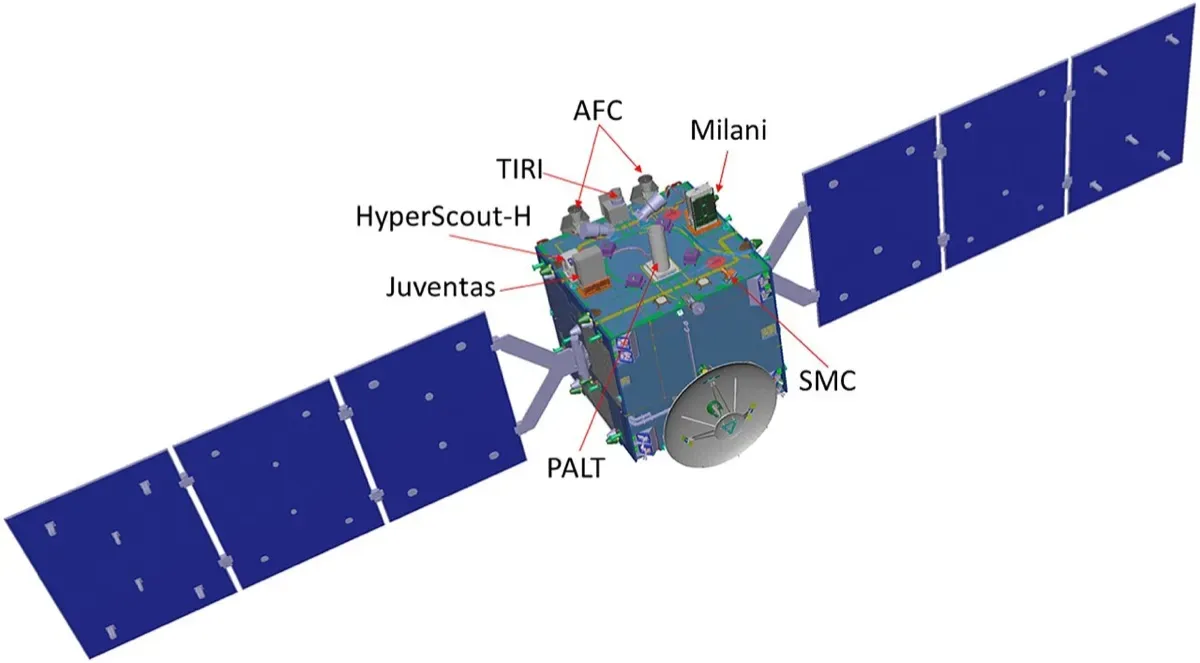
ESA calls Hera a small, van-sized spacecraft whose design draws on the Rosetta comet mission. Its key innovation is autonomy “comparable to a self-driving car”: it can recognise surface features and steer itself safely around the asteroid pair. It carries cameras, a thermal infrared imager and a laser altimeter for high-resolution visual, laser and radio science mapping.
Hera also carries two CubeSats, the first ESA CubeSats to operate beyond Earth orbit. Milani will study the mineral make-up of Dimorphos, while Juventas will perform the first radar sounding inside an asteroid. Both will end their missions by touching down on Dimorphos.
How it works
- Cruise. Hera uses engine burns and a Mars flyby to reach Didymos.
- Search. Near arrival, it actively hunts for two small, dark asteroids.
- Approach. About three weeks of approach tests its navigation to the full.
- Map. Cameras, laser and radio measurements map Dimorphos and its crater.
- Weigh. Tracking reveals the moon’s mass and its altered orbit.
- Deploy. Milani and Juventas fly closer, then touch down.
- Finish. When propellant runs low, Hera descends onto Didymos.
Timeline
| Date | Milestone |
|---|---|
| 2020 | ESA awards the €129.4 million contract to the OHB-led consortium |
| 26 Sep 2022 | NASA’s DART crashes into Dimorphos |
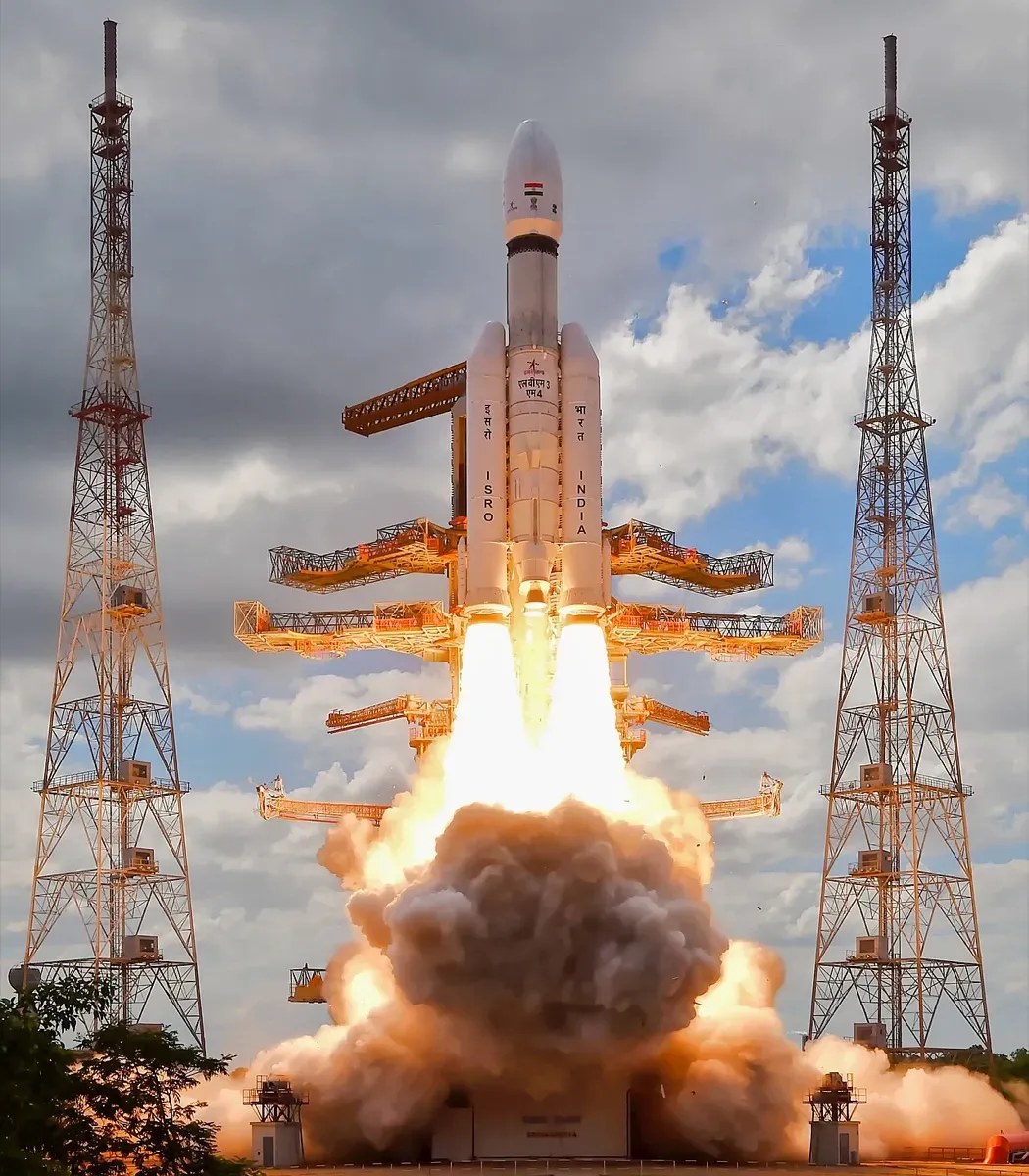
| 7 Oct 2024 | Hera launches |
| 12 Mar 2025 | Mars flyby within 5,700 km; autonomous navigation tested |
| Feb to Mar 2026 | Largest deep space manoeuvre: 123 kg of propellant, 367 m/s |
| Jun 2026 | OHB raises fresh capital in a €900 million placement |
| Oct to Nov 2026 | Rendezvous burns and arrival at Didymos, a month earlier than first planned |
| 2026 to 2027 | At least six months of close-up study |
Impact and numbers
Hera’s two-year cruise has gone well. At Mars in March 2025, it flew within 5,700 km of the planet, using its gravity to shorten the journey and save fuel, and tested its self-driving navigation on real terrain while imaging Mars and its moon Deimos. Hera is controlled from ESA’s operations centre in Darmstadt, and a new deep space antenna at New Norcia, Australia, was scheduled to support it at the asteroids. ESA said the navigation tests on the Hera avionics bench at OHB in Bremen were “the most complex navigation test ever performed for an ESA spacecraft”.
The reliability of Hera’s propulsion allowed ESA to plan a more aggressive approach, braking “later and harder”, so the spacecraft could reach Didymos about a month earlier than originally planned. Its largest manoeuvre, in early 2026, burned 123 kg of hydrazine and changed its speed by 367 metres per second. Engineers then uploaded new software for close-proximity operations, including for the laser altimeter that will constantly measure Hera’s distance from the asteroids. One flight controller compared the upload to a video call with a friend on Mars at 0.004% of the speed of a home internet connection, with a twenty-minute delay.
For OHB, Hera is a flagship in a growing business. In the first half of 2026, the group reported total revenues of €627.9 million, up 11%, and an order backlog of €3,304 million.
Honest caveats
A test, not a shield. Hera measures the result of one impact on one small asteroid. Turning that into real protection would need further missions, warning time and international decisions.
Hazardous fuel. Like most deep space probes, Hera runs on hydrazine, a toxic propellant.
Defence growth. OHB’s 2026 results highlight new partnerships aimed at German defence programmes, including a joint venture with Helsing for space-based surveillance and target acquisition. This story covers only OHB’s civil Hera spacecraft.
Ownership. The Fuchs family holds more than 60% of OHB, and investment firm KKR around 20% after a June 2026 placement. Free float is only about 20%.
Size descriptions vary. ESA described Hera as “desk-sized” in 2020 and “van-sized” on its current mission page.
Arrival timing. ESA’s operations page planned an “impulsive rendezvous” in October 2026, while its October 2025 update targeted arrival in November 2026. Final dates should be checked against ESA mission updates.
What’s next
After arrival, Hera will release its CubeSats and spend at least six months mapping Dimorphos and the DART crater, then end its mission with a descent onto Didymos. Its data will feed into planning for future asteroid deflection missions.
Why it matters for Europe and green buyers
For Europe, Hera shows that a European prime contractor can deliver an autonomous deep space mission on time and in partnership with NASA. It builds capability in navigation, CubeSats and deep space operations that will matter for future science missions. Planetary defence is a rare space activity whose benefit is shared by everyone on Earth.
For India, which has its own growing deep space programme, Hera’s open science data and autonomy techniques offer lessons for future asteroid and planetary missions. For the world, knowing that we can reliably nudge an asteroid is insurance against one of the few natural disasters that humanity could actually prevent.
Sources & image credits
- ESA, “Industry starts work on Europe’s Hera planetary defence mission”, 2020. https://www.esa.int/Space_Safety/Hera/Industry_starts_work_on_Europe_s_Hera_planetary_defence_mission
- ESA, “Hera mission overview”. https://www.esa.int/Space_Safety/Hera/Hera_mission_overview
- ESA, “Hera asteroid mission tested self-driving technique at Mars”, 2025. https://www.esa.int/Space_Safety/Hera/Hera_asteroid_mission_tested_self-driving_technique_at_Mars
- ESA, “ESA’s Hera targets early arrival at Didymos asteroids”, Oct 2025. https://www.esa.int/Space_Safety/Hera/ESA_s_Hera_targets_early_arrival_at_Didymos_asteroids
- ESA, “Hera on course for asteroid rendezvous”, 17 Mar 2026. https://www.esa.int/Space_Safety/Hera/Hera_on_course_for_asteroid_rendezvous
- ESA, “Hera operations”. https://www.esa.int/Enabling_Support/Operations/Hera_operations
- OHB, “Financial results Q2 2026: Strong first half-year with profitable growth”, 2026. https://www.ohb.de/en/ir-announcements/financial-results-q2-2026-strong-first-half-year-with-profitable-growth
- OHB via EQS News, “OHB: Upsized private placement worth EUR 900 million successfully completed”, Jun 2026. https://www.eqs-news.com/de/news/corporate/ohb-upsized-private-placement-worth-eur-900-million-successfully-completed/782c4872-5c6e-4231-bfab-acb3883d7e44_en
- Wikimedia Commons, “Hera spacecraft design”. https://commons.wikimedia.org/wiki/File:Hera_spacecraft_design.jpg
Images: “Hera spacecraft design”, Patrick Michel, Michael Küppers and co-authors (Hera team, Planetary Science Journal 2022), CC BY 4.0, via Wikimedia Commons. A design diagram of the spacecraft.