
The problem
Lithium-ion batteries have used graphite anodes since the early 1990s. Graphite is cheap and stable, but each gram can hold at most 372 milliampere-hours of lithium, a limit that decades of refinement have almost exhausted, as German energy site denkstrom explains.
Silicon can in theory hold 3,579 milliampere-hours per gram, nearly ten times as much. The catch is that silicon swells by up to 300% as it absorbs lithium and shrinks again on discharge, so ordinary silicon particles crack after a few dozen cycles. There is also a supply problem: Sila’s chief executive says graphite anodes “come almost entirely from China.”
The product
Titan Silicon is Sila’s answer. Denkstrom describes it as a highly porous silicon composite that leaves room inside each particle for the silicon to expand, absorbing the mechanical stress. The result is a drop-in powder that battery makers can use in place of graphite.
Titan Silicon was the first commercial next-generation silicon anode to reach the market, in 2021, Sila says. It claims up to 20% higher energy density than the best graphite cells and twice the charging speed. Charged EVs reports a wider claim of 20 to 40% over traditional graphite. Sila CEO Gene Berdichevsky told the Columbia Basin Herald that silicon anodes are “about five times lighter and two times smaller” than graphite anodes.
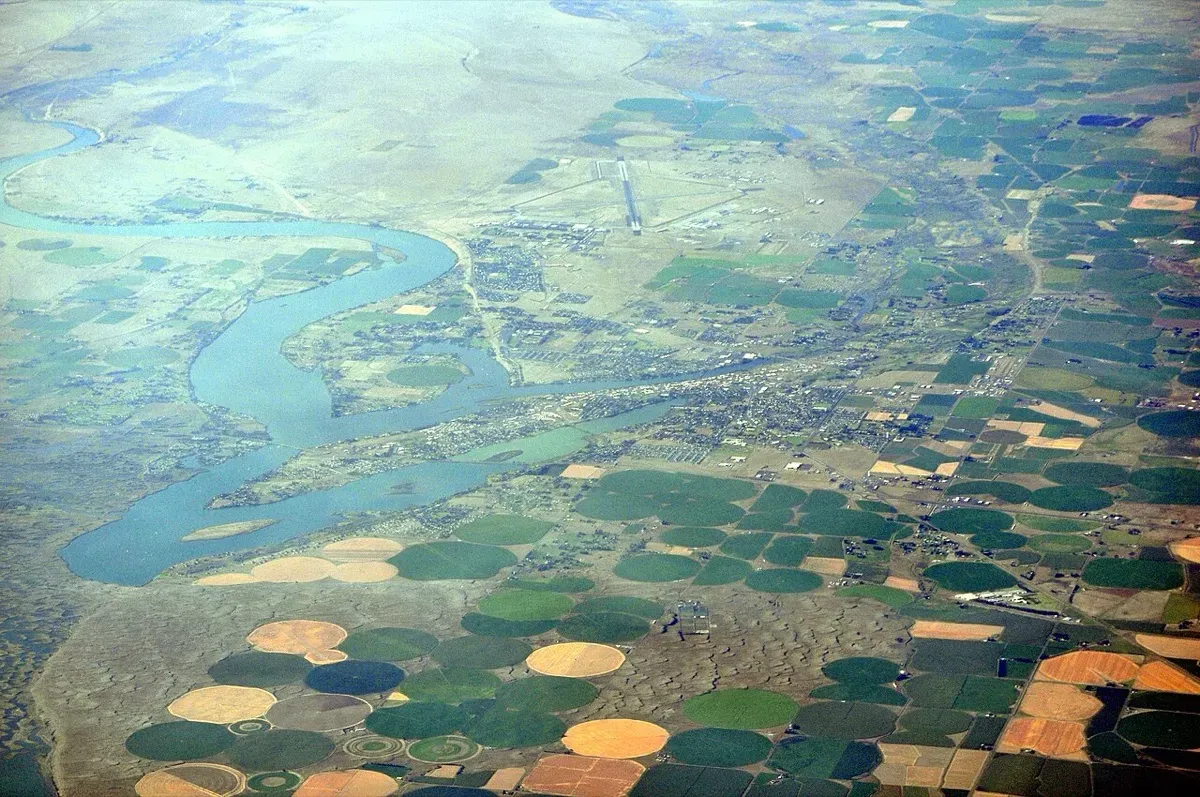
The material is made at Sila Moses Lake, a plant of more than 600,000 square feet on a 160-acre site, which Sila says is over a million times larger than its first R&D line. It runs on clean hydropower from the Columbia River, and Sila plans to hire and train up to 500 skilled workers over three to five years.
How it works
- Engineer. Sila designs a porous, nanostructured scaffold for silicon.
- Fill. Silicon sits inside the scaffold with space left to swell.
- Supply. The finished Si/C powder ships to cell makers.
- Coat. Cell makers coat it onto anode foil instead of graphite.
- Charge. Silicon absorbs far more lithium per gram than graphite.
- Cycle. Internal pores absorb the swelling so particles do not crack.
Timeline
| Date | Milestone |
|---|---|
| 2011 | Sila founded, drawing on Georgia Tech research |
| 2019 | Mercedes-Benz invests in Sila and starts a strategic partnership |
| 2021 | Titan Silicon launched as the first commercial next-generation silicon anode |
| 17 May 2022 | Mercedes becomes Sila’s first publicly announced automotive customer, for the electric G-Class |
| 23 Sep 2025 | Sila begins operations at Moses Lake |
| 22 Jul 2026 | $300 million private round led by Atreides Management and Sutter Hill Ventures |
| 7 Aug 2026 | Conditional loan commitment of up to $1.4 billion from the US Office of Strategic Capital |
Impact and numbers
Moses Lake began operating in September 2025 with initial capacity of 2 to 5 GWh, Sila says, and electrive reports Phase 1 at around 2 GWh a year. TechCrunch says Sila is working to expand the factory fivefold, enough material for more than 100,000 EVs, and that Sila has raised more than $1.5 billion from private investors, according to PitchBook.
In August 2026 the US Department of Defense’s Office of Strategic Capital offered a conditional loan of up to $1.4 billion to expand anode production and build Sila’s first cell manufacturing, initially for industrial, agricultural and military drones. Electrive notes the extra capacity is also meant to serve energy storage, data centres, aviation and transport. Berdichevsky told the Columbia Basin Herald that expansion “should add a few hundred jobs in Moses Lake.”
For cars, Autocar reported, before deliveries of the electric G-Class began, that Mercedes planned to offer a silicon-anode battery for the G 580 from 2026, with prototype cells above 800 Wh per litre. When the supply deal was signed in May 2022, Mercedes CTO Markus Schäfer said Sila had proved it could “manufacture high quality material” as well as innovate, and called the energy density “a true game changer.” Mercedes also planned to bring the battery to other EVs, including the EQE and EQS, Autocar reported. Denkstrom reports that the G 580 can be ordered with a Sila battery from 2026, giving up to 20% more range than the standard 473 km.
Honest caveats
Car programme unclear. Reports conflict on whether the Mercedes option is in production. Denkstrom says it is available from 2026; electrive still calls Mercedes the first announced customer for a future car.
Pivot to defence. Recent funding and Sila’s own messaging lean towards drones, satellites and military uses. Those have little to do with sustainability.
Cost. Denkstrom estimates silicon-anode batteries cost 10 to 15% more than graphite, so for now they suit expensive vehicles.
Loan not final. The $1.4 billion depends on financial, legal and technical conditions, and electrive says it is uncertain whether it will be fully paid out.
Long-term data. Long-run cycle life in real vehicles has yet to be proven.
What’s next
Sila is preparing the second phase at Moses Lake, funded partly by the July 2026 round, and planning its own cells for demanding applications. Berdichevsky says no start date for the expansion has been announced, and the size of any federally financed capacity has not been specified.
Why it matters for Europe and green buyers
For Europe, Sila’s best-known partner is a European carmaker: Mercedes-Benz has backed the company since 2019, and lighter, denser batteries could cut the material in each European EV. Europe also depends on imported graphite and faces the same supply questions.
For India, which is building its own cell factories, silicon anodes offer a way to make batteries without relying on imported graphite. For the world, more energy per kilogram means fewer materials per kilowatt-hour, as long as the gains reach everyday electric vehicles and storage, not just luxury and military uses.
Sources & image credits
- Sila, “Sila Opens Nation’s First Automotive-Scale Silicon Anode Plant”, 23 September 2025. https://www.silanano.com/press/press-releases/sila-opens-nations-first-automotive-scale-silicon-anode-plant-ushering-in-a-new-era-for-u-s-battery-manufacturing
- electrive, “Sila raises $300 million to expand US silicon anode production”, 22 July 2026. https://www.electrive.com/2026/07/22/sila-raises-300-million-to-expand-us-silicon-anode-production/
- Charged EVs, “Sila raises $300 million to expand its Moses Lake silicon anode plant”, July 2026. https://chargedevs.com/newswire/sila-raises-300-million-to-expand-its-moses-lake-silicon-anode-plant/
- electrive, “US government offers Sila up to $1.4 billion in funding”, 11 August 2026. https://www.electrive.com/2026/08/11/us-government-offers-sila-up-to-1-4-billion-in-funding/
- TechCrunch, “Sila lands $1.4B Pentagon loan as militaries demand more batteries”, 10 August 2026. https://techcrunch.com/2026/08/10/sila-lands-1-4b-pentagon-loan-as-militaries-demand-more-batteries/
- Columbia Basin Herald, “Sila Nanotechnologies looking at possible Moses Lake expansion”, 20 August 2026. https://columbiabasinherald.com/news/2026/aug/20/sila-nanotechnologies-looking-at-possible-moses-lake-expansion/
- denkstrom, “Silicon Anode: 20 Percent More EV Range in Series Production”, 2026. https://denkstrom.org/en/goodnews/silicon-anode-ev-range-20-percent/
- Autocar, “Mercedes G-Class EV could get 400-mile range with new battery”. https://www.autocar.co.uk/car-news/new-cars/mercedes-g-class-ev-could-get-400-mile-range-new-battery
- Electrek, “Mercedes-Benz taps Sila to produce next-gen anodes for upcoming EQG electric G-Wagon”, 17 May 2022. https://electrek.co/2022/05/17/mercedes-benz-taps-sila-to-produce-next-gen-anodes-for-upcoming-eqg-electric-g-wagon/
- Wikimedia Commons, “Aerial - Moses Lake, WA 03 - white balanced”. https://commons.wikimedia.org/wiki/File:Aerial_-_Moses_Lake,_WA_03_-_white_balanced_(9794714986).jpg
Images: “Aerial - Moses Lake, WA 03 - white balanced”, Joe Mabel, 2013, CC BY-SA 3.0, via Wikimedia Commons. Illustrative; the city of Moses Lake before the Sila plant was built.

.jpg)