The problem
Experiments on a space station often need to come back to Earth: biological samples, new materials, failed parts. TechCrunch noted in 2024 that only two companies provided cargo delivery to and from the ISS, and both were American.
As commercial space stations are planned and the ISS heads for retirement, Europe risks depending entirely on others to move goods to and from orbit.
The product
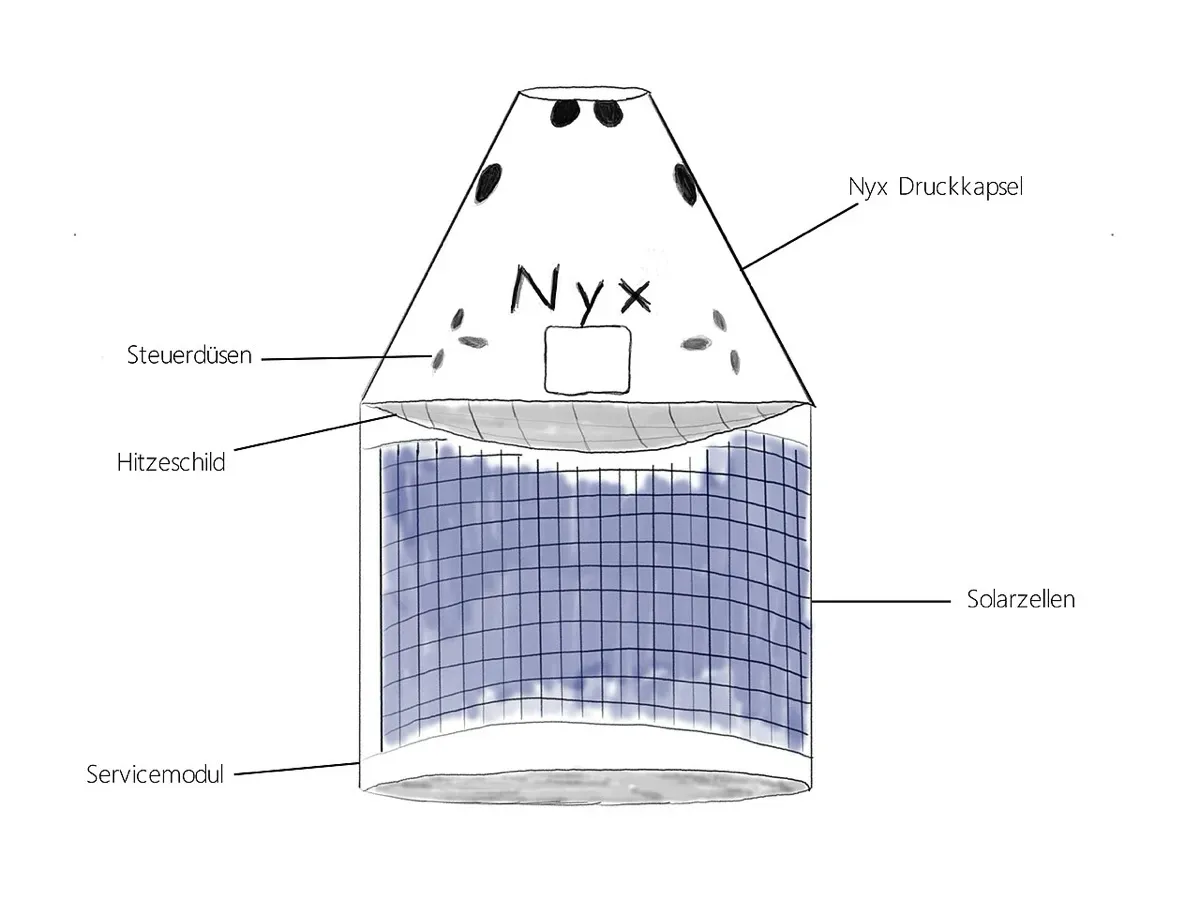
Nyx is designed as a reusable, modular capsule. TechCrunch reported that it will carry 3,000 kg of cargo to and from Earth, and European Spaceflight gives its full-scale dimensions as 4 metres wide and 7 metres tall. Planned later versions would carry cargo to lunar orbit and the surface of the Moon, and the company is exploring a crewed version that it says could fly as early as 2035, subject to a “political decision”. SpaceNews reported that TEC also plans a version of Nyx that could fly freely in orbit for up to six months without docking to a station.
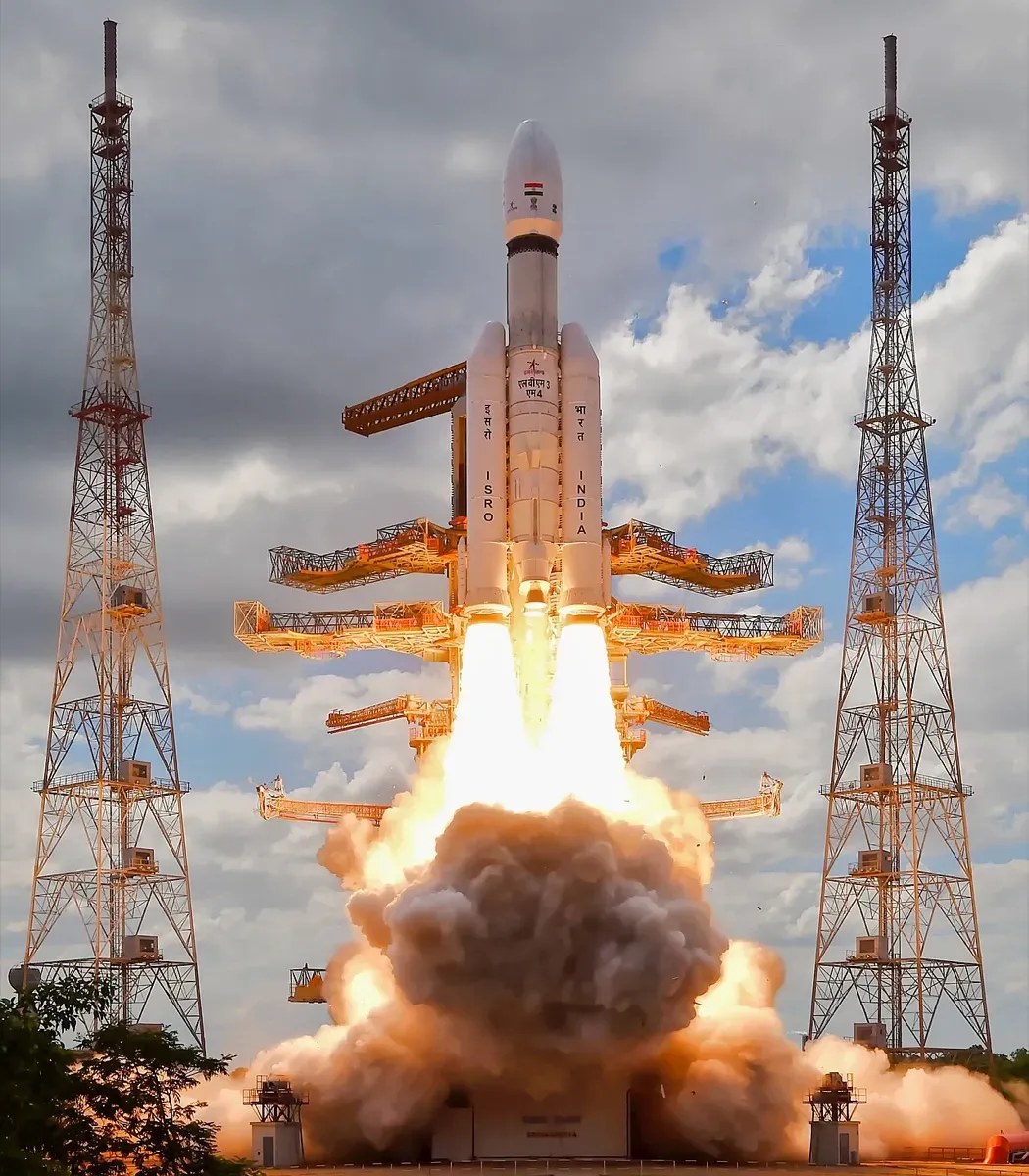
TEC has been testing Nyx in steps. Its first subscale capsule, Mission Bikini, flew on the first Ariane 6 in July 2024 but was never released because the rocket’s upper stage failed to perform its deorbit burn. The second, Mission Possible, launched on SpaceX’s Transporter-14 on 23 June 2025. The 1,600 kg capsule powered its customer payloads, re-entered the atmosphere and re-established contact, but was lost minutes before splashdown.
The company is also developing Storm, a reusable high-thrust engine burning liquid oxygen and biomethane, intended for a future reusable European heavy launcher.
How it works
- Launch. Nyx rides to orbit on a rocket, for its demonstration on Ariane 6.
- Dock. It approaches the space station and docks autonomously.
- Swap. Crews unload supplies and load experiments for return.
- Re-enter. A heat shield protects the capsule through the atmosphere.
- Descend. Drogue parachutes stabilise it, then main parachutes slow it.
- Recover. It splashes down, is recovered and is refurbished to fly again.
Timeline
| Date | Milestone |
|---|---|
| 2021 | The Exploration Company founded |
| Jul 2024 | Mission Bikini flies on Ariane 6 but is not released |
| Nov 2024 | $160 million Series B led by Balderton Capital and Plural |
| 23 Jun 2025 | Mission Possible launches; re-enters but parachutes fail to deploy |
| Jan 2026 | 20 splashdown drops of a 1:4 scale model in Rome |
| 19 May 2026 | Parachute drop test in the Mojave Desert, drogue to main handover nominal |
| 8 Sep 2026 | $450 million Series C co-led by Bessemer, Atomico and the Scaleup Europe Fund |
| 10 Sep 2026 | ESA awards the €760 million ALADDIN contract |
| By Q2 2029 | Nyx demonstration docking with the ISS on Ariane 6 |
Impact and numbers
Mission Possible was not a full success, but SpaceNews reported that it derisked many Nyx systems, including avionics, guidance and the heat shield. The first capsule took three years and €35 million to build, according to European Spaceflight.
In 2026, TEC tested what Mission Possible could not. In January, a 1:4 scale Nyx model of about 135 kg made 20 drops into a 470 metre towing tank in Rome to measure splashdown loads. On 19 May, a helicopter dropped a test vehicle from 2.8 km over the Mojave Desert, and the company reported nominal handover from drogue to main parachutes.
ESA then chose TEC for Phase 2 of its cargo programme, now called ALADDIN. ESA said TEC had secured 40% of the financing for the Nyx demonstration from private investors, with ESA covering the other 60%. ESA called it the first and largest capsule transport service contract it has awarded to a European company. TEC says it has more than $2 billion in contracts and commitments. Back in 2024, TechCrunch reported that around 90% of its then $770 million backlog came from private space station developers, a sign that commercial stations, not only the ISS, are the long-term market.
Huby has stressed the private funding model. “We started the development of Nyx with private funding only,” she said when the ESA contract was signed, calling it the first time in Europe that a five-year-old space start-up had won a contract worth hundreds of millions of euros in open competition.
Honest caveats
Not yet flown at full scale. Nyx itself has not flown. The demonstrator was lost, and SpaceNews reported in October 2025 that the cause was still under investigation by an external board. Plans have shifted too: soon after the flight, the company said it would fly another subscale capsule “as soon as possible”, but by October 2025 it said a further test flight probably would not be needed.
Tight deadline. TEC says its first Nyx demonstration is planned for 2028, while ESA’s contract requires docking no later than the second quarter of 2029, the final window before the ISS’s planned retirement.
Soft numbers. European Spaceflight notes that TEC’s $2 billion figure mixes contracts and non-binding commitments, so firm revenue is unclear.
Public money. ESA funds 60% of the demonstration and offers up to €50 million more for using Ariane 6.
Environmental footprint. Reusability cuts hardware waste compared with single-use supply ships, but every launch still has emissions. Biomethane for Storm is a stated plan, not a demonstrated supply chain.
What’s next
TEC will complete parachute qualification, build the first full-scale Nyx and prepare for its Ariane 6 demonstration. ESA says it will keep competition alive by continuing a second tender with another bidder.
Why it matters for Europe and green buyers
For Europe, Nyx could give the continent its own way to bring cargo back from orbit for the first time, and a stepping stone towards European crew transport. It also shows a new model: private investors carry real risk and ESA acts as an anchor customer.
For India, which is building its own crew and station plans, a reusable commercial capsule is a reference for how private firms can share costs with a space agency. For the world, reusable spacecraft are a step away from throwaway hardware in space.
Sources & image credits
- TechCrunch, “The Exploration Company raises $160M to build Europe’s answer to SpaceX Dragon”, 17 Nov 2024. https://techcrunch.com/2024/11/17/the-exploration-company-raises-160m-to-build-europes-answer-to-spacex-dragon/
- European Spaceflight, “The Exploration Company Declares Mission Possible a ‘Partial Success’”, Jun 2025. https://europeanspaceflight.com/the-exploration-company-declares-mission-possible-a-partial-success/
- SpaceNews, “The Exploration Company still studying Mission Possible reentry”, Oct 2025. https://spacenews.com/the-exploration-company-still-studying-mission-possible-reentry/
- European Spaceflight, “The Exploration Company Completes Nyx Splashdown Tests”, Feb 2026. https://europeanspaceflight.com/the-exploration-company-completes-nyx-splashdown-tests/
- The Exploration Company, “The Exploration Company completes Drop Test for Nyx Recovery System in California”, 4 Jun 2026. https://www.exploration.space/blog/nyx-recovery-drop-test
- European Spaceflight, “The Exploration Company Raises $450 Million in Series C Funding”, Sep 2026. https://europeanspaceflight.com/the-exploration-company-raises-450-million-in-series-c-funding/
- ESA, “ESA signs service contract with The Exploration Company for its Nyx vehicle under ‘ALADDIN’”, Sep 2026. https://www.esa.int/Newsroom/Press_Releases/ESA_signs_service_contract_with_The_Exploration_Company_for_its_Nyx_vehicle_under_ALADDIN_the_European_autonomous_cargo_capsule_project
- European Spaceflight, “ESA Awards The Exploration Company a €760M Space Station Cargo Contract”, Sep 2026. https://europeanspaceflight.com/esa-awards-the-exploration-company-a-e760m-space-station-cargo-contract/
- Wikimedia Commons, “Nyx beschriftet”. https://commons.wikimedia.org/wiki/File:Nyx_beschriftet.jpg
Images: “Nyx beschriftet”, Alpha2221, 28 Apr 2024, CC BY-SA 4.0, via Wikimedia Commons. Illustrative concept drawing.