The problem
Capturing CO2 is only half of the job. The gas then has to be kept out of the atmosphere for thousands of years. Conventional geological storage pumps compressed CO2 into deep sandstone or old oil and gas fields, where it stays as a buoyant fluid or gas trapped under caprock. That works, but it needs careful long-term monitoring because the CO2 could in principle leak back to the surface.
Some emissions are also hard to avoid. Geothermal power is low-carbon, but the steam it uses still contains some CO2 and toxic hydrogen sulphide (H2S). Cement, steel and chemicals plants, and direct air capture machines, all need a safe and permanent home for the CO2 they collect.
The product
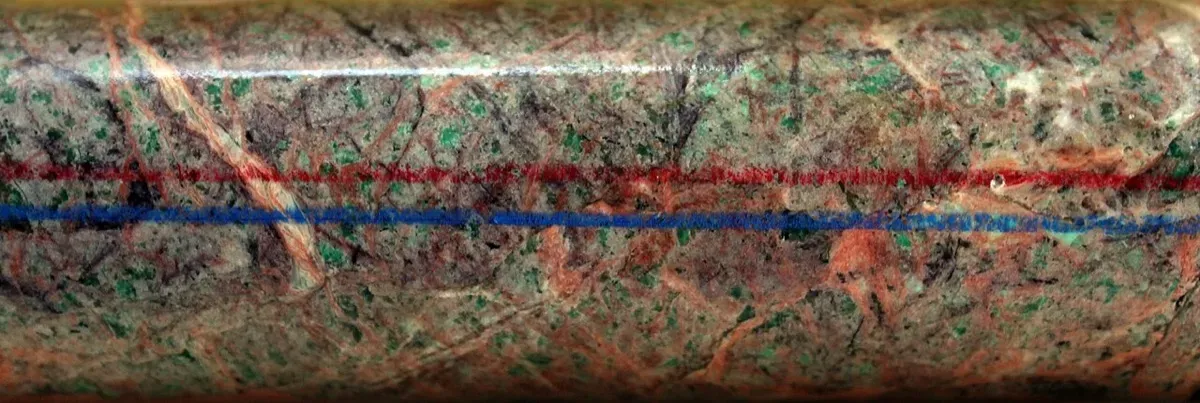
Carbfix began as an academic research project in Iceland and is now a company that designs, builds and runs CO2 mineral storage. Its idea is to copy and speed up a natural process. Basalt, the volcanic rock that makes up most of Iceland, is rich in calcium, magnesium and iron. When CO2 dissolved in water flows through basalt, the slightly acidic water dissolves these metals, which then combine with the carbon to form solid carbonate minerals.
The Carbfix process first dissolves CO2 in water, the same way a soda machine makes sparkling water. Because the CO2 is already dissolved, it is not buoyant and does not tend to rise. The carbonated water is then injected deep into the basalt, where it mineralises within about two years.
Carbfix monitors each site with chemical and isotope tracers, sampling in nearby monitoring wells, CO2 soil flux measurements and reservoir models. Pressure and gas sensors at the wellheads check that the CO2 is fully dissolved before injection.
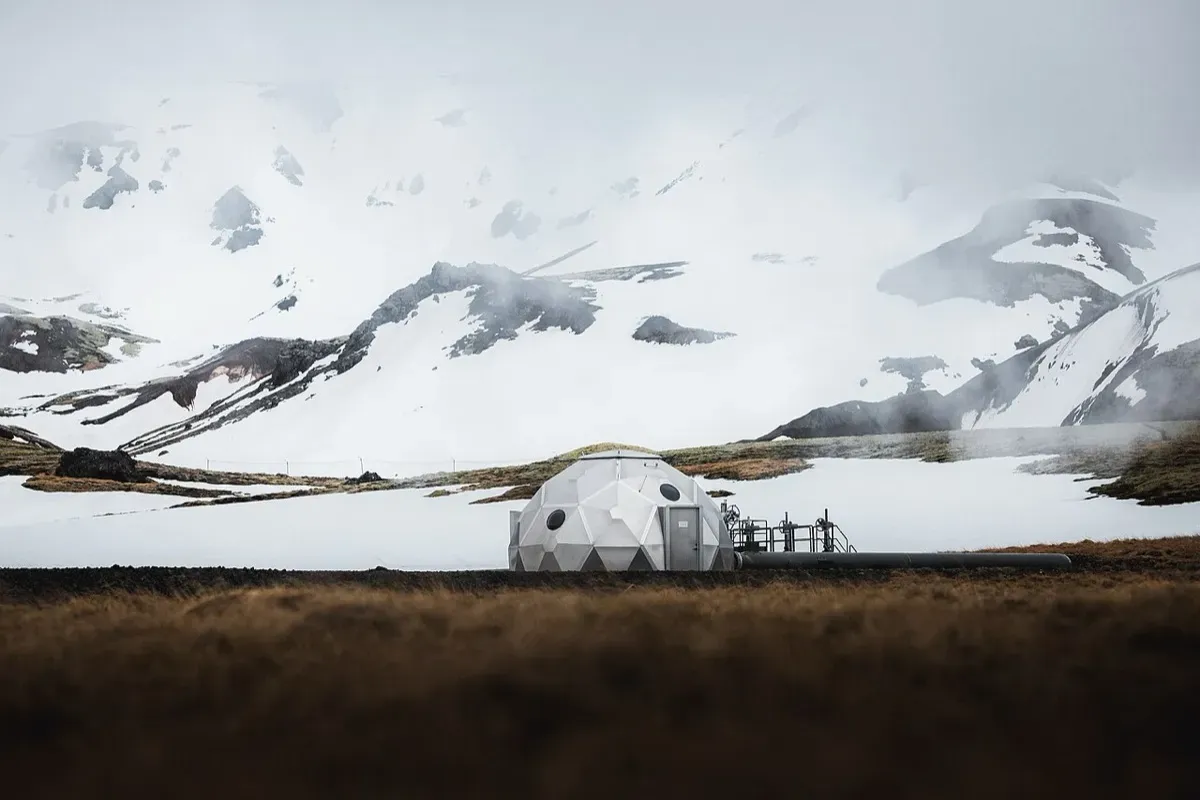
Carbfix sells this as two kinds of project. Where an emitter or a direct air capture plant sits close to suitable rock, it can inject near the source, as at Hellisheiði. Elsewhere, it proposes large terminals in places with favourable rock, where CO2 arrives by pipeline or ship and is stored with economies of scale. It also offers feasibility studies, pilots and consultancy to partners abroad.
How it works
- Capture. CO2 is collected from a power plant, a factory or a direct air capture machine.
- Dissolve. In a scrubbing tower, the gas is dissolved in water.
- Inject. The carbonated water is pumped down wells into porous basalt.
- React. The acidic water releases calcium, magnesium and iron from the rock.
- Mineralise. These metals bind with the CO2 to form stable carbonate minerals.
- Verify. Tracers and monitoring wells confirm that the CO2 has turned into stone.
Timeline
| Date | Milestone |
|---|---|
| 2012 | Pilot injections at Hellisheiði; more than 95% of the CO2 mineralises within two years |
| 2014 | Industrial-scale injection begins at Hellisheiði |
| 2016 | Pilot results published in Science |
| 2017 | First direct air capture CO2 stored with Carbfix in Iceland, from Climeworks |
| Mar 2025 | Carbfix abandons the Coda Terminal in Hafnarfjörður |
| Jul 2025 to Jun 2026 | Steingerður plant captures 99.6% of incoming CO2 and injects over 19,000 tonnes |
Impact and numbers
The scientific foundation is unusually strong. During pilot injections in 2012, the CO2 was spiked with carbon-14 so scientists could track it. A 2016 paper in Science reported that more than 95% of the injected CO2 had turned into carbonate minerals within two years, far faster than many expected.
Industrial-scale injection began in 2014 at ON Power’s Hellisheiði geothermal plant. Since then, according to ON Power, more than 120,000 tonnes of CO2 and over 50,000 tonnes of H2S have been mineralised in the rock.
The newest capture unit, Steingerður, was built under the Silfurberg project with almost EUR 3.9 million from the EU Innovation Fund. Between 1 July 2025 and 30 June 2026, it dissolved 99.6% of the CO2 and all of the H2S that entered it and sent them for storage. More than 19,000 tonnes of CO2 were injected during that year, through older geothermal wells now used for reinjection.
Carbfix also provides storage for direct air capture in Iceland, which has made Hellisheiði a destination for policymakers. In September, the foreign ministers of Belgium, the Netherlands and Luxembourg visited the site.
Honest caveats
Rock and water dependent. The method needs reactive rock such as basalt and large amounts of water to dissolve the CO2. A 2026 University of Iceland study notes that freshwater scarcity can limit scale, and that current projects mainly use freshwater or geothermal condensate.
Community consent. Carbfix’s Coda Terminal, planned in Straumsvík near Hafnarfjörður to receive CO2 shipped from abroad, was dropped in March 2025 after residents and councillors raised doubts and permitting questions remained.
Mostly emission cuts. Most of the CO2 stored so far comes from a geothermal plant. That reduces emissions but is not carbon removal unless the CO2 comes from the air or biomass. The same process does bring a local benefit, though: ON Power says it offers a safe and cost-effective way to treat toxic hydrogen sulphide from the steam.
Small next to the need. Over a decade of injection adds up to about 120,000 tonnes, tiny compared with the billions of tonnes the world emits each year.
What’s next
After Coda, Carbfix said it would focus on Icelandic heavy industry, under partnership agreements with Elkem at Grundartangi and Rio Tinto in Straumsvík, and develop projects in Þorlákshöfn and at Bakki near Húsavík. The University of Iceland study found seawater could be used for mineralisation at Straumsvík, which could ease the water limit at coastal sites.
Why it matters for Europe and green buyers
For Europe, Carbfix shows that storage need not depend only on North Sea reservoirs. Basalt and similar rocks occur across the continent and its oceans, and mineral storage is attractive where permanence and public trust matter. European industry and removal buyers can look to Hellisheiði for one of the longest-running, best-documented storage records in the world.
For India, the vast Deccan Traps basalt in Maharashtra, Gujarat and neighbouring states is a natural candidate for the same chemistry. Carbfix’s monitoring record gives a template for pilots near Indian power, cement and steel plants, provided water use and local consent are handled with care.
Sources & image credits
- Carbfix, company website. https://www.carbfix.com/
- Carbfix, “Protecting our climate by turning CO2 into stone”. https://www.carbfix.com/protecting-our-climate-by-turning-co2-into-stone
- Carbfix, “Proven” (monitoring and pilot results). https://www.carbfix.com/proven
- Matter et al., “Rapid carbon mineralization for permanent disposal of anthropogenic carbon dioxide emissions”, Science, 2016. https://www.science.org/doi/10.1126/science.aad8132
- ON Power, “The Steingerdur carbon capture plant is achieving excellent results in carbon dioxide capture”, 2026. https://www.on.is/en/frettir/lofthreinsistodin-steingerdur-skilar-frabaerum-arangri-i-fongun-koldioxids
- ThinkGeoEnergy, “Carbfix achieves 99.6% capture of CO2 and H2S from geothermal power plant in Iceland”, 2026. https://www.thinkgeoenergy.com/carbfix-achieves-99-6-capture-of-co2-and-h2s-from-geothermal-power-plant-in-iceland/
- Hafnarfjörður municipality, “Carbfix abandons its plans and goes elsewhere”, 24 March 2025. https://hafnarfjordur.is/en/carbfix-abandons-its-plans-and-goes-elsewhere/
- University of Iceland, “Geochemical framework for CO2 mineralization in coastal aquifers: lessons from the Coda Terminal project”, 2026. https://iris.hi.is/en/publications/geochemical-framework-for-cosub2sub-mineralization-in-coastal-aqu/
- Wikimedia Commons, “Carbfix well - injection site.jpg”. https://commons.wikimedia.org/wiki/File:Carbfix_well_-_injection_site.jpg
Images: “Carbfix well - injection site”, Siljaye, Hellisheiði, Iceland, 29 March 2022, CC BY-SA 4.0, via Wikimedia Commons.