The problem
Smallholders grow roughly a third of the world’s food, often on acidic, nutrient-poor soils they cannot afford to repair. In India, many farm plots are tiny, and in the Mati study area the median farmer worked just 0.2 acres. These farmers typically harvest only about half of what better-capitalised farms produce under similar conditions, and they are hit hardest by droughts and erratic monsoons.
At the same time, India sits on one of the world’s largest basalt formations, the Deccan Traps, and quarries cutting aggregate there leave behind fine rock waste. Enhanced rock weathering could turn that waste into a soil improver and a durable carbon sink, if someone pays for the rock, the spreading and the monitoring.
The product
Mati Carbon was founded in 2022. It works with smallholder farmers in India and in African countries such as Tanzania and Zambia, and its website says it now operates in seven countries. Its model is simple for farmers: Mati supplies basalt free of cost, and the farmer pays nothing in money, labour or time. The yield gain and the carbon removal are kept as two separate products. Farmers keep the extra harvest; Mati sells only the carbon, and only after it has been measured.
The basalt is sourced from nearby quarries, which keeps transport emissions low. Rice paddies are a good setting, because flooded fields have very high water flows that speed up basalt dissolution. Mati’s verification relies on extensive soil and water sampling and field-deployed mass spectrometry, and its software coordinates deployments across remote villages. Mati’s chief science officer, Jake Jordan, says the scientific literature suggests ERW can store carbon for about 10,000 years. On its website, Mati quotes a farmer, Urmila Devi, who says she saw far fewer pests such as stem borer after the basalt and needed 50% less fertiliser; that is one farmer’s account, not a measured result. It works with Yale University on the science and issues credits through both Puro.earth and Isometric.
How it works
- Source. Waste basalt fines are collected from quarries near the farms.
- Deliver. Mati transports and spreads the rock on paddies, at about 45 tonnes per hectare in its main study.
- Weather. Warm monsoon water reacts with the basalt, releasing calcium, magnesium and other nutrients.
- Capture. Dissolved CO2 is converted into bicarbonate, which travels via rivers to the ocean.
- Measure. Soil chemistry, including how much calcium and magnesium leave relative to stable titanium, shows how much rock has dissolved.
- Certify. Third-party audits verify removals before credits are issued and sold.
Timeline
| Date | Milestone |
|---|---|
| 2021 | XPRIZE Carbon Removal launched; more than 1,300 teams from 112 countries enter |
| 2022 | Mati Carbon founded |
| 2024 | Mati named one of 20 XPRIZE finalists |
| Kharif 2024 | About 40,000 tonnes of basalt spread on more than 8,000 paddies in central India |
| Apr 2025 | Mati wins the USD 50 million XPRIZE grand prize |
| 2025 | Preprint by Jordan et al. reports yield and carbon results |
| Jun 2026 | 717 CO2 removal certificates issued under Puro’s ERW methodology |
Impact and numbers
The best evidence comes from the 2024 Kharif season in the Gaurela-Pendra-Marwahi district of Chhattisgarh, covering 636 farmers in 36 villages and more than 800 hectares. On 44 farms with paired treated and untreated plots, basalt raised rice yields by a median of 22.9%, worth roughly USD 303 per farmer in one season, close to a fifth of average annual household income in the region. Surveys of 594 farmers pointed the same way.
The rock also supplied nutrients. Each hectare took up about 2,700 kg of silicon, which helps rice resist blast disease, and about 27 kg of potassium, while neutralising acidity equal to roughly four tonnes of agricultural lime per hectare.
On carbon, about 27% of the basalt weathered in the first year, which the researchers estimate as about four tonnes of CO2 removed per hectare, nearly 1,000 tonnes across the 620-acre study area and more than 3,000 tonnes for the full deployment. In April 2025, XPRIZE awarded Mati its USD 50 million grand prize; all winners had removed more than 1,000 net tonnes in the competition’s final year. The UK rock weathering company UNDO took third runner-up, so two weathering firms finished in the top four. In 2026, Mati received 717 certified removal certificates under the Puro Standard after a third-party audit of its sourcing, application, monitoring and calculations.
Honest caveats
Gross, not net. The authors note that first-year removal figures are gross, measured before subtracting carbon lost as bicarbonate travels downstream and re-equilibrates in the ocean.
Timing lag. Weathering cations can sit on soil exchange sites for years before carbon is locked away, so the drawdown a credit represents may lag the season it is claimed for.
One season of safety data. No measurable buildup of nickel, chromium or cadmium was found after one application, but tissue samples were few and repeated applications are untested.
Small verified volume. 717 certified tonnes is tiny next to the 40,000 tonnes of rock spread.
Survey noise. Farmer-reported harvests are rounded and less precise than plot measurements.
What’s next
Mati aims to benefit more than 100 million farmers by mid-century. It plans to scale across India and the Global South, use its prize money to build local partnerships and keep issuing credits through two registries.
Why it matters for Europe and green buyers
For Europe, Mati is a test of whether climate finance from the Global North can buy durable removal while lifting farm incomes in the Global South. European companies buying removal credits, and EU policymakers setting rules for them, need exactly this kind of audited, field-measured evidence. It also shows that ERW credits can come with clear social benefits, not just tonnes.
For India, Mati’s work is a home-grown proof point. It uses Indian basalt, Indian quarry waste and Indian smallholders, and it puts extra income directly in farmers’ hands. If the carbon accounting holds up over time, ERW could become a new rural income stream across the Deccan basalt belt and the rice-growing east.
Sources & image credits
- Mati Carbon, company website. https://www.mati.earth/
- Mati Carbon, “Mati Carbon is the USD 50M grand prize winner”, April 2025. https://www.mati.earth/mati-carbon-is-the-grand-prize-winner-of-the-xprize-carbon-removal-competition/
- XPRIZE, “XPRIZE makes history, awards $100M prize for groundbreaking carbon removal solutions”, April 2025. https://www.xprize.org/news/xprize-makes-history-awards-100m-prize-for-groundbreaking-carbon-removal-solutions
- XPRIZE, Mati Carbon team page. https://www.xprize.org/teams/11441-mati-carbon
- Remineralize the Earth, “Paydirt: rock dust, rice, and a smallholder’s reward”, June 2026 (on Jordan et al. 2025). https://remineralize.org/2026/06/paydirt-rock-dust-rice-and-a-smallholders-reward/
- Mondo Visione, “Mati Carbon issues first CORCs under Puro Standard ERW methodology”, June 2026. https://mondovisione.com/news/mati-carbon-issues-first-corcs-under-puro-standard-erw-methodology-717-co-rem-2026629/
- Mati Carbon, “What it actually takes to verify carbon removal”, 2026. https://mati.earth/articles/what-it-actually-takes-to-verify-carbon-removal
- Isometric Registry, “ERW Deployment: Seoni and North Chhattisgarh, India”. https://registry.isometric.com/project/prj_1JKR5RQG81S0Y2CZ
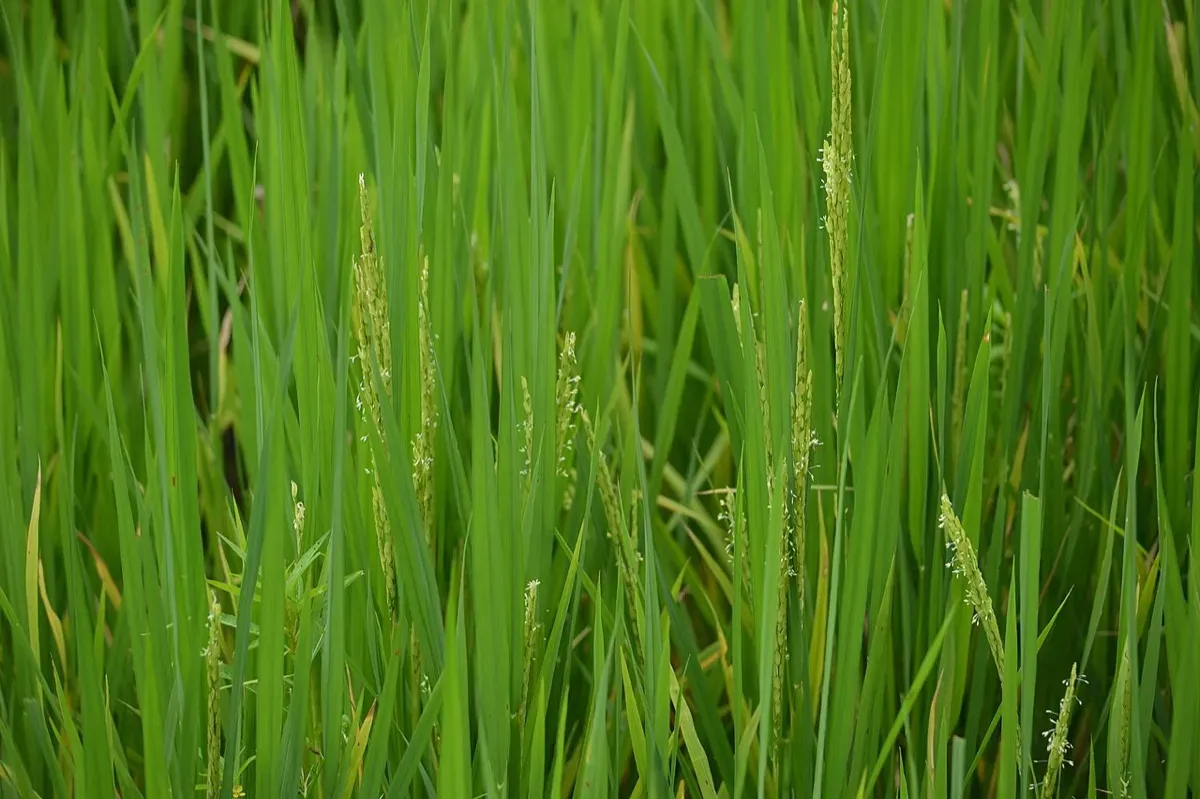
- Wikimedia Commons, “Paddy Field in Raigarh.jpeg”. https://commons.wikimedia.org/wiki/File:Paddy_Field_in_Raigarh.jpeg
Images: “Paddy Field in Raigarh”, Kailash kumbhkar, Raigarh, Chhattisgarh, India, 26 October 2015, CC BY-SA 4.0, via Wikimedia Commons. Illustrative: shows a Chhattisgarh paddy field, not a Mati deployment.