The problem
Paralysis cuts the link between brain and body. In spinal cord injury, signals cannot pass the damaged section. After stroke, brain damage leaves many people with weak or paralysed arms. Grenoble neurologist Professor Olivier Detante says stroke affects around 150,000 people a year in France alone, often leaving long-term motor impairments.
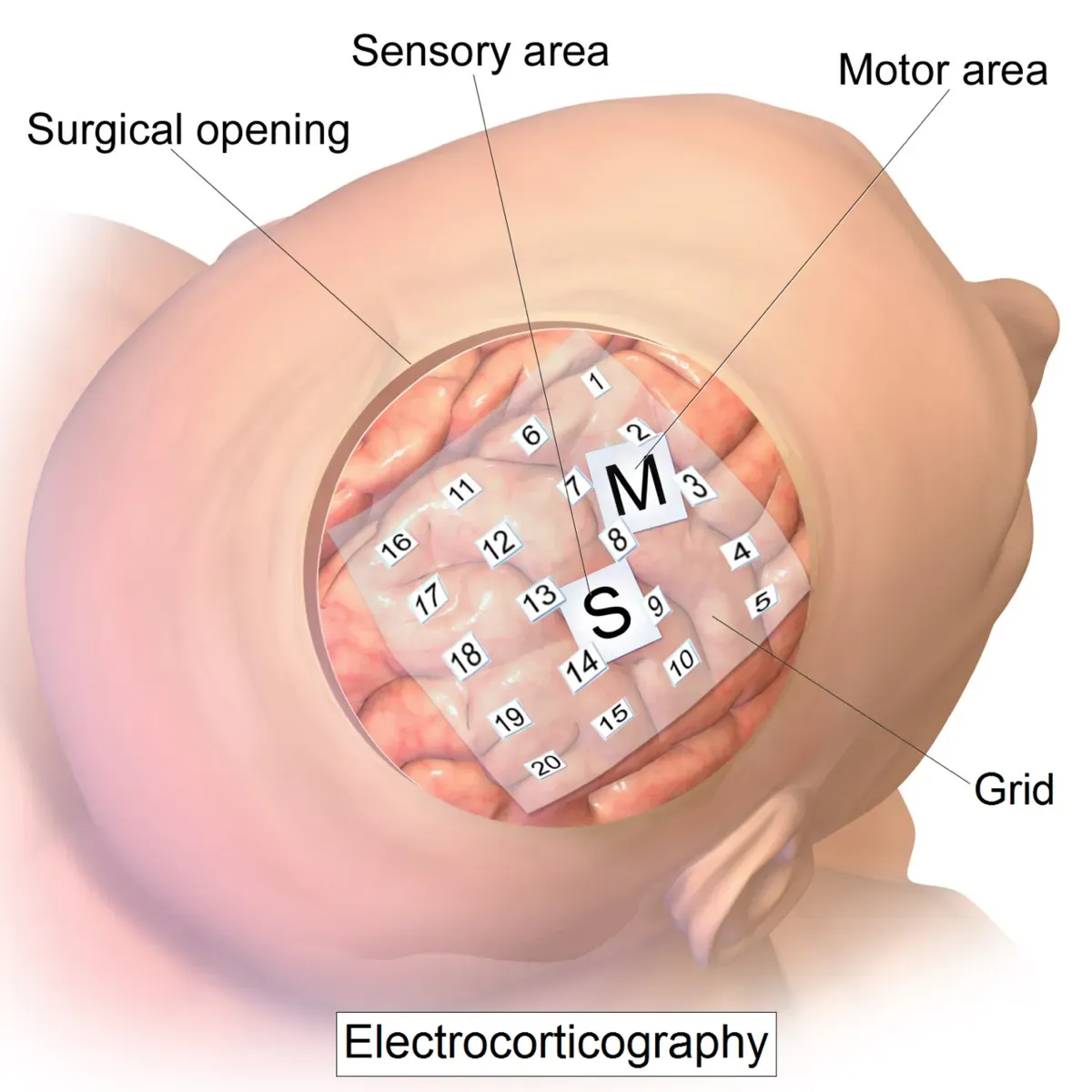
Brain-computer interfaces can read movement intentions directly from the brain, but many use needle-like electrodes that penetrate brain tissue. CEA chose a less invasive path: recording from the surface of the dura, the membrane covering the brain, without entering it.
The product
WIMAGINE is an epidural electrocorticography (ECoG) implant. Each unit has an 8 by 8 grid of 64 electrodes and recording electronics in a circular titanium case 50 mm across and as thick as the skull. A surgeon removes a disc of bone and fits the implant in its place, so it rests on the dura and is invisible once implanted, according to the Nature paper.
There are no wires through the skin. A personalised headset holds two antennas: one powers the implant by inductive coupling, and the other receives the brain signals in real time and passes them to a portable processing unit. Adaptive artificial intelligence decoders turn those signals into movement intentions. In the digital bridge, the team also upgraded the spinal stimulator with wireless modules, so stimulation could be adjusted in real time with a latency of about 100 milliseconds.
The output can drive almost anything. WIMAGINE has controlled an exoskeleton, a spinal cord stimulator, and now rehabilitation tools.
How it works
- Implant. Surgeons fit two WIMAGINE units over the motor areas of the brain.
- Power. A headset antenna powers each implant wirelessly.
- Record. 64 electrodes per implant pick up brain activity.
- Transmit. Signals stream by radio to a portable processor.
- Decode. AI algorithms predict the intended movement in real time.
- Act. The intention drives an exoskeleton, spinal stimulation or rehabilitation tools.
Timeline
| Date | Milestone |
|---|---|
| 12 Jun 2017 to 21 Jul 2019 | A tetraplegic man in Grenoble controls a four-limb exoskeleton and avatar with two WIMAGINE implants |
| Oct 2019 | Results published in The Lancet Neurology |
| 24 May 2023 | Nature publishes the brain-spine “digital bridge” with EPFL, CHUV and UNIL |
| Mar 2025 | CEA launches its €40 million Audace! programme, which includes the BrainSync BCI project |
| 8 Apr 2026 | BCI4STROKE-Arm trial (NCT07477613) starts at Grenoble Alpes University Hospital |
| 15 Jun 2026 | First stroke patient receives two WIMAGINE implants at Clinatec |
Impact and numbers
The 2019 Lancet Neurology study enrolled two participants; one was excluded because of a technical problem with the implants. The other, a 28-year-old man with tetraplegia after a C4 to C5 injury, used WIMAGINE for 24 months. He controlled up to eight degrees of freedom, reaching and touching with a virtual avatar at home (64% success) or with an exoskeleton in the lab (71% success). The decoding models worked for up to about seven weeks without recalibration.
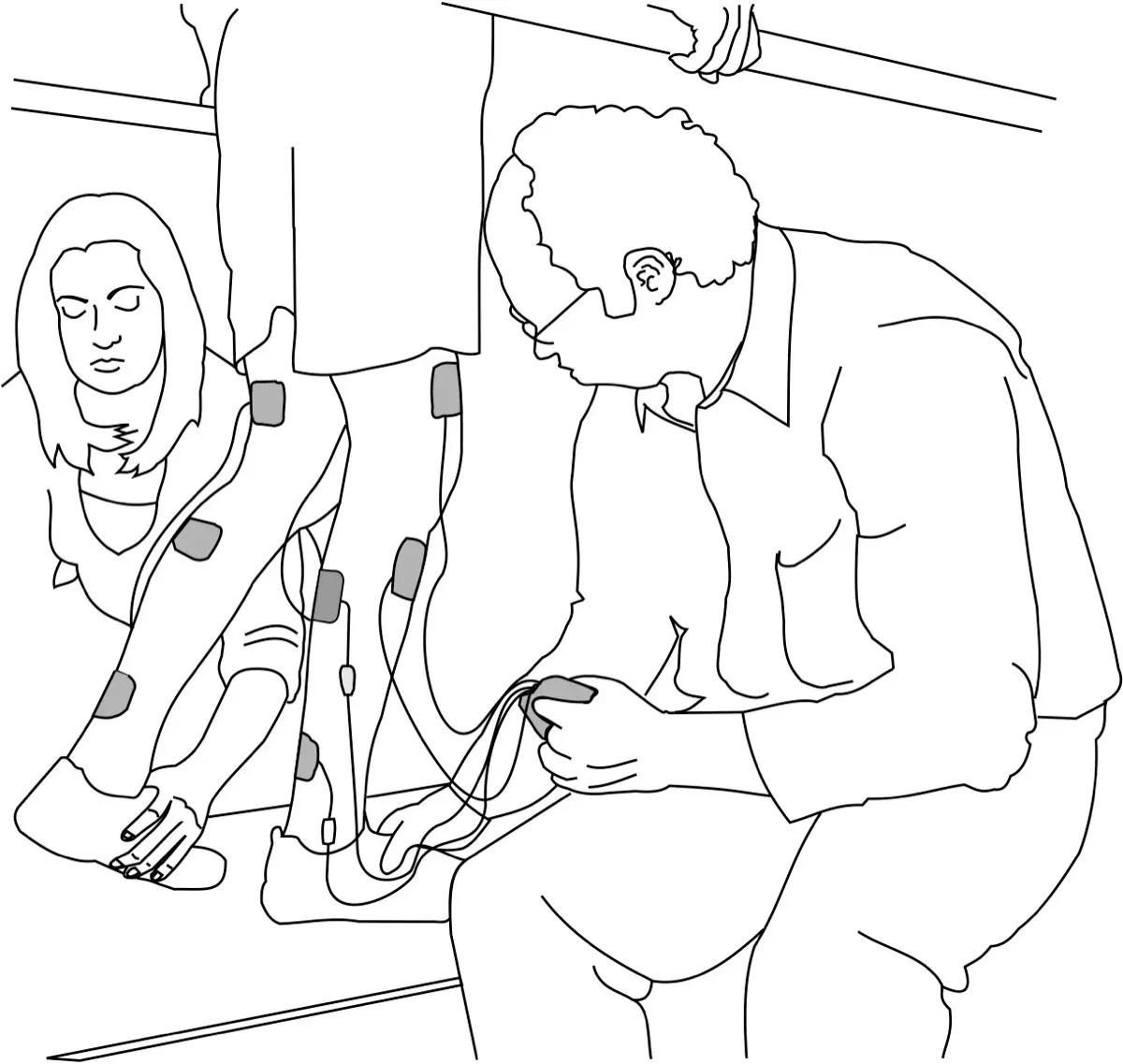
In the 2023 Nature study, WIMAGINE was paired with an implanted spinal cord stimulator developed by EPFL, CHUV, UNIL and ONWARD Medical. The participant, Gert-Jan Oskam, regained natural control of his legs to stand, walk, climb stairs and cross complex terrain. Researchers saw improvements in his sensation and movement even with the bridge switched off, suggesting new nerve connections had grown. “We have implanted WIMAGINE devices above the region of the brain that is responsible for controlling leg movements,” said neurosurgeon Professor Jocelyne Bloch.
The new stroke trial couples WIMAGINE with decoding software that drives a robotic glove, a surface stimulator or a virtual environment. Pairing detected intention with real feedback is meant to promote neuroplasticity. The first rehabilitation sessions began after the June 2026 implantation, combining functional stimulation, a robotic glove and video-based therapy, all driven by intentions decoded by WIMAGINE, according to Guillaume Charvet of CEA Clinatec. The surgery was performed by Professor Stephan Chabardes and Dr Mazen Kallel. Patients follow a six-month rehabilitation programme, and the trial targets 10 participants.
Honest caveats
Tiny evidence base. The exoskeleton and digital bridge results each rest on one person. CEA itself says the digital bridge “has only been tested in one person.”
No approval. WIMAGINE is used only in clinical trials. Commercialisation of the brain-spine system runs through ONWARD Medical, with EIC support, and has not reached market.
Surgery and failures. The implant requires opening the skull, and one 2019 participant was excluded after a technical problem with the implants.
Privacy and ethics. Wireless streaming of brain signals and AI decoding raise questions about data security, consent and who controls neural data. Long-term support for implanted research devices once trials end also matters.
What’s next
The BCI4STROKE-Arm trial runs at Grenoble and Saint-Étienne university hospitals until about 2031, with support from the French National Research Agency through France 2030 and from the European Innovation Council. A comparable approach could later target arm and hand function after spinal cord injury, Bloch and Grégoire Courtine say.
Why it matters for Europe and green buyers
For Europe, WIMAGINE shows public research at its best: a state laboratory in Grenoble, working with Swiss universities and a Dutch-Swiss company, produced one of the most cited results in neurotechnology, and kept the know-how in Europe.
For India, where stroke affects far more people than spinal cord injury, a stroke-rehabilitation use would reach far more patients, if it is ever made affordable. For the world, restoring movement and independence to people with paralysis supports health and inclusion.
Sources & image credits
- CEA, “Brain Computer Interface (BCI) enables thought-controlled walking after spinal cord injury”, May 2023. https://www.cea.fr/english/Pages/News/brain-computer-interface-enables-thought-controlled-walking-after-spinal-cord-injury.aspx
- Lorach H. et al., “Walking naturally after spinal cord injury using a brain-spine interface”, Nature, 2023. https://www.nature.com/articles/s41586-023-06094-5
- Benabid A. L. et al., “An exoskeleton controlled by an epidural wireless brain-machine interface in a tetraplegic patient: a proof-of-concept demonstration”, The Lancet Neurology, 2019 (PubMed). https://pubmed.ncbi.nlm.nih.gov/31587955/
- CEA-Leti, “Brain-Computer Interface: A New Era for Post-Stroke Rehabilitation”, 2026. https://www.leti-cea.com/cea-tech/leti/english/Pages/What's-On/News/AVC-Brain-Computer-Interface.aspx
- Inside BCI, “France’s CEA-Leti opens new clinical trial taking its brain implant from paralysis recovery into post-stroke rehabilitation”, 3 June 2026. https://insidebci.com/news/2026-06-03-cea-leti-bci4stroke-wimagine-post-stroke-rehabilitation/
- ClinicalTrials.gov, NCT07477613, “Implantable Brain-Computer Interface for Upper-Limb Recovery After Stroke”. https://clinicaltrials.gov/study/NCT07477613
- Guillaume Charvet (CEA Clinatec), “A first WIMAGINE implantation several months after stroke”, LinkedIn, June 2026. https://www.linkedin.com/posts/charvet-guillaume_wimagine-bci4stroke-clinatec-activity-7505298980281520128-FPQL
- Wikimedia Commons, “Clinatec”. https://commons.wikimedia.org/wiki/File:Clinatec.JPG
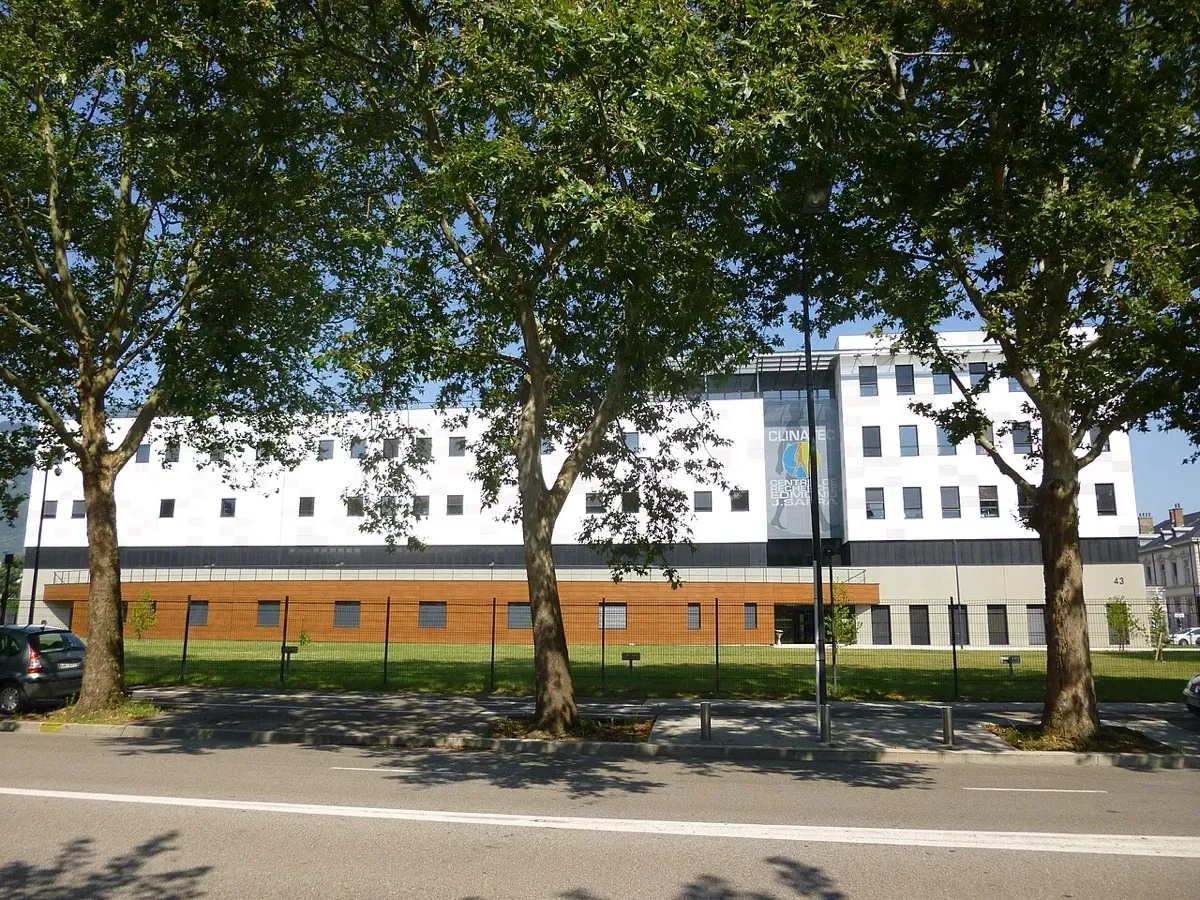
Images: “Clinatec”, Simdaperce, 2013, CC BY-SA 3.0, via Wikimedia Commons. Illustrative; the Clinatec building, not the WIMAGINE implant.