
The problem
“The UK countryside is going silent,” is how Chirrup’s incubator Sustainable Ventures puts it. Founder Conrad Young remembers a landscape full of birds in the 1970s. Farming often takes the blame for the decline, but according to Sustainable Ventures only 4% of farms monitor biodiversity, because the cost and time of hiring an ecologist do not fit farm budgets. Without data, it is nearly impossible to find either problems or solutions (Sustainable Ventures).
Demand for that data is now coming from the food chain. Processors, brands and retailers are adding biodiversity monitoring to supply contracts. Chirrup says Mondelez requires wheat farmers to provide a species inventory, and Hilton Foods offers farmers Chirrup’s reporting tools to support regenerative farming (Republic Europe). The UK Dairy Roadmap now asks signatories to support at least 50% of their farms to monitor biodiversity by 2030 (edie).
The product
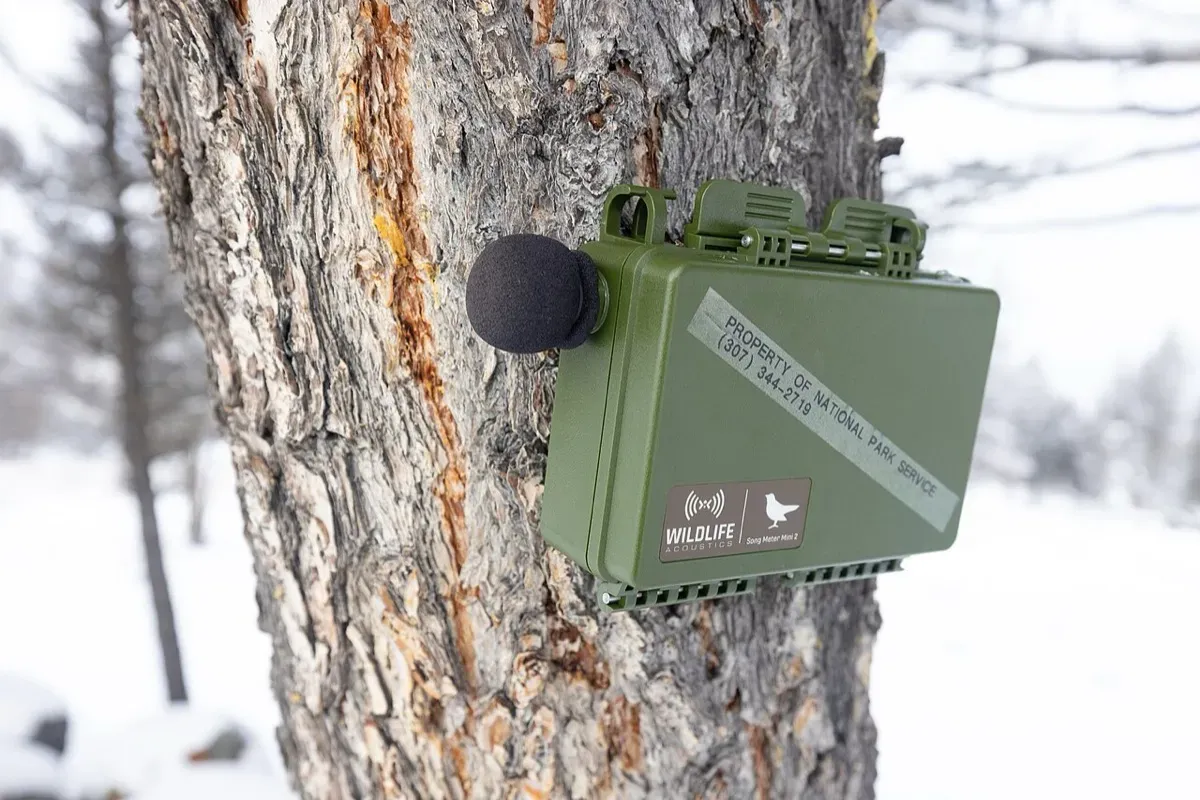
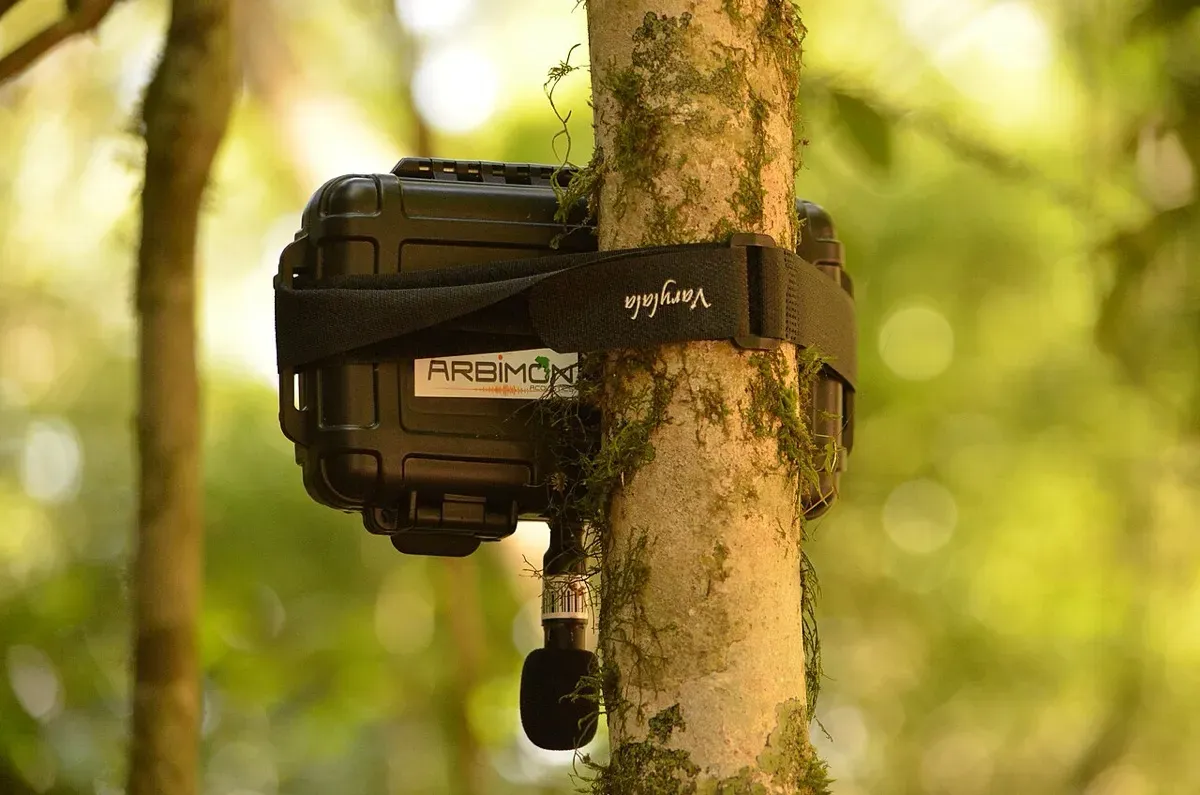
The Chirrup Box, which Sustainable Ventures calls a “robot ecologist”, is a small recorder that a farmer can set up in about 15 minutes. It records bird activity over around three weeks. Chirrup.ai’s AI then identifies each species it hears and turns the results into farm-ready reports (Chirrup.ai).
The company is clear that the box is only half the product. “The real value isn’t in the device. It’s in the reporting,” its website says. The platform shows which birds are present, what they suggest about the wider ecosystem, and how a farm compares with others. Reports can support biodiversity net gain plans, regenerative farming claims and sustainability reporting.
Sustainable Ventures says it helped Chirrup win £288,000 from Innovate UK to develop and pilot its third-generation box, a project called ChirrupNano, and the next-generation device was then launched to reach more farms (Sustainable Ventures).
How it works
- Install: the box is attached to a tree or pole on the farm. Each device listens across at least a 100 m radius (edie).
- Record: it captures the dawn chorus and other bird activity, typically over 14 to 21 days.
- Identify: AI identifies the species from their songs and calls.
- Score: the platform calculates an overall biodiversity score and benchmarks it against other farms in Chirrup’s database.
- Track: repeat monitoring shows how the score changes from the first baseline as hedgerows, margins or tree planting mature.
The logic is that birds sit at several levels of the food web. As one Agri-EPI Centre manager puts it on Chirrup’s site, if there are birds of prey there are smaller birds, and if there are smaller birds there are insects, which tells farmers whether their hedgerows, margins and catch crops are working (Chirrup.ai).
Timeline
| Date | Milestone |
|---|---|
| 2020 | Lockdown birdsong gives Conrad Young the idea for Chirrup |
| 24 Mar 2022 | Chirrup.ai Ltd incorporated |
| c. 2024 | GBP 288k Innovate UK grant for the ChirrupNano third-generation box |
| May to Jun 2025 | Ten-farm trial with Carbon Calling in Cumbria and northern England |
| 22 Aug 2025 | Wyke Farms starts a three-year pilot on ten farms |
| 19 Feb 2026 | Crowdfunding round closes at GBP 441,013 from 111 investors |
| 29 May 2026 | Pilgrim’s Europe completes a 40-farm trial |
Impact and numbers
- Dairy: Wyke Farms, the Somerset cheesemaker, added Chirrup monitoring to ten farms that supply a quarter of the milk used in its cheese, piloting it for three years in the first instance (edie).
- Pig and poultry: Pilgrim’s Europe put recorders on 10 broiler farms in Lincolnshire and 30 pig farms in Norfolk for 21 days. Its sustainable agriculture manager, Anna Ganiford, said the trial gave the company “a baseline we didn’t have before” and insights to guide hedgerow management, grass cutting and tree planting (Farmers Weekly; Chirrup.ai).
- Regenerative farmers: a two-week trial with Carbon Calling recorded the dawn chorus on ten farms in Cumbria and the North of England, with results shared at the Carbon Calling Conference near Penrith (Chirrup.ai).
- Business: Chirrup says it has monitored more than 300 farms, received £325,000 in grants and earned £342,000 in commercial revenue. Its February 2026 crowdfunding raised £441,013 from 111 investors at a £1.9 million pre-money valuation (Republic Europe).
- Recognition: Chirrup lists an Earthshot Prize nomination, a 2025 BusinessGreen award and support from the University of Edinburgh’s Bayes Centre AI accelerator (Chirrup.ai).
Honest caveats. Chirrup’s accuracy claims and farm counts come from the company and its crowdfunding page, which Republic Europe notes it does not audit. Birds are a useful indicator, but they do not directly measure soil life, insects or plants, and a two to three week recording window gives a snapshot that can be affected by weather and season. Comparing farms fairly depends on the size and quality of Chirrup’s benchmark database, which is not public. Financially, Chirrup is a very small company: the crowdfunding page warns that such businesses may have little cash before a raise, and it lists a director’s loan and a short-term loan to bridge Innovate UK payments.
What’s next
Chirrup’s stated goal is 9,000 thriving, biodiverse farms by 2030. Half of the new funding is earmarked for more efficient device distribution and leaner data management so it can monitor far more farms (Republic Europe). It is also positioning its reports for biodiversity net gain plans and nature finance, where farmers need evidence to secure payments.
Why it matters for Europe / green buyers
The EU Nature Restoration Law requires member states to take measures to increase farmland bird populations and improve other biodiversity indicators in agricultural ecosystems (European Commission). Food buyers sourcing from European farms will increasingly be asked to show that progress. A low-cost, repeatable birdsong baseline is one of the cheapest ways to give every supplier farm a measurable starting point.
India has the same need. The State of India’s Birds 2023 report, based on 30 million observations from about 30,000 birdwatchers, found that 60% of assessed species show long-term declines, with birds of open habitats, grasslands and wetlands among the worst hit (Bird Count India). Simple acoustic boxes could help Indian farmer groups and food companies track whether agroforestry, field margins and natural farming bring birds back.
Sources & image credits
- Chirrup.ai, company website: https://www.chirrup.ai/
- Chirrup.ai, “About”: https://chirrup.ai/about/
- Sustainable Ventures, “Meet Our Members: Helping Chirrup Launch the World’s First Robot Ecologist” (3 Dec, year not shown on the page): https://www.sustainableventures.co.uk/sustainable-stories/chirrup
- Republic Europe (Seedrs), Chirrup.ai EIS crowdfunding campaign (closed 19 Feb 2026): https://europe.republic.com/chirrup-ai
- Chirrup.ai, “Chirrup.ai partners with Carbon Calling for biodiversity monitoring trial” (2025): https://chirrup.ai/chirrup-carbon-calling-biodiversity-farm-trial/
- edie, “Somerset cheesemaker Wyke Farms turns to AI for biodiversity monitoring” (22 Aug 2025): https://www.edie.net/somerset-cheesemaker-wyke-farms-turns-to-ai-for-biodiversity-monitoring/
- Farmers Weekly, “AI birdsong trial maps pig and poultry farm biodiversity” (29 May 2026): https://www.fwi.co.uk/news/environment/biodiversity/ai-birdsong-trial-maps-pig-and-poultry-farm-biodiversity
- Chirrup.ai, “Case study: Pilgrim’s Europe poultry and pig supply chain” (2026): https://chirrup.ai/case-study-pilgrims-europe-poultry-pig-supply-chain/
- European Commission, “Nature Restoration Law enters into force” (15 Aug 2024): https://environment.ec.europa.eu/news/nature-restoration-law-enters-force-2024-08-15_en
- Bird Count India, “State of India’s Birds 2023 Summary” (11 Oct 2023): https://birdcount.in/state-of-indias-birds-2023/
Images:
- “Skylark singing, Callanais stones” by sylvia duckworth, CC BY-SA 2.0 (https://creativecommons.org/licenses/by-sa/2.0), via Wikimedia Commons: https://commons.wikimedia.org/wiki/File:Skylark_singing,_Callanais_stones_-_geograph.org.uk_-_600506.jpg