The problem
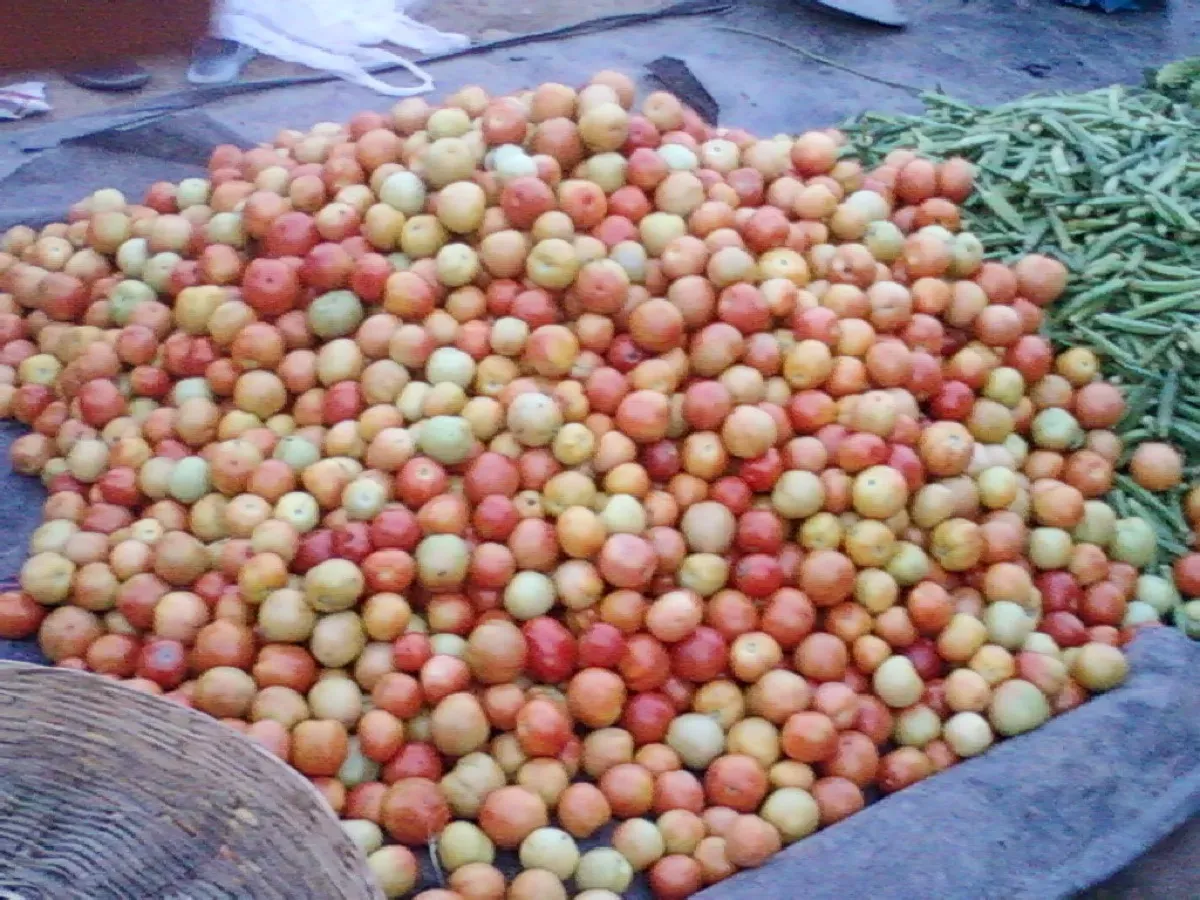
India is the world’s second-largest producer of fruit and vegetables, yet a large share spoils between field and market. A 2015 trade report put losses at 30% to 40% of produce each year, largely because small farmers have no cold storage. Ecozen itself puts post-harvest losses at around 30% of India’s food waste, driven mainly by missing storage and processing.
Existing cold stores tend to sit in towns, serve traders or large growers and depend on grid power that is unreliable in many villages. Without a way to cool produce right after harvest, a farmer must sell at once to whoever is buying, often at the season’s lowest price. Battery-backed solar was one option, but batteries need replacing every few years, which puts running costs out of reach for smallholders.
The product
Ecofrost is a walk-in cold room roughly the size of a small shipping container, powered by its own solar panels. Early units held about 5 tonnes of produce in a footprint of about 12 by 8 by 8 feet, small enough to move by truck. In 2014 the founders quoted 5 to 6 lakh rupees for a 5-tonne system.
Today’s product page lists a refrigeration capacity of 1.5 to 2.7 tonnes of refrigeration (TR), R407F refrigerant and battery-free backup of up to 30 hours. Ecozen says its solar tracking reaches up to 99.5% maximum power point efficiency, so the room draws more energy from fewer panels and keeps working in weak light. Every unit is internet-connected, and a mobile app lets users select a crop and have the right temperature set automatically.
Ecozen sells units to farmers, farmer producer organisations (FPOs) and village entrepreneurs who rent space to neighbours. Its sister product Ecotron, a solar pump controller, has passed 1.6 lakh (160,000) units.
How it works
- Harvest the sun. Panels feed a variable-frequency compressor that adjusts to the cooling load.
- Store cold, not power. Surplus daytime energy charges a thermal storage unit instead of a battery bank.
- Release at night. The thermal store keeps the room cool after sunset or on cloudy days.
- Pre-cool. Freshly picked produce loses field heat quickly, which on its own extends shelf life.
- Monitor. IoT modules report temperature and system health in real time for predictive maintenance.
- Sell better. Ecozen links users to distant markets; it cites one customer earning about Rs 1 lakh more in three months by selling in Surat and Hyderabad instead of Pune.
Timeline
| Date | Milestone |
|---|---|
| 2014 | Ecofrost developed at IIT Kharagpur’s technology park and field-tested in Karnataka |
| May 2014 | Ecofrost launched |
| Sep 2014 | Founders announce a manufacturing and assembly unit in Pune |
| Oct 2015 | Fruitnet reports units can become cost-neutral within two years |
| 24 Jan 2023 | $25 million raised in equity and debt, Series C led by Nuveen and Dare Ventures |
| Apr 2024 | $30 million raised in debt and equity, with new debt from DFC and InCred |
| 31 Mar 2026 | Techcircle reports products reaching over 1.2 million farmers in 16 states |
| 2026 | Rs 125 crore debt raise through non-convertible debentures reported |
Impact and numbers
In its 2014 interview the team said the thermal bank could carry the room for more than 36 hours; the current page says up to 30. In 2015 the founders told Fruitnet a unit could become cost-neutral within two years and raise farmer profits by about 40%, a company estimate rather than an independent study.
Shared ownership through FPOs is a key route to scale. Kattangur Farmers Producer Company, set up in 2019, used India’s Agriculture Infrastructure Fund to buy Ecofrost rooms; its members farm an average of 2.4 acres, and Ecozen says 2,400 farmers benefited. In Odisha, the state government included solar cold rooms in its 5T transformation initiative as it encouraged farmers to move from paddy to higher-value horticulture.
Ecozen’s company-wide claims have grown with each update. In January 2023 it cited more than 120,000 farmers and over 20,000 tonnes of food loss avoided. In April 2024 it cited more than 180,000 farmers, 2 million tonnes of greenhouse gas avoided and more than 50,000 tonnes of food loss prevented. A March 2026 report cited over 1.2 million farmers in 16 states, more than 19,000 tonnes of food waste prevented and an estimated 315 million litres of diesel saved.
Finances are strong. Entrackr reports, from filings, that FY25 operating revenue rose 2.5 times to Rs 1,150 crore from Rs 458.5 crore, while profit rose 4.7 times to Rs 95 crore. The company has raised over $100 million in equity and debt, backed by Nuveen, Omnivore and Dare Ventures.
Honest caveats
Conflicting figures. Food loss avoided appears as 20,000 tonnes (2023 and the Ecofrost article), 50,000 tonnes (2024) and 19,000 tonnes (2026). Farmer reach jumps from 180,000 to 1.2 million, probably reflecting a different counting method. None is independently audited.
Ecofrost is a small slice. Revenue and farmer reach are dominated by solar pumps and other products; Ecozen does not break out Ecofrost sales.
Debt-funded growth. The 2026 raise is debt, adding interest costs, and Entrackr notes that FY26 accounts had not yet been filed.
Capacity. A room of a few tonnes suits a village cluster, not a wholesale market; it complements rather than replaces a cold chain.
What’s next
Ecozen says it will apply its motor control, thermal storage, AI and IoT stack to milling, mobility, retail and industry, and expand into Africa and Southeast Asia. The Rs 125 crore debt issue will fund growth and working capital. For Ecofrost, FPO ownership backed by the Agriculture Infrastructure Fund looks like the main path to more rooms.
Why it matters for Europe and green buyers
Europe has a dense cold chain, but it imports large volumes of produce from regions that lack one. Food lost at origin also wastes water, land and emissions, so European importers and retailers with Scope 3 targets have a stake in supplier-side fixes. A thermal store in place of a battery is also a durable idea for off-grid farm shops and market stalls in Europe.
In India, Ecofrost shows that a homegrown, profitable company can serve smallholders without subsidy-dependent grid extensions. For the world, cutting post-harvest loss is one of the cheapest ways to feed more people with the same land.
Sources & image credits
- Rediff, “IITians build unique, affordable solar-powered cold storage”, 18 September 2014. https://www.rediff.com/business/report/pix-special-iitians-build-unique-affordable-solar-powered-cold-storage/20140918.htm?print=true
- Fruitnet, “Beating the rot”, 23 October 2015. https://www.fruitnet.com/asiafruit/beating-the-rot/166880.article
- Ecozen, “Ecofrost: solar powered cold storage room”. https://www.ecozensolutions.com/ecofrost/
- Ecozen, “Climate-smart deep-tech company Ecozen raises $25 million”, 24 January 2023. https://www.ecozensolutions.com/news/climate-smart-deep-tech-company-ecozen-raises-25-million.html
- Ecozen, “Climate smart deep-tech company Ecozen raises $30 million”, April 2024. https://www.ecozensolutions.com/news/climate-smart-deeptech-company-ecozen-raises-30-million-dollars.html
- Ecozen, “Solar-powered solutions spark agricultural rebirth”. https://www.ecozensolutions.com/agriculture/solar-powered-solutions-spark-agricultural-rebirth.html
- Ecozen, “Kattangur FPO case study: AIF scheme with Ecofrost”. https://www.ecozensolutions.com/ecofrost/fpos-leverage-agri-infra-funds-for-ecofrost.html
- Techcircle, “How Autodesk Fusion helped Ecozen manage engineering complexity as it scaled”, 31 March 2026. https://www.techcircle.in/2026/03/31/how-autodesk-fusion-helped-ecozen-manage-engineering-complexity-as-it-scaled
- Entrackr, “Exclusive: Ecozen to secure Rs 125 Cr in debt financing”, 2026. https://entrackr.com/exclusive/exclusive-ecozen-to-secure-rs-125-cr-in-debt-financing-12173532
- Wikimedia Commons, “Fresh Tomatoes at the Subzi Mandi”. https://commons.wikimedia.org/wiki/File:Fresh_Tomatoes_at_the_Subzi_Mandi.jpg
Images: “Fresh Tomatoes at the Subzi Mandi”, Tom1cruz, CC0 1.0, via Wikimedia Commons. Illustrative; no freely licensed photo of an Ecofrost unit was found.