The problem
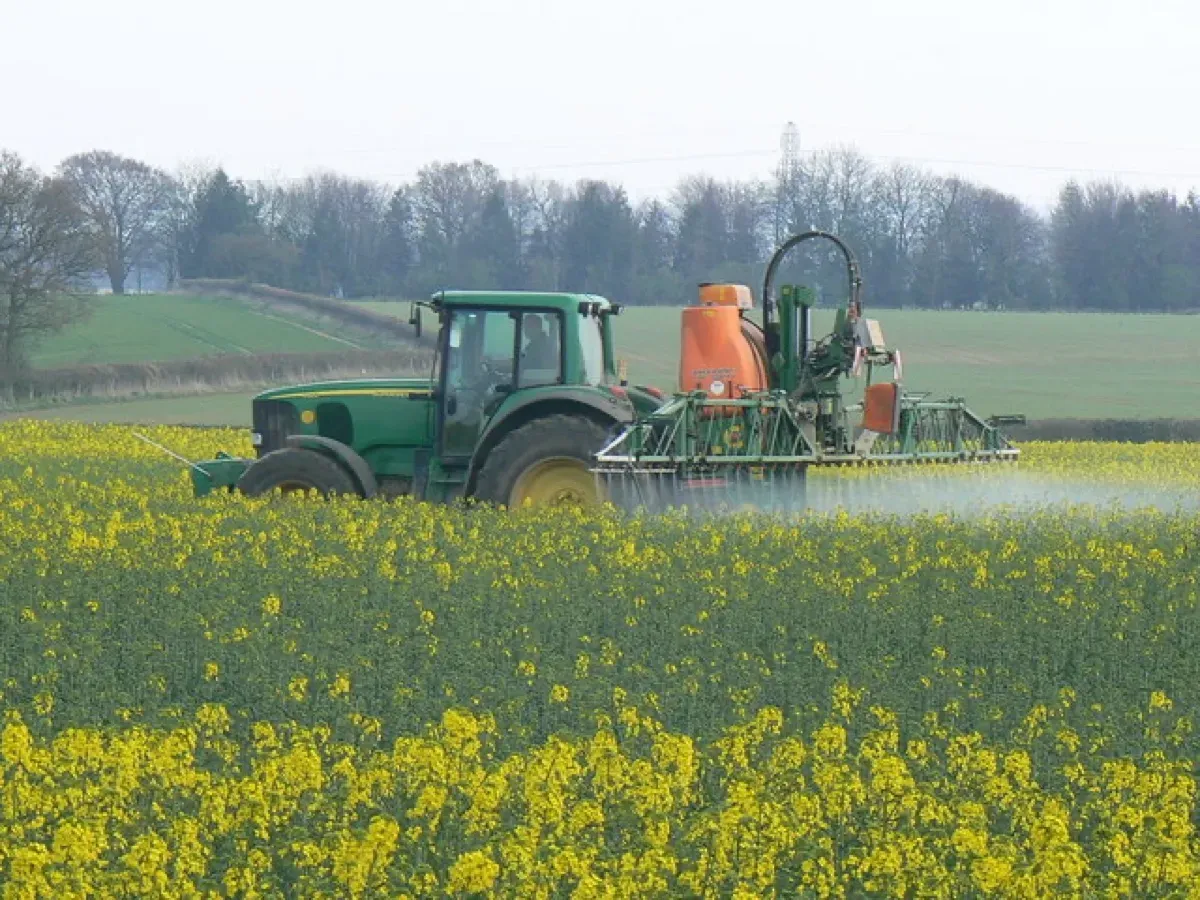
Young row crops lose most to weeds in their first weeks, exactly when they are smallest. Conventional growers spray repeatedly, at a time when European approvals for herbicides keep shrinking and water companies push back on residues. Organic growers, who cannot use most herbicides, rely on people lying on weeding trailers to pull weeds by hand, and seasonal labour is getting harder to find across Europe.
Machinery adds its own costs. Every tractor pass burns diesel and compacts the soil, and heavy machines cannot enter wet fields when timing matters most.
The product
The FD20 does two jobs with one machine: it sows the crop and then keeps it weeded all season. FarmDroid’s 2026 factsheet lists a working width of up to 3.5 metres, 2 to 12 rows, a daily capacity of up to 6 hectares, a 6 kWh battery for up to 12 extra hours of work, a standard weight of 1,250 kg and an expected life of more than 10 years for its main components. It accepts seeds from 0.5 mm to 14 mm.
The factsheet gives two crop counts, “over 50” in its introduction and “100+” in its specifications table, including sugar beet, onion, chicory, spinach, rapeseed, maize and beans. The 2026 season was the first full one for a larger seeding system able to handle maize, green beans and soya beans, and maize already ranked eighth among FD20-seeded crops.
An add-on called +Spray, which the factsheet calls FarmDroid’s latest innovation, lets conventional growers place micro-doses of plant protection products on or between plants. FarmDroid says it can reduce product use by up to 94%. A new AI assistant, Odin, now answers operator questions in the FarmDroid app.
How it works
- Plan. The grower sets row spacing, plant distance, depth and seeding pattern in the app.
- Sow. The robot drops each seed and logs its position by RTK GPS to about 8 mm.
- Map. Every seed becomes a known point, so no camera is needed to find the crop.
- Hoe. Tools cut between rows and swing in and out of the row around each seed position, even before crops emerge.
- Spot spray (optional). +Spray applies tiny doses only where needed.
- Stay out. Solar panels and the battery keep it working day and night, at up to 950 metres an hour.
Timeline
| Date | Milestone |
|---|---|
| 2011 | Jens Warming first has the idea for the robot |
| Mar 2018 | FarmDroid ApS founded in Denmark |
| 2019 | First commercial FD20 units bought by farmers |
| 2021 to 2022 | University of Hohenheim tests seven weeding robots, including the FD20, in south-west Germany |
| Mar 2023 | FarmDroid turns five with more than 350 robots in more than 12 countries |
| 24 Jun 2026 | Season review: 5,503 ha seeded and 22,526 ha weeded by the FD20 fleet |
| 20 Aug 2026 | AGRAVIS ends active FarmDroid distribution in Germany; FarmDroid takes over service |
| 1 Sep 2026 | Larger FD60 launched; deliveries from January 2027 |
Impact and numbers
The strongest independent evidence comes from a University of Hohenheim study by Roland Gerhards and colleagues, published in Weed Research in 2023. Testing seven robotic systems in sugar beet and oilseed rape over 2021 and 2022, it found the FD20 and two other hoeing robots controlled 92% to 94% of weeds. All treatments except two caused less than 5% crop stand loss. Adding a third-party spot sprayer to the FD20 did not raise weed control further.
FarmDroid’s own 2026 data show the scale of use. The fleet seeded 5,503 hectares, 86% of it by precision seeding, and weeded 22,526 hectares, roughly four times the seeded area. Fourteen percent of robots micro-sprayed 508 hectares, and FarmDroid reports an average 91% reduction in chemical inputs during spot spraying and 81% during band spraying. Support cases fell by 40%.
Individual machines stand out. One French robot sowed 77.7 hectares in a season, a Dutch robot weeded 194.9 hectares of sugar beet across many passes, and three FD20s on a German farm logged more than 18,000 hours over six seasons. The fleet has passed 929,000 operating hours. FarmDroid calculates that one Danish robot avoided 3.0 tonnes of CO2 compared with conventional weeding, a single-machine company estimate.
Honest caveats
Cost per hectare. The Hohenheim study put treatment costs for slow in-row hoeing robots at €555 to €804 per hectare, against €307 to €383 for broadcast herbicide and €221 for camera-guided inter-row hoeing. FarmDroid claims the new FD60 can reach €304 per hectare, a company figure.
Losses while scaling. Danish filings show a 2025 net loss of DKK 28.9 million. Equity of DKK 52.6 million and an equity ratio of 80.2% suggest the company is solvent, not in distress.
Distribution change. AGRAVIS, which widened sales in Germany, one of FarmDroid’s largest markets, stopped active distribution in August 2026. FarmDroid promises unchanged service but has not yet detailed its 2027 setup.
Data mostly in-house. Spray savings, CO2 figures and fleet records come from FarmDroid’s own data. Crop counts differ even within one factsheet.
Fit. The robot is slow and suits stable row layouts; it is not a universal replacement for a tractor.
What’s next
The FD60, launched on 1 September 2026, keeps the seed-mapping idea but scales it: up to 6.75 metres width, 20 rows per pass, about 60 hectares a season and up to 18 hectares a day. It carries eight solar panels producing 3.7 kW, a 23.5 kWh battery and a small petrol range extender. Orders opened on launch day, it will be shown at Agromek in Herning on 24 to 27 November 2026, and first deliveries are due from January 2027. The FD20 remains the choice for smaller fields.
Why it matters for Europe and green buyers
For Europe, the FD20 tackles three priorities at once: less herbicide, less diesel and less soil compaction, with no cameras or crop-recognition software to train. It suits the organic sugar beet, onion and vegetable growers who struggle most to hire hand weeders.
For India, where farms are small and fields are often irregular, a solar robot that needs no fuel is attractive in principle, but cost per hectare would need to fall sharply; no Indian deployment was found in the sources. For the world, mechanical weeding powered by sunlight shows that cutting farm chemicals does not have to mean more labour.
Sources & image credits
- FarmDroid, “FarmDroid turns 5 years”, March 2023. https://farmdroid.com/news/farmdroid-turns-5-years/
- FarmDroid, FD20 factsheet 2026 (PDF). https://farmdroid.com/wp-content/uploads/Factsheet-FD20-metricimperial-2026.pdf
- Gerhards R. et al., “A comparison of seven innovative robotic weeding systems and reference herbicide strategies in sugar beet and rapeseed”, Weed Research 64(1), 2023, via University of Hohenheim. https://hohpublica.uni-hohenheim.de/items/3240bf21-4a5b-4a29-a99c-9b103f8a6eff/full
- FarmDroid, “2026 season wrap-up: FarmDroid FD20 seeding and weeding season in numbers”, 24 June 2026. https://farmdroid.com/blog/2026-season-wrap-up-farmdroid-fd20-seeding-and-weeding-season-in-numbers/
- FarmDroid, “FarmDroids breaking records across the fleet”, August 2026. https://farmdroid.com/blog/farmdroids-breaking-records-across-the-fleet/
- FarmDroid, “FarmDroid and AGRAVIS conclude their distribution partnership in Germany”, 20 August 2026. https://farmdroid.com/news/farmdroid-and-agravis-conclude-their-distribution-partnership-in-germany/
- Future Farming, “Droid scales up: new FD60 brings autonomous seeding and weeding to larger farms”, September 2026. https://www.futurefarming.com/tech-in-focus/field-robots/droid-scales-up-new-fd60-brings-autonomous-seeding-and-weeding-to-larger-farms/
- Regnskabsbasen, “FarmDroid ApS, CVR 39408589, regnskab og nøgletal” (2025 accounts, from the Danish CVR register). https://regnskabsbasen.dk/selskab/farmdroid-aps-39408589
- Wikimedia Commons, “Fields of lettuce, Lower Tenthill, 2022”. https://commons.wikimedia.org/wiki/File:Fields_of_lettuce,_Lower_Tenthill,_2022.jpg
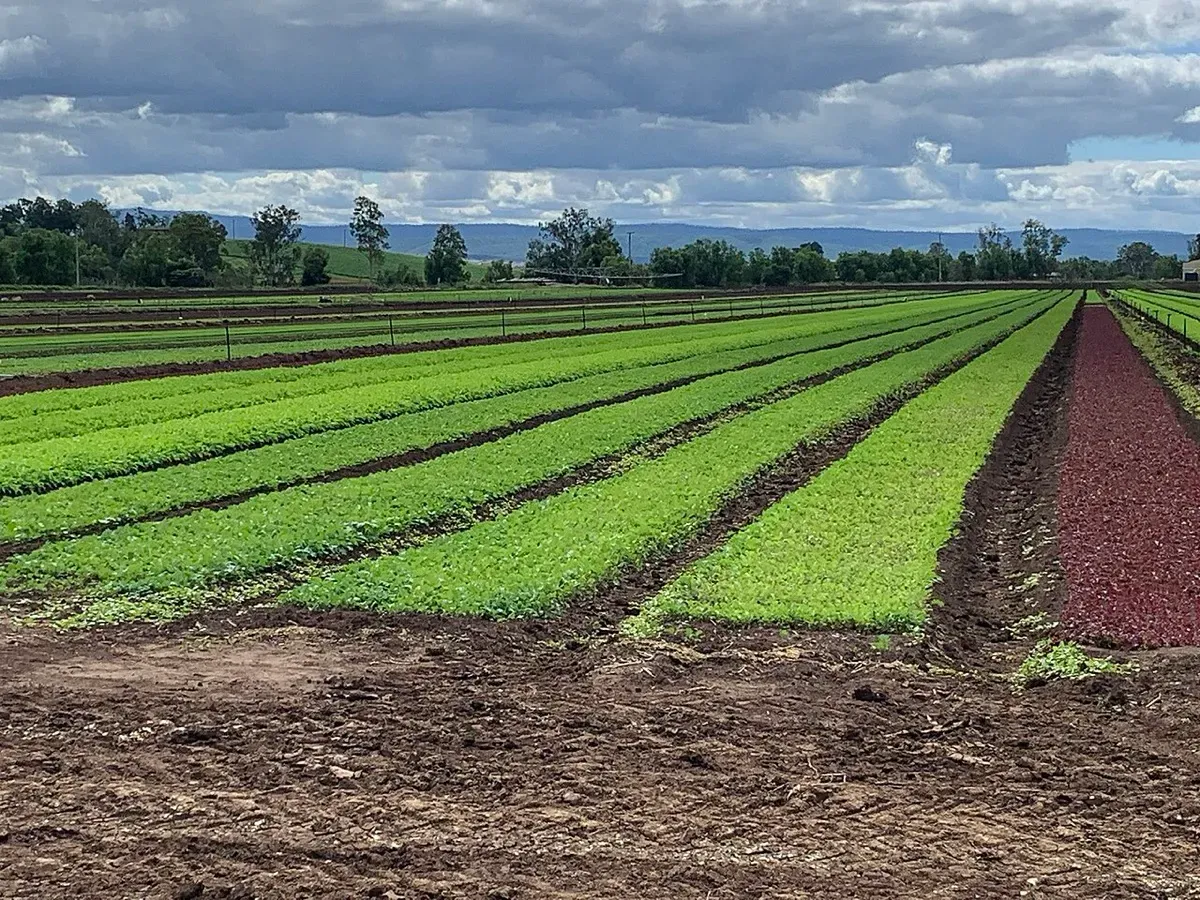
Images: “Fields of lettuce, Lower Tenthill, 2022”, Kerry Raymond, CC BY 4.0, via Wikimedia Commons. Illustrative; a row crop, not a FarmDroid robot.