
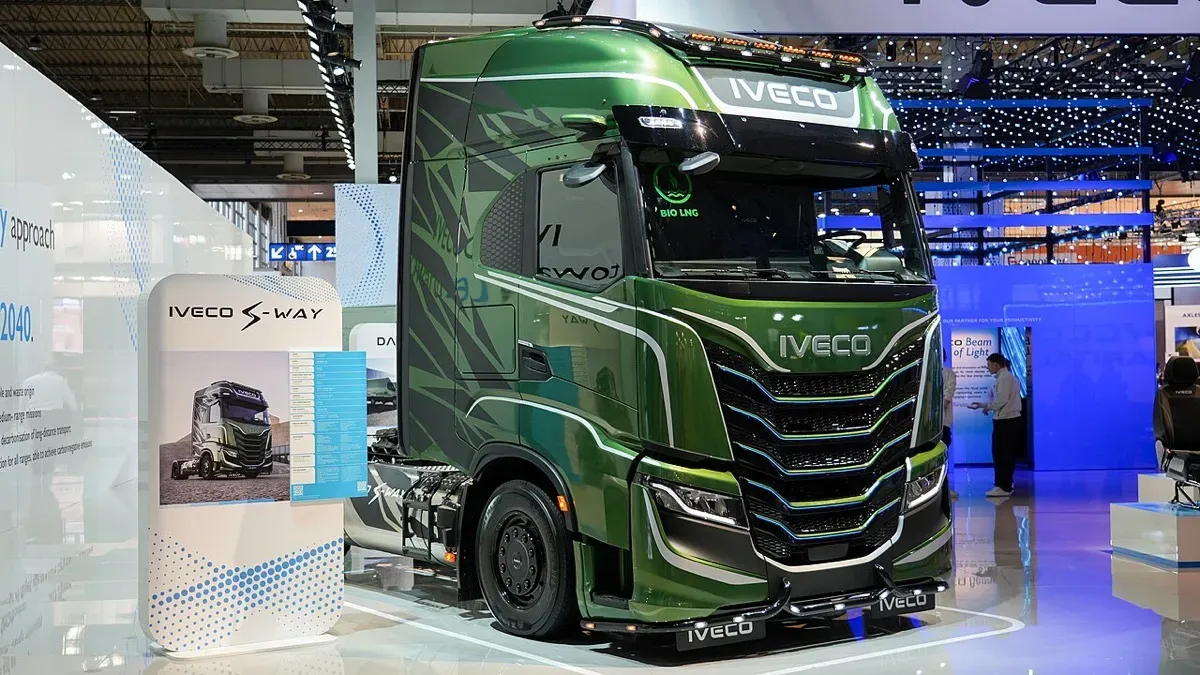
The problem
Long-distance heavy trucks are among the hardest vehicles to electrify. Batteries for 40-tonne lorries are heavy, megawatt charging is only starting, and hauliers need ranges of many hundreds of kilometres. Many European fleets bought LNG trucks as a cleaner option than diesel, but fossil LNG is still a fossil fuel, and its price has swung wildly with gas markets and geopolitics.
At the same time, Germany has thousands of biogas plants built to make electricity under the EEG feed-in law. As their 20-year tariffs end, operators need a new market for their gas.
The product
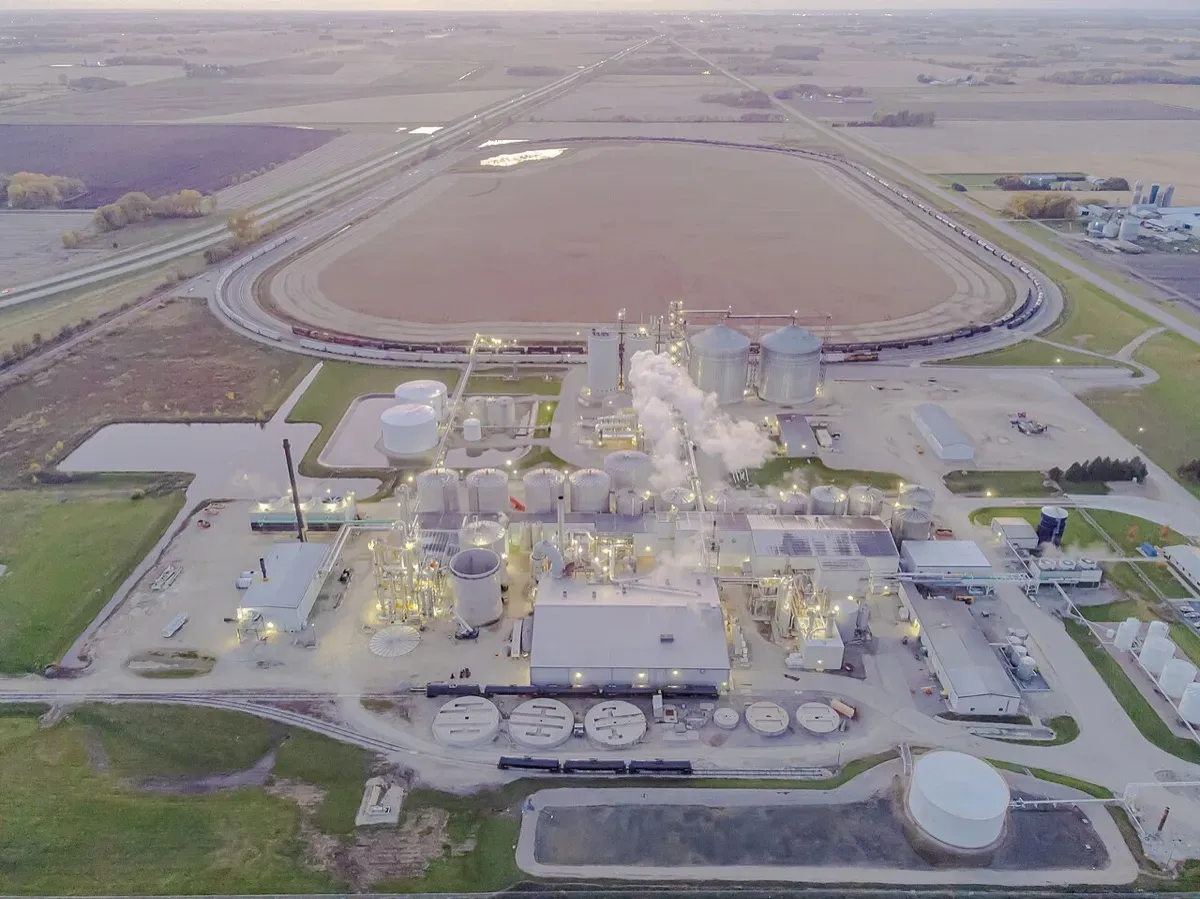
Bio-LNG is biomethane, chemically the same as natural gas, liquefied for transport and storage. EnviTec makes it at the BioEnergie Park Güstrow, which it calls Germany’s largest integrated bio-LNG plant. The 17-hectare site covers the whole chain: biogas production, upgrading to biomethane, liquefaction of both the methane and the CO2, and loading for road tankers (EnviTec Güstrow).
Key figures from EnviTec:
- about 9,000 tonnes of bio-LNG and 18,000 tonnes of liquid CO2 a year;
- 150,000 tonnes a year of input, mainly agricultural residues;
- a 3.1 MWel combined heat and power unit for the site’s own power;
- over EUR 50 million invested in CO2 and LNG liquefaction plus replacement of roofs, mixers and other parts.
The fuel is sold through EnviTec’s subsidiary LIQVIS, founded in 2015 and part of the group since 2025. LIQVIS runs 15 LNG filling stations at busy freight hubs. EnviTec says bio-LNG trucks reach ranges of up to 1,700 km depending on the maker, refuel in around 15 minutes, and that bio-LNG has been sold at a stable price below EUR 1/kg (net) (EnviTec, Mar 2026).
How it works
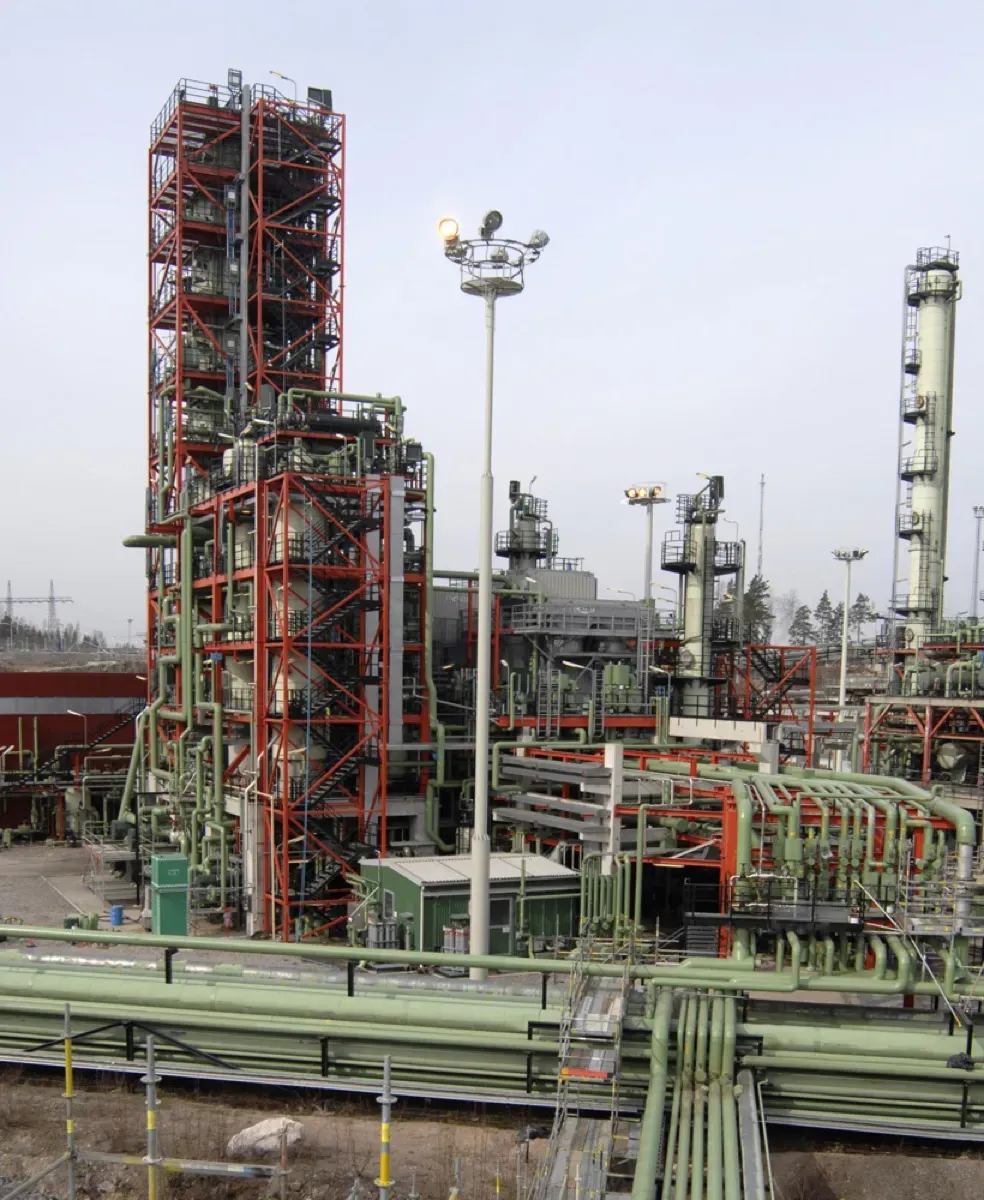
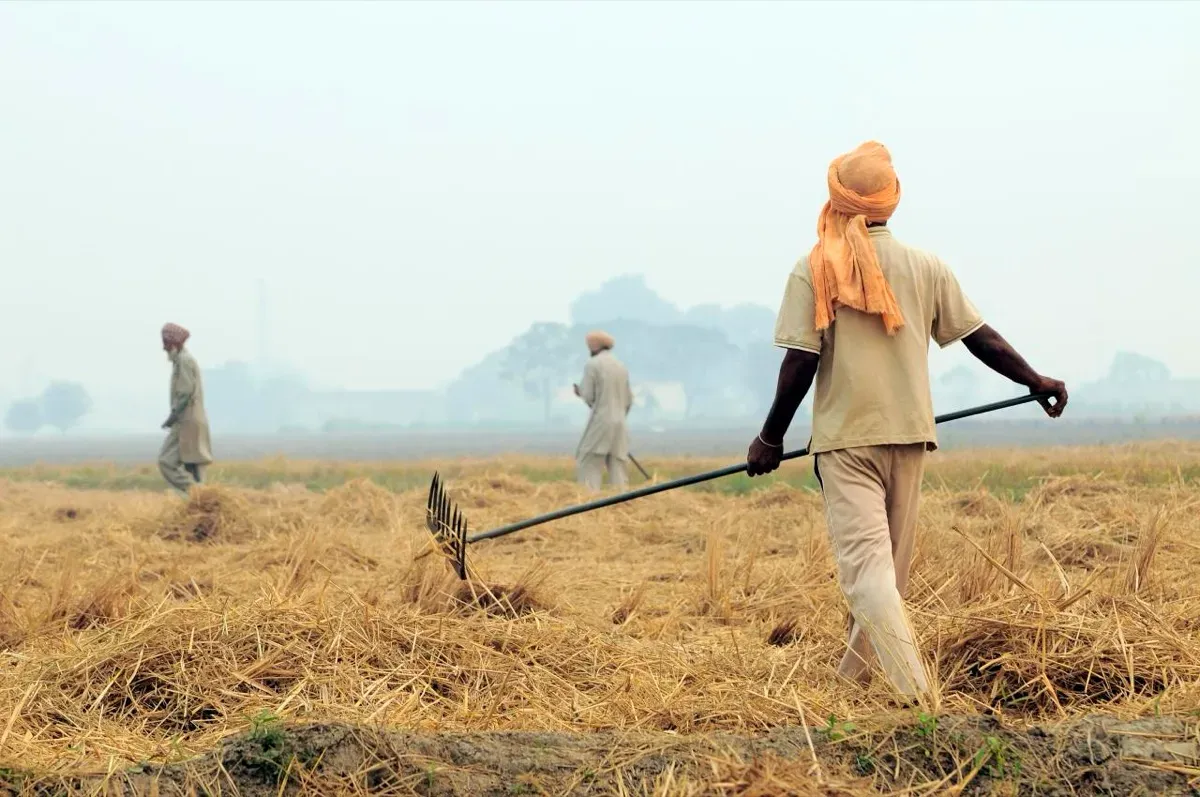
- Ferment: agricultural residues, manure and other organic material are digested by microbes in sealed tanks, producing raw biogas (mainly methane and CO2).
- Upgrade: the EnviThan process, using Evonik membranes and installed at over 100 plants, separates methane from CO2 and removes sulphur compounds.
- Polish: moisture and the last traces of CO2 are removed so the gas will not freeze in the cold box.
- Liquefy: biomethane is cooled until it becomes liquid bio-LNG and stored in an insulated tank.
- Capture CO2: the separated CO2 is compressed, purified and liquefied to food grade for drinks and industry.
- Deliver: tankers take bio-LNG to filling stations; digestate goes back to fields as fertiliser.
Timeline
| Date | Milestone |
|---|---|
| 2009 | EnviTec builds what was then Germany’s largest biogas plant at Güstrow |
| 2021 | EnviTec buys the site and runs it itself |
| 2023 | Conversion to bio-LNG and liquid CO2 production |
| 19 Mar 2026 | EnviTec and LIQVIS promote bio-LNG as a price-stable truck fuel |
| 8 May 2026 | German law raising the GHG quota to 17.5% from 2027 adopted |
| 30 Sep 2026 | H1 2026: revenue up, EBT down to EUR 4.4 million |
Impact and numbers
- Fuel output: about 9,000 t of bio-LNG a year at Güstrow, which EnviTec equates to green fuel for over 50 million truck kilometres.
- Less maize: before conversion, the previous operator used about 400,000 tonnes of substrate a year, mainly maize, grass and whole-crop silage, to feed a 500 GWh gas upgrading plant. Input is now 150,000 tonnes, mostly agricultural residues (EnviTec Güstrow).
- Group: EnviTec made revenue of EUR 312.6 million in 2025 and EUR 169.2 million in H1 2026, up from EUR 148.4 million. H1 EBITDA fell to EUR 21.4 million from EUR 26.3 million and EBT to EUR 4.4 million (EnviTec H1 2026).
- Investment: about EUR 100 million planned by 2029 for new builds, refurbishment and converting more plants to bio-LNG, after EEG awards for around 16 MW of plants in June 2026.
Honest caveats. EnviTec gives no published life-cycle CO2 figure for Güstrow bio-LNG; it speaks only of “significant” savings. The real benefit depends on feedstock (manure and residues score far better than energy maize) and on keeping methane leaks from digesters, upgrading and liquefaction low, because methane is a far stronger greenhouse gas than CO2. Gas trucks still emit CO2 at the tailpipe; the claim rests on the biogenic origin of the carbon. Bio-LNG economics depend heavily on policy: the retroactive end of double counting for advanced biofuels from 1 January 2026 was one of the main reasons EnviTec’s earnings fell (EnviTec H1 2026 report), while electric trucks keep triple counting. And 9,000 tonnes a year is a few hundred trucks’ worth of fuel, small next to the German fleet.
What’s next
EnviTec is shifting its own plants from selling electricity to selling biomethane and bio-LNG, backed by about EUR 100 million of investment by 2029. It is building a bio-LNG project for heavy transport in Sweden, started up a combined biogas and upgrading plant in Estonia in June 2026, and LIQVIS has more filling stations in the pipeline. The company kept its 2026 guidance of EUR 330 to 370 million revenue and EUR 5 to 15 million EBT, and expects higher revenue and profit in 2027 (wallstreet-online).
Why it matters for Europe / green buyers
RED III asks member states to raise renewables in transport and sets a sub-target for advanced biofuels from residues such as manure and straw (EUR-Lex). Germany’s new GHG quota law, adopted on 8 May 2026, lifts the quota from 12.1% to 17.5% from 2027 and raises the advanced biofuel sub-quota from 2% in 2026 to 9% in 2040, with anti-fraud measures from 2027 (EnviTec H1 2026 report). For haulier buyers, bio-LNG is a way to cut emissions with trucks they can buy today; the questions are certified feedstock, methane-slip data and where the nearest station is.
India is betting on the same molecule in compressed form. A Compressed Biogas Blending Obligation requires CBG to make up 1%, 3% and 4% of CNG and piped gas consumption in FY2025-26, FY2026-27 and FY2027-28, and 5% from FY2028-29, which the government expects to drive about ₹37,500 crore of investment in 750 CBG projects (PIB). Güstrow’s mix of fuel plus food-grade CO2 is a model Indian CBG plants could copy to improve their economics.
Sources & image credits
- EnviTec Biogas, “Biomethan und Bio-LNG aus dem Bioenergiepark Güstrow”: https://www.envitec-biogas.de/referenzen/guestrow
- EnviTec Biogas, “Green fuel for heavy-duty transport: EnviTec Biogas advances decarbonisation together with subsidiary LIQVIS” (19 Mar 2026, PDF): https://www.envitec-biogas.com/fileadmin/ns_theme_envitec/downloads/Press_releases/2026/EnviTec_Biogas_advances_decarbonisation_together_with_subsidiary_LIQVIS_EN_fin.pdf
- EnviTec Biogas, “EnviTec Biogas performs as planned in the first half of 2026” (PDF): https://www.envitec-biogas.com/fileadmin/ns_theme_envitec/downloads/Press_releases/2026/EnviTec_Biogas_performs_as_planned_in_the_first_half_of_2026__EN.pdf
- EnviTec Biogas, Halbjahresbericht 2026 (H1 2026 report, German, PDF): https://www.envitec-biogas.de/fileadmin/ns_theme_envitec/PDFs/IR/Hauptversammlung/2027/EnviTec_Biogas_H1-26.pdf
- wallstreet-online, “EnviTec Biogas: Halbjahr 2026 nach Plan” (30 Sep 2026): https://www.wallstreet-online.de/nachricht/21455124-envitec-biogas-halbjahr-2026-plan-biomethan-wandel-fahrt
- EUR-Lex, Directive (EU) 2023/2413 (RED III): https://eur-lex.europa.eu/eli/dir/2023/2413/oj/eng
- Press Information Bureau, CBG Blending Obligation and SAF targets: https://www.pib.gov.in/PressReleaseIframePage.aspx?PRID=1979705
Images:
- “Iveco S-Way 500 Bio-LNG AS440S50T P 2LNG IAA Transportation 2024 (DSC03371)” by MarcelX42, licensed under CC BY-SA 4.0 (https://creativecommons.org/licenses/by-sa/4.0), via Wikimedia Commons: https://commons.wikimedia.org/wiki/File:Iveco_S-Way_500_Bio-LNG_AS440S50T_P_2LNG_IAA_Transportation_2024_(DSC03371).jpg
.jpg)