
The problem
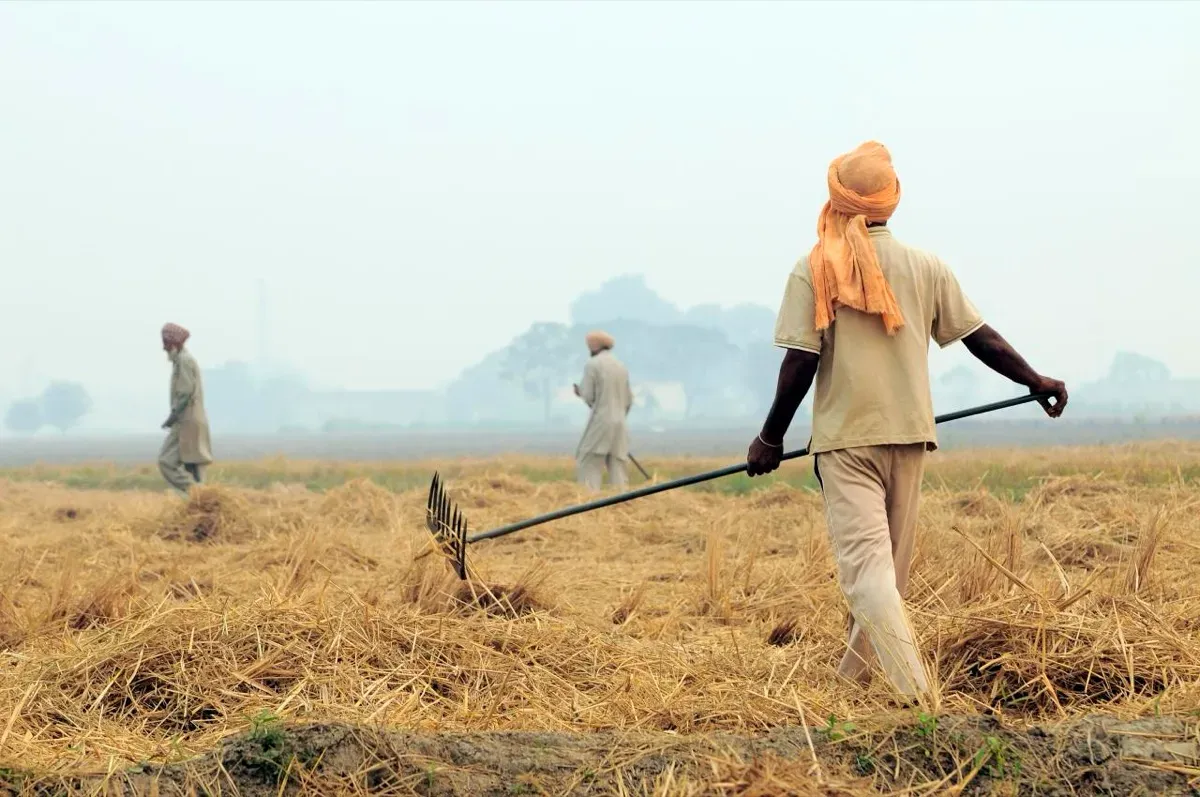
India’s ethanol blending programme has grown fast, but almost all of its ethanol comes from sugar cane juice, molasses and grain. That raises food-versus-fuel and water questions in a country where cane is a thirsty crop. At the same time, millions of tonnes of rice straw are burned each year in the north-west because farmers have only a few weeks between harvest and wheat sowing.
Second-generation ethanol promises to solve both problems at once: use straw and other residues that nobody eats, and pay farmers for something they now burn. The catch is that straw is tough to break down, full of silica and varies widely in moisture.
The product
enfinity is Praj’s proprietary 2G ethanol process, developed and optimised at industrial scale for agricultural residues such as wheat and rice straw, corn stover and bagasse, as well as energy crops and hardwood (Praj). Besides ethanol, it yields lignin and other by-products such as stillage and biogenic CO2, and Praj also offers a sister process, Celluniti, for cellulosic sugars.
The first commercial unit is IndianOil’s bio-refinery at its Panipat refinery in Haryana, designed for 100 kilolitres a day (KLPD) of ethanol from rice straw. Praj was technology licensor and engineering, procurement and construction management (EPCM) partner; the Prime Minister dedicated it on World Biofuel Day, 10 August 2022, calling it Asia’s first 2G ethanol bio-refinery (Praj, 2022). Praj says its co-products include lignosulphonates and bio-bitumen.
Praj, which started in ethanol technology in India in the early 1980s, describes three commercial enfinity plants of roughly 25,000 tonnes of ethanol a year each, licensed to the three state oil companies. Each has a different set-up: IndianOil’s is co-located with its Panipat refinery, BPCL’s at Bargarh is an integrated 1G and 2G complex, and HPCL’s at Bathinda is a standalone greenfield plant (Praj). All are supported by the government’s Pradhan Mantri JI-VAN Yojana (2019, amended 2024), which funds advanced biofuel projects using lignocellulosic biomass.
How it works
- Collect: straw bales are bought from farmers after the rice harvest and stored for year-round use.
- Pre-treat: the straw is cleaned and broken down with heat and chemicals to open up the cellulose and hemicellulose.
- Hydrolyse: enzymes (reported to be Novozymes’ Cellic CTec3 at Panipat) convert cellulose into fermentable sugars.
- Ferment: microbes ferment the sugars into ethanol.
- Distil: ethanol is separated and dehydrated to fuel grade for blending into petrol.
- Use co-products: lignin and residues are used for energy or products, and biogenic CO2 can be captured.
Timeline
| Date | Milestone |
|---|---|
| 10 Aug 2022 | Panipat 2G bio-refinery dedicated to the nation; commissioning begins |
| 11 Nov 2023 | Commercial production starts at Panipat (100 KLPD capacity) |
| Sep 2025 | Numaligarh Refinery’s 185 KLPD bamboo-based 2G plant inaugurated in Assam |
| Dec 2025 | Panipat runs at 62% of design capacity after Nov to Dec modifications |
| 19 Mar 2026 | BPCL’s Praj-licensed 2G plant at Bargarh, Odisha, commissioned |
| Q4 FY27 | HPCL’s Bathinda 2G plant expected to start production |
Impact and numbers
- Cost: IndianOil’s cumulative spend on Panipat was ₹984 crore against an approved ₹909 crore ±10% (ChiniMandi).
- Output: the government told Parliament on 5 February 2026 that FY2024-25 output was about 5.7% of the plant’s annual design capacity (Tecrow). By December 2025 it ran at 62% after modifications.
- Bargarh: BPCL’s ₹1,775 crore integrated 1G and 2G bio-refinery has a combined 63,000 KL a year design capacity. Its 2G unit made 76 KL in the final days of FY2025-26 (Nagpur Today). Praj says it is designed to take about 850 tonnes a day of residue, 70% for ethanol, from farmers across about 1.6 lakh acres, generating an estimated ₹100 crore a year in rural income (Praj Annual Report 2025-26).
- Company: Praj reported FY26 revenue of ₹31,678 million and profit after tax of ₹238.5 million, with an order backlog of ₹43,050 million (Praj Q4 FY26).
Honest caveats. The government’s own answer to Parliament said straw quality, especially moisture and silica, causes problems in downstream treatment and mechanical issues. IndianOil withheld ₹5.25 crore of Praj’s ₹10.5 crore licence fee because the performance guarantee test run had not been completed, and Praj carried out ₹9.44 crore of modifications free of cost (ChiniMandi). Praj’s annual report describes “significant scale-up” in capacity use, which is true from a low base. Bargarh’s 2G post-commissioning output beyond March 2026 was not disclosed in BPCL’s RTI reply. No independent life-cycle emissions figure for Panipat ethanol was found. And one 100 KLPD plant uses only a small fraction of the straw burned each year, so even several plants will not end stubble burning on their own.
What’s next
Praj says it uses structured learnings from plant to plant to de-risk enfinity, as the IndianOil, BPCL and HPCL projects commission 9 to 12 months apart. The HPCL plant at Bathinda, Punjab, was under mechanical completion and expected to begin 2G ethanol production in Q4 FY27. If Panipat can sustain more than 60% and Bargarh ramps up, the next question is whether private sugar and grain distillers will invest in 2G without public money from the PM JI-VAN scheme.
Why it matters for Europe / green buyers
Europe has been here before. Clariant shut its sunliquid cellulosic ethanol plant at Podari, Romania, in December 2023 after it failed to reach targeted yields and kept losing money (Clariant). RED III still counts straw-based ethanol towards its advanced biofuel sub-target (EUR-Lex), so a technology that works at scale in India could find buyers and licensees in Europe. For investors and policymakers, the Panipat data are a reminder to ask for audited output, not nameplate capacity.
For India, the stakes are higher. Cleaner air in Delhi, income for straw-burning districts and less pressure on food crops all depend on making 2G ethanol reliable. Praj, as the only Indian licensor with plants running, is where that test is happening.
Sources & image credits
- Praj Industries, “Advanced Bioethanol”: https://www.praj.net/businesslines/advanced-bioethanol/
- Praj Industries, “IOCL’s 2G Ethanol Bio-Refinery based on Praj’s technology inaugurated by Prime Minister Modi” (16 Aug 2022, PDF): https://www.praj.net/wp-content/uploads/2022/08/20220816-Press-Release-IOCLs-2G-Ethanol-Bio-Refinery-based-on-Prajs-technology-inaugurated-by-Prime-Minister-Modi.pdf
- ChiniMandi, “India’s first 2G ethanol plant at Panipat costs ₹984 Crore, Government tells Lok Sabha” (2026): https://www.chinimandi.com/indias-first-2g-ethanol-plant-at-panipat-costs-%E2%82%B9984-crore-government-tells-lok-sabha/
- Tecrow, “India’s flagship 2G ethanol plant produced just 5.7% of what it was built for” (2026): https://tecrow.com/energy/indias-flagship-2g-ethanol-plant-less-production/
- Nagpur Today, “₹1,775-Crore BPCL Bio-Refinery: RTI Reveals 163 KL Ethanol Output in FY26” (Sep 2026): https://www.nagpurtoday.in/bpcl-bargarh-bio-refinery-ethanol-output-rti/
- Praj Industries, Annual Report 2025-26 (PDF, via ChiniMandi): https://www.chinimandi.com/wp-content/uploads/2026/08/Praj-Industries-Annual-Report-2025-2026.pdf
- Praj Industries, Q4 and FY26 results release (28 May 2026, PDF): https://www.praj.net/wp-content/uploads/2026/05/Praj-Q4-FY26-Results-Release_280526.pdf
- Clariant, “Clariant shuts its sunliquid bioethanol plant in Romania” (Dec 2023): https://www.clariant.com/en/Corporate/News/2023/12/Clariant-shuts-its-sunliquid-bioethanol-plant-in-Romania
- EUR-Lex, Directive (EU) 2023/2413 (RED III): https://eur-lex.europa.eu/eli/dir/2023/2413/oj/eng
Images:
- “NP India burning 46 (6314792401)” by Neil Palmer (CIAT), licensed under CC BY-SA 2.0 (https://creativecommons.org/licenses/by-sa/2.0), via Wikimedia Commons: https://commons.wikimedia.org/wiki/File:NP_India_burning_46_(6314792401).jpg
.jpg)