The problem
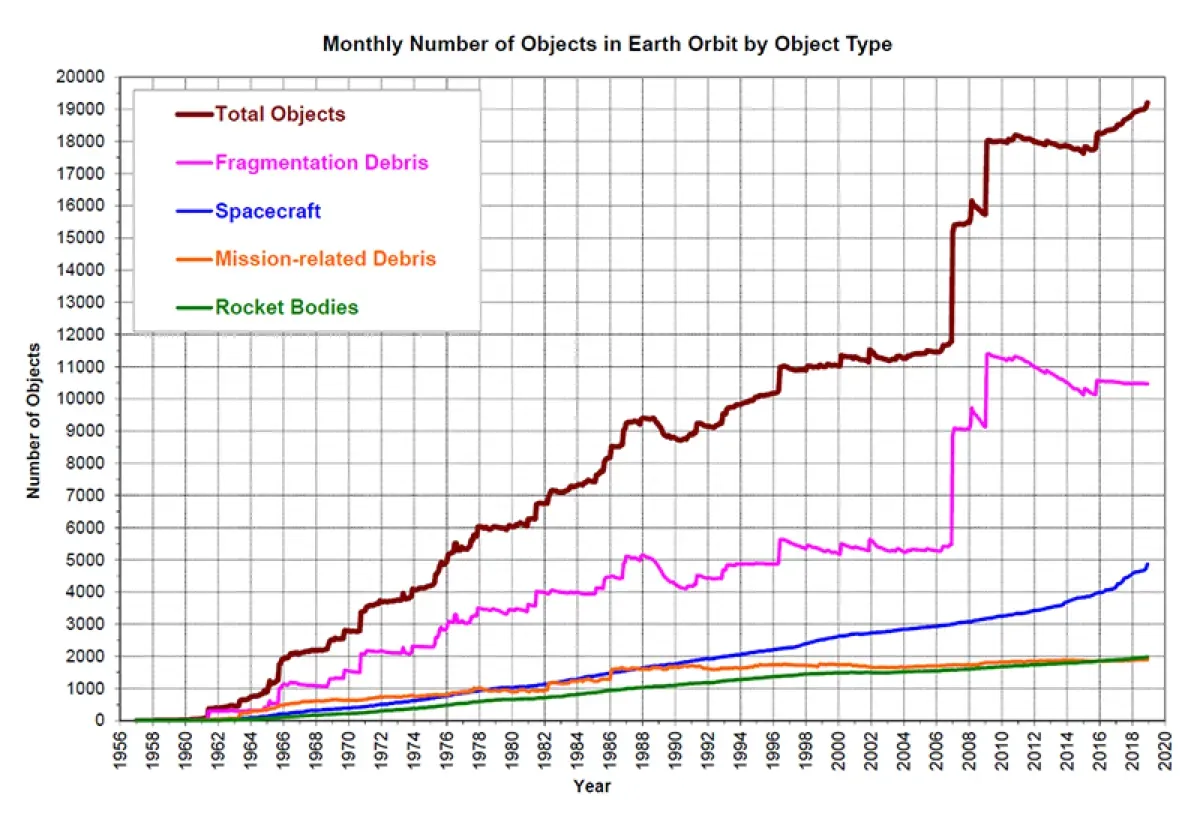
Most small satellites have no engine. Once a rocket drops them off, they cannot easily move to a better orbit, dodge a piece of debris or lower themselves to burn up at the end of their mission. As constellations grow, satellites that cannot manoeuvre become a collision risk and future space junk.
Electric propulsion is very fuel-efficient, but Exotrail’s 2020 announcement notes that legacy Hall-effect systems were the size of a fridge and required kilowatts of power. That put them out of reach for the cubesats and microsatellites that now dominate launches.
The product
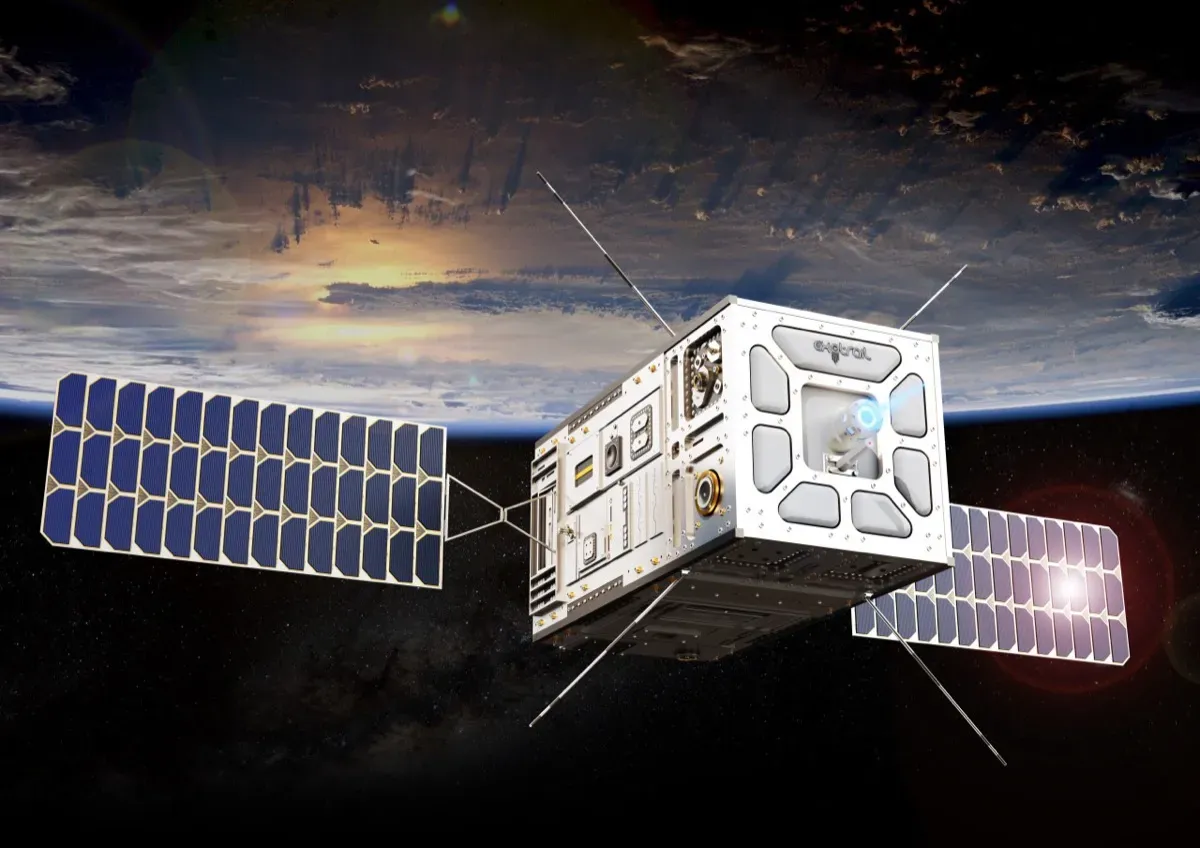
Exotrail’s first thruster, ExoMG, flew on a 10 kilogram cubesat launched on 7 November 2020 aboard India’s PSLV rocket. It ignited on the first attempt and, the company said, was the first Hall-effect thruster to operate on a spacecraft under 100 kg. The nanosatellite version ran on just 50 watts and was about the volume of a two-litre soda bottle. After an altitude change in December 2020, the demonstration was declared a full success.
Today the range is called spaceware, in nano, micro, mini and cluster configurations. Its best seller, spaceware micro, is a 150 W system delivering more than 7 mN of thrust for missions of up to 60 kNs. A 450 W spaceware mini is in development. Exotrail says spaceware improves deployment, lets satellites avoid collisions and supports safe de-orbiting, which “contributes to the reduction of space pollution”.
Exotrail also builds and flies spacevan, an orbital vehicle powered by its own thrusters. The first spacevan flew on SpaceX’s Transporter-9 in November 2023 and released a cubesat, EXO-0, after three months in orbit. Exotrail runs these missions from its own satellite control centre.
How it works
- Ionise. Electricity from solar panels ionises a small amount of gas propellant.
- Trap electrons. A magnetic field traps electrons, creating an electric field.
- Accelerate. That field shoots ions out of the thruster at very high speed.
- Push gently. The thrust is tiny, but it works for hours with very little propellant.
- Manoeuvre. Satellites raise their orbit, keep station, dodge debris or drop lower.
- Retire. At end of life, thrusters lower the satellite so it re-enters and burns up.
Timeline
| Date | Milestone |
|---|---|
| 7 Nov 2020 | ExoMG launches on a cubesat aboard India’s PSLV and ignites first time |
| Dec 2020 | First demonstration phase ends with an altitude change |
| Feb 2023 | Series B of $58 million, backed by Bpifrance funds and Eurazeo |
| Nov 2023 | First spacevan flies on SpaceX Transporter-9 |
| 2025 | 1,300 square metre production facility installed |
| 17 Feb 2026 | Orders from India’s XDLINX Space Labs (16 units) and Dhruva Space (14 units), for delivery by 2027 |
| 9 Sep 2026 | Creotech Instruments orders three units for Poland’s CAMILA Earth observation satellites |
| 10 Sep 2026 | Selected under France 2030 to lead a de-orbiting demonstration with Astroscale France and Eutelsat |
| 14 Sep 2026 | Partnership with Safran on higher-power electric propulsion |
Impact and numbers
Exotrail’s thrusters have moved from demonstration to series production in a 1,300 square metre facility. In September 2026 it said more than 200 spaceware micro units had been ordered, more than 25 were in space and their combined firing time had passed 1,000 hours. It counts more than 30 customers in over 20 countries.
India is a fast-growing market. On 17 February 2026, during the launch of the India-France Year of Innovation in Mumbai, Exotrail announced a first contract with India’s Dhruva Space for 14 spaceware micro systems and a second order from XDLINX Space Labs for 16 more, all due by 2027. The event was opened by French President Emmanuel Macron and Indian Prime Minister Narendra Modi.
In Europe, Poland’s Creotech Instruments ordered three units for CAMILA, a four-satellite civilian Earth observation system for Polish territory. A partnership signed in September 2026 combines Safran’s high-power electric propulsion technology with Exotrail’s system integration and production base in Massy.
Honest caveats
Defence is a big customer base. XDLINX describes its missions as serving “commercial and defense ISR”, meaning intelligence, surveillance and reconnaissance, and Exotrail’s 2023 round included France’s Innovation Defense Fund. Thrusters that help satellites de-orbit cleanly are also used on security missions.
Propulsion is not removal. spaceware lets a working satellite de-orbit itself, but it does nothing for dead satellites already in orbit. That is why Exotrail is now working with Astroscale France on a de-orbiting service, with a first mission planned before 2030.
Slipping schedules. Payload reported an Arianespace deal to fly spacevan towards geostationary orbit in the second half of 2026. Exotrail’s own website now says spacevan GEO will launch in late 2028 aboard Ariane 6.
Inconsistent specifications. Exotrail press releases describe spaceware as suited to satellites of 10 to 1,000 kg in one release and 50 to 1,000 kg in another. Buyers should check the specification for their mission.
Shared names. Customer Dhruva Space and partner Astroscale appear elsewhere in this series; they are mentioned here only as customers and partners.
What’s next
Exotrail plans to fly more spacevan missions, including launches on MaiaSpace’s reusable rocket from 2027, and to build higher-power systems with Safran. Its France 2030 de-orbiting demonstration with Astroscale France and Eutelsat aims to show controlled removal of a constellation satellite in low Earth orbit.
Why it matters for Europe and green buyers
For Europe, Exotrail is a home-grown supplier of a key building block for responsible space operations: small, efficient engines that let satellites avoid collisions and leave orbit on time. Its Safran partnership links French start-up agility with established industry. European space agencies can require manoeuvrable, de-orbit capable satellites and back suppliers like this.
For India, the link is direct. Exotrail’s first thruster flew on a PSLV, and Indian satellite builders are now among its biggest customers. Fitting propulsion to Indian small satellites helps them meet de-orbiting norms. For the world, cheap, reliable propulsion is one of the simplest ways to stop today’s satellites becoming tomorrow’s debris.
Sources & image credits
- Exotrail, “Exotrail paves the way for new space mobility”, 2020. https://www.exotrail.com/blog/exotrail-paves-the-way-for-new-space-mobility
- Exotrail, “Exotrail raises 58M$ in a Series B round”, Feb 2023. https://www.exotrail.com/blog/exotrail-raises-58m-in-a-series-b-round-to-scale-up-and-pursue-its-ambitions-for-space-mobility-worldwide
- Exotrail, “In-Orbit Services”. https://www.exotrail.com/in-orbit-services
- Payload, “Exotrail Inks Multi-Launch Deal with MaiaSpace”, 2025. https://payloadspace.com/exotrail-inks-multi-launch-deal-with-maiaspace/
- Exotrail, “Exotrail signs a second propulsion contract with XDLINX Space Labs”, 17 Feb 2026. https://www.exotrail.com/blog/exotrail-signs-a-second-propulsion-contract-with-xdlinx-space-labs
- Exotrail, “Dhruva Space and Exotrail ink first contract for propulsion systems delivery”, 17 Feb 2026. https://www.exotrail.com/blog/dhruva-space-and-exotrail-ink-first-contract-for-propulsion-systems-delivery
- Exotrail, “Creotech Instruments signs with Exotrail for the propulsion of the CAMILA constellation”, 9 Sep 2026. https://www.exotrail.com/blog/creotech-instruments-signs-with-exotrail-for-the-propulsion-of-the-camila-constellation
- Exotrail, “Safran and Exotrail partner to build a reference offering in electric propulsion”, 14 Sep 2026. https://www.exotrail.com/blog/safran-and-exotrail-partner-to-build-a-reference-offering-in-electric-propulsion
- Exotrail, “Exotrail and Astroscale France join forces to build deorbiting capability”, 2026. https://www.exotrail.com/blog/exotrail-and-astroscale-france-join-forces-to-build-deorbiting-capability-aimed-at-satellites-in-low-earth-orbit
- Wikimedia Commons, “Hall effect thruster ExoMG Exotrail”. https://commons.wikimedia.org/wiki/File:Hall_effect_thruster_ExoMG_Exotrail.jpg
Images: “Hall effect thruster ExoMG Exotrail”, Exotrail SA, 21 Nov 2019, CC BY-SA 4.0, via Wikimedia Commons. An artist’s rendering of the earlier ExoMG thruster.