The problem
Most direct air capture designs rely on expensive engineered sorbents or liquid solvents, plus big fans to push air through them. That makes the machines costly to build and run, and DAC prices remain far above what most buyers can pay. If carbon removal is ever to reach billions of tonnes a year, as many climate scenarios assume, it needs cheaper materials and simpler equipment.
Nature already has a slow CO2 sponge. Lime, made by heating limestone, naturally reabsorbs CO2 from the air over time and turns back into limestone. The question Heirloom asked was whether that process could be sped up dramatically and run as an industrial loop.
The product
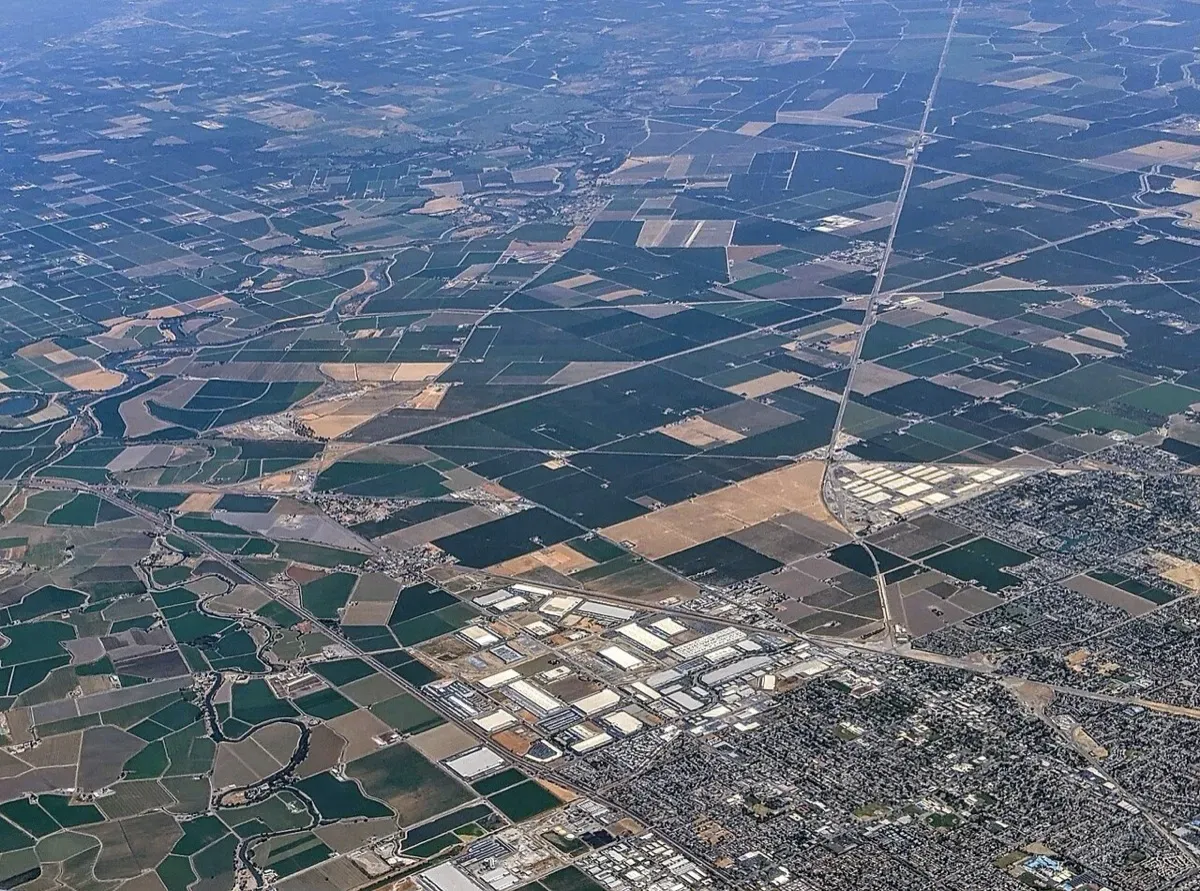
Heirloom was founded in 2020. Chief executive and co-founder Shashank Samala says its limestone-based capture went from 1 kilogram of CO2 to a capacity of up to 1,000 tonnes in just over two years. In November 2023, US Energy Secretary Jennifer Granholm and California Lieutenant Governor Eleni Kounalakis helped unveil its facility in Tracy, in California’s Central Valley, described as the first commercial DAC facility in the United States.
The Tracy plant is essentially a warehouse of trays. Limestone powder is heated in a kiln powered by renewable electricity, driving off CO2. The leftover calcium oxide is mixed with water to form calcium hydroxide, or lime, which is spread on vertically stacked trays where it pulls CO2 from the air. Once it has turned back into limestone, it goes back into the kiln. Heirloom says it collects tens of millions of data points a month to improve uptake rates. It has also set up a community governance model to gather local feedback on plant operations and on its investments in Tracy and San Joaquin County.
The CO2 released in the kiln is captured. In Tracy, partner CarbonCure embeds it permanently in concrete used in building foundations, which Heirloom says also makes the concrete stronger. In future plants, CO2 is meant to be stored deep underground.
How it works
- Bake. Limestone (calcium carbonate) is heated in a renewably powered kiln, releasing its CO2.
- Store. The CO2 is captured and sent for permanent storage, in concrete or underground.
- Hydrate. The remaining calcium oxide is mixed with water to make lime.
- Spread. The lime is spread on vertically stacked trays, watered and treated to boost its uptake.
- Absorb. The lime reacts with CO2 in the air and turns back into limestone.
- Repeat. The material loops back to the kiln, reducing how much new limestone must be mined.
Timeline
| Date | Milestone |
|---|---|
| 2020 | Heirloom founded |
| Nov 2023 | Tracy facility unveiled with up to 1,000 tonnes a year of capacity |
| Dec 2024 | USD 150 million investment round completed, as reported by Trellis |
| Jan 2025 | CEQA environmental approval for the Tracy upgrade |
| Jun 2025 | California agency approves a sales tax exclusion for the Tracy upgrade |
| Aug 2025 | Development permit for the upgrade; construction begins |
| Apr 2026 | Project Cypress in Louisiana survives the US DOE funding review |
| Jun 2026 | MoUs with TKMS and thyssenkrupp Calvion for DAC in Alberta, Canada |
Impact and numbers
The Tracy plant is small but symbolic: it proved that limestone looping works outside the lab. According to a June 2025 staff summary from a California state financing authority, Heirloom planned to upgrade the facility with a closed-loop limestone process and about 850 tonnes a year of capture capacity, with construction expected to finish by April 2026. The upgrade involved about USD 9.8 million of qualifying equipment and an estimated sales tax exclusion of about USD 833,000. The same document lists Microsoft, Klarna and Shopify among Heirloom’s customers.
Heirloom’s bigger plans are in Louisiana. Its site at the Port of Caddo-Bossier near Shreveport is part of Project Cypress, a regional DAC hub eligible for up to USD 600 million in federal grants on a pay-for-performance basis. In April 2026, US Energy Secretary Chris Wright confirmed the project had survived a review of about 2,200 Biden-era awards; USD 50 million had been disbursed so far. CO2 from Heirloom’s site is to be piped about 100 miles to the Central Louisiana Regional Carbon Storage Hub, run by CapturePoint.
In June 2026, Heirloom signed agreements with naval shipbuilder TKMS and engineering firm thyssenkrupp Calvion to explore large-scale DAC in Alberta, linked to TKMS’s Canadian submarine bid.
Honest caveats
Output not disclosed. Heirloom publishes capacity figures, not audited tonnes removed per year in Tracy.
Timelines slipped. Heirloom’s project page still describes a 17,000 tonne Louisiana facility coming online in 2026 and a 100,000 tonne facility in 2027. In 2025, Trellis reported that one planned facility had been cancelled and at least 10 technical staff had left amid doubts over federal hub funding.
Energy and heat. Driving CO2 out of limestone needs high temperatures. The climate benefit depends on clean power for the kiln.
Policy risk. Much of the US DAC business case rests on federal grants, tax credits and corporate buyers. Changes in Washington can delay or stop projects.
What’s next
The upgraded Tracy plant should show whether the closed-loop design performs as planned. In Louisiana, Heirloom now needs to build and hit performance targets to unlock pay-for-performance funds, while Alberta could become a third base if the Canadian partnership moves ahead.
Why it matters for Europe and green buyers
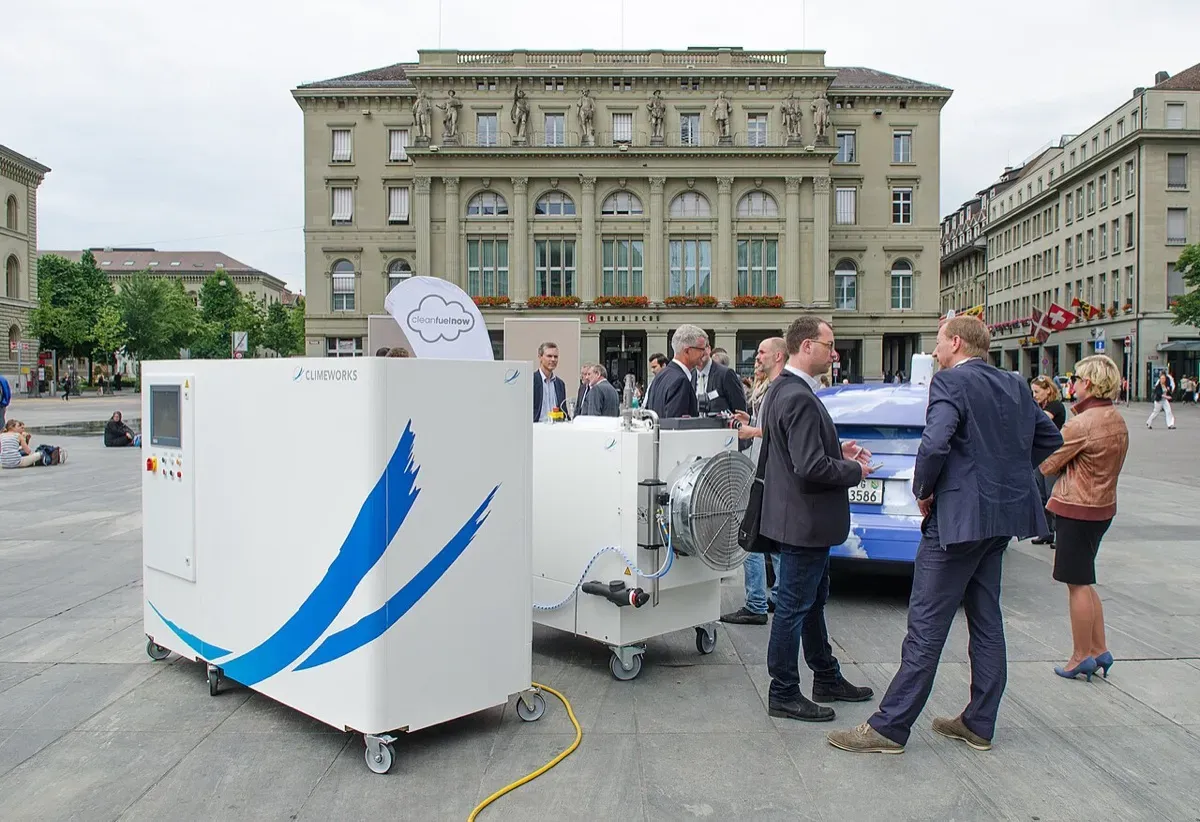
For Europe, Heirloom offers a different model from the sorbent machines of Climeworks or Skytree. Limestone is cheap and abundant across the continent, and its cement and lime industries already master kilns and mineral handling. If Heirloom’s loop proves cheap at scale, European lime producers could adapt it, and buyers of removal credits would gain another durable option.
For India, which is one of the world’s largest cement producers, the idea of using familiar minerals and kilns for carbon removal is attractive. Indian industry has the materials and know-how; what it would need is clean electricity for the kilns and suitable storage for the CO2.
Sources & image credits
- Heirloom, “Heirloom unveils America’s first commercial Direct Air Capture facility”, November 2023. https://www.heirloomcarbon.com/news/heirloom-unveils-americas-first-commercial-direct-air-capture-facility
- Heirloom, “Technology”. https://www.heirloomcarbon.com/technology
- Heirloom, “Projects”. https://www.heirloomcarbon.com/projects
- California Alternative Energy and Advanced Transportation Financing Authority, staff summary 4.A.17, Heirloom Carbon Technologies, 17 June 2025. https://website-prod.treasurer.ca.gov/sites/default/files/2025-12/4a17.pdf
- Trellis, “U.S. carbon removal industry in turmoil as federal support remains uncertain”, 7 May 2025. https://trellis.net/article/carbon-removal-industry-setbacks-federal-support-uncertain/
- Red River Parish Journal (The Center Square), Project Cypress survives DOE review, 22 April 2026. https://www.redriverparishjournal.com/2026/04/22/
- TKMS, “TKMS, Heirloom Carbon Technologies and thyssenkrupp Calvion explore commercialization of Direct Air Capture in Canada”, June 2026. https://www.tkmsgroup.com/news/article/tkms-heirloom-carbon-technologies-and-thyssenkrupp-calvion-explore-commercialization-of-direct-air-capture-in-canada
- Wikimedia Commons, “Tracy aerial.jpg”. https://commons.wikimedia.org/wiki/File:Tracy_aerial.jpg
Images: “Tracy aerial”, Dicklyon, Tracy, California, 8 August 2021, CC BY-SA 4.0, via Wikimedia Commons. Illustrative: shows the city of Tracy, not the Heirloom facility.