The problem
Dutch greenhouses are among the most productive farms on Earth, and they run on extra CO2. Growers raise CO2 levels inside the glass to speed up photosynthesis and lift yields of tomatoes, cucumbers, peppers and flowers. Most of that CO2 has come from burning natural gas in on-site heating systems, and the rest from industrial plants.
Both sources are drying up. Gas-fired heating is being replaced by geothermal and other non-fossil heat, which produces no CO2 to capture. Industrial CO2 is increasingly routed to permanent storage under the North Sea through projects such as Porthos. Research cited by Skytree projects a structural shortage of about 0.8 to 1.4 million tonnes of CO2 a year for the sector by 2031. Without an alternative, crop output and the Netherlands’ place as a horticulture leader are at risk.
The product
Skytree’s story starts in orbit. According to the company’s Australian expansion profile, its founders developed a CO2 scrubber to clean the air on the International Space Station. Its technology is rooted in more than a decade of work linked to the European Space Agency, and in 2014 the company moved “from cosmos to carbon”, applying the idea to the open atmosphere. Chief executive Rob van Straten leads the business.
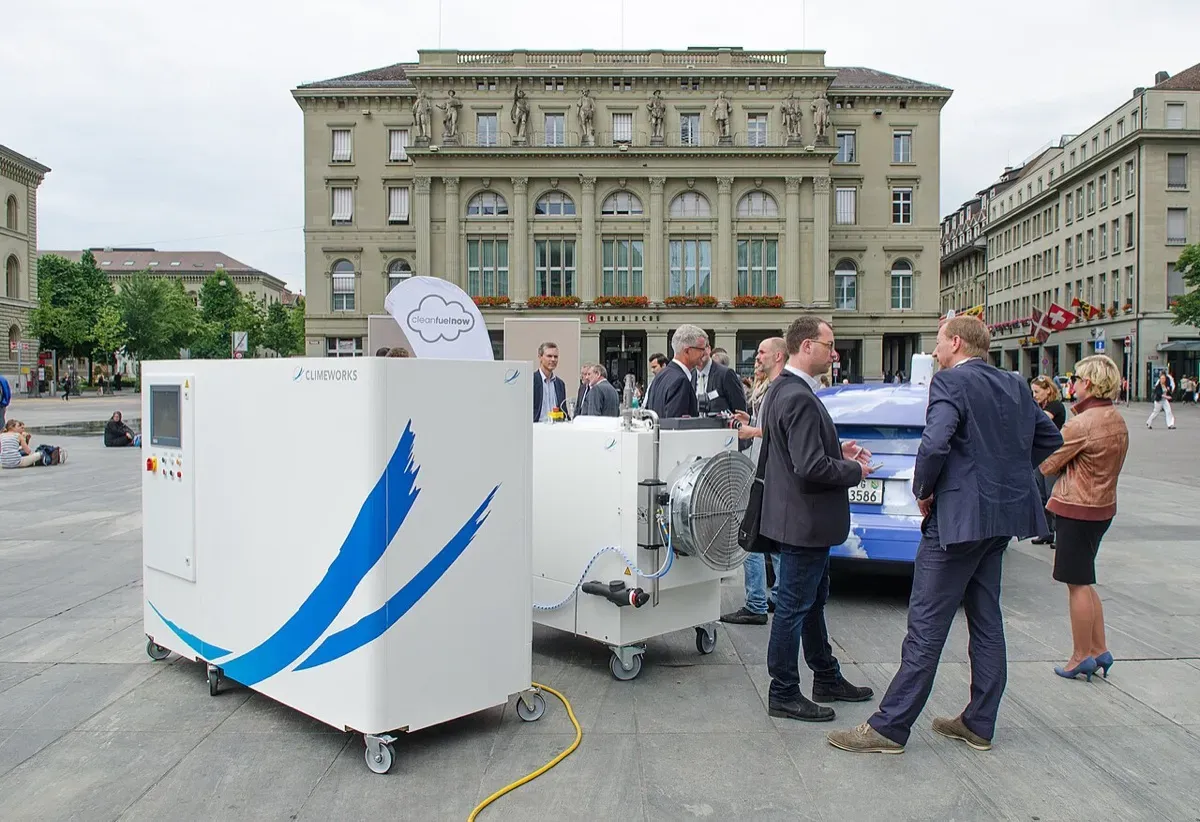
Skytree Stratus is its commercial machine. A single system captures from about 2.5 tonnes of CO2 a day and can be combined into parks of any size. The design uses a proprietary moving bed: the sorbent travels between a cold chamber, where it soaks up CO2, and a hot chamber, where it releases it. Because only the sorbent is heated, not the whole steel machine, Stratus can run 80% of its heating load on heat of 80°C or more, and cut electricity use to as low as 0.9 MWh per tonne.
The company says output stays within plus or minus 5% across seasons, in temperatures from minus 35°C to 50°C, and that modules can be upgraded in the field with better sorbents as they arrive.
How it works
- Capture. Ambient air passes a sorbent in the cold adsorption chamber, where CO2 binds to it.
- Move. The loaded sorbent is carried into a separate hot chamber.
- Release. Low-grade heat, for example from geothermal wells or waste heat, frees the CO2 from the sorbent.
- Return. The cleaned sorbent cycles back to capture more CO2.
- Deliver. The CO2 is piped into greenhouses or, in winter, can be routed to permanent storage.
- Monitor. Software tracks air conditions in real time to keep output stable.
Timeline
| Date | Milestone |
|---|---|
| 2014 | Skytree shifts from space station air scrubbing to atmospheric CO2 |
| 2024 | Austrade begins working with Skytree on Australian market entry |
| 3 Jun 2026 | First commercial Stratus system announced at Lingezegen Energy |
| Jun 2026 | Australian expansion announced, targeting CCU projects first |
| 10 Sep 2026 | First SDE++ subsidies for DAC in Dutch greenhouses, 23,000 tonnes a year |
| 6 Oct 2026 | EUR 1 million development loan from Invest International for an Iceland Skypark |
Impact and numbers
The first commercial system is at Lingezegen Energy, a regional Dutch energy company that serves greenhouses. It is planned to capture 7,200 tonnes of atmospheric CO2 a year for 10 greenhouses covering 80 hectares, and is integrated with a floating solar park and thermal storage. Gasworld reported the project would start at around 900 tonnes a year and scale to 7,200 tonnes by 2027.
In September 2026, Dutch growers’ association Glastuinbouw Nederland announced that a group of greenhouse projects had won the first SDE++ awards for DAC in the Netherlands. SDE++, short for Stimulering Duurzame Energieproductie en Klimaattransitie, is the Dutch operating subsidy for clean energy and climate technologies. The awards cover a combined 23,000 tonnes of CO2 a year and mobilise about EUR 80 million in subsidies, with the projects using Skytree Stratus.
Abroad, Skytree’s Skypark model sets up a local project company with an energy partner, investors and CO2 buyers. The first Skypark outside the Netherlands is planned in Iceland, using geothermal power and heat to replace imported CO2, with a EUR 1 million development loan. In Australia, the company is targeting greenhouse, drinks and future e-fuel customers and states a global goal of capturing 10 million tonnes of CO2 a year by 2030.
Honest caveats
Utilisation, not removal. CO2 piped into a greenhouse is taken up by plants and much of it returns to the air when crops are eaten or decay. The climate gain is replacing fossil CO2, not cleaning up past emissions. Only the winter CO2 sent to storage creates negative emissions.
Subsidy dependent. The first wave of Dutch projects relies on SDE++ operating support. Roughly EUR 80 million for 23,000 tonnes a year shows the gap still to close with fossil CO2 prices.
Early days. Stratus is newly commercial. Its performance figures come from the company, based on more than two years of lab data, and have not yet been confirmed by long-term field results.
Ambitious targets. A goal of 10 million tonnes a year by 2030 is far beyond what any DAC company has delivered so far.
What’s next
Skytree plans to roll out Stratus across Dutch growers with SDE++ support, develop further Skyparks, starting with Iceland where installation is targeted for 2028, and build CCU and later storage projects in Australia. A key test will be whether field units match lab energy figures through Dutch winters and summers.
Why it matters for Europe and green buyers
For Europe, Skytree tackles a real supply problem. As North Sea storage and gas phase-out squeeze CO2 supply, food, drinks and greenhouse producers need a local, fossil-free source. A machine that makes CO2 on site with waste heat keeps food production going while cutting fossil use, and it gives buyers of Dutch tomatoes and flowers a clearer climate story.
For India, protected cultivation in polyhouses is spreading, and Indian food and beverage makers also buy industrial CO2. On-site DAC is still too costly for most Indian growers, but modular units that run on low-grade or solar heat could one day suit industrial clusters with spare heat.
Sources & image credits
- Skytree, “Skytree launches first commercial Skytree Stratus system at Lingezegen Energy”, 3 June 2026. https://skytree.tech/en-en/news/skytree-launches-first-commercial-skytree-stratus-system-at-lingezegen-energy
- Skytree, “Skytree’s DAC technology awarded first-ever SDE++ subsidies for Dutch greenhouse sector”, September 2026. https://skytree.tech/en-en/news/skytree-dac-technology-awarded-first-ever-sde-subsidies-for-dutch-greenhouse-sector-cementing-dac-as-a-structural-pillar-of-the-dutch-co-transition
- Skytree, “Skytree secures EUR 1 million development loan from Invest International for its first Skypark project in Iceland”, October 2026. https://skytree.tech/en-en/news/skytree-secures-1-million-development-loan-from-invest-international-for-its-first-skypark-co-as-a-service-project-in-iceland
- Austrade, “Negative emissions, positive impact: Skytree’s investment in Australia”, 2026. https://international.austrade.gov.au/en/news-and-analysis/success-stories/negative-emissions-positive-impact-skytree-investment-in-australia
- Gasworld, “Skytree to deploy direct air capture system for Dutch greenhouse CO2 supply”, 2026. https://www.gasworld.com/story/skytree-to-deploy-direct-air-capture-system-for-dutch-greenhouse-co2-supply/2251367.article/
- Skytree, company website. https://skytree.tech/en-en
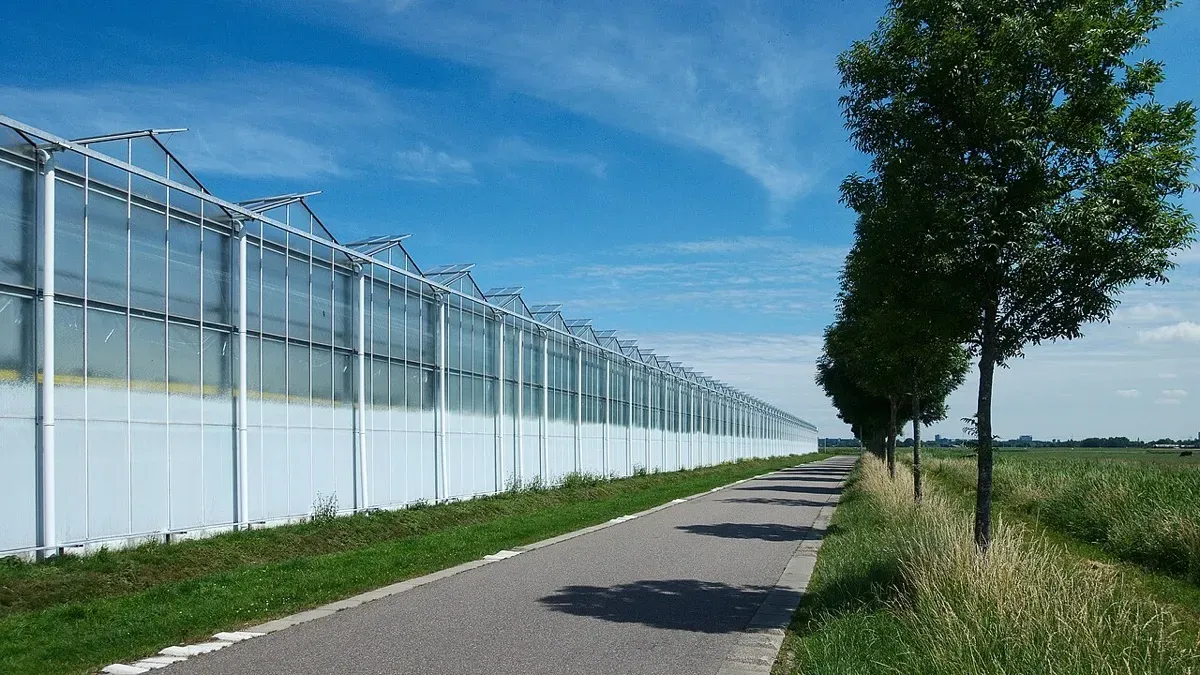
- Wikimedia Commons, “Greenhouse alley - Flickr - Rob Oo.jpg”. https://commons.wikimedia.org/wiki/File:Greenhouse_alley_-_Flickr_-_Rob_Oo.jpg
Images: “Greenhouse alley”, Rob Oo, Het Kraaienest, Midden-Delfland, the Netherlands, 15 June 2020, CC BY 2.0, via Wikimedia Commons. Illustrative: shows Dutch greenhouses, not the Skytree Stratus machine.