The problem
Aluminium is light, strong and corrosion-resistant, which makes it essential for electric vehicles, solar panel frames, energy-efficient windows and packaging. But producing it from ore is one of the most carbon-intensive processes in industry. Bauxite is refined into alumina, which is then split into aluminium by electrolysis in smelters that run around the clock. The International Aluminium Institute (IAI) puts the global average for primary aluminium at about 15 tonnes of CO2e per tonne, from mine to cast house, with much of that coming from coal-fired power in Asia (IAI, primary aluminium GHG intensity).
Recycling changes the picture. Remelting scrap needs only about 5% of the energy of primary production, and IAI data show recycled aluminium has gate-to-gate emissions of about 0.5 tonnes CO2e per tonne (IAI, aluminium facts). The difficulty is that post-consumer scrap, from old window frames, car parts and cans, is mixed, painted and contaminated with other alloys, so most of it has historically gone into lower-grade castings rather than back into high-specification products.
The product
Hydro CIRCAL is Hydro’s brand of prime-quality recycled aluminium made with a minimum of 75% post-consumer scrap. It was launched in 2019, and its recycled content is certified by the third-party auditor DNV (Hydro, January 2024). It is sold mainly as extrusion ingot to Hydro’s own extrusion business and to external customers, who turn it into profiles for windows, curtain walls, furniture, vehicles and electronics.
In January 2024 Hydro announced that its updated Environmental Product Declaration for its European recyclers showed an average footprint of 1.9 kg CO2e per kg of aluminium, down from 2.3 kg, thanks to better sourcing, sorting and traceability of scrap (Aluminium International Journal). Hydro runs a network of around 30 recycling facilities in Europe, North America and Brazil, and has invested NOK 150 million at its Henderson plant in Kentucky to expand CIRCAL production in the United States. A plant-specific EPD for CIRCAL 75R billet from Ghlin, Belgium, reports 1.76 kg CO2e per kg (EPD International).
In early 2023 Hydro went further, delivering the first near-zero footprint aluminium for the European building market based on Hydro CIRCAL 100R, made entirely from post-consumer scrap.
How it works
- Scrap collection: Hydro buys post-consumer scrap, such as window frames and facade elements from demolition sites, end-of-life vehicles and used profiles, often through take-back partnerships with customers.
- Sorting: advanced sorting, including sensor-based systems, separates aluminium from other metals and groups scrap by alloy, which is vital for meeting tight specifications.
- Decoating and remelting: paint and coatings are removed and the scrap is melted in furnaces.
- Alloying: a small share of primary aluminium, and alloying elements, are added to reach the exact chemistry the customer needs; this is why CIRCAL 75R is “at least 75%” rather than 100%.
- Casting: the metal is cast into extrusion billets, ready to be pressed into profiles.
- Verification: DNV audits the post-consumer content, and EPDs document the carbon footprint.
Timeline
| Date | Milestone |
|---|---|
| 2019 | Hydro CIRCAL launched with at least 75% post-consumer scrap |
| Early 2023 | First near-zero CIRCAL 100R delivered for European building projects |
| Jan 2024 | Updated EPD shows 1.9 kg CO2e per kg for European production, down from 2.3 |
| Sep 2026 | EU drops proposed aluminium scrap export duty in favour of waste shipment rules |
| 21 May 2027 | Tighter EU restrictions on waste exports to non-OECD countries take effect |
Impact and numbers
- Footprint: 1.9 kg CO2e per kg in Europe compares with a global primary average of about 15 kg, roughly an eighth.
- Energy: recycling uses about 95% less energy than primary production, according to IAI.
- Plants: CIRCAL is produced at Clervaux, Azuqueca and Wrexham in Europe and at three recyclers in the United States, drawing on a wider network of about 30 Hydro recycling facilities.
- Market reach: a single kilogram of CIRCAL replacing global-average primary metal avoids roughly 13 kg of CO2e, so a 20 kg set of aluminium window profiles would save about a quarter of a tonne (an illustrative calculation), before any differences in design or alloy are considered.
- Scrap policy: from 21 May 2027, EU exports of non-hazardous waste to non-OECD countries will generally be banned unless the destination is approved for that stream, and India, the EU’s largest single destination for aluminium scrap, was not on the Commission’s draft authorised list published in September 2026 (WasteTrade, 22 September 2026).
Honest caveats. Comparisons between recycled and primary aluminium depend on methodology. Recycled aluminium EPDs generally treat post-consumer scrap as burden-free, so the low figures reflect the recycling process, not the original smelting. Recycling cannot meet all demand, because aluminium stays in buildings and vehicles for decades and global consumption is growing, so primary aluminium, ideally made with renewable power, is still needed. Hydro’s 1.9 kg is an average across European plants; individual products and batches vary. More recycling in Europe also means competing for limited scrap with other buyers, rather than automatically adding new supply.
What’s next
Hydro is investing in better sorting technology and more post-consumer scrap capacity to raise recycled content across its range. It also pairs recycled metal with low-carbon primary aluminium made with Norwegian hydropower, sold as Hydro REDUXA, so customers can choose between recycled and renewable-powered primary metal depending on the alloy and volume they need. Tighter EU scrap export rules from 2027 should keep more scrap in Europe, which supports recyclers like Hydro. The EU’s Carbon Border Adjustment Mechanism, in its definitive phase since January 2026 for aluminium, adds a carbon cost to high-emission imports (European Commission).
Why it matters for Europe / green buyers
For architects, window makers, carmakers and electronics brands, recycled aluminium is one of the fastest ways to cut embodied carbon without changing design. Buyers should ask for post-consumer content (not just “recycled”, which may include factory offcuts), third-party certification and product-specific EPDs, and should set up take-back schemes so their own end-of-life products feed the loop.
India is the world’s second-largest aluminium producer and depends heavily on coal power for smelting, while also importing large volumes of European scrap. Europe’s export rules and CBAM will reshape that trade, making domestic scrap collection and low-carbon smelting more urgent for Indian producers.
Sources & image credits
- Hydro, “Pushing the boundaries for low-carbon aluminium with Hydro CIRCAL”, January 2024: https://www.hydro.com/en/global/media/news/2024/pushing-the-boundaries-for-low-carbon-aluminium-with-hydro-circal/
- EPD International, EPD-IES-0003803 Hydro CIRCAL 75R Ghlin billet: https://www.environdec.com/library/epd3803
- Aluminium International Journal, “Hydro improves Circal’s CO2 footprint”: https://aluminium-journal.com/hydro-improves-circals-co2-footprint
- International Aluminium Institute, “Facts about aluminium”: https://international-aluminium.org/landing/aluminium-facts/
- International Aluminium Institute, “Primary aluminium greenhouse gas emissions intensity”: https://international-aluminium.org/statistics/greenhouse-gas-emissions-primary-aluminium/
- International Aluminium Institute, “Recycling saves 95% of the energy and a similar share of greenhouse gas emissions”: https://international-aluminium.org/landing/as-well-as-aluminium-recycling-saving-95-of-the-energy-needed-for-primary-aluminium-production-the-recycling-process-saves-a-similar-percentage-in-greenhouse-gas-emissions/
- WasteTrade, “EU aluminium scrap export restrictions: a critical 2027 shift”, 22 September 2026: https://www.wastetrade.com/news/eu-aluminium-scrap-export-restrictions
- European Commission, “CBAM definitive regime”: https://taxation-customs.ec.europa.eu/carbon-border-adjustment-mechanism/cbam-definitive-regime_en
Images:
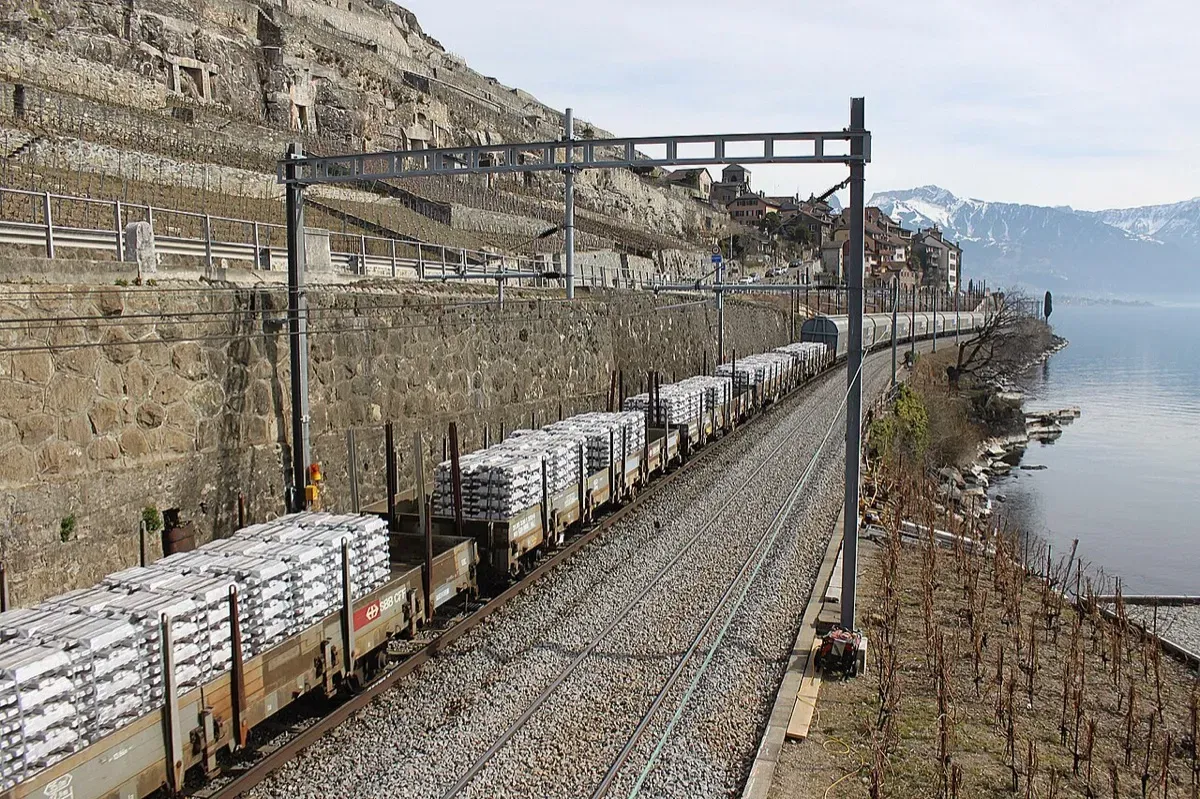
- “Aluminium ingots St-Saphorin 180310” by NAC, licensed CC BY-SA 4.0 (https://creativecommons.org/licenses/by-sa/4.0), via Wikimedia Commons: https://commons.wikimedia.org/wiki/File:Aluminium_ingots_St-Saphorin_180310.jpg