The problem
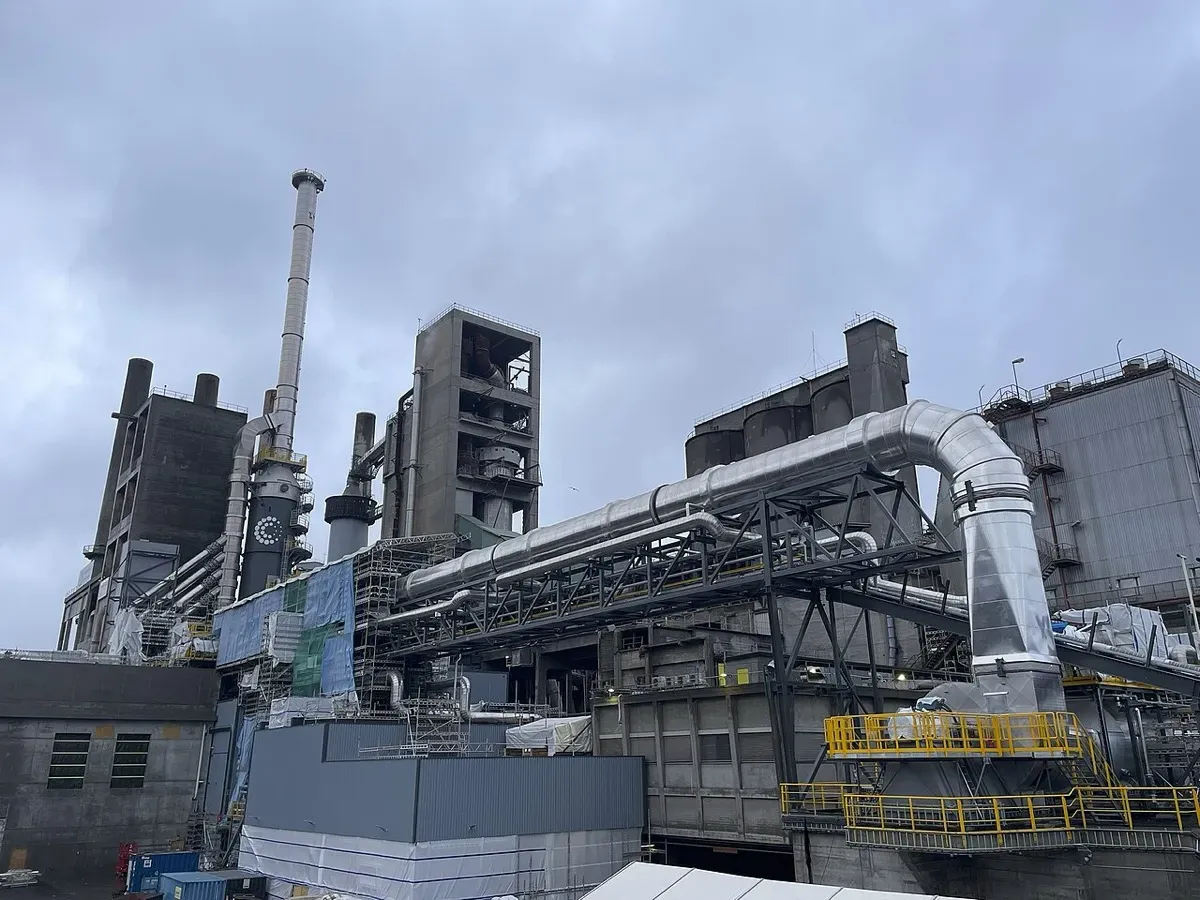
Steel is everywhere, from wind turbines and bridges to trucks and washing machines, and it is one of the hardest materials to decarbonise. According to worldsteel, the industry accounts for 7% to 8% of global anthropogenic greenhouse gas emissions, and in 2024 it emitted on average 1.92 tonnes of CO2 for every tonne of crude steel (worldsteel, 2025). Most of that comes from blast furnaces, where coke made from coal reacts with iron ore to remove the oxygen, releasing CO2.
Recycling scrap in electric arc furnaces helps, but there is not enough scrap to meet global demand, and many high-grade applications still need steel made from virgin iron ore. Policy is now pricing the problem. Since 1 January 2026 the EU’s Carbon Border Adjustment Mechanism (CBAM) has been in its definitive phase for imports of iron and steel, cement, aluminium, fertilisers, electricity and hydrogen, with importers buying certificates from February 2027 (European Commission, CBAM).
The product
SSAB sells two low-emission steel families. SSAB Fossil-free steel is made from iron reduced with fossil-free hydrogen using the HYBRIT process, then melted in an electric arc furnace with fossil-free electricity. In August 2021 SSAB delivered the first trial batch to Volvo Group, describing it as the world’s first fossil-free steel (SSAB, August 2021). Customers including Volvo Group, Epiroc and Peab have since used it in vehicles, machinery and buildings.
SSAB Zero, launched in March 2023, is made from recycled steel melted using fossil-free energy at SSAB Americas’ Montpelier mill in Iowa. SSAB says its fossil carbon emissions are below 0.05 kg CO2e per kg of steel in scope 1 and 2, including purchased energy and transport (SSAB, March 2023). About 20,000 tonnes of SSAB Zero were produced in the second quarter of 2026 (SSAB Q2 2026 report).
Both products have the same mechanical properties as conventional grades, so a designer can swap them in without changing the product.
How it works
The HYBRIT (Hydrogen Breakthrough Ironmaking Technology) route has four steps:
- Fossil-free pellets: LKAB mines iron ore in northern Sweden and turns it into pellets.
- Hydrogen from electrolysis: electrolysers split water using fossil-free electricity, mostly from Swedish hydro and nuclear power. HYBRIT has also tested storing hydrogen in a lined rock cavern at Svartöberget, which can cut the variable cost of hydrogen production by up to 40% by producing when power is cheap.
- Direct reduction: hydrogen removes oxygen from the pellets in a shaft furnace. The by-product is water, not CO2. The result is sponge iron with 98% to 99% metallisation.
- Melting: the sponge iron is melted in an electric arc furnace with fossil-free electricity and small amounts of biocarbon and slag formers.
The HYBRIT final report found that hydrogen reduction and arc furnace melting produce 42 kg of biogenic CO2 per tonne of iron, against 383 kg of fossil CO2 for a conventional natural gas process (excluding gas heating), and that total emissions round to 0.0 tonnes CO2e per tonne of steel (SSAB, 27 August 2024).
Timeline
| Date | Milestone |
|---|---|
| 2016 | SSAB, LKAB and Vattenfall launch HYBRIT |
| 2020 | HYBRIT pilot plant starts in Luleå |
| Aug 2021 | First fossil-free steel delivered to Volvo Group |
| Mar 2023 | SSAB Zero launched |
| Apr 2024 | SSAB decides to build a fossil-free mini-mill in Luleå (about €4.5 billion) |
| Aug 2024 | HYBRIT pilot phase final report; more than 5,000 tonnes of hydrogen-reduced iron produced |
| Jun 2025 | Luleå start-up postponed 12 months to end of 2029 because of grid delays |
| 15 Jun 2026 | LKAB receives environmental permit covering a HYBRIT demonstration plant in Gällivare |
| Q2 2027 | Planned start of Oxelösund electric arc furnace |
Impact and numbers
- National effect: HYBRIT says converting to hydrogen-based ironmaking and arc furnaces could cut Sweden’s total CO2 emissions by more than 10% and Finland’s by 7%.
- Pilot output: more than 5,000 tonnes of hydrogen-reduced iron by August 2024.
- Luleå mini-mill: two electric arc furnaces with a budget of about €4.5 billion; start-up was postponed by 12 months to the end of 2029 because grid reinforcements were delayed (SSAB, June 2025), and SSAB said in July 2026 that the project remained on schedule and within budget.
- Oxelösund: a new arc furnace is being installed, with production planned for the second quarter of 2027 after a one-quarter delay caused by appeals over the power line.
- Iron supply: on 15 June 2026 a Swedish court granted LKAB an environmental permit for its Gällivare operations, including a HYBRIT demonstration plant for up to 1.5 million tonnes of sponge iron a year; the ruling can be appealed and LKAB still has to take an investment decision (LKAB).
Honest caveats. Hydrogen-reduced steel is still made in pilot volumes; most of the “fossil-free” steel customers receive today comes from small batches, and SSAB Zero relies on recycled scrap rather than hydrogen-reduced iron. The large-scale supply of fossil-free sponge iron depends on LKAB’s Gällivare plant, which has a permit but no final investment decision. Timelines have already slipped because of grid capacity, and SSAB’s own report says its plan depends on electricity infrastructure being in place on time. Fossil-free steel carries a price premium, and “0.0 tonnes” is a rounded figure covering scope 1 and 2 emissions, not the full life cycle.
What’s next
The next two years are about switching on electric arc furnaces at Oxelösund and building Luleå, while LKAB decides on Gällivare. SSAB has said the Raahe mill in Finland will follow later, with timing depending on raw materials, finances and market conditions. Rising carbon costs under the EU Emissions Trading System and CBAM should narrow the price gap with conventional steel.
Why it matters for Europe / green buyers
For truck makers, machinery producers, construction firms and data centre builders, SSAB offers one of the few ways to buy near-zero steel today, in grades they already specify. Buyers can sign offtake agreements now to secure future volumes, ask for product-specific environmental product declarations, and check whether claims cover scope 1 and 2 only or the full value chain.
India, the world’s second-largest steel producer, faces CBAM on its exports to Europe and is studying hydrogen-based ironmaking too. The Swedish experience shows both the promise and the infrastructure needed: cheap clean electricity, grid capacity and high-grade iron ore.
Sources & image credits
- SSAB, “The world’s first fossil-free steel ready for delivery”, August 2021: https://www.ssab.com/en/news/2021/08/the-worlds-first-fossilfree-steel-ready-for-delivery
- SSAB, “SSAB launches new zero-emission steel, SSAB Zero”, March 2023: https://www.ssab.com/en/news/2023/03/ssab-launches-new-zeroemission-steel--ssab-zero
- SSAB, “HYBRIT: Six years of research paves the way for fossil-free iron and steel production on an industrial scale”, 27 August 2024: https://www.ssab.com/en/news/2024/08/hybrit-six-years-of-research-paves-the-way-for-fossilfree-iron-and-steel-production-on-an-industrial
- SSAB, “SSAB continues the transformation with a fossil-free mini-mill in Luleå, Sweden”, April 2024: https://www.ssab.com/en/news/2024/04/ssab-continues-the-transformation-with-a-fossilfree-minimill-in-lule-sweden
- SSAB, “SSAB postpones commissioning of new steel mill in Luleå by 12 months”, June 2025: https://www.ssab.com/en/news/2025/06/ssab-postpones-commissioning-of-new-steel-mill-in-lule-by-12-months
- SSAB, Q2 2026 interim report, July 2026: https://www.ssab.com/-/media/files/company/investors/interim-reports/2026/ssab-q2-2026-report_eng_f.pdf
- LKAB, “LKAB granted environmental permit for operations in Gällivare”, June 2026: https://lkab.com/en/press/lkab-granted-environmental-permit-for-operations-in-gallivare/
- worldsteel, “Climate change and the production of iron and steel”, 2025: https://worldsteel.org/climate-action/climate-change-and-the-production-of-iron-and-steel/
- European Commission, “CBAM definitive regime”: https://taxation-customs.ec.europa.eu/carbon-border-adjustment-mechanism/cbam-definitive-regime_en
Images:
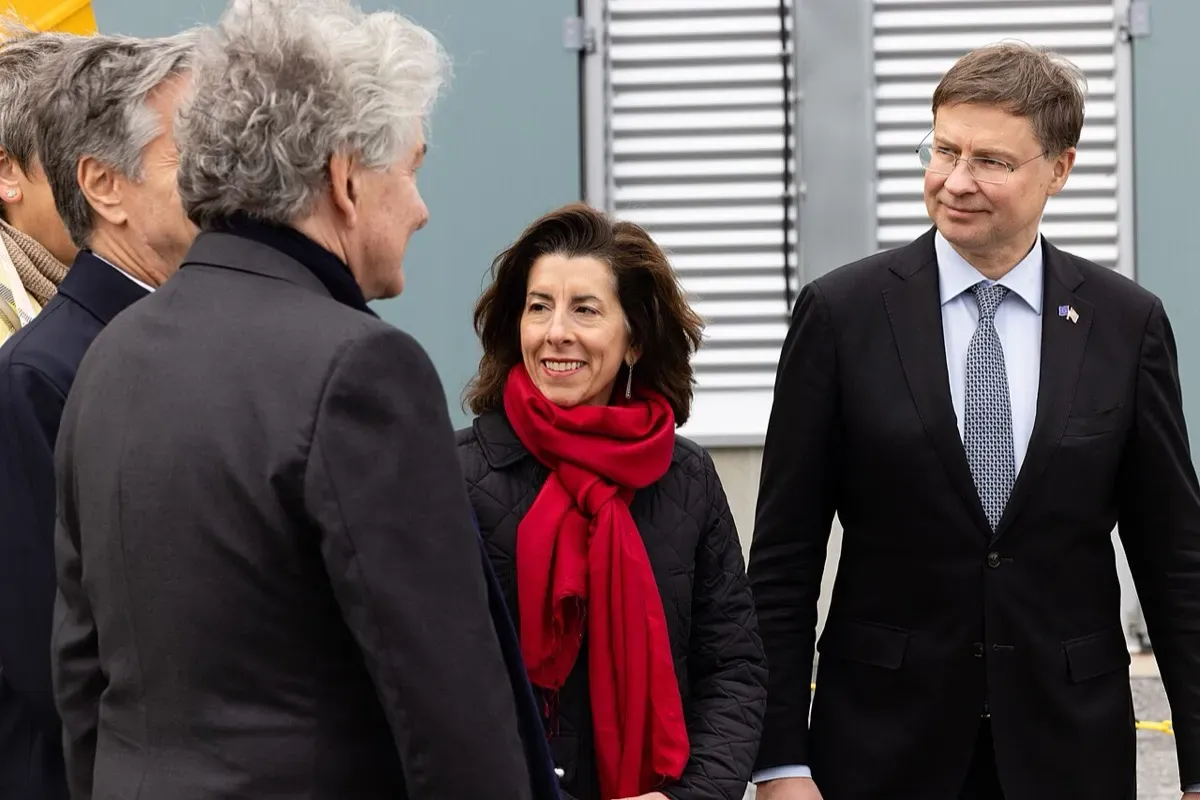
- “Secretary Raimondo Tours Hybrit Steel Plant” by the U.S. Department of State (photo: Chuck Kennedy), public domain, via Wikimedia Commons: https://commons.wikimedia.org/wiki/File:Secretary_Raimondo_Tours_Hybrit_Steel_Plant.jpg