The problem
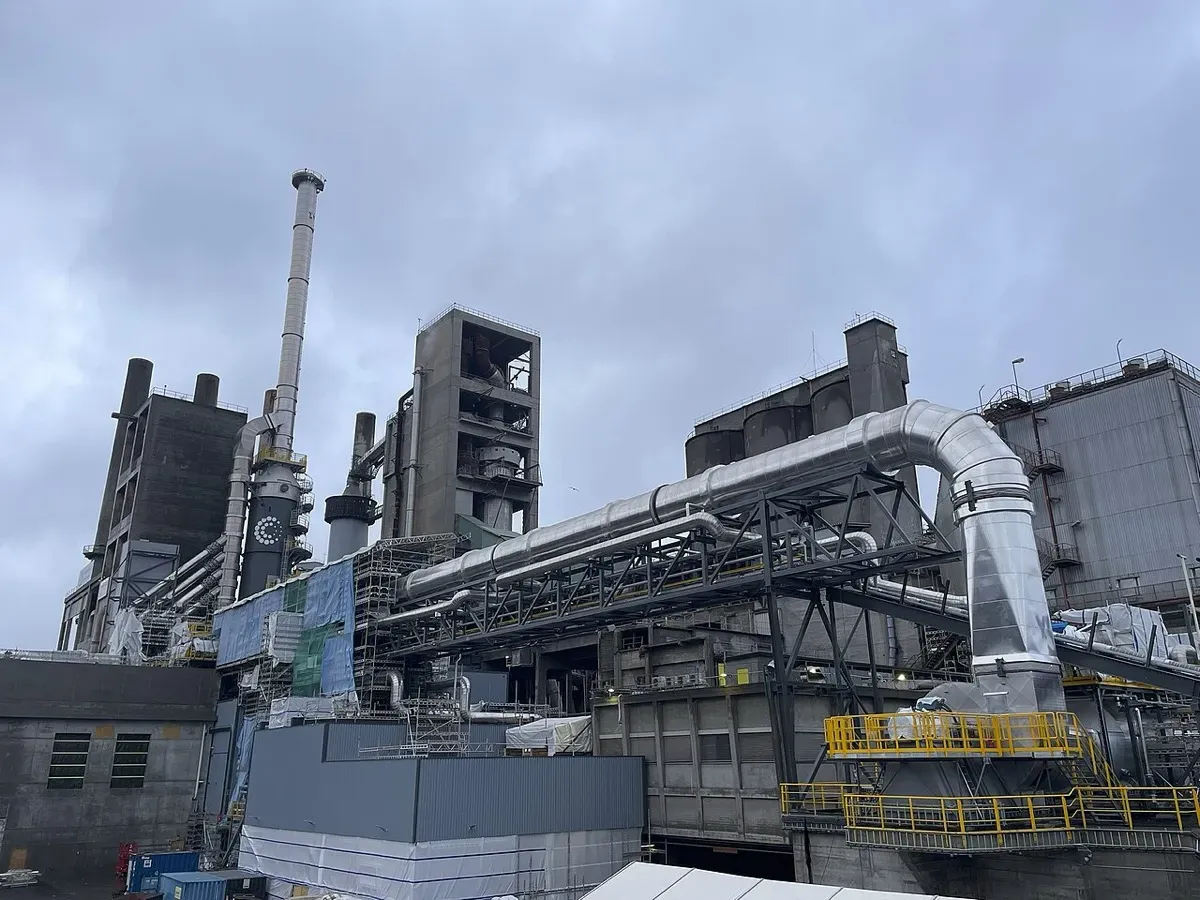
Flat glass is energy-intensive. A float furnace runs continuously for 15 to 20 years, burning large amounts of natural gas, and the raw materials themselves release CO2: soda ash and limestone give off carbon dioxide as they melt. As buildings become more energy efficient in use, the “embodied” carbon of materials like glass, steel and concrete makes up a growing share of a building’s lifetime footprint.
Recycled glass, known as cullet, is the main lever. It melts at a lower temperature than virgin batch and avoids the process emissions from carbonates. But most building glass is never recycled back into windows. Glass for Europe, the industry association, estimates that only about 5% of end-of-life building glass is currently recycled into new flat glass; most ends up in landfill or is downcycled into containers or insulation (Glass for Europe, 2024). The same study found that European flat glass furnaces used on average about 26% cullet in 2018, much of it the factories’ own internal waste. Collecting clean, sorted cullet from renovation and demolition sites is the bottleneck: old windows have to be dismantled carefully, separated from frames, sealants and coatings, and kept free of ceramics and metals that cause defects in new glass.
The product
ORAÉ is Saint-Gobain’s lowest-carbon flat glass. Its launch was announced in July 2022, and in April 2023 it received a third-party verified Environmental Product Declaration (EPD), which the company describes as a world first for low-carbon glass. The EPD gives 6.64 kg CO2e per m² from cradle to grave for 4 mm glass, 42% below Saint-Gobain Glass’s European baseline for clear glass (Saint-Gobain, Glass for Facade 2022; EPD International).
Crucially, ORAÉ performs exactly like standard glass. Light transmission, U-value and solar factor are the same, so architects do not have to compromise. It can be coated with Saint-Gobain’s PLANITHERM low-emissivity or COOL-LITE solar-control coatings, and toughened or laminated for safety glazing (Saint-Gobain Glass UK). COOL-LITE XTREME ORAÉ combines the low-carbon substrate with a high-performance solar-control coating for facades, reducing both embodied carbon and the operational energy needed for cooling.
Early projects in France included Carré Invalides with Nexity, Kalifornia with Bouygues and the Polyclinique du Parc in Caen with Icade Santé.
How it works
- Collecting cullet: Saint-Gobain sources external cullet from glass processors’ offcuts and from renovation and demolition sites through take-back schemes, such as its UK Cullet Return Programme.
- Batch recipe: cullet makes up 55% to 65% of the batch, according to the EPD, replacing much of the sand, soda ash, limestone and dolomite.
- Melting: cullet melts at lower energy than raw materials and releases no carbonate CO2, so the furnace uses less gas per tonne.
- Renewable electricity: electricity used on site comes from renewable sources.
- Float process: molten glass floats on a bath of molten tin to form perfectly flat sheets, which are annealed, cut and shipped.
- Campaigns: because clean external cullet is limited, ORAÉ is made in production campaigns rather than continuously.
The EPD shows that the remaining footprint is dominated by natural gas combustion in the furnace, which is why electrification is the next step.
Timeline
| Date | Milestone |
|---|---|
| May 2022 | One-week zero-carbon flat glass trial at Aniche using 100% cullet and 100% biogas plus decarbonised electricity |
| Jul 2022 | ORAÉ launch announced |
| Apr 2023 | Verified EPD published: 6.64 kg CO2e per m² for 4 mm glass |
| 2023 | COOL-LITE XTREME ORAÉ added for low-carbon facades |
| Aug 2026 | Saint-Gobain and AGC Glass Europe announce a large hybrid electric furnace at Avilés |
| H2 2027 | Avilés hybrid furnace expected to start production |
Impact and numbers
- Carbon saving: about 42% lower cradle-to-grave footprint than Saint-Gobain’s standard European clear glass, verified under EN 15804.
- Recycled content: 64% under ISO 14021, with the EPD valid until April 2028 (EPD PDF).
- Zero-carbon proof: in May 2022 Saint-Gobain ran its Aniche furnace for a week on 100% recycled glass and 100% green energy from biogas and decarbonised electricity, showing near-zero production is technically possible (Glass International).
- Electrification: construction of the Avilés hybrid furnace, co-funded by the EU Innovation Fund and building on the VOLTA demonstration project with AGC, is scheduled to begin in January 2027 (AGC, 31 August 2026).
Honest caveats. ORAÉ is about 40% lower carbon, not zero carbon; most of its remaining footprint still comes from burning natural gas. Its availability is limited by the supply of clean cullet, so it is made in campaigns and can have longer lead times. Using a scarce resource for one premium product can shift recycled content away from standard lines, so the real climate gain depends on growing total cullet collection, not just allocating it. Comparisons with other manufacturers’ glass should use EPDs with the same scope and thickness.
What’s next
Saint-Gobain’s path combines more cullet, biogas and electric melting. The Avilés hybrid furnace will test large-scale electrification, while Glass for Europe is pushing for better collection and sorting of building glass during renovation. If those efforts succeed, the 2022 Aniche trial points to a future of near-zero flat glass. These steps sit within Saint-Gobain’s group commitment to reach carbon neutrality by 2050, and the company has integrated ORAÉ’s environmental data into Calumen, its glazing configuration tool, so designers can compare footprints at the specification stage.
Why it matters for Europe / green buyers
Under the recast Energy Performance of Buildings Directive (EU) 2024/1275, the life-cycle global warming potential of new buildings must be calculated and disclosed from 2028 for large buildings and from 2030 for all new buildings (EUR-Lex). Specifying ORAÉ is one of the easiest embodied-carbon wins for facades and windows. Practical steps for buyers: specify ORAÉ or an equivalent EPD-verified low-carbon substrate early, because campaign production means longer lead times; ask glaziers for product-specific EPDs rather than generic data; and write glass take-back into demolition and refurbishment contracts. Developers and contractors who return offcuts and old glazing help close the loop and increase the supply of the very cullet that low-carbon glass depends on.
In India, Saint-Gobain produces ORAÉ at its World Glass Complex in Rajasthan, using recycled content and renewable energy, giving Indian green-building projects a local low-carbon option (Construction Digital).
Sources & image credits
- Saint-Gobain Glass UK, “ORAÉ” product page: https://www.saint-gobain-glass.co.uk/product/orae/
- Saint-Gobain, “Glass for Facade 2022”: ORAÉ, the world’s first low carbon glass: https://media.saint-gobain.com/building-glass-europe/glass-for-facade-2022/10-11/
- EPD International, EPD-IES-0008970 ORAÉ 4 mm: https://environdec.com/library/epd8970
- Saint-Gobain Glass, Environmental Product Declaration ORAÉ 4 mm (PDF), April 2023: https://www.saint-gobain-glass.es/es/documents/dap/epd-orae-4mm.pdf
- Glass International, “Saint-Gobain secures zero-carbon flat glass achievement”, 17 May 2022: https://www.glass-international.com/news/saint-gobain-secures-zero-carbon-flat-glass-achievement
- Glass for Europe, “Recycling of end-of-life building glass”, 2024: https://glassforeurope.com/wp-content/uploads/2025/05/GfE-Recycling-of-end-of-life-building-glass_2024.pdf
- AGC Inc., “AGC Glass Europe and Saint-Gobain launch large-scale hybrid furnace project”, 31 August 2026: https://www.agc.com/en/news/detail/1212108_2814.html
- Directive (EU) 2024/1275 on the energy performance of buildings (recast): https://eur-lex.europa.eu/eli/dir/2024/1275/oj
- Construction Digital, “Why Saint-Gobain is expanding its India manufacturing hub”: https://constructiondigital.com/news/saint-gobain-expanding-india-manufacturing-hub
Images:
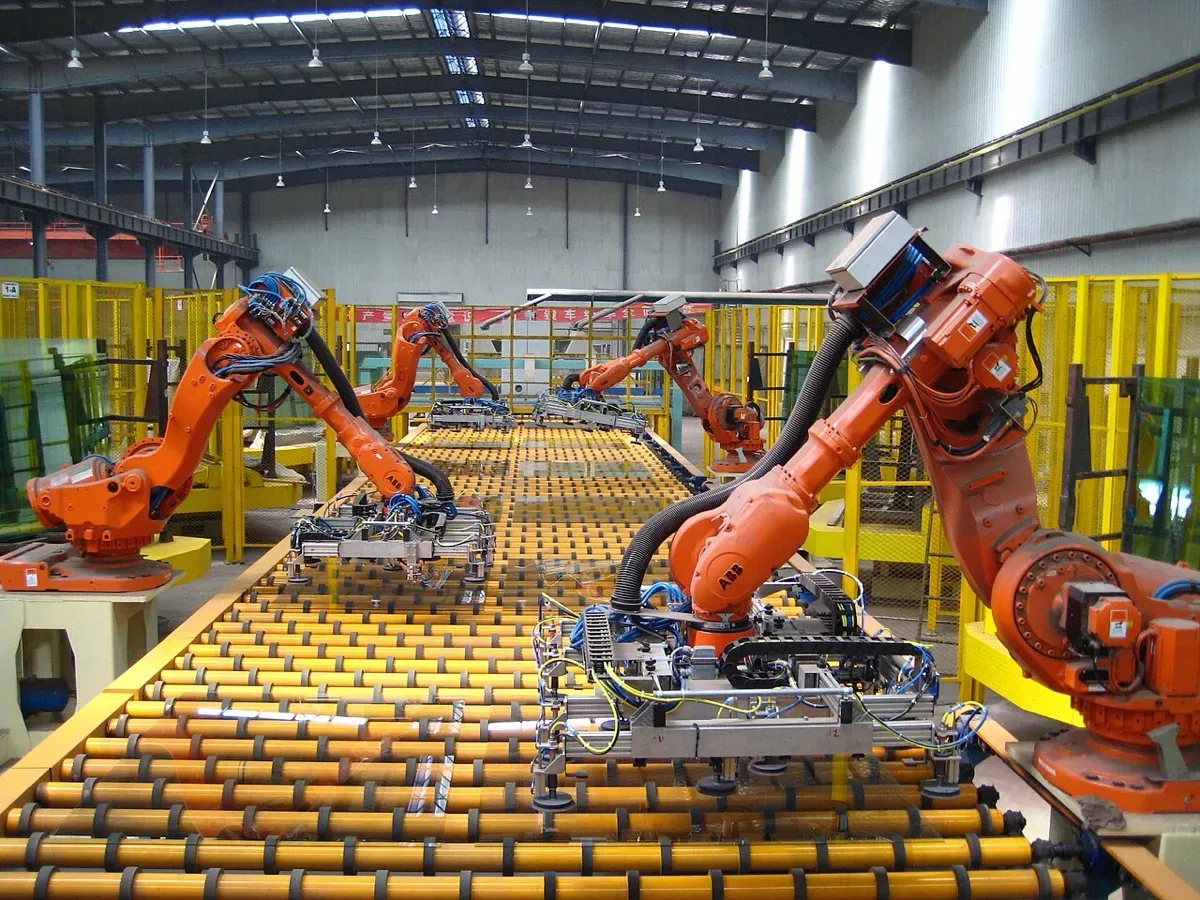
- “Float Glass Unloading” by ICAPlants, licensed CC BY-SA 3.0 (https://creativecommons.org/licenses/by-sa/3.0), via Wikimedia Commons: https://commons.wikimedia.org/wiki/File:Float_Glass_Unloading.jpg