
The problem
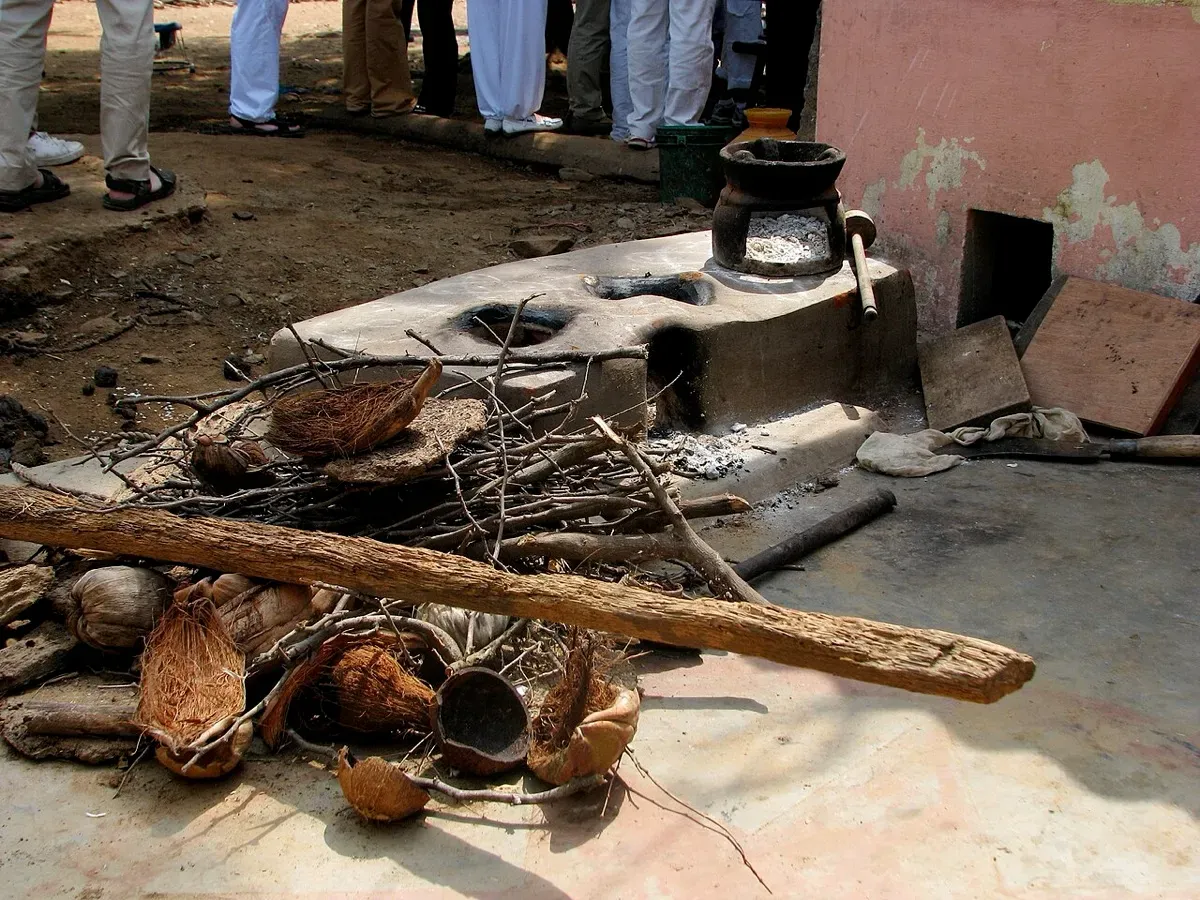
Around 2.1 billion people, roughly a quarter of the world’s population, still cook on open fires or inefficient stoves fuelled by wood, dung, crop waste, kerosene or coal. The World Health Organization estimates that household air pollution caused about 2.9 million premature deaths in 2021, including more than 309,000 children under five (WHO fact sheet). Women and girls carry most of the burden, from smoke exposure to hours spent collecting fuel.
India has made huge progress with LPG: about 10.58 crore (105.8 million) connections under the Pradhan Mantri Ujjwala Yojana by July 2026. But refills remain the weak point. Beneficiaries averaged 4.71 cylinders a year in 2025-26, and the West Asia crisis pushed the market price of a 14.2 kg cylinder to ₹1,695 in June 2026 against a retail price held at ₹942, leaving a large implicit subsidy. The government has also cut the number of refills eligible for the targeted ₹300 subsidy from nine to four a year (Lok Sabha answer, 23 July 2026). Meanwhile, manure from India’s very large cattle herd emits methane, a greenhouse gas many times more potent than CO2 over the short term.
The product
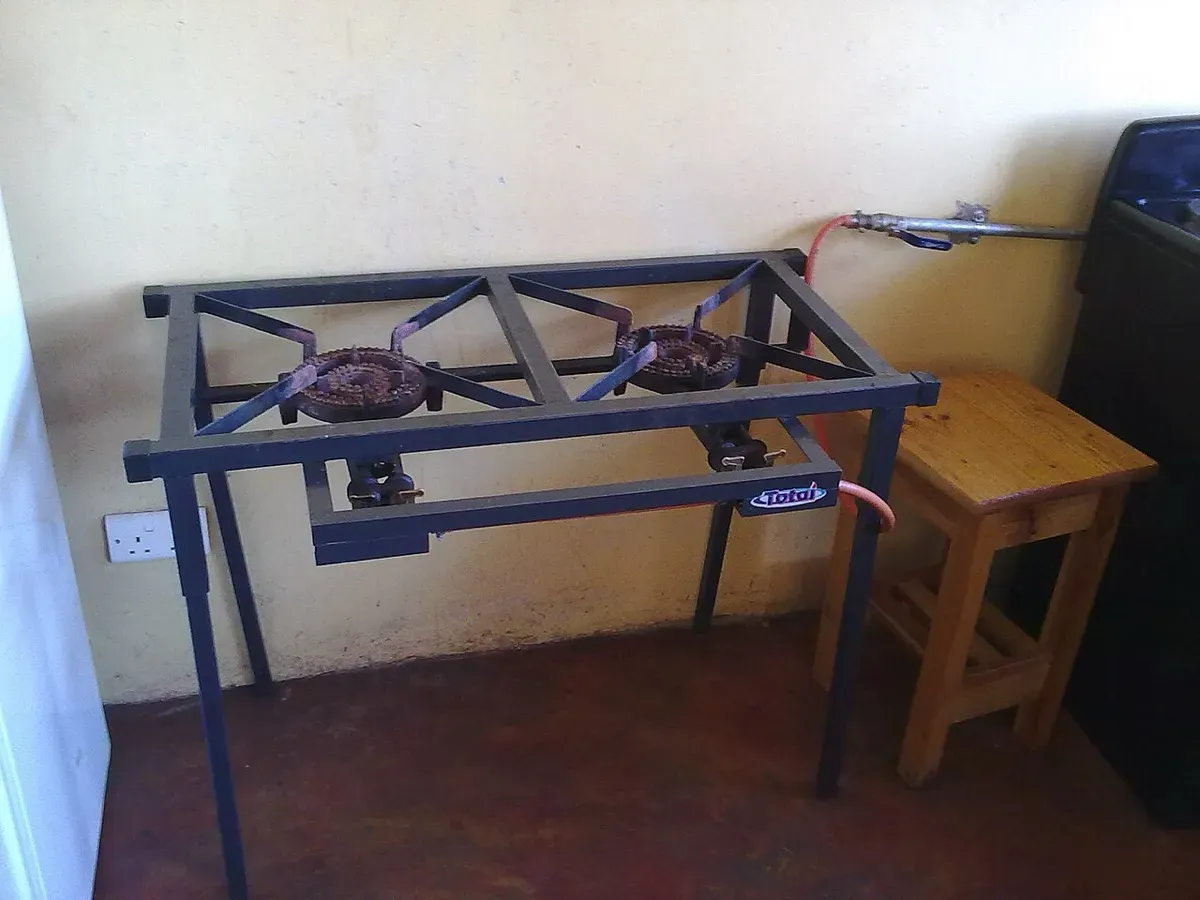
A biodigester tackles both problems at once. Sistema.bio’s design is a long, sealed bag of industrial-grade LLDPE geomembrane laid in a shallow trench, with an inlet tank, an outlet for bioslurry, a gas line, safety valves, an H2S filter and a biogas stove. The company says the geomembrane lasts more than 15 years, travels easily to remote villages and can be assembled in a day, and that its systems cost around 20% less than traditional brick-and-concrete biogas plants (Financial Express, 6 June 2023).
The most popular Indian model, the Sistema 6, suits a farm with three or four cattle. It provides three to four hours of cooking gas a day and more than 100 litres of bioslurry. The company says it typically pays for itself within about 18 months, and that India’s central financial assistance, starting from ₹14,350 per unit, shortens that further (The CSR Universe interview). The company’s Kenya catalogue lists a daily feed of about 45 litres of manure for the Sistema 6 and gas output of about 1.7 m³ a day, enough for around three hours on one burner (Sistema.bio catalogue). Larger models such as the Sistema 40, 120 and 200 serve medium dairies and can power engines or generators.
Tata Trusts brought the company to India, and in June 2023 it opened what it called the world’s largest biogas plant factory at Chakan, near Pune, with capacity for 100,000 units a year and exports to Asia and Africa.
How it works
- Feeding: each morning the farmer mixes fresh manure with water and pours it into the inlet tank.
- Digestion: inside the sealed bag, bacteria break down the organic matter without oxygen, producing biogas that is roughly 50% to 70% methane.
- Gas use: the gas collects in the top of the bag and flows through a pipe, filter and valves to a biogas stove in the kitchen.
- Bioslurry: digested slurry flows out the other end. It is a nutrient-rich liquid fertiliser that the company says can replace 70% to 75% of chemical fertiliser.
- Climate effect: methane that would have escaped from open manure piles is captured and burned, and the gas displaces firewood or LPG.
Timeline
| Date | Milestone |
|---|---|
| 2010 | Sistema.bio founded in Mexico |
| c. 2018 | India operations begin with support from Tata Trusts |
| 5 Jun 2023 | Chakan, Pune factory opened (100,000 units a year) |
| 2024 | 26,500 systems installed worldwide in one year; $18.5 million raised |
| 9 Apr 2025 | 100,000 biogas plants in India across 24 states |
| May 2025 | MoU with Danone for 6,500 biodigesters by 2030 |
| Mar 2026 | India’s National Household Biogas Programme period ends; extension under discussion |
Impact and numbers
- Global reach: by the end of 2024 the company counted 123,500 biodigesters in 35 countries, reaching 740,000 farmers and family members and reducing about 1.5 million tonnes of CO2e a year, by its own estimate (Sistema.bio Annual Report 2024).
- India: 100,000 plants across 24 states by April 2025, serving more than 600,000 people, with a goal of 1 million farmers by 2030 (Sistema.bio, 9 April 2025). By 2026 India installations exceeded 124,000 (Iamrenew interview).
- Dairy partnerships: Amul aims to install 17,000 Sistema 6 units in Gujarat’s Kheda, Anand and Mahisagar districts; Nestlé’s Punjab programme has installed more than 6,000 since 2023; Danone plans 6,500 across Mexico, Morocco and India by 2030 (Sistema.bio and Danone).
- Satisfaction: in its 2024 survey, the company reported that over 97% of clients saw cost savings or other financial benefits.
Honest caveats. Most numbers here come from the company. Biodigesters only deliver if they are fed every day and maintained; the company itself has said that about half of India’s estimated five million older biogas plants are not working. Leaking digesters can release methane, cutting the climate benefit, and carbon credit claims for household energy projects have faced criticism for over-crediting, so buyers of credits should check monitoring methods. The economics depend on subsidies: India’s national household biogas programme ended in March 2026 and an extension was still under discussion. Families with fewer than two or three cattle may not produce enough manure.
What’s next
Sistema.bio is pushing deeper into dairy supply chains, where milk buyers such as Amul, Nestlé and Danone want to cut farm methane in their Scope 3 emissions. Larger “productive use” systems that run engines and farm machinery are growing in Latin America, and Africa is the fastest-growing region: in 2024 Kenya, Uganda and Malawi together added 4,800 units, with Kenya alone accounting for 89% of them, according to the annual report. In India, the LPG price shock of 2026 has strengthened the case for local biogas.
Why it matters for Europe / green buyers
For European food companies sourcing dairy, coffee or cocoa from smallholders, biodigesters are a practical Scope 3 lever that also improves farm income and household health. Corporate buyers and CSR funds should insist on metered monitoring, independent verification and after-sales service commitments. In Europe itself, the same anaerobic digestion principle powers thousands of farm and municipal biogas plants that feed the grid with biomethane.
Sources & image credits
- Sistema.bio, “Annual Activity Report 2024”, March 2025: https://sistema.bio/wp-content/uploads/2025/03/Annual-Activity-Report-2024.pdf
- Sistema.bio, “First 100,000 biogas plants and counting: Sistema.bio drives biogas revolution in India”, 9 April 2025: https://sistema.bio/blog/driving-biogas-revolution-india/
- The Financial Express, “Sistema.bio sets up largest facility for biogas plants”, 6 June 2023: https://www.financialexpress.com/business/industry-sistema-bio-sets-up-largest-facility-for-biogas-plants-3114696/
- The CSR Universe, interview with Piyush Sohani, Sistema.bio: https://thecsruniverse.com/articles/sistema-bio-on-unlocking-methane-mitigation-rural-prosperity-and-india-s-climate-future-through-biogas-solutions
- Iamrenew, “Biogas sector awaits solar-like push: Piyush Sohani, Sistema.bio”, 2026: https://www.iamrenew.com/interviews/indias-biogas-sector-awaits-solar-like-policy-push-at-grassroot-levels-piyush-sohani-md-sistema-bio/
- Sistema.bio, “Sistema.bio signs MoU with Danone to deploy 6,500 biodigesters across dairy farms”, May 2025: https://sistema.bio/blog/sistemabio-danone-deploy-biodigesters/
- Sistema.bio, product catalogue (Kenya): https://sistema.bio/wp-content/uploads/1905_KENYA_CATALOGO_compressed.pdf
- World Health Organization, “Household air pollution” fact sheet: https://www.who.int/news-room/fact-sheets/detail/household-air-pollution-and-health/
- Lok Sabha, Unstarred Question No. 734, “Implementation of PMUY”, answered 23 July 2026: https://sansad.in/getFile/lsapps/loksabhaquestions/annex/188/AU734_YoIA4C.pdf
Images:
- “Biogas stove” by SuSanA Secretariat, licensed CC BY 2.0 (https://creativecommons.org/licenses/by/2.0), via Wikimedia Commons: https://commons.wikimedia.org/wiki/File:Biogas_stove_(5268651030).jpg

.jpg)