The problem
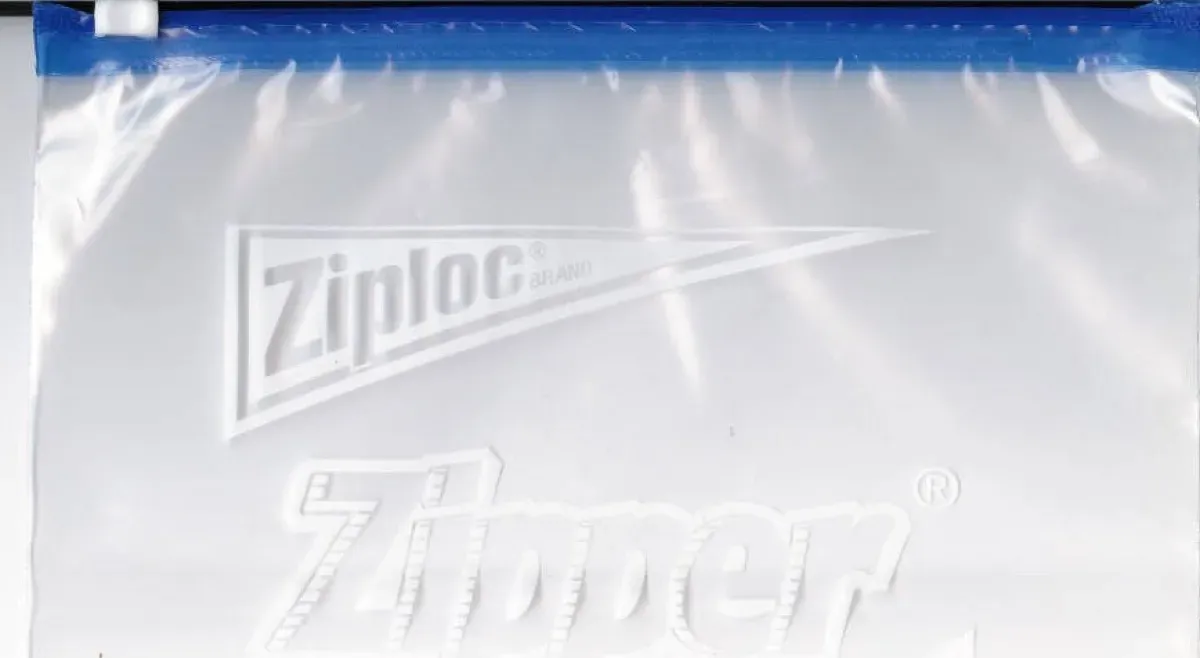
Zip-top food storage bags are made of thin polyethylene. They are cheap and handy, but most households use them once or twice and throw them away. Dirty film bags are almost never recycled at kerbside, so they go to landfill or incineration, and some end up as litter. Stasher, citing an analysis of US plastic recycling, says 95% of plastic in the US is never recycled (Stasher).
Founder Kat Nouri, a mother of three, was dismayed by how much single-use plastic she used to pack her children’s school lunches. She had already built a successful brand, Modern Twist, selling silicone placemats and baby bibs, and asked why the same material could not make food storage bags that are used again and again instead of once. She launched Stasher in 2016 and began persuading retailers to stock it (NPR).
The product
A Stasher bag is a flexible pouch made of platinum-cured, food-grade silicone. Stasher says its silicone meets US FDA food safety requirements and EU food safety standards, and contains no lead, latex, BPA, BPS or phthalates (Stasher FAQ).
Key features:
- Pinch-Loc seal: a thick ridge that closes when pressed together, without a plastic zip.
- Heat and cold: it can be used in the freezer, microwave, dishwasher and an oven up to 425°F (218°C), so food can be stored, cooked sous-vide or reheated in the same bag.
- Sizes: sandwich, snack, half-gallon, stand-up and bowl formats; a seven-piece starter kit sells for USD 87.99 (Stasher).
- Guarantee: a lifetime guarantee replaces a bag damaged through normal use.
The bags are designed in Emeryville, California, and made in China at a factory that holds SA8000 social certification for decent working conditions. Online orders ship without extra packaging, and retail packaging is 70% post-consumer recycled material.
How it works
- Fill: food, leftovers, snacks or toiletries go into the bag.
- Seal: the Pinch-Loc ridge is pressed closed along its length.
- Store or cook: the bag goes into the fridge, freezer, microwave (with the seal slightly open) or oven.
- Wash: the bag is washed by hand or in the dishwasher and dried upside down.
- Recycle: at the end of its life, US customers can send it to TerraCycle with a free shipping label; Stasher notes that most recycling facilities do not accept silicone.
Timeline
| Date | Milestone |
|---|---|
| 2016 | Kat Nouri founds Stasher |
| 12 Dec 2019 | SC Johnson acquires Stasher |
| 19 Nov 2021 | Nouri tells Stasher’s story on NPR’s How I Built This |
| Jun 2023 | Stasher customer survey on how long bags are used |
| 23 Jun 2026 | Prime Day deal cuts a three-pack to USD 18.04 |
Impact and numbers
- Bags replaced (lifetime): Stasher’s claims page estimates 31 uses a year and says a bag can replace about 155 single-use plastic bags over its life, based on a 2017 Cambridge Group analysis of 2,000 US consumers and a June 2023 customer survey (Stasher).
- Bags replaced (per year): the FAQ says one bag “replaces 260 single-use plastic bags per year” (Stasher FAQ).
- Durability: customers who have used Stasher products for more than five years report that most are still in use unless damaged.
- Lids: Stasher says one Stretch Lid can replace 10 rolls of plastic wrap a year.
- Price: during Amazon Prime Day 2026, a three-pack was cut from USD 44.67 to USD 18.04 (The Guardian).
Honest caveats. Stasher’s two savings figures do not match: 155 bags over a lifetime and 260 bags a year differ by a factor of about eight, and neither has been independently verified. A silicone bag is far heavier and more energy-intensive to make than a thin plastic bag, so it must be used many times to come out ahead, and Stasher has not published a life-cycle assessment comparing the two. Silicone is a synthetic polymer made from silicon and fossil-derived inputs; it is durable but hard to recycle, and free TerraCycle take-back is only available in the US. The bags are made in China and shipped long distances. Stasher also sells “recyclable paper bags”, which shows the parent company sees a market for single-use too. Finally, Stasher’s owner, SC Johnson, also owns Ziploc, one of the best-known brands of single-use zip bags, so the group profits from both the problem and the alternative.
What’s next
Under SC Johnson, Stasher has expanded from bags into bowls, stretch lids and travel and beauty pouches, and is widely discounted through large online retailers. A reusable bag that lasts for years also sells less often than a box of disposables, so growth depends on new households and new product types. Its next test is whether it can extend its US-only TerraCycle recycling programme to other markets, which Stasher says it is working on. For now, a damaged bag outside the US has no free route to recycling, so the lifetime guarantee and repurposing ideas on its blog are the main ways to keep bags out of the bin.
Why it matters for Europe / green buyers
The EU’s Single-Use Plastics Directive targets items such as cutlery, plates, straws and food containers, and asks member states to reduce consumption of single-use cups and food containers (EUR-Lex). Zip-top storage bags bought for home use are not on its list, so the shift to reusables in the kitchen depends on consumers. For European buyers, the key questions are how many times a reusable will really be used, where it is made, and what happens at the end of its life. Silicone bags make most sense for people who freeze, marinate or pack lunches every day.
In India, plastic carry bags thinner than 120 microns have been banned since 31 December 2022 alongside a list of single-use plastic items (PIB), and many households already reuse steel tiffins and glass jars for food storage. A silicone bag is a niche, imported product there; the bigger opportunity is to keep and strengthen those existing reuse habits.
Sources & image credits
- Stasher, “Claims”: https://www.stasherbag.com/pages/claims
- Stasher, “FAQ”: https://www.stasherbag.com/pages/faq
- Stasher, “Reusable silicone bag starter kit”: https://www.stasherbag.com/products/reusable-silicone-bag-starter-kit
- TerraCycle, “Stasher Bag Free Recycling Program”: https://www.terracycle.com/en-US/brigades/stasher
- NPR, How I Built This, “Stasher and Modern-Twist: Kat Nouri”, 19 November 2021: https://www.npr.org/2021/11/19/1057386872/stasher-and-modern-twist-kat-nouri
- Milwaukee Business Journal, “SC Johnson acquires Stasher silicone storage bags”, 12 December 2019: https://www.bizjournals.com/milwaukee/news/2019/12/12/sc-johnson-acquires-stasher-silicone-storage-bags.html
- The Guardian, The Filter US, Stasher reusable silicone bags sale, 23 June 2026: https://www.theguardian.com/thefilter-us/2026/jun/23/stasher-reusable-silicone-bags-sale
- EUR-Lex, Directive (EU) 2019/904 on the reduction of the impact of certain plastic products on the environment: https://eur-lex.europa.eu/eli/dir/2019/904/oj
- Press Information Bureau, Government of India, ban on identified single-use plastic items from 1 July 2022: https://www.pib.gov.in/PressReleaseIframePage.aspx?PRID=1837518
Images:
- “Ziplock” by User:Mattes, 2005, released into the public domain, via Wikimedia Commons: https://commons.wikimedia.org/wiki/File:Ziplock.jpg