The problem
A timber harvest involves many parties. The forest owner or manager plans which stands to cut. A contractor sends a harvester and a forwarder. A buyer expects a certain volume and mix of log sizes. Certification bodies such as FSC and PEFC want proof that rules on buffer zones, soil and retained trees were followed. Too often these parties work from different spreadsheets, paper maps and phone calls, and nobody sees what is happening in the forest until the job is over.
The result is waste. Logs are cut to the wrong lengths, volumes do not match the sale, and mistakes near rivers or protected areas are found late. For a sector that wants to show it is sustainable, poor data is a weak point.
The product
Treemetrics was founded in Cork in 2005 and is led by co-founder Enda Keane. Its platform, ForestHQ, launched on 9 June 2022 with support from the European Space Agency and Enterprise Ireland, is built around three tasks: measure, manage and harvest.
- Measure. Satellite and aerial images, plus field data, give an overview of stands and their condition.
- Manage. Managers plan operations on maps, track contractors and keep the records that FSC and PEFC audits need, using built-in certification forms.
- Harvest. Modern harvesters record every log they cut in a standard data format called StanForD. ForestHQ takes those files and shows progress, volumes and log mixes against the plan almost in real time.
The HarvestSync app lets operators and supervisors log work and issues in the field, and the platform links with QField for mobile mapping. On 3 December 2025, Treemetrics announced Crann, which it calls the world’s first AI forestry assistant, giving early access to users who can ask questions about their forests and operations in plain language.
How it works
- Map. Stands are mapped from satellite and aerial images, with boundaries, roads and sensitive areas marked.
- Plan. Managers set out harvest areas, target volumes and log products, and assign them to contractors.
- Connect. Harvesters upload StanForD production files, and field staff log checks in HarvestSync.
- Monitor. ForestHQ compares what is being cut with the plan and flags problems, such as wrong log lengths or work near buffer zones.
- Report. At the end, the platform produces records for the buyer, the owner and certification audits.
- Ask. With Crann, users can query this data in plain language.
Timeline
| Date | Milestone |
|---|---|
| 2005 | Treemetrics founded in Cork |
| Apr 2017 | Coillte signs a contract worth about EUR 1 million for real-time satellite harvest control, marked by the Taoiseach |
| 2020 | EU research project DESIRA reports Coillte’s harvest monitoring efficiency up by more than 30% |
| 9 Jun 2022 | ForestHQ platform launched with ESA and Enterprise Ireland support |
| 3 Dec 2025 | Crann AI forestry assistant announced, with early access |
Impact and numbers
The biggest proof point is Coillte, Ireland’s state forestry company. In April 2017 the then Taoiseach Enda Kenny marked a contract worth around EUR 1 million between Coillte and Treemetrics to use satellite technology and harvester data to control harvests in real time.
A case study by the EU-funded DESIRA project, which looks at digitalisation in rural areas, found that the system raised Coillte’s harvest monitoring efficiency by more than 30%. Managers could see production and log mixes without visiting each site, and problems could be found and fixed sooner. According to the case study, Coillte first approached Treemetrics around 2014 for help with harvest monitoring. Treemetrics trained Coillte staff and connected ForestHQ to the forester’s existing systems. Besides the efficiency gain, the harvest module helped reduce losses, supported harvester drivers’ performance and safety, and automated some routine tasks. The same study lists work with the Irish Farmers’ Association and the Romanian harvesting company Silvador.
The European Space Agency’s business applications programme supported the development of ForestHQ under a climate-smart forestry project, aimed at combining Earth observation with field data to help forests store more carbon and stay healthy. The development took two years and was funded through InCubed, an ESA programme for commercial Earth observation products. The global certification body PEFC supported the project so that the system would meet the needs of its certificate holders, and Treemetrics designed it to support forest carbon certification as well as sustainable forest management audits. Treemetrics says it has worked in more than 40 countries.
Honest caveats
It is software, not a forest. Better data helps, but whether a harvest is sustainable depends on the plan, the rules and the people who carry it out.
Company and client figures. The 30% efficiency gain comes from a case study built with the company and Coillte. No independent audit was found.
Depends on modern machines. Real-time harvest data needs harvesters that log in StanForD and have connectivity. Older or smaller operations get less benefit.
AI is new. Crann was announced at the end of 2025 with early access. Its accuracy and usefulness have not yet been tested publicly.
Certification is not automatic. Built-in forms help with FSC and PEFC paperwork, but certification still depends on audits in the field.
What’s next
Treemetrics’ next step is AI built on top of ForestHQ, with Crann as the first tool and further assistant features planned. Rising demand for proof of origin, under rules such as the EU Deforestation Regulation, and for carbon and biodiversity reporting, gives forest managers new reasons to digitise.
Why it matters for Europe and green buyers
For Europe, ForestHQ is a home-grown tool for the paperwork that new rules demand. Timber buyers must increasingly prove where wood came from and that it was harvested legally and sustainably. A platform that links the plan, the harvester and the audit trail makes that easier, and its support from ESA shows Europe’s space programme being put to practical use in forests.
For India, where state forest corporations and paper and plywood companies manage large plantations, and where the wood supply chain is often informal, harvest tracking could improve transparency and FSC certification. Few Indian harvests are mechanised, so a version based on field apps and satellite images, rather than harvester data, would be the realistic starting point.
Sources & image credits
- Treemetrics, company website (ForestHQ, HarvestSync, Crann). https://www.treemetrics.com/
- Treemetrics, “Treemetrics launches transformative new platform with ESA support” (9 Jun 2022). https://www.treemetrics.com/2022/06/09/treemetrics-launches-transformative-new-platform-with-esa-support/
- The Irish Times, “Treemetrics unveils new smart forest management platform” (9 Jun 2022). https://www.irishtimes.com/technology/2022/06/09/treemetrics-unveils-new-smart-forest-management-platform/
- ESA Business Applications, Climate Smart Forestry project. https://business.esa.int/projects/climate-smart-forestry
- Coillte, “An Taoiseach Enda Kenny marks major contract between Coillte and Treemetrics” (Apr 2017). https://www.coillte.ie/media/2017/04/An-Taoiseach-Enda-Kenny-Marks-Major-Contract-Between-Coillte-and-Treemetrics.pdf
- DESIRA project, Treemetrics case study. https://desira2020.agr.unipi.it/wp-content/uploads/2021/01/43_INRA_Treemetrics_fv.pdf
- Treemetrics ForestHQ documentation, harvest monitoring. https://docs.foresthq-en.treemetrics.com/3-harvest-monitoring
- Innovatek, “Introducing Crann: the world’s first AI forestry assistant” (Dec 2025). https://innovatek.co.nz/introducing-crann-the-worlds-first-ai-forestry-assistant/
- Wikimedia Commons, “Fionnán (Finnaun) forest - geograph.org.uk - 1269117.jpg”. https://commons.wikimedia.org/wiki/File:Fionn%C3%A1n_(Finnaun)_forest_-_geograph.org.uk_-_1269117.jpg
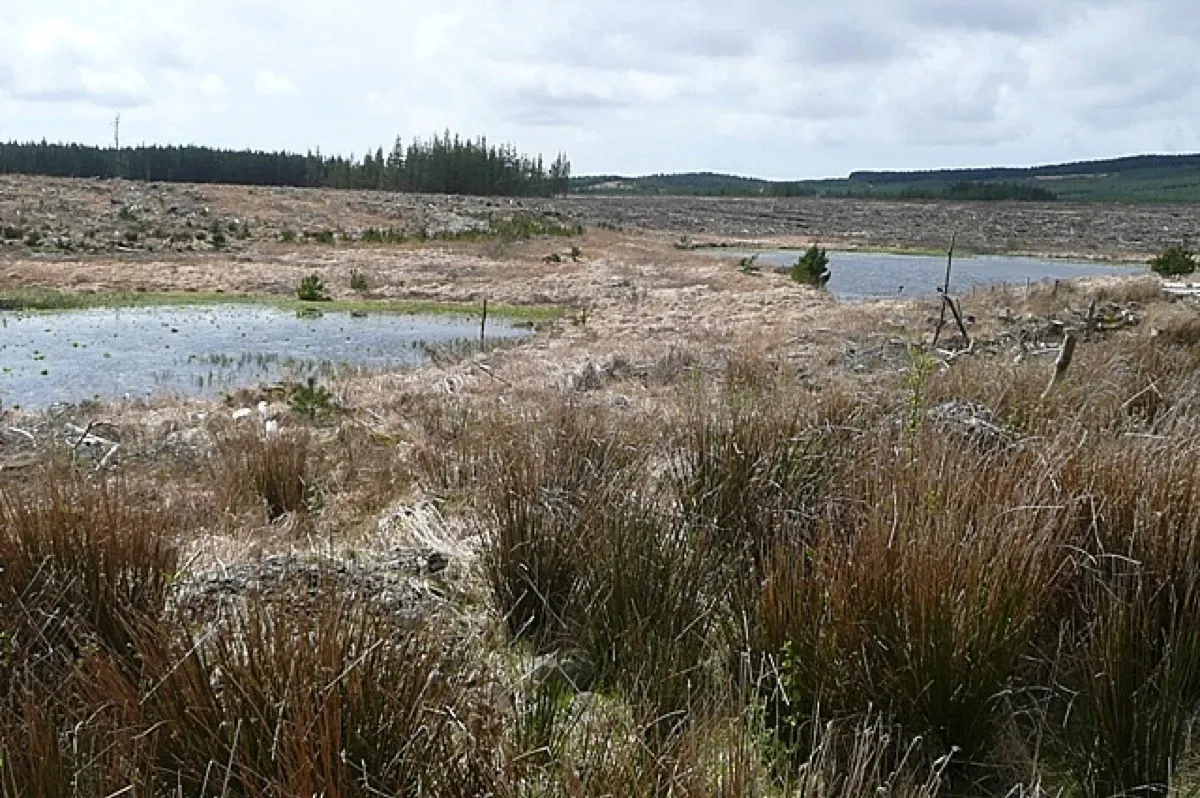
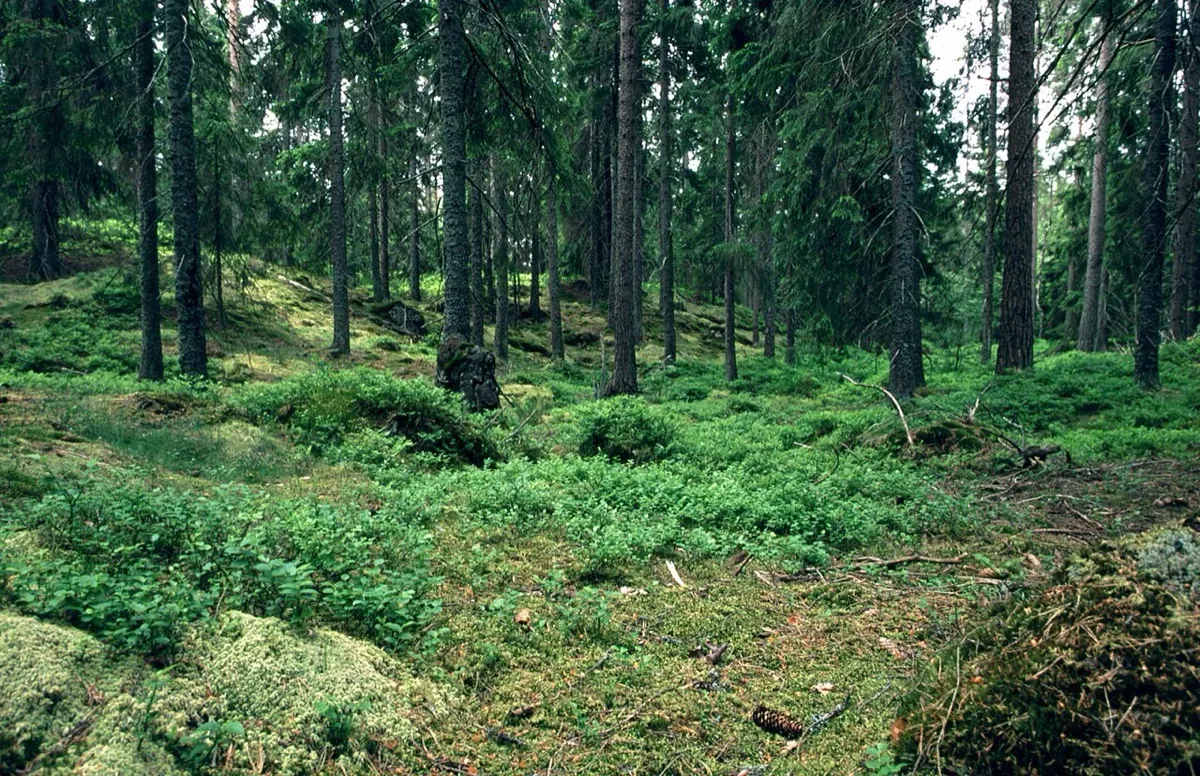
Images: “Fionnán (Finnaun) forest”, Graham Horn, 10 April 2009, CC BY-SA 2.0, via Wikimedia Commons (from geograph.org.uk). Illustrative: a Coillte forest, not a Treemetrics project.
_forest_-_geograph.org.uk_-_1269117.jpg)