The problem
Rocks are the planet’s slowest but biggest carbon sink. When rain falls it picks up CO2 and forms a weak carbonic acid. As that acid reacts with silicate rocks, the carbon is locked away, eventually as bicarbonate washed to the ocean. UNDO says natural rock weathering removes about 1 billion tonnes of CO2 a year, but over geological timescales.
Farmers, meanwhile, face acidic and depleted soils and rising costs for lime and fertiliser. Many quarries produce fine rock dust as a by-product. Enhanced rock weathering links these: grind the right rock finely, spread it on fields and the larger surface area makes weathering much faster, while the minerals help soils. UNDO cites estimates that ERW could remove up to 4 billion tonnes of CO2 a year.
The product
UNDO was founded in 2022 in the UK and is led by Jim Mann. It buys silicate rock, arranges spreading on working farms through local contractors, measures the carbon removed and sells verified removal credits to companies. The farmer keeps control of the land and benefits from the rock.
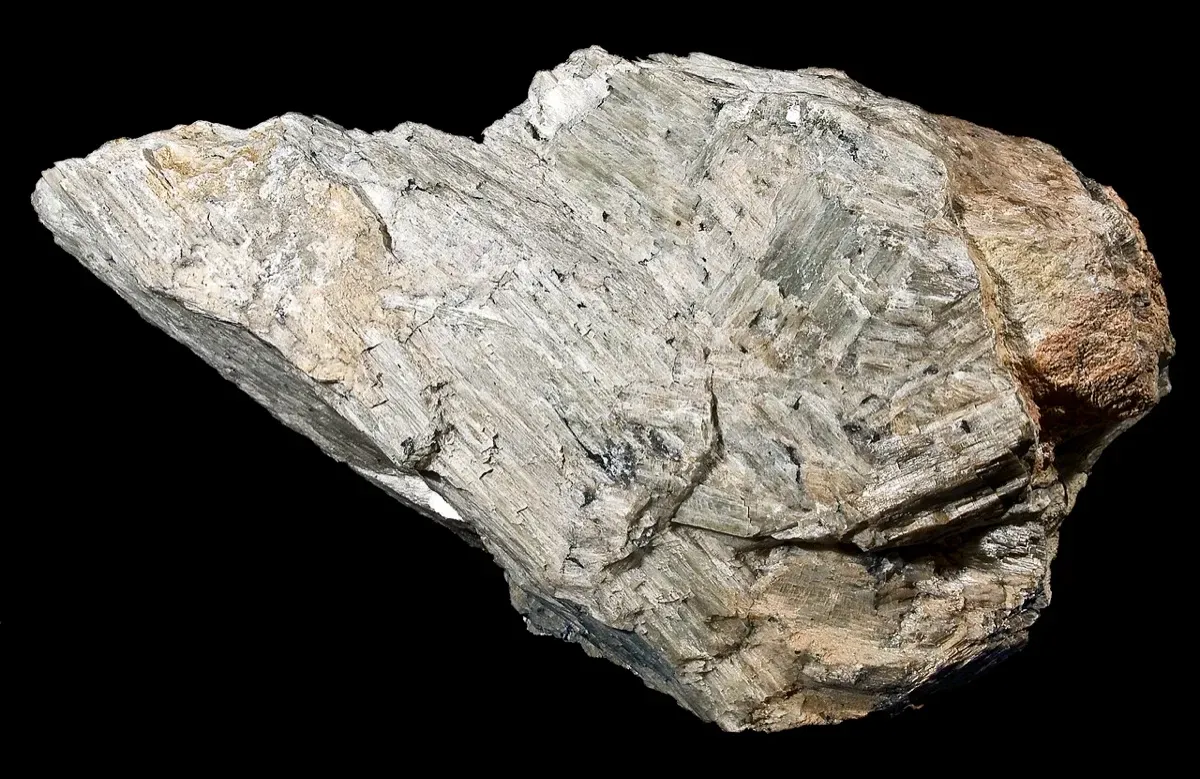
In the UK, UNDO uses basalt, which weathers slowly but is very abundant. In Canada, it uses wollastonite, a fast-reacting calcium silicate, sourced locally from Seeley’s Bay in Ontario. Under its Farmer Program, the rock and professional spreading are paid for by credit sales, so farmers pay nothing except haulage, and in Kingston a 2026 rebate covers that too.
The company pitches several side benefits. Silicate rocks carry magnesium, calcium and potassium, so UNDO says its rock can raise soil fertility and cut lime and fertiliser bills. Its Green Jobs Pathway hires local contractors rather than importing machines and staff, and the bicarbonate that eventually reaches the sea can help counter ocean acidification. In Kingston, it also runs a research programme with CORCAN, part of Canada’s Correctional Service, on penitentiary farms.
UNDO’s buyers include Microsoft, Barclays, British Airways and McLaren Racing. According to its website, it has spread thousands of tonnes of rock in the UK, US, Australia and Canada and set up field trials in East Africa.
How it works
- Source. Silicate rock such as basalt or wollastonite is crushed to a fine powder, often from quarry by-products.
- Spread. Local contractors spread it on fields, much like agricultural lime.
- React. Rainwater carrying dissolved CO2 reacts with the rock, forming bicarbonate.
- Store. Bicarbonate drains to rivers and the sea, where carbon stays for thousands of years.
- Measure. Soil and porewater samples track how much rock has weathered.
- Verify and sell. Removal is verified after it happens and sold as credits.
Timeline
| Date | Milestone |
|---|---|
| 2022 | UNDO founded in the UK |
| 2023 | Microsoft’s first-ever ERW purchase: 5,000 tonnes from UNDO |
| 2024 | Microsoft buys a further 15,000 tonnes and funds research |
| Apr 2025 | UNDO named third runner-up in XPRIZE Carbon Removal, winning USD 5 million |
| Sep 2025 | Canadian research team moves to the RXN Hub in Kingston, Ontario |
| 21 Oct 2025 | Microsoft agrees to buy 28,900 tonnes by 2036, financed by Inlandsis |
| Nov 2025 | Farm Credit Canada makes a strategic investment |
| Jun 2026 | Peer-reviewed paper on UNDO’s SAT-C soil water method published |
Impact and numbers
By mid-2026, UNDO had spread more than 313,000 tonnes of silicate rock on farms in Scotland and Ontario, aiming to remove roughly 69,000 tonnes of CO2, according to Climate Solutions News. Its relationship with Microsoft has grown season by season: 5,000 tonnes in 2023, 15,000 in 2024 and 28,900 in October 2025, nearly 49,000 tonnes in total. The latest deal is backed by debt financing from Inlandsis, a Canadian climate fund, so UNDO can pay upfront costs before the credits arrive.
In November 2025, Farm Credit Canada, a federal Crown corporation, invested through its new venture arm. UNDO expects to triple its Canadian operations from 2025 to 2026, with Ontario as a springboard for a national programme.
Measurement is a core focus. In Kingston, a team of 15 scientists works with SAT-C, short for saturation-centrifugation, UNDO’s patent-pending way of extracting soil porewater for analysis. Unlike traditional methods, it does not depend on natural soil moisture, so sampling can continue in dry periods. A peer-reviewed paper compared it with rhizons and lysimeters at two Scottish trials, Dumyat and Glensaugh. In Ontario, UNDO runs 2.5-acre measurement sites inside working fields, testing four application rates across six groups of plots.
Honest caveats
Slow credits. UNDO’s head of finance told Climate Solutions News that credits are generated as the rock weathers, which could take 10 to 15 years, while costs come upfront.
Measurement is hard. Tracking carbon through soils, rivers and the sea is complex. UNDO’s own investment in new sampling methods shows how much uncertainty remains.
Targets versus delivery. The 69,000 tonne figure is an aim, not a verified total.
Rock choice matters. Basalt is abundant but slow. Faster minerals such as wollastonite are less common. Quarrying, grinding and trucking also cause emissions, which must be deducted.
What’s next
UNDO plans to scale its Canadian farmer network, deliver its Microsoft contracts and work with McLaren engineers on a battery-powered SAT-C soil auger for faster sampling. Its Ontario hay trials and plot sites aim to show farmers clear yield benefits alongside carbon.
Why it matters for Europe and green buyers
For Europe, ERW uses existing quarries, farms and contractors, so it could scale without heavy new infrastructure. The EU’s move to certify permanent removals gives buyers a reason to look for well-measured projects like UNDO’s Scottish trials. For farmers, a free soil improver funded by carbon buyers is an easy sell if the yield benefits hold.
For India, with large areas of acidic soils and abundant basalt, the same model is already being tested by companies such as Mati Carbon. UNDO’s measurement work, from porewater methods to plot design, offers lessons for Indian projects that need to prove removal on small, varied farms.
Sources & image credits
- UNDO, company website. https://un-do.com/
- UNDO, “UNDO and Microsoft to remove 28,900 tonnes of carbon, backed by financing from Inlandsis”, October 2025. https://un-do.com/resources/blog/undo-and-microsoft-to-remove-28900-tonnes-of-carbon-backed-by-financing-from-inlandsis/
- Newswire, “UNDO expands relationship with Microsoft to deliver 28,900 tonnes of carbon removal”, 21 October 2025. https://www.newswire.ca/news-releases/undo-expands-relationship-with-microsoft-to-deliver-28-900-tonnes-of-carbon-removal-backed-by-novel-financing-from-the-inlandsis-fund-827455335.html
- UNDO, “Farm Credit Canada invests in UNDO to scale community-based carbon removal”, November 2025. https://un-do.com/resources/blog/farm-credit-canada-invests-in-undo-to-scale-community-based-carbon-removal/
- UNDO, “SAT-C: UNDO’s carbon removal measurement breakthrough”, June 2026. https://un-do.com/resources/blog/sat-c-undos-carbon-removal-measurement-breakthrough/
- UNDO, “Inside UNDO’s on-farm research: small plot monitoring sites in Eastern Ontario”, 2026. https://un-do.com/resources/blog/inside-undos-on-farm-research-small-plot-monitoring-sites-in-eastern-ontario/
- UNDO, “Understanding carbon credits in the UNDO Farmers Program”, 2026. https://un-do.com/resources/blog/understanding-carbon-credits-in-the-undo-farmers-program/
- Climate Solutions News, “Solving the money problem holding back carbon removal”, June 2026. https://climatesolutions.news/spotlight/solving-the-money-problem-holding-back-carbon-removal
- The Kingston Whig-Standard, “Beneath the surface, Kingston researchers tackle biggest challenge facing carbon removal”, 2026. https://www.thewhig.com/news/beneath-the-surface-kingston-researchers-tackle-biggest-challenge-facing-carbon-removal
- Wikimedia Commons, “Wollastonite madagascar.jpg”. https://commons.wikimedia.org/wiki/File:Wollastonite_madagascar.jpg
Images: “Wollastonite madagascar”, Didier Descouens, specimen from Anosy Region, Madagascar, 10 January 2010, CC BY-SA 3.0, via Wikimedia Commons. Illustrative: shows a wollastonite mineral, not UNDO’s operations.