The problem
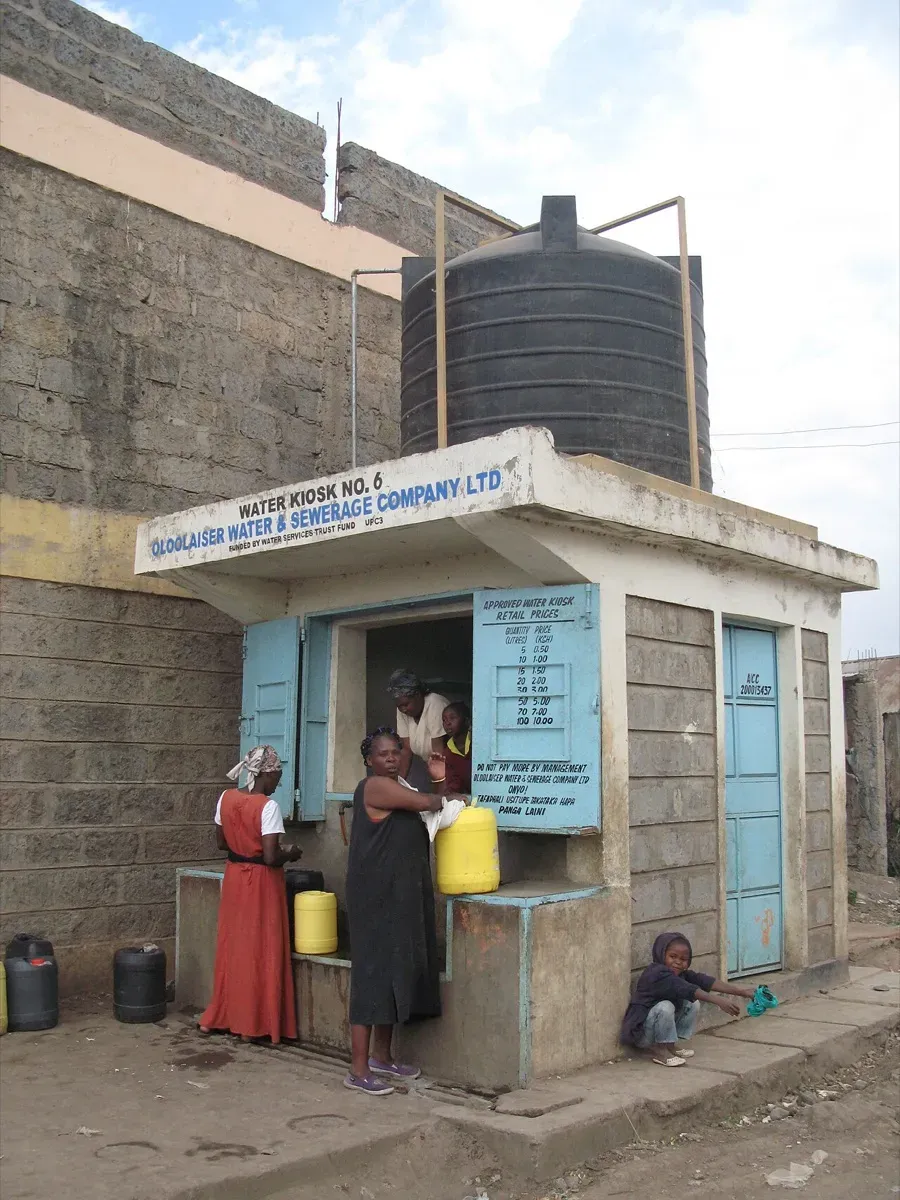
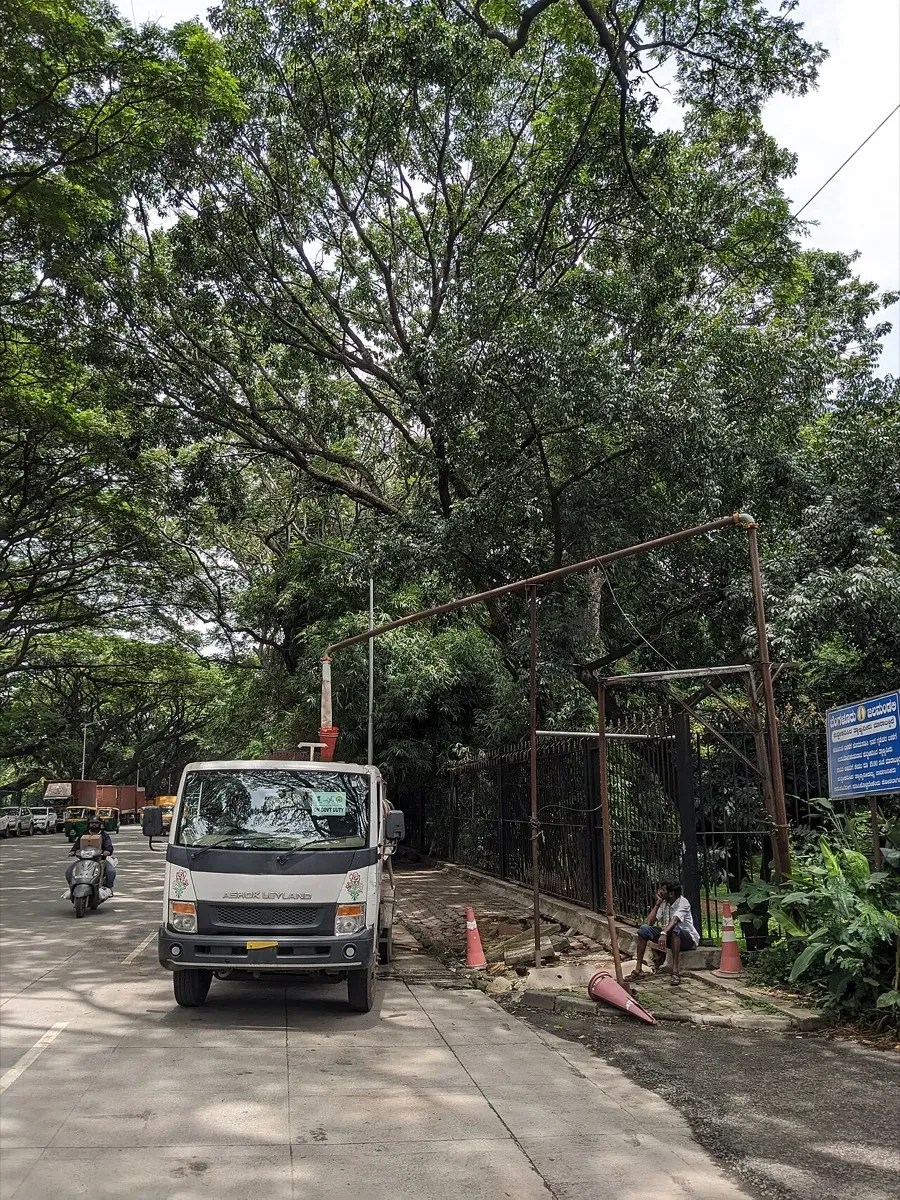
India is home to about 18% of the world’s population but only around 4% of its water resources, according to World Bank figures quoted by DCD (DCD, 21 April 2026). NITI Aayog’s 2018 Composite Water Management Index found that 600 million Indians faced high to extreme water stress (PIB, 2018). Cities such as Bengaluru pump groundwater faster than it recharges and rely on tanker lorries in dry months.
Pulling water from the air is an old idea, but most commercial atmospheric water generators work like dehumidifiers. They chill air below its dew point so water condenses on a cold coil. That works in humid weather but becomes very energy-hungry in dry air, when the air must be cooled much further. In India’s dry season, when water is scarcest, condensation machines are at their least efficient.
The product
Uravu’s founders began working on air-to-water while students. CEO Swapnil Shrivastav has said the idea dates to a 2012 student competition and was inspired by the moisture vaporators on the desert planet Tatooine in Star Wars. A two-week water outage at NIT Calicut in 2016 made the problem personal (DCD). In 2018 a Hyderabad team led by Shrivastav was named one of five finalists, from 98 teams, in the US$1.75 million Water Abundance XPRIZE, which challenged competitors to harvest water from air cheaply using renewable energy (XPRIZE; TechCrunch, 22 March 2018).
The company’s first prototype in 2019 made 5 litres a day. By 2024 its Bengaluru plant was producing around 4,000 litres a day (Mongabay India, August 2024), and DCD reported in 2026 a capacity of 5 m³, or 5,000 litres, a day. The water is bottled in glass and supplied to hotels and restaurants, including The Leela, Hyatt and Royal Orchid properties, which use it in place of plastic-bottled water. Uravu has sold more than 500,000 bottles, and has even supplied water for beer brewed with Bengaluru’s The Bier Library (BusinessLine, 2024).
How it works
The key ingredient is salt. A calcium chloride solution, a liquid desiccant, is exposed to ambient air in an absorber, where it soaks up water vapour, much as table salt goes damp in the monsoon. The diluted solution is then heated to around 60 °C in a desorber, releasing the water as vapour, which is condensed and collected. A vacuum pump lowers the pressure so evaporation happens at lower temperatures. The concentrated salt solution returns to the absorber, and the cycle repeats (DCD; Mongabay).
Because the desiccant absorbs moisture even when the air is dry, the system keeps working across 30% to 100% relative humidity. Its heat can come from solar thermal collectors, biomass, or industrial waste heat. Uravu reports energy use of about 300 to 400 Wh per litre, compared with 500 to 800 Wh or more for condensation-based generators in low humidity.
The numbers explain the business strategy. At 300 to 400 Wh per litre, producing 1,000 litres needs 300 to 400 kWh of energy, most of it as heat rather than electricity. If that heat has to be bought, air-to-water stays a premium product. If it is free, because it comes from solar collectors or from equipment that must be cooled anyway, the economics change completely. That is why Uravu is moving from bottled water towards data centres, where waste heat is abundant and cooling is a cost operators already pay.
Timeline
| Date | Milestone |
|---|---|
| 2012 | Idea first proposed in a student competition |
| Mar 2018 | Shrivastav’s team named a Water Abundance XPRIZE finalist |
| 2019 | First prototype produces 5 litres a day |
| 2024 | Production reaches about 4,000 litres a day in Bengaluru |
| Jul 2025 | US$1.2 million pre-Series A, led by Enrission |
| Apr 2026 | 125 kW data centre cooling unit developed; pilot agreed with a hyperscaler, expected from Q2 2026 |
Impact and numbers
- Cost: about ₹3 to ₹4 per litre today, with a target below ₹1 per litre at scale (Mongabay).
- Customers: DCD reports 40 hospitality clients; earlier coverage cites about 50.
- Data centres: Uravu’s “Tatooine” system plugs into a data centre’s cooling loop and uses waste heat at 35 to 60 °C to release water. The company claims up to 30 m³ of surplus distilled water per day for every megawatt of IT load, and at least 5 m³ in less favourable conditions, with energy use about a fifth of an air-cooled chiller (DCD).
- Funding: US$4.7 million raised from venture investors; the July 2025 pre-Series A was led by Enrission (changestarted).
Honest caveats. Air-to-water remains expensive compared with piped municipal water, which costs a fraction of a rupee per litre where it is available, so today’s market is premium bottled water rather than household supply. Independent experts are cautious. Mongabay quotes Deepak Swami of IIT Mandi doubting that the technology can scale to meet large-scale demand. Data centre figures are company claims based on pilots that have not yet been independently reported. Reported founding dates (2017 or 2019) and capacities (4,000 or 5,000 litres a day) vary between sources. Glass bottles are better than plastic but still need collection and transport.
What’s next
Uravu’s next goal is a modular 1 MW data centre block, and it is in discussions with five other digital infrastructure firms about pilots. It plans to raise a Series A in 2026. If the data centre model works, cooling would pay for the hardware and surplus water could be supplied to nearby communities, letting operators claim to be water-positive.
Why it matters for Europe / green buyers
Europe’s data centre boom is running into the same water constraints, from Ireland and the Netherlands to drought-hit Spain, and the EU is pushing operators to report water and energy performance. A cooling system that turns waste heat into usable water would be valuable well beyond India. For hotel groups, Uravu offers a tangible way to remove plastic bottles while reducing pressure on local groundwater. Data centre operators and hyperscalers should watch the 2026 pilots closely and ask for independently measured water output, energy use and cooling performance before committing at scale.
Sources & image credits
- Mongabay India, “Innovative air-to-water tech using liquid desiccant makes affordable, renewable water”, August 2024: https://india.mongabay.com/2024/08/innovative-air-to-water-tech-using-liquid-desiccant-makes-affordable-renewable-water/
- The Hindu BusinessLine, “Drawing water from air on a sustainable, industrial scale”, 2024: https://www.thehindubusinessline.com/specials/emerging-entrepreneurs/drawing-water-from-air-on-a-sustainable-industrial-scale/article68512557.ece
- DCD (DatacenterDynamics), “Uravu’s salty solution to the data center cooling conundrum”, 21 April 2026: https://www.datacenterdynamics.com/en/analysis/uravus-salty-solution-to-the-data-center-cooling-conundrum/
- changestarted, “Climate tech startup Uravu Labs raises $1.2 million in a pre-Series A round”, July 2025: https://changestarted.com/climate-tech-startup-uravu-labs-raises-1-2-million-in-a-pre-series-a-round/
- XPRIZE, “Five Teams Advance to Final Round of $1.75M Water Abundance XPRIZE”, 2018: https://www.xprize.org/news/five-teams-advance-to-final-round-of-1-75m-water
- TechCrunch, “Water Abundance XPRIZE finalists compete in gathering water from thin air”, 22 March 2018: https://techcrunch.com/2018/03/22/water-abundance-xprize-finalists-compete-in-gathering-water-from-thin-air/
- Press Information Bureau, Government of India, “NITI Aayog Report on Water Crisis” (Composite Water Management Index, 2018): https://www.pib.gov.in/newsite/PrintRelease.aspx?lang=2®=3&relid=195635
Images:
- “Water tanker refilling in Bengaluru” by Saiphani02, licensed CC BY-SA 4.0 (https://creativecommons.org/licenses/by-sa/4.0), via Wikimedia Commons: https://commons.wikimedia.org/wiki/File:Water_tanker_refilling_in_Bengaluru.jpg