
The problem
Windows are usually the weakest point of a building’s insulation. To reach today’s standards, manufacturers moved from double to triple glazing, with argon or krypton gas between the panes. That works, but triple glazing is thick and heavy. A third pane adds glass, weight and carbon, and needs deeper frames.
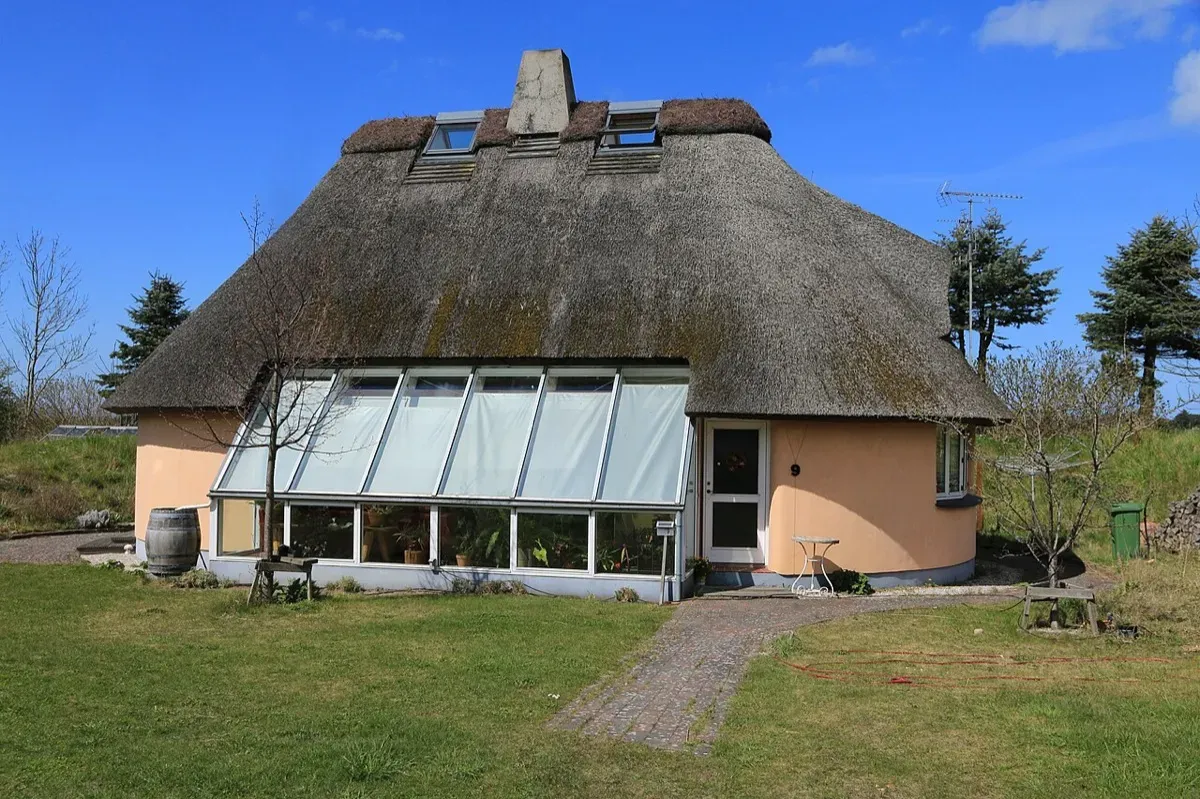
Roof windows have extra problems. They face the sky, so they lose more heat at night, carry snow loads and must resist hail. In old houses, thick modern glazing often does not fit the slim profiles that conservation officers require, so owners of listed buildings are stuck with poorly insulated roof lights.
The product
VELUX vacuum insulated glazing (VIG) uses two panes of glass with a thin vacuum between them instead of a gas-filled gap. With no gas to conduct or carry heat, the pane insulates much better for its thickness (VELUX).
According to VELUX:
- the unit is 11.5 mm thick, compared with 26.4 mm for standard double glazing and 38 mm for triple glazing with similar insulation;
- the glass unit has about 30% lower CO2 footprint than comparable alternatives;
- a window with it is 1.5 to 5 kg lighter per MK06 size window, depending on construction;
- a hybrid version adds a third pane with gas filling and reaches a window U-value (Uw) of 0.83 W/m²K with 38 dB of sound insulation.
The first product is the VELUX Heritage conservation roof window with VIG, sold in Great Britain and Ireland. The UK page lists an 11.5 mm pane, Uw 1.1 W/m²K and 37 dB sound reduction (VELUX UK). The standard Heritage window it sits beside guarantees Uw 1.3 W/m²K.
How it works
- Two panes: two sheets of tempered glass are placed a fraction of a millimetre apart.
- Pillars: a grid of tiny spacer pillars holds the panes apart against air pressure; they appear as a faint dot pattern.
- Seal: the edges are hermetically sealed.
- Evacuate: the air is pumped out, leaving a vacuum that stops heat moving by conduction and convection.
- Low-e coating: a low-emissivity coating on the inner face cuts heat lost as radiation.
- Frame: the thin pane fits slim frames, which matters for heritage and renovation projects.
Tempering the glass is what makes VIG suitable for roof windows, which must be stronger than wall glazing. That was the focus of the joint development deal VELUX signed with Guardian Glass in March 2024 (Guardian Glass).
Timeline
| Date | Milestone |
|---|---|
| Early 2000s | VELUX first tests vacuum glazing, over 20 years before launch, according to the company |
| Mar 2024 | Joint development agreement with Guardian Glass on tempered VIG |
| 2 Mar 2026 | VIG roof window unveiled at DACH+HOLZ in Cologne |
| Sep 2026 | VIG launches in the VELUX Heritage window in Great Britain and Ireland |
| Later | Hybrid VIG version and other European markets, depending on demand |
Impact and numbers
- Thickness: 11.5 mm versus 38 mm for triple glazing, about a 70% reduction.
- Weight: 1.5 to 5 kg less per MK06 window, making installation easier on old roofs (Glazing Today).
- Carbon: about 30% lower CO2 footprint for the glass unit alone; for the hybrid, 5% lower for the full window and 12% lower for the glass.
- Comfort: 37 dB sound reduction for the Heritage VIG window; 38 dB for the hybrid.
- Lifespan: industry commentators expect vacuum glass to last 40 to 60 years, longer than conventional sealed units (Glazing Today).
Honest caveats. VELUX has published two different window figures: the March 2026 launch release gives Uw 1.0 W/m²K, while the UK Heritage product page lists Uw 1.1 W/m²K. The second is the figure for the product actually on sale. Both are good for a roof window but not better than the best triple glazing. The 30% carbon saving applies only to the glass unit, not the whole window. VELUX has not published prices, and industry commentary in October 2026 named purchase price as the main barrier to vacuum glass. The spacer pillars are visible as a dotted pattern up close, which some owners will dislike. The product is so far limited to one heritage range in two countries; VELUX said no launch date has been set for Germany and other markets depend on “project interest and availability” (VELUX). Long-term field data on vacuum seals in roof windows, under hail, snow and heat cycling, is still limited.
What’s next
VELUX says the hybrid version, with a Uw of 0.83 W/m²K, will follow, and that it expects to bring VIG to other European markets as demand grows. The company also launched a cheaper Standard glass rooflight and an installation lining kit in autumn 2026. The key test is price: if VIG roof windows cost close to triple-glazed ones, slim vacuum panes could spread across renovation projects, where frame depth and roof weight are often limiting.
Why it matters for Europe / green buyers
Most of Europe’s 2050 building stock already exists, and the recast Energy Performance of Buildings Directive, Directive (EU) 2024/1275, requires countries to cut average primary energy use in homes by 16% by 2030 and 20 to 22% by 2035 (EUR-Lex). That means renovating millions of attics and roofs, many in protected historic centres where thick modern windows are not allowed. Thin, light, high-performance glazing makes those upgrades possible without changing the look of a building. For buyers, ask for the window’s Uw (not just the glass Ug), the sound rating, the warranty on the vacuum seal and the EPD for the whole window.
In India, the main window problem is heat coming in rather than heat going out. Vacuum glazing’s low U-value helps air-conditioned buildings too, but solar heat gain, shading and the Energy Conservation Building Code’s limits on glazing matter more. VELUX has not announced VIG for India. If prices fall, vacuum glass could suit premium offices and hotels in hot cities, where thin, light units can replace heavy double glazing in existing frames.
Sources & image credits
- VELUX Group press, “Achieving triple glazed performance with just two panes” (2 Mar 2026): https://press.velux.com/achieving-triple-glazed-performance-with-just-two-panes/
- VELUX Group press, “VELUX Group launches new products and upgrades to bring more choice, comfort and smarter solutions to homeowners” (Sep 2026): https://press.velux.com/velux-group-launches-new-products-and-upgrades-to-bring-more-choice-comfort-and-smarter-solutions-to-homeowners/
- VELUX UK, “VELUX Heritage conservation roof window” (with VIG): https://www.velux.co.uk/professionals/campaign/heritage-conservation-roof-window
- Glazing Today, “Vacuum insulating glazing hitting the mainstream with Velux” (6 Apr 2026): https://glazingtoday.com/1728-2/
- Glazing Today, “Vacuum glazing gains ground as heritage retrofit option”: https://glazingtoday.com/vacuum-glazing-gains-ground-as-heritage-retrofit-option/
- Guardian Glass, “Guardian Glass and the VELUX Group enter partnership to jointly develop tempered vacuum insulated glass” (Mar 2024): https://www.guardianglass.com/us/en/insights/guardian-glass-and-the-velux-group-enter-partnership
- EUR-Lex, Directive (EU) 2024/1275 on the energy performance of buildings (recast): https://eur-lex.europa.eu/eli/dir/2024/1275/oj/eng
Images:
- “VELUX top-hung electric roof windows” by Obsidian agency, 2026, licensed under CC BY-SA 4.0 (https://creativecommons.org/licenses/by-sa/4.0), via Wikimedia Commons: https://commons.wikimedia.org/wiki/File:VELUX_top-hung_electric_roof_windows.tif