The problem
Takeaway lunches, office canteens, stadiums and festivals use vast numbers of single-use cups, bowls and boxes. Reusable alternatives exist, but they face two practical problems. Customers do not want to pay a deposit or carry containers around, and operators lose money when containers are not returned.
Germany’s reuse-offer obligation, in force since 1 January 2023, requires larger takeaway businesses to offer a reusable option, yet reuse remains rare. WWF’s market analysis found that reusable packaging made up only 1.6% of takeaway sales in 2023, and just 0.3% for food (WWF). Businesses that ignore the rule face fines of up to EUR 100,000 under the German Packaging Act.
The product
Vytal offers reusable bowls, boxes and cups made from polypropylene (PP). The bowls are made in Germany by the housewares maker Koziol, and the cups are made in the Czech Republic. Each container carries a unique QR code, and some systems also use RFID chips (Vytal FAQ).
Instead of a cash deposit, Vytal links each container to a user:
- App: customers scan the QR code with the Vytal app and can keep a container for up to 14 days for free.
- Tap2Borrow: customers tap a bank card at the till and have 9 days to return the item.
- Late fee: if a container is not returned in time, the customer pays EUR 10 for a bowl or EUR 4 for a cup, and keeps it.
Restaurants and caterers pay Vytal a fee for each fill rather than buying their own stock. The software platform, Vytal.ONE, tracks every container through issue, return, washing and reuse, and gives operators data on stock and return rates (Inven Capital).
How it works
- Borrow: the customer scans the container or taps a card when buying food or a drink.
- Track: the QR code or RFID tag links the item to the customer’s account or card.
- Return: the container goes back to any participating outlet or return point within the loan period.
- Wash: the operator or a partner washes it industrially and it re-enters the pool.
- Retire: after up to 200 uses, worn containers are recycled. Vytal says recycled PP cannot yet go back into new food containers, so it is used for other products.
Timeline
| Date | Milestone |
|---|---|
| Summer 2019 | Vytal founded in Cologne by Sven Witthöft and Tim Breker |
| Sep 2019 | First Vytal bowls in use at Cologne’s Mediapark |
| 2020 | Fabian Barthel joins (1 March); investment from Georg Kofler on TV show Die Höhle der Löwen; REWE partnership |
| 1 Jan 2023 | German reuse-offer obligation for takeaways begins |
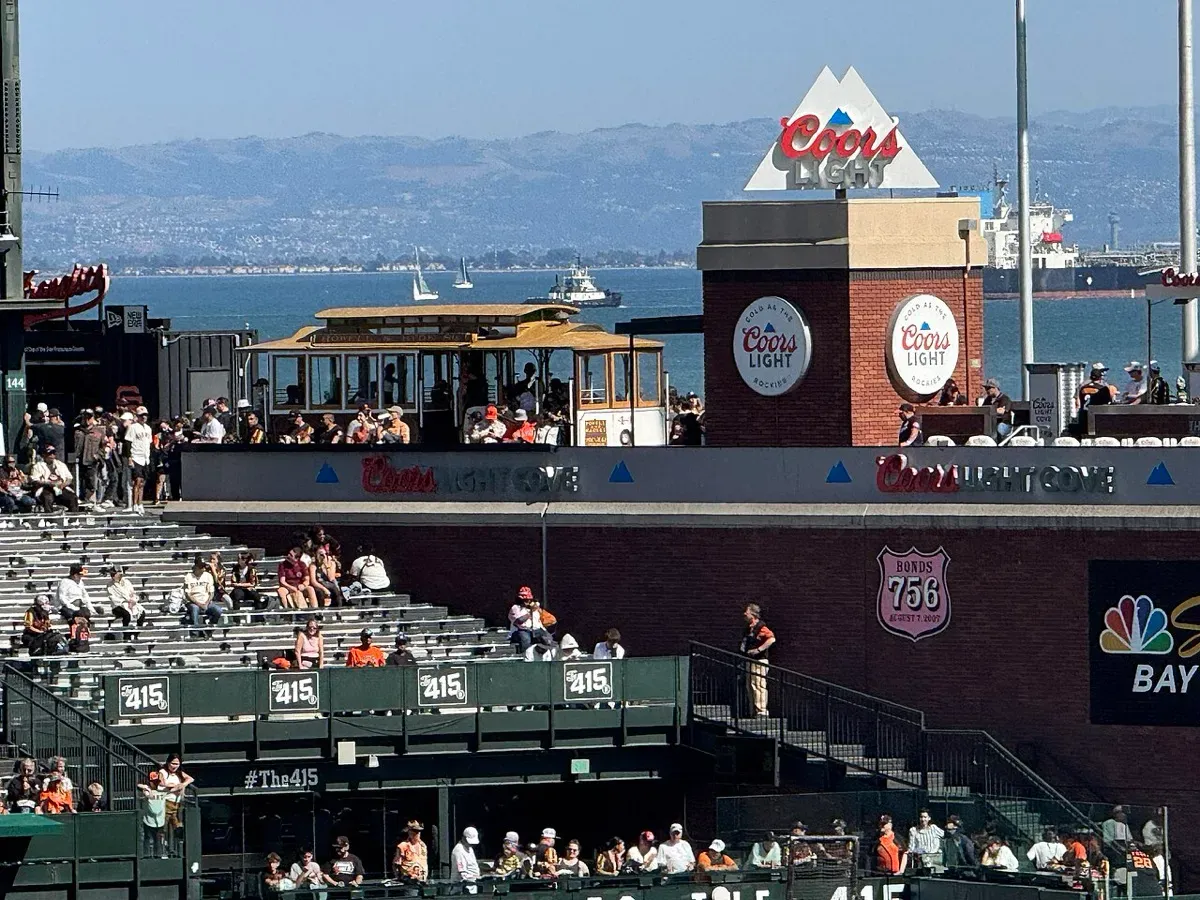
| 2025 | Club Level pilot at Oracle Park, San Francisco: 206,305 cups issued |
| 2026 | Full ballpark rollout at Oracle Park for poured alcoholic drinks |
| 2 Jul 2026 | Multi-million euro growth funding backed by Inven Capital |
Impact and numbers
- Scale: Vytal reports more than 7,000 business customers in 20 countries and more than 25 million single-use items replaced (Inven Capital).
- Customers: references include Oracle Park (San Francisco Giants), the Los Angeles Memorial Coliseum, SAP’s Walldorf campus, the University of Manchester and the OMR Festival in Hamburg; drinks brands including Coca-Cola, Pepsi and Warsteiner, and Chick-fil-A, have used the system.
- Ballpark pilot: in 2025, Oracle Park’s Club Level issued 206,305 reusable cups with an 88% return rate, avoiding more than 3,000 pounds of plastic and about 8 tonnes of greenhouse gas emissions, according to Vytal (Vytal on LinkedIn).
- Funding: the July 2026 round, from Inven Capital, the venture fund of Czech energy group ČEZ, will be used to develop Vytal.ONE, invest in digital infrastructure and grow in Europe and North America (Startbase).
- Climate: Vytal says each container can save up to 30 kg of CO2 over its life compared with single-use packaging.
Honest caveats. Most of Vytal’s impact figures come from the company and are not independently verified. Its headline return rate of more than 99% applies to “open-loop” systems such as canteens, where users are known; the public ballpark pilot achieved 88%, which means about one cup in eight was not returned. Every lost container cuts the environmental benefit, because a reusable cup is heavier than a single-use one and only pays back after about 10 uses. Without a deposit, the late fee is the only incentive to return items, and customers who pay it simply keep a plastic cup. Washing, transport and the IT system all add costs and emissions. Vytal does not publish its revenue or whether it is profitable.
What’s next
With the new funding Vytal plans to grow in Europe and North America, with sports and entertainment venues as one of its fastest-growing markets. Its pitch to stadiums goes beyond waste: branded cups as sponsor space, faster service at the bar, and data on every drink served. Stadiums, campuses and large employers, where people arrive and leave through fixed points, suit the model best. The Oracle Park rollout will show whether high return rates can be held across a whole stadium, not just one level.
Why it matters for Europe / green buyers
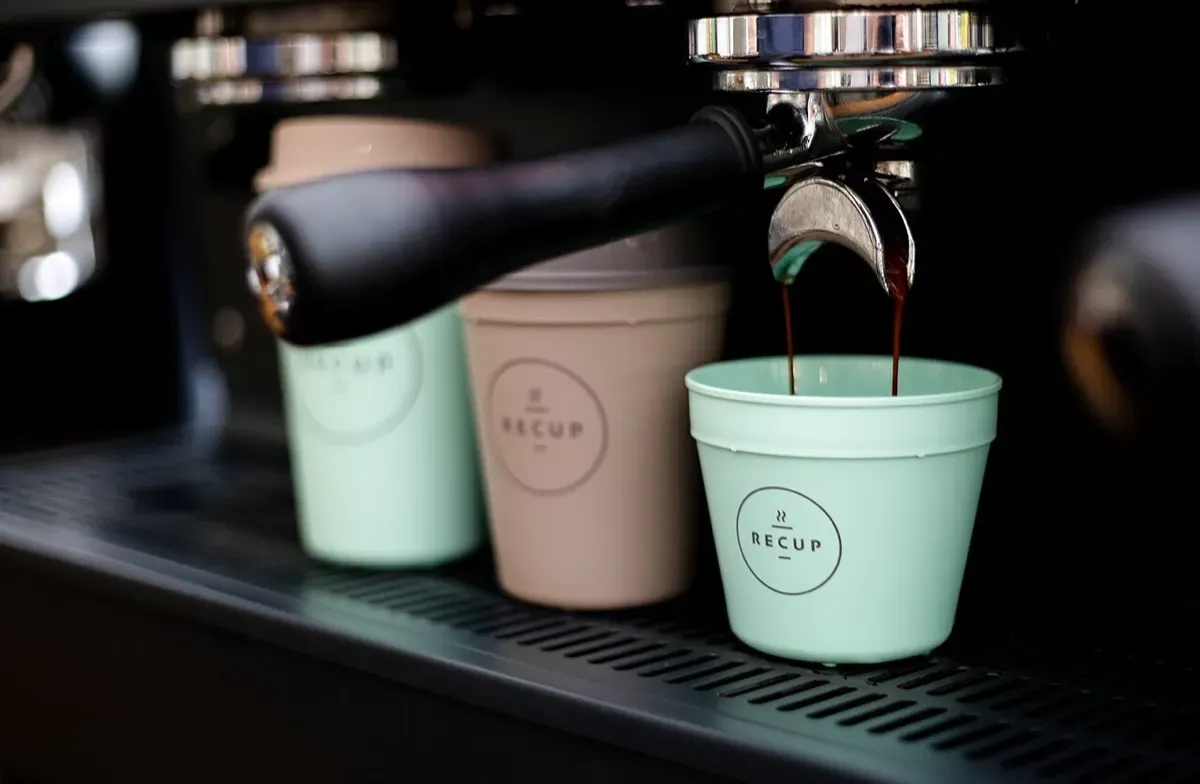
Under the EU Packaging and Packaging Waste Regulation, takeaway businesses must accept customers’ own containers from February 2027 and offer reusable packaging from February 2028, with an aim of offering 10% of products in reuse formats by 2030 (EUR-Lex). Deposit-free, data-led systems like Vytal give caterers another option alongside deposit networks such as RECUP. Buyers should ask any provider for measured return rates and cycle counts, not just the maximum number of uses.
India’s plastic packaging rules already include reuse. The EPR guidelines notified in February 2022 set mandatory targets not only for recycling and recycled content but also for the reuse of rigid plastic packaging by brand owners: for packs of 0.9 to 4.9 litres or kg, 10% in 2025-26 rising to 25% from 2028-29 (PIB). Corporate campuses, IT parks and cricket stadiums in cities such as Bengaluru and Hyderabad have the same controlled entry and exit that suits Vytal’s model.
Sources & image credits
- Inven Capital, press release on Vytal funding round, 2 July 2026: https://www.invencapital.cz/file/edee/ivcp2/news/press-release-vytal.pdf
- Startbase, “Vytal sichert sich Millionenfinanzierung”, July 2026: https://www.startbase.com/news/vytal-sichert-sich-millionenfinanzierung/
- KÜR NRW, “Gründerstory: Vytal Global GmbH”: https://kuer.nrw/gruenderstory-vytal-global-gmbh/
- Vytal, FAQ: https://www.vytal.org/faq
- Vytal on LinkedIn, “206,305 reusable cups, 88% return rate”, 2026: https://www.linkedin.com/posts/vytal-global_206305-reusable-cups-88-return-rate-activity-7442990384625967104-gizO
- WWF Germany, “Ein Jahr Mehrwegangebotspflicht: Erste Ergebnisse der WWF-Marktanalyse”: https://www.wwf.de/fileadmin/fm-wwf/Publikationen-PDF/Plastik/Ein-Jahr-Mehrwegangebotspflicht-Erste-Ergebnisse-der-WWF-Marktanalyse.pdf
- EUR-Lex, Regulation (EU) 2025/40 on packaging and packaging waste: https://eur-lex.europa.eu/eli/reg/2025/40/oj
- Press Information Bureau, Government of India, “Plastic recycling targets”, 8 December 2022: https://www.pib.gov.in/PressReleasePage.aspx?PRID=1881760&lang=2®=3
Images:
- “Oracle Park, August 2025” by Missvain (Sarah Stierch), 30 August 2025, released under CC0 1.0 (https://creativecommons.org/publicdomain/zero/1.0/), via Wikimedia Commons: https://commons.wikimedia.org/wiki/File:Oracle_Park_-_August_2025_-_Sarah_Stierch_-_17.jpg