
The problem
Many of the animals that signal whether an ecosystem is healthy are easier to hear than to see. Birds sing at dawn in thick canopy, frogs call at night from wetlands, and bats echolocate at frequencies far above human hearing. Counting them by eye or ear means sending skilled observers out at awkward hours, often for only a few visits a year.
Before purpose-built recorders, autonomous recording units had to be sourced and assembled by researchers themselves (Wildlife Acoustics). That made large, repeatable surveys hard, and left monitoring programmes dependent on a few people with the right skills.
The product
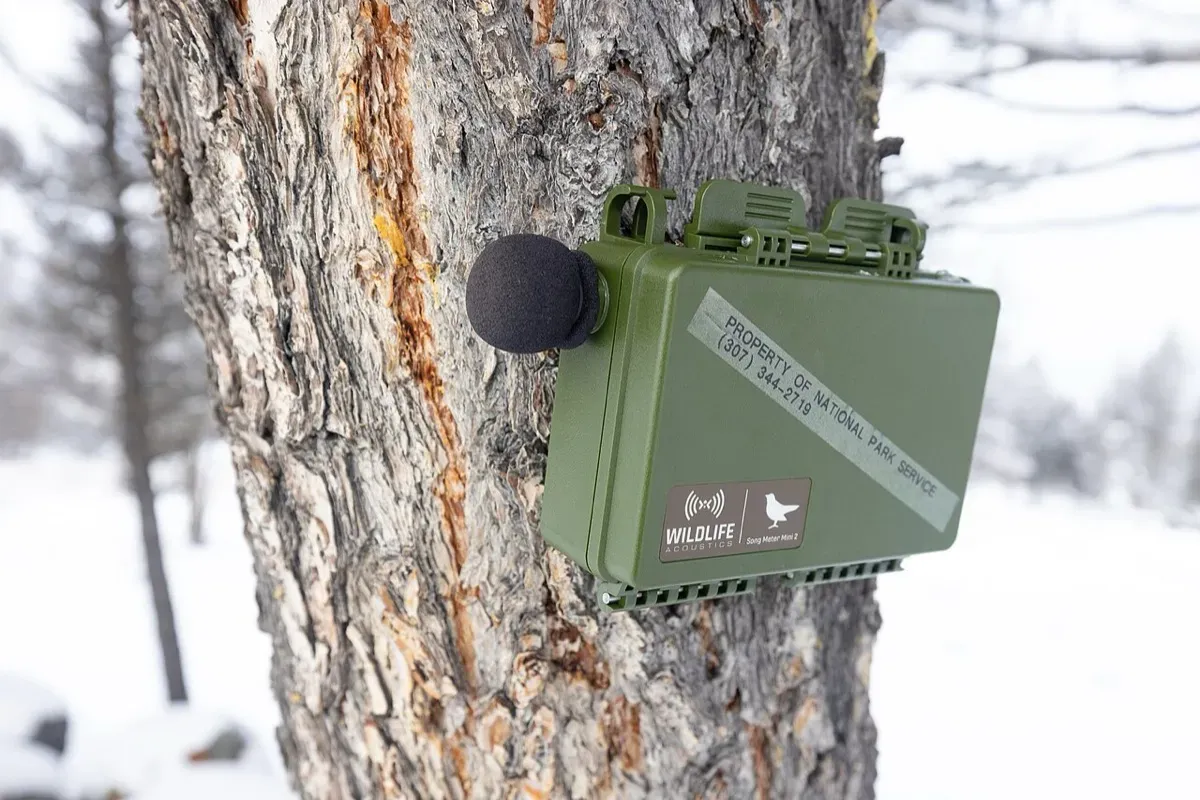
Song Meter is Wildlife Acoustics’ family of passive acoustic recorders, sold alongside its analysis software:
- Song Meter SM5: the company’s top-of-the-line recorder for audible-range wildlife, released with the ultrasonic SM5BAT in December 2025 (Ecological Logistics). It has two built-in microphones and ports for two cabled microphones, built-in GPS for time synchronisation across recorders, an IP67 enclosure rated from -20°C to 85°C, and two SD slots for up to 4 TB. It records in stereo for up to 900 hours on four alkaline D cells or 1,710 hours on eleven lithium-ion 18650 cells at 24 kHz, and can take solar power. An expansion port is designed for a cellular remote access accessory due in 2027 (Wildlife Acoustics).
- Song Meter Micro 2: the most compact and economical model, recording birds, amphibians, mammals and soundscapes for up to 280 hours at 24 kHz on four AA batteries, with bulk pricing for orders of 500 or more (Wildlife Acoustics).
- Mini 2 and Mini Bat 2: mid-range recorders. UK distributor NHBS reports the Mini 2 can run for up to 1,565 hours on lithium-ion batteries, and all second-generation units have lockable hinged lids and tripod mounts (NHBS).
- Kaleidoscope Pro: software to sort, label and identify bird songs, frog calls and bat calls from months of recordings, with cluster analysis, sound level analysis and Bat Auto-ID classifiers for the US, Canada, the UK, Europe, South Africa and the Neotropics (Wildlife Acoustics).
How it works
- Configure: users set location, schedule and settings from a phone via the Bluetooth Song Meter Configurator app, and can push one configuration file to many recorders.
- Deploy: recorders are strapped to trees or posts, with stub or cabled microphones placed at different heights for multi-taxa surveys.
- Record: units wake on schedule, for example at dawn and dusk, or trigger on ultrasonic calls in the bat versions.
- Sync: GPS time stamps allow detections to be mapped across microphones and recorders.
- Analyse: recordings go into Kaleidoscope Pro, where cluster analysis groups similar sounds and auto-ID suggests likely bat species for an expert to check.
Timeline
| Date | Milestone |
|---|---|
| 2003 | Ian Agranat founds Wildlife Acoustics |
| 2007 | SM1, the first commercially available purpose-built wildlife recorder, and Song Scope software |
| 2016 | SM4 and SM4BAT become the new industry standard |
| Apr 2022 | SMART system launched to cut bat deaths at wind farms |
| 2023 | Second-generation Song Meter Mini 2 and Micro 2 |
| 2025 | Founder transfers ownership to employees |
| 9 Dec 2025 | SM5 and SM5BAT released, shipping to some markets in early 2026 |
Impact and numbers
- Wind energy: in April 2022 the company launched the Song Meter with Analysis and Remote Transfer (SMART) system, which combines real-time bat detection with turbine data so wind farm operators can reduce bat fatalities while limiting downtime. It builds on 13 years of ultrasonic monitoring work (Wildlife Acoustics).
- Grants: since 2015 the company has run a quarterly product grant programme, awarding up to USD 12,000 of equipment each quarter to research and conservation projects worldwide.
- Himalayan bats: a grant-funded team from IISER Pune placed SM4BAT recorders in forest, forest edge and open habitats in Kedarnath Wildlife Sanctuary, Uttarakhand, from 1,400 to 3,700 m. They collected about 760 hours of data and recorded around 15 bat species, including the highest elevation record of the European free-tailed bat, and trained two local field assistants to run the detectors (Wildlife Acoustics).
- Rajasthan grasslands: a Rufford-funded project uses SM4BAT recorders for bats and SM4 recorders for birds, including the elusive Stoliczka’s bushchat, at Tal Chhapar Sanctuary and Nahargarh Biological Park (Rufford Foundation).
Honest caveats. “Leading provider” and “best battery performance on the market” are the company’s own claims. Song Meters cost considerably more than open-source alternatives such as AudioMoth, which matters for projects that need hundreds of units. Bat Auto-ID covers several regions but not South Asia, so Indian users must build their own call libraries, as the Himalayan team did by recording bats caught in mist nets. Automatic identification still needs expert checking, and recorders can only show that a species was calling, not how many individuals are present. Remote cellular access for the SM5 is promised for 2027, so for now someone still has to visit each recorder to collect data.
What’s next
The SM5’s expansion port is meant to support cellular remote access in 2027 and customer-built electronics for edge analysis, which would let recorders report results without a site visit. In 2025 the company also set up its first scientific advisory board and a conference travel grant for early-career researchers (Wildlife Acoustics).
Why it matters for Europe / green buyers
The EU Nature Restoration Law asks member states to increase farmland bird populations and improve biodiversity indicators in farm and forest ecosystems, with national restoration plans setting milestones for 2030, 2040 and 2050 (European Commission). Standardised recorders with European bat classifiers help consultants, landowners and wind developers produce comparable evidence of change. Tools like SMART also show how bioacoustics can make renewable energy expansion and bat protection work together.
For India, Song Meters already underpin a small but growing body of work on bats and birds in the Himalayas and Rajasthan’s threatened grasslands. Expanding that into standard monitoring would require regional call libraries and trained forest staff, both goals of the projects above.
Sources & image credits
- Wildlife Acoustics, “About Us” and company timeline: https://www.wildlifeacoustics.com/about-us
- Wildlife Acoustics, “Song Meter SM5 Acoustic Recorder”: https://www.wildlifeacoustics.com/products/song-meter-sm5
- Ecological Logistics, “Song Meter 5 Family Released” (9 Dec 2025): https://ecologicallogistics.co.za/index.php/2025/12/09/song-meter-5-family-released/
- Wildlife Acoustics, “Song Meter Micro 2 Acoustic Recorder”: https://www.wildlifeacoustics.com/products/song-meter-micro-2
- NHBS, “Meet the new Song Meter 2 ultrasonic and acoustic recorders”: https://www.nhbs.com/blog/meet-the-new-song-meter-2-ultrasonic-and-acoustic-recorders
- Wildlife Acoustics, “Kaleidoscope Pro Analysis Software”: https://www.wildlifeacoustics.com/products/kaleidoscope-pro
- Wildlife Acoustics, customer story, “Creating a standard for acoustic bat monitoring in the Himalayas”: https://www.wildlifeacoustics.com/customer-stories/creating-a-standard-for-acoustic-bat-monitoring-in-the-himalayas
- The Rufford Foundation, “Ram Mohan: Acoustics and Conservation: Bats and Birds in Semiarid Landscapes”: https://www.rufford.org/projects/ram-mohan/acoustics-and-conservation-bats-and-birds-in-semiarid-landscapes/
- European Commission, “Nature Restoration Law enters into force” (15 Aug 2024): https://environment.ec.europa.eu/news/nature-restoration-law-enters-force-2024-08-15_en
Images:
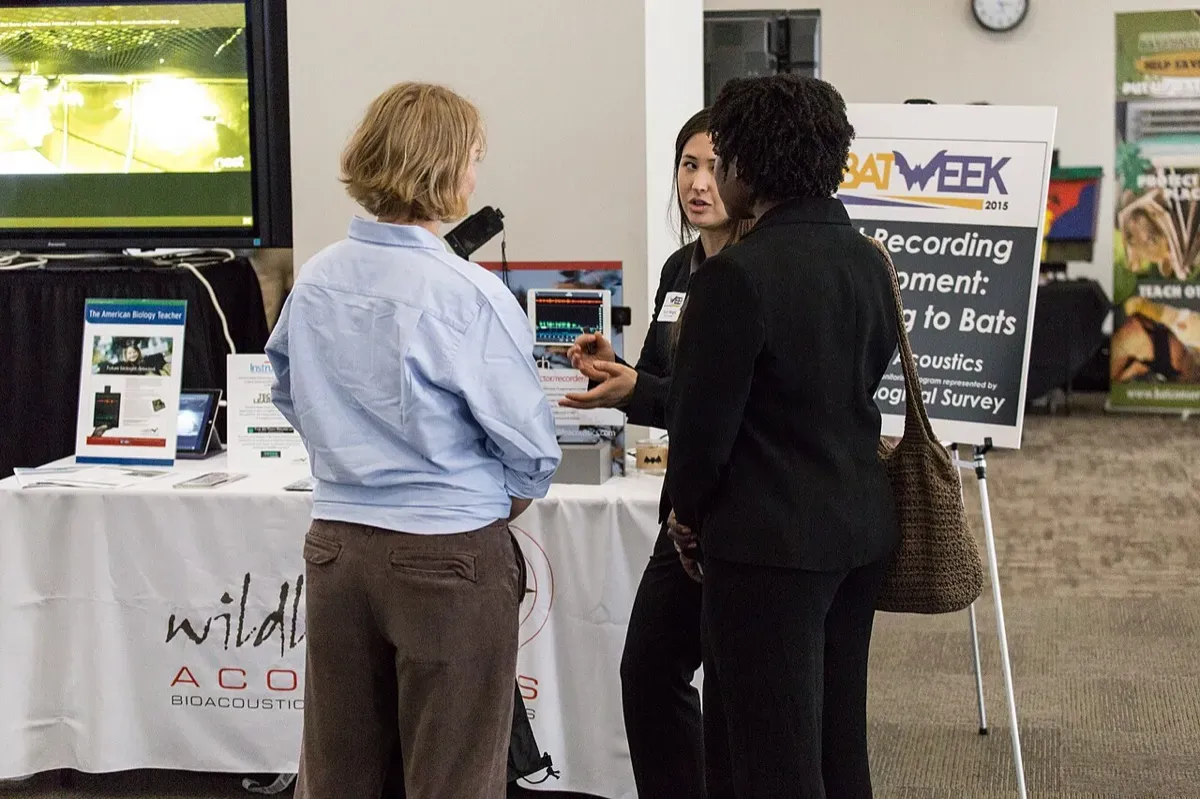
- “Wildlife Acoustics” by USFWS Headquarters (27 Oct 2015), public domain, via Wikimedia Commons: https://commons.wikimedia.org/wiki/File:Wildlife_Acoustics_(21924437433).jpg
.jpg)