The problem
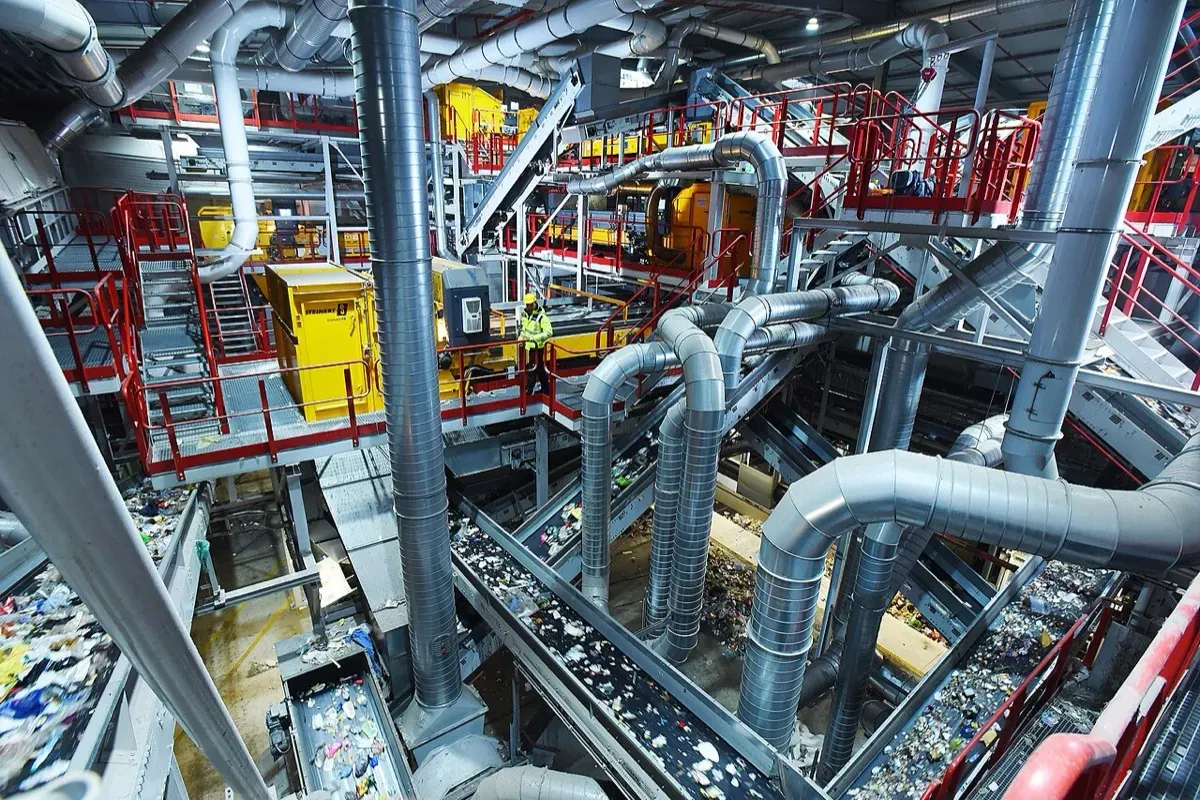
Construction and demolition waste is a jumble of concrete, bricks, timber, metals, plastics, plasterboard and packaging. Much of it can be recycled, but only if it is sorted into clean fractions. Sorting by hand is slow, dusty and dangerous: workers pick heavy, sharp objects off fast conveyor belts, often in cold halls.
Simple machines like screens and magnets separate by size or metal content, but they cannot tell a plank of wood from a plastic pipe of the same size. Without better sorting, much C&D waste is downcycled into fill, burned or landfilled.
Renovation is also changing the stream. As Europe retrofits old buildings for energy efficiency, more insulation, timber, window frames and mixed plastics come out of sites, and these need to be separated if they are to be recycled rather than incinerated. Labour shortages in the waste sector add pressure to automate the hardest, most hazardous picking jobs.
The product
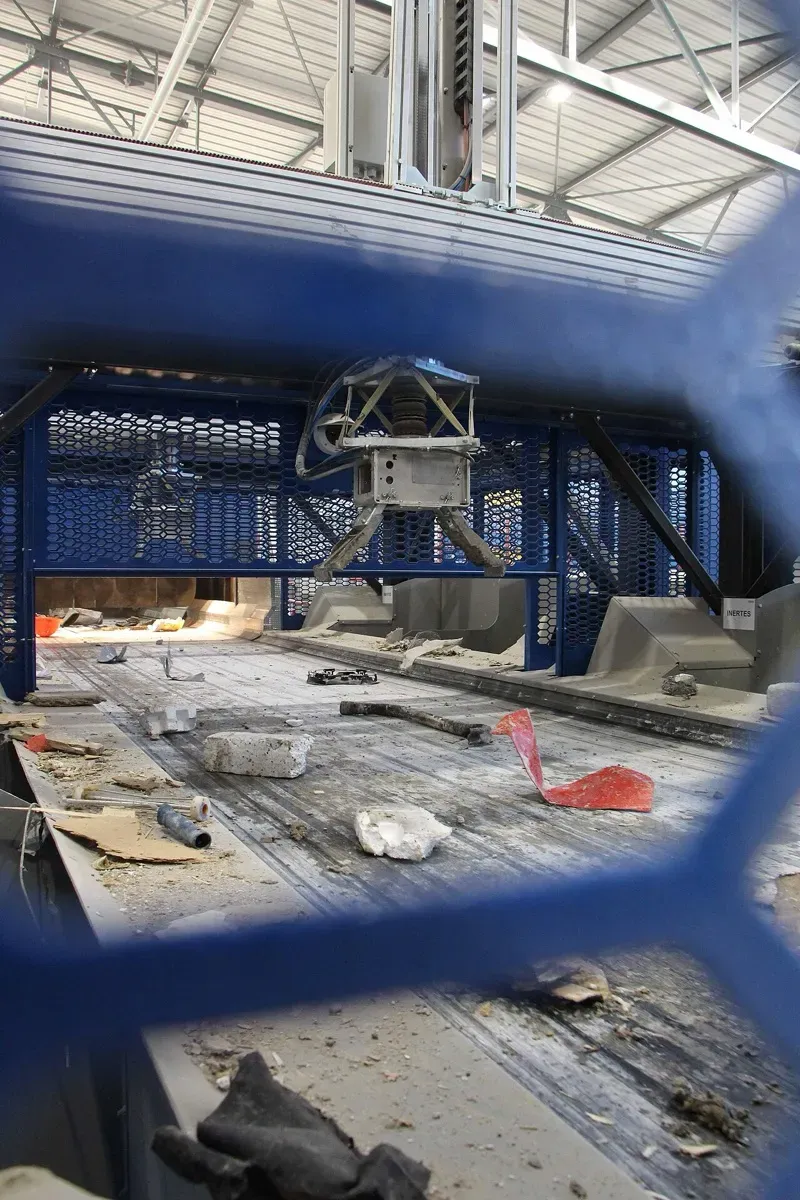
The Heavy Picker is a robotic sorting station for bulky waste. Sensors and cameras above the belt feed data to ZenRobotics’ AI, which identifies each object and tells robot arms with grippers what to pick and where to drop it. ZenRobotics calls it the world’s strongest waste sorting robot (Terex).
The robots can be set up for different tasks, such as picking wood, metals, inert material or plastics, and can be retrained as market prices change. ZenRobotics also sells the Fast Picker for lighter material, and in 2026 launched the OmniPicker, an IP67-rated robot that picks up to 60 objects a minute with a 15 kg lifting capacity, on lines handling up to 100 tonnes an hour, with its ZenVision analytics (ZenRobotics).
How it works
- Pre-treat: a trommel or screen removes fines and oversize items, and magnets pull out ferrous metal.
- Spread: a feeding bunker gives the robots an even flow of material on the belt.
- Recognise: sensors and AI identify each item by material and shape.
- Pick: robot arms grab the target items and drop them into chutes for each fraction, up to 10 in one pass.
- Monitor: a remote control and data system shows what is passing through, so operators can adjust settings (C&D Recycling).
Timeline
| Date | Milestone |
|---|---|
| 2007 | ZenRobotics founded in Helsinki |
| 2009 | First company to apply AI-based robots to waste sorting |
| 2010 | ZenRobotics Recycler makes its first pick in Helsinki |
| 2015 | Heavy Picker launched |
| 2018 | Fast Picker launched |
| 11 Aug 2022 | Terex Materials Processing acquires ZenRobotics’ assets |
| Sep 2023 | Fully robotised MRF agreed with Bjorstaddalen in Norway |
| Jun 2025 | Four Heavy Pickers run RGS Nordic’s fully automated C&D plant in Copenhagen |
| May 2026 | OmniPicker launched at IFAT Munich |
Impact and numbers
- RGS Nordic, Denmark: RGS processes up to one-third of Denmark’s C&D waste. Its Copenhagen line has a Terex trommel handling up to 45 tonnes an hour, a ballistic screen, magnets and four Heavy Pickers, with no hand sorting (C&D Recycling).
- US steel recycler: three Heavy Pickers commissioned in 2024 to remove copper “meatballs”, wires and trash from ferrous scrap, followed by a repeat order for seven more, to help keep copper below 0.1% in recycled steel (Recycling Product News).
- Norway: a fully robotised material recovery facility for household waste, agreed with Bjorstaddalen and Tandberg Engineering in 2023, to reduce incineration and landfill (Circular Economy News).
- Purity: up to 99% according to ZenRobotics; the OmniPicker is marketed with up to 99.9% purity and yield.
Honest caveats. In 2022 Terex bought the assets of ZenRobotics Ltd rather than the company itself, so the brand now depends on Terex’s strategy and investment. Purity and yield claims are company figures and depend heavily on the material, belt loading and pre-treatment; independent performance data are scarce. Robots replace dangerous manual picking, which also means fewer jobs on sorting lines. Picking rates of tens of items a minute per arm mean large plants need several robots and good mechanical pre-sorting. The US steel orders show strong demand from scrap metal, which is valuable but is not the C&D waste where the robot first made its name. The company has not published how many Heavy Pickers are installed worldwide, and robots add little value in plants where the mixed waste is never pre-screened.
What’s next
ZenRobotics is pushing the OmniPicker and ZenVision analytics, with predictive diagnostics and seven-day playback, and selling complete robotic plants with Terex Recycling Systems. Terex’s global dealer and service network gives the robots wider reach than ZenRobotics had alone. Its target markets include C&D waste, commercial and industrial waste, household waste and scrap metal, in Europe and North America.
Why it matters for Europe / green buyers
The EU Waste Framework Directive set a target of 70% by weight for preparing non-hazardous C&D waste for reuse, recycling and other material recovery by 2020 (EUR-Lex). Much of that “recovery” is backfilling, so sorting that produces clean wood, metal and plastic fractions is needed for higher-value recycling. For waste operators, robots offer safer workplaces and steadier output. For developers and buyers of recycled materials, plants with documented sorting quality make it easier to specify recycled content. When assessing robotic sorting, ask for site-specific purity data and maintenance costs over several years.
India notified the Environment (Construction and Demolition) Waste Management Rules, 2025, in force from 1 April 2026. They introduce extended producer responsibility for C&D waste and require large projects of 20,000 m2 or more to use rising shares of recycled C&D material, from 5% in 2026-27 to 25% from 2030-31 (Gazette of India, via MPCB). The rules also set EPR recycling targets for reconstruction and demolition projects that rise from 25% of the previous year’s waste in 2025-26 to 100% from 2028-29. That will create demand for C&D recycling plants that produce cleaner, sorted outputs.
Sources & image credits
- ZenRobotics, “About us” and company timeline: https://www.terex.com/zenrobotics/about-us
- Terex, “Terex MP acquires ZenRobotics” (11 Aug 2022): https://www.terex.com/recycling/en/about/news/zenrobotics
- Construction & Demolition Recycling, “Terex and ZenRobotics claim sorting success in Europe” (5 Jun 2025): https://www.cdrecycler.com/news/terex-zenrobotics-recycling-sorting-robot-demolition-materials-denmark/
- Recycling Product News, “Robotics enhances scrap metal sorting with high precision” (23 Sep 2025): https://www.recyclingproductnews.com/article/43704/zenrobotics-to-supply-one-of-uss-largest-steel-recyclers-with-sorting-robots
- ZenRobotics, “ZenRobotics to launch new OmniPicker at IFAT Munich 2026” (1 May 2026): https://www.terex.com/zenrobotics/about-us/news/zenrobotics-to-launch-new-omnipicker-at-ifat-munich-2026
- Circular Economy News, “ZenRobotics and Terex Recycling Systems to deliver a fully robotised MRF in Norway” (20 Sep 2023): https://www.circular-economy-news.com/index.php/equipment/zenrobotics-and-terex-recycling-systems-to-deliver-a-fully-robotised-material-recovery-facility-in-norway
- EUR-Lex, Directive 2008/98/EC on waste (Waste Framework Directive): https://eur-lex.europa.eu/eli/dir/2008/98/oj/eng
- Gazette of India, Environment (Construction and Demolition) Waste Management Rules, 2025 (hosted by MPCB): https://www.mpcb.gov.in/sites/default/files/construction-demolition-waste/Construction_and_Demolition_waste_Rules_2025.pdf
Images:
- “Robot de tri” by HELVETIA ENVIRONNEMENT, 2019, licensed under CC BY-SA 4.0 (https://creativecommons.org/licenses/by-sa/4.0), via Wikimedia Commons: https://commons.wikimedia.org/wiki/File:Robot_de_tri.jpg