The problem
Bengaluru shows the Indian urban water paradox clearly. In May 2025 the city recorded 105.5 mm of rain in one early morning, streets flooded and several people died in rain-related incidents. Yet in April of the same year, the lakes within city limits held only about 10,595 million litres, a third of their capacity, with only three full (The New Indian Express). The city’s response included a Rs 1,600 crore World Bank loan to finish its stormwater drain network, designed to carry water out of the city faster.
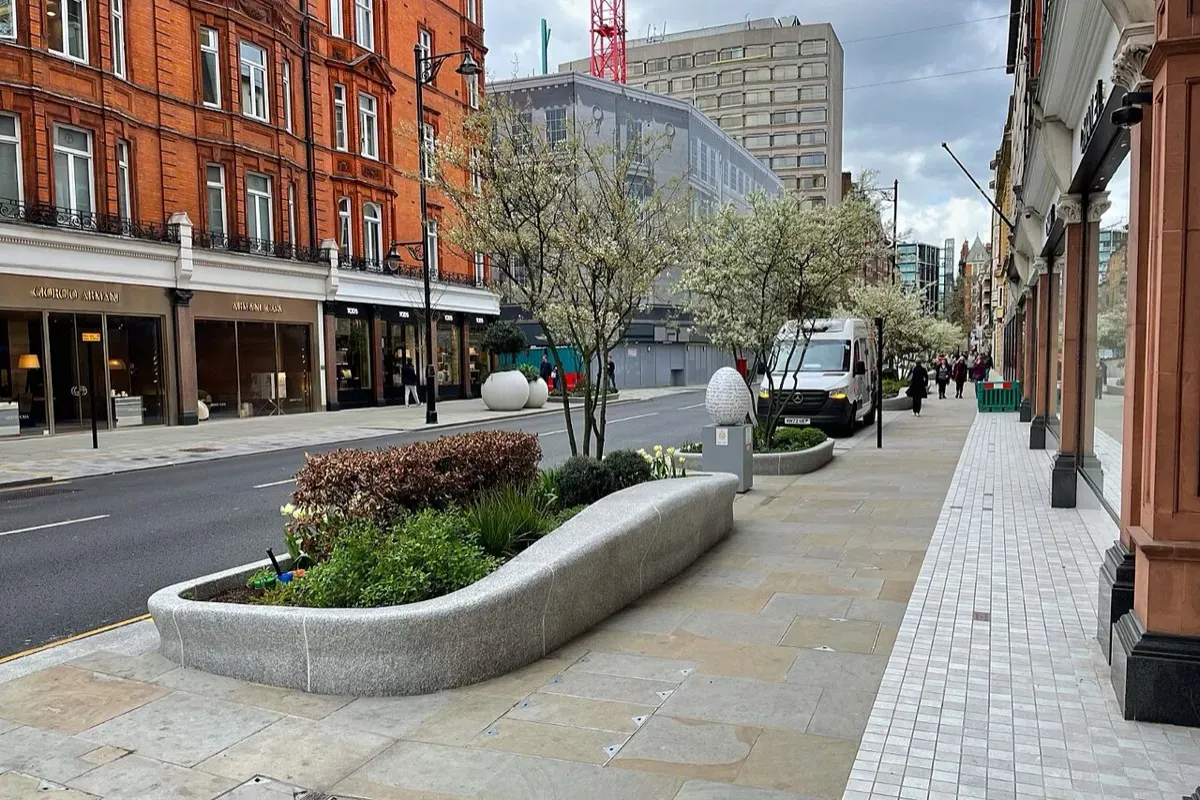
Experts quoted by Citizen Matters point out that Bengaluru already extracts all of its available groundwater and that hard paving stops rain from reaching aquifers. They argue that main roads cannot safely be made permeable, but walkways, parking areas and recharge pits can (Citizen Matters).
The product
ACC Permecrete is a pervious concrete supplied as ready-mix from ACC’s RMX plants. ACC describes it as a sustainable water management technology that reduces the risk of flooding and stagnation by percolating surface runoff, with a filtration rate of 500 to 1,000 L/min/m², says it can be placed and finished quickly, and recommends it for car parks, walkways, driveways and streets (ACC).
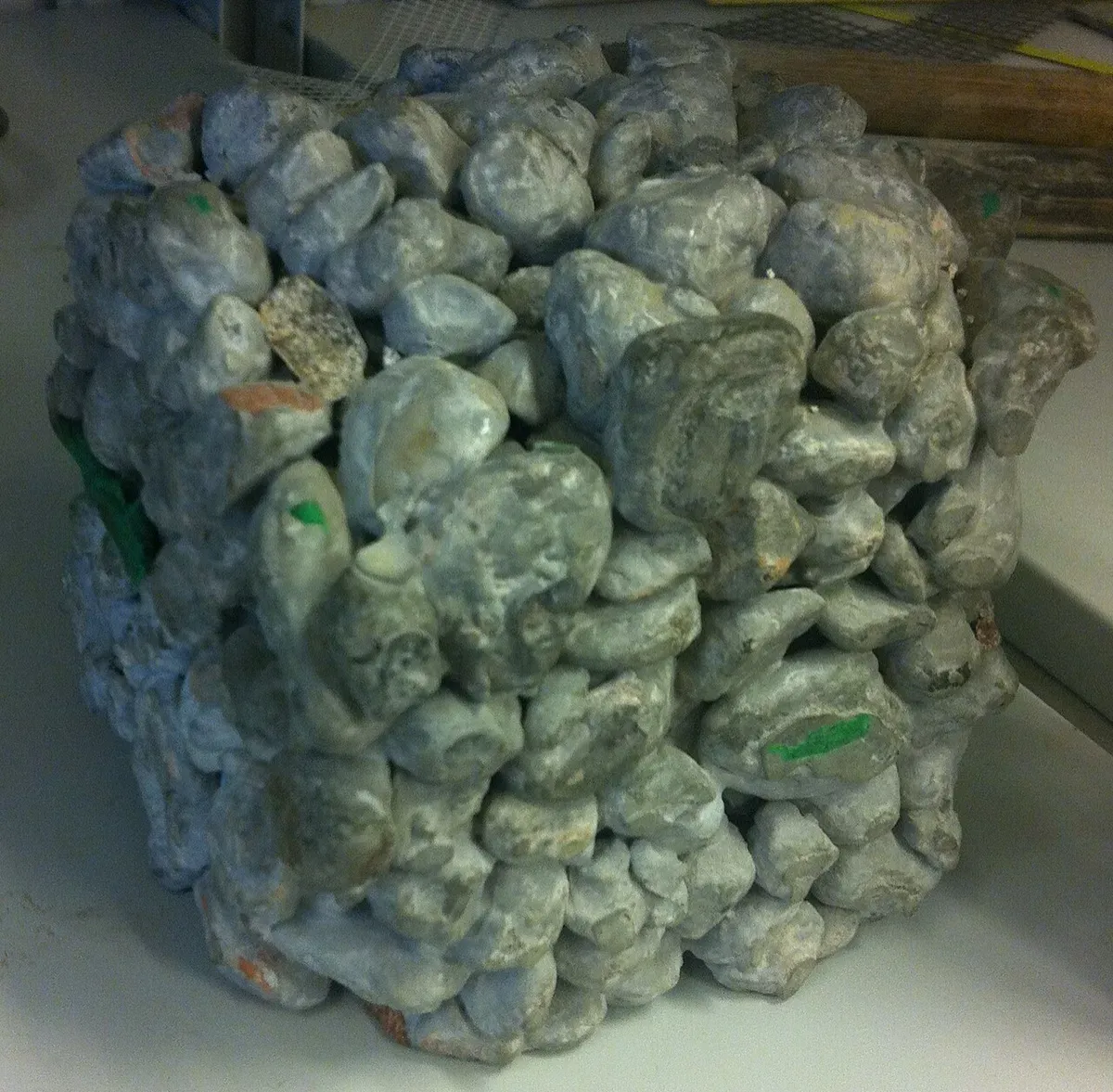
Pervious concrete is made with little or no sand (“no fines”), so the cement paste coats coarse aggregate and leaves connected voids. A trade article from March 2014 described Permecrete as a porous, high-performance RMX that lets water drain to the ground below, keeps areas dry and helps groundwater, for uses such as open-air car parks over a permeable sub-grade (B2B Purchase). The “ACC Permecrete” trademark was filed on 18 January 2019 and registered on 8 July 2019 (QuickCompany).
Permecrete sits in a wider RMX range. In April 2021, when ACC was still part of LafargeHolcim, it launched four further ready-mix products, including the lower-carbon ECOPact, in six cities; the press photo for that launch showed a Permecrete demonstration (The Hindu BusinessLine).
How it works
- Prepare: the ground is excavated and a free-draining base of crushed stone is laid on a permeable sub-grade.
- Pour: Permecrete arrives in a transit mixer and is placed and compacted quickly, because the low-paste mix sets fast.
- Cure: the slab is covered to retain moisture while it hardens.
- Drain: rain falls straight through the pores into the base, which stores it while it soaks into the soil or flows to a recharge pit.
- Maintain: the surface is swept or vacuumed to keep pores open.
Timeline
| Date | Milestone |
|---|---|
| 1936 | ACC incorporated |
| Mar 2014 | Permecrete promoted as ACC’s self-draining RMX |
| 18 Jan 2019 | “ACC Permecrete” trademark filed (registered 8 Jul 2019) |
| Sep 2022 | Adani Group takes control of ACC and Ambuja from Holcim |
| 29 Sep 2026 | ACC shareholders approve merger into Ambuja Cements |
Impact and numbers
- Filtration: 500 to 1,000 L/min/m² equals 500 to 1,000 mm of rain per minute. Bengaluru’s record morning in May 2025 brought 105.5 mm in hours, so the slab surface is rarely the bottleneck; the soil and base below it are.
- Scale behind the brand: ACC reported sales of Rs 25,962 crore in FY26 (Financial Express), with a ready-mix network that can deliver to many Indian cities.
- Policy target: Bengaluru’s Climate Action Plan aims for 40% of the city’s surface to be permeable by 2040 (NbS4India).
Honest caveats. ACC publishes no strength, void ratio, test standard or field performance data for Permecrete on its product page, and no monitored Indian project with recharge figures was found. Pervious concrete is weaker than normal concrete and suits light traffic; heavy lorries and turning buses can ravel it. Its pores clog with dust, silt and leaves, a real risk in dusty Indian cities, so without regular vacuum sweeping performance falls. Water can only soak away if the soil and base below allow it; on clay or over a high water table, a pipe outlet is needed. Polluted runoff from car parks may need treatment before it reaches groundwater. It is still cement, with a high carbon footprint. Commercially, ACC is being merged into Ambuja Cements: the merger is effective from 1 January 2026 and expected to close in FY27, subject to the tribunal’s final approval (Financial Express), so the brand and range may change. Competitors such as UltraTech offer similar pervious concretes.
What’s next
If Bengaluru and other cities turn permeability targets into rules for parking lots, campuses and footpaths, pervious ready-mix could become a routine order rather than a demonstration product. The most effective designs are likely to pair pervious slabs with recharge pits and roadside bioswales, which Citizen Matters reports Bengaluru’s civic body has already piloted, so that a car park both absorbs its own rain and feeds a deeper recharge point. The open question is who maintains these assets after handover: a housing society, a municipal ward or the contractor. What the market needs is local design guidance, test methods for infiltration and clogging, and published case studies with measured recharge.
Why it matters for Europe / green buyers
In Europe, pervious concrete, known in Germany as “Drainbeton”, is one of several options for unsealing car parks and yards. The EU Soil Monitoring Directive (EU) 2025/2360, in force since 16 December 2025, requires member states to monitor land take and soil sealing and sets mitigation principles for it (EUR-Lex), so pervious surfaces will appear more often in tenders. European buyers specify them through local standards, infiltration tests and maintenance plans, which is the discipline Indian projects still lack.
For Indian developers, housing societies and municipal bodies, Permecrete offers a familiar material from a familiar supplier: it comes in the same transit mixers as ordinary concrete. That lowers the barrier compared with imported systems. The checks are a soil percolation test, a proper base, light-traffic zoning, a sweeping contract and a clear warranty from whichever company owns the brand after the merger.
Sources & image credits
- ACC, “ACC Permecrete: water-permeable concrete for urban drainage”: https://www.acchelp.in/all-products/ready-to-mix-concrete/acc-permecrete
- QuickCompany, trademark 4060642 “ACC Permecrete”: https://www.quickcompany.in/trademarks/4060642-acc-permecrete
- B2B Purchase, “Self-water draining concrete by ACC” (19 Mar 2014): https://b2bpurchase.com/self-water-draining-concrete-by-acc/
- The Hindu BusinessLine, “ACC launches 4 ready-mix products” (21 Apr 2021): https://www.thehindubusinessline.com/companies/acc-launches-4-ready-mix-products/article34375460.ece
- Financial Express, “ACC-Ambuja merger moves ahead: what investors should watch next” (1 Oct 2026): https://www.financialexpress.com/market/stock-insights/acc-ambuja-merger-moves-ahead-what-investors-should-watch-next/4350777/
- Citizen Matters, “Rethinking road infrastructure: road designs for groundwater recharge” (2 Jun 2025): https://citizenmatters.in/rethinking-road-infrastructure-road-designs-for-groundwater-recharge/
- NbS4India, “BBMP’s BCAP and BlueGreenUru: charting a greener future for Bengaluru”: https://www.nbs4india.org/bbmps-bcap-and-bluegreenuru-charting-a-greener-future-for-bengaluru/
- The New Indian Express, “SWD project: BBMP secures Rs 1,600 crore World Bank loan” (23 May 2025): https://www.newindianexpress.com/cities/bengaluru/2025/May/23/swd-project-bbmp-secures-d1600-crore-world-bank-loan
- EUR-Lex, Directive (EU) 2025/2360 on soil monitoring and resilience: https://eur-lex.europa.eu/eli/dir/2025/2360/oj/eng
Images:
- “Pervious concrete” by johny, released under CC0 1.0 (https://creativecommons.org/publicdomain/zero/1.0/deed.en), via Wikimedia Commons: https://commons.wikimedia.org/wiki/File:Pervious_concrete.JPG