The problem
The Netherlands lives with too much and too little water at once. Cloudbursts overload sewers built for gentler rain, while dry summers lower groundwater levels, stress trees and cause peat soils to shrink. The common culprit is that rain from roofs and paving is piped straight into the sewer, out of the area where it fell.
Dutch municipalities therefore push “afkoppelen”: disconnecting downpipes and paved areas from the sewer so rain can soak into the ground. For new housing areas, separating rainwater from the sewer is already required (Hydrorock, Monnickenburg). On small plots, there is often not enough open soil to absorb a heavy shower quickly, so the water needs a buffer.
The product
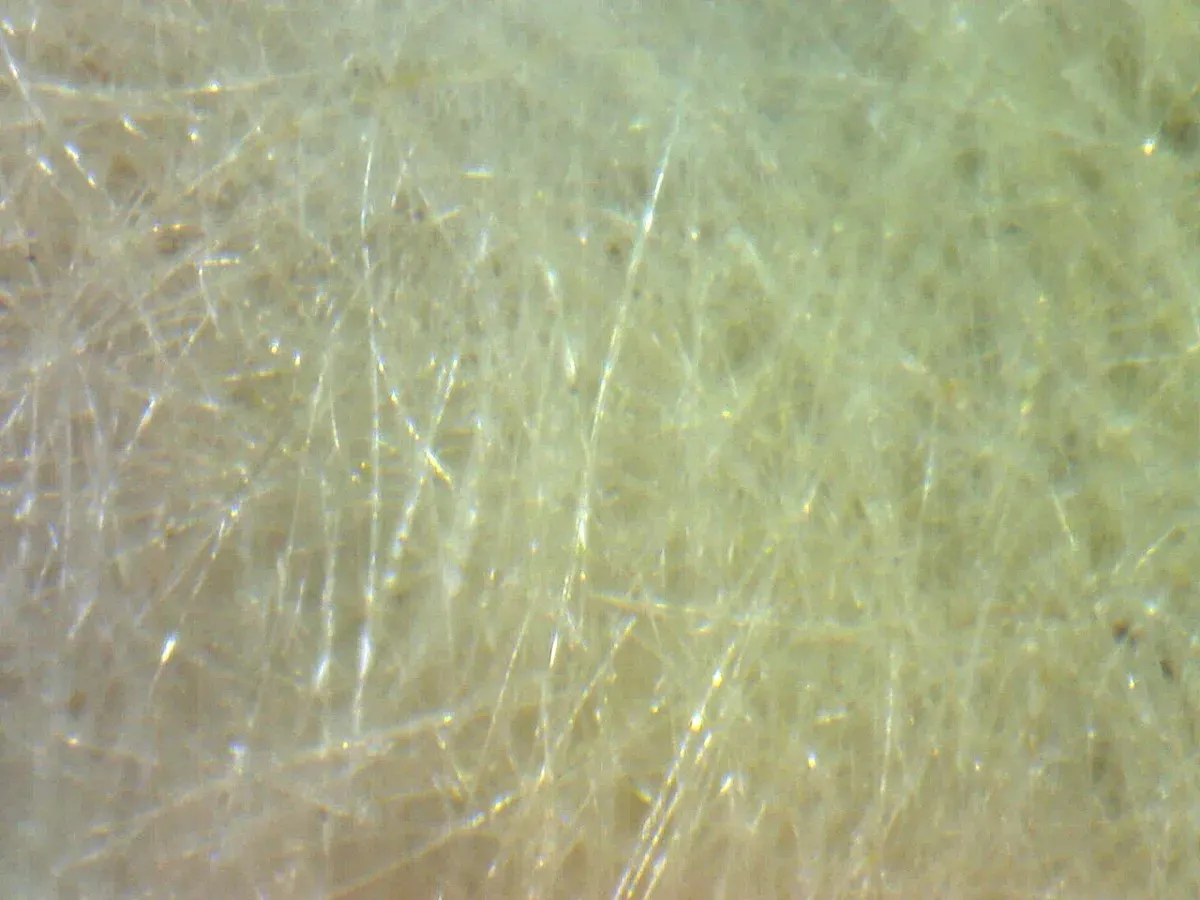
Hydrorock blocks are made of Rockflow stone wool, produced from volcanic basalt rock that is melted and spun into fibres, and wrapped in a geotextile. The blocks have up to 95% void space, so they absorb water quickly, store it and release it gradually into the surrounding soil (Hydrorock). The company was set up as a collaboration between ROCKWOOL and the Asbipro group (Hydrorock, about) and registered in Schiedam in December 2013 (TransFirm).
The range (Hydrorock products; D-blocks):
- D-blocks for gardens and small roofs, from the D34 (120 x 15 x 20 cm, 34 litres, 2.7 kg) to the D340 (120 x 30 x 100 cm, 340 litres, 27 kg, for about 3.72 m² of roof) and the D440 (120 x 40 x 100 cm, 440 litres, 35 kg, about 4.16 m² of roof);
- BD blocks with built-in perforated pipes that link block to block for larger systems;
- DHD and BDHD heavy-duty versions for driveways and car parks;
- IR irrigation blocks that hold water near tree and plant roots.
Hydrorock says one person can install a garden block without heavy machinery, and that stone wool’s capillary action holds some water for plants.
How it works
- Collect: a downpipe, gully or drain feeds rainwater into the block through a connector.
- Buffer: the stone wool soaks up the peak flow within its 95% void space.
- Infiltrate: water seeps through the geotextile into the soil over the following hours.
- Retain: capillary forces keep some moisture in the block for roots during dry spells.
- Link up: for larger sites, BD blocks are coupled through internal pipes into one buffer.
Timeline
| Date | Milestone |
|---|---|
| 19 Dec 2013 | Hydrorock International B.V. registered in Schiedam |
| 2018 | Rockflow stone wool system under a supermarket car park in Zevenaar is monitored |
| Ongoing | Hilversum uses BD blocks at the Monnickenburg housing development |
| 2024 | EU adopts the recast Urban Wastewater Treatment Directive (2024/3019) |
| 31 Dec 2033 | Integrated wastewater plans due for EU cities over 100,000 p.e. |
Impact and numbers
The most solid evidence comes from ROCKWOOL, Hydrorock’s materials partner, on its Rockflow system. At the Zonnemaat Jumbo supermarket in Zevenaar, a 12 x 28.8 x 0.5 m stone wool package (about 173 m³) was installed under the car park to take rain from 4,500 m² of disconnected surface, designed for 35.7 mm of rain per hour. Monitoring analysed by Ingenieursbureau Land showed the buffer emptied within a day, with an average infiltration rate (k-value) of 4.7 metres per day, even in a clay area (ROCKWOOL Rainwater Systems).
At Monnickenburg in Hilversum, BD blocks let homes manage rain on site without any connection to the sewer, according to Hydrorock’s case study (Hydrorock). The case study page does not give the number of homes or the volume installed.
Honest caveats. The Zevenaar monitoring concerns a ROCKWOOL Rockflow project, not a Hydrorock-branded installation, so it supports the material rather than this product line. Hydrorock’s case studies are marketing pages without measured data. The “zero plastic” message sits awkwardly with the geotextile wrap and the internal pipes in BD blocks. Like any infiltration system, the blocks need permeable soil and enough depth to groundwater; in high water tables or contaminated ground they may not be suitable. Silt and leaves entering the block can reduce its performance over time, so gutter guards or filter units matter. Stone wool production is energy-intensive, and the product’s carbon footprint is not published on the pages reviewed. End-of-life claims, such as recycling the stone wool, rely on the manufacturer taking it back.
What’s next
The recast Urban Wastewater Treatment Directive (EU) 2024/3019 requires integrated urban wastewater management plans for large cities by the end of 2033, prioritising green and blue infrastructure and setting an indicative goal of keeping storm overflows below 2% of annual dry-weather load (EUR-Lex). Small, distributed infiltration under gardens and verges is one way for cities to cut runoff without digging up streets for bigger sewers. Expect more municipal “disconnection” subsidies and more demand for products with independent long-term monitoring.
Why it matters for Europe / green buyers
For a homeowner or developer, Hydrorock offers a compact way to keep rain on the plot instead of sending it to the sewer. The checks are simple: run an infiltration test, confirm the groundwater depth, size the blocks to the roof or paved area, and add a filter before the inlet. Municipal buyers should ask for monitoring data from real Hydrorock sites, not only material tests. In England, where the June 2025 national SuDS standards are still non-statutory guidance rather than law, small infiltration units like these are mostly chosen voluntarily, by councils and developers who want to keep rain out of combined sewers (New Civil Engineer).
In India, the case for infiltration is about recharge as much as flooding. Bengaluru extracts all of its replenishable groundwater, and experts say that while roads cannot be made permeable safely, walkways, parking and recharge pits can return rain to the aquifer (Citizen Matters). Light, high-void blocks that one person can install would fit housing societies and campuses, if stone wool can be sourced locally at a sensible price and kept free of urban silt.
Sources & image credits
- Hydrorock, “What is Hydrorock”: https://www.hydrorock.com/what-is-hydrorock/
- Hydrorock, products overview: https://www.hydrorock.com/products/
- Hydrorock, D-blocks product range: https://www.hydrorock.com/product-range/d-blocks/
- Hydrorock, about Hydrorock: https://www.hydrorock.com/about-hydrorock/
- Hydrorock, case study “Woningbouw, Monnickenburg” (Hilversum): https://www.hydrorock.com/nl/case-study/residential-monnickenburg/
- ROCKWOOL Rainwater Systems, “Monitoring in Zevenaar”: https://rain.rockwool.com/nl/advies-en-inspiratie/referentieprojecten/monitoring-in-zevenaar/
- TransFirm, Hydrorock International B.V. company record: https://www.transfirm.nl/nl/organisatie/59478691-000028772857-hydrorock-international-b.v.
- EUR-Lex, Directive (EU) 2024/3019 concerning urban wastewater treatment (recast): https://eur-lex.europa.eu/eli/dir/2024/3019/oj/eng
- Citizen Matters, “Rethinking road infrastructure: road designs for groundwater recharge” (2 Jun 2025): https://citizenmatters.in/rethinking-road-infrastructure-road-designs-for-groundwater-recharge/
- New Civil Engineer, “Experts ‘disappointed’ drainage regulation update still does not make SuDS mandatory” (23 Jun 2025): https://www.newcivilengineer.com/latest/experts-disappointed-drainage-regulation-update-still-does-not-make-suds-mandatory-23-06-2025/
Images:
- “Rockwool close up 4” by Achim Hering, licensed under CC BY 3.0 (https://creativecommons.org/licenses/by/3.0), via Wikimedia Commons: https://commons.wikimedia.org/wiki/File:Rockwool_close_up_4.jpg