
The problem
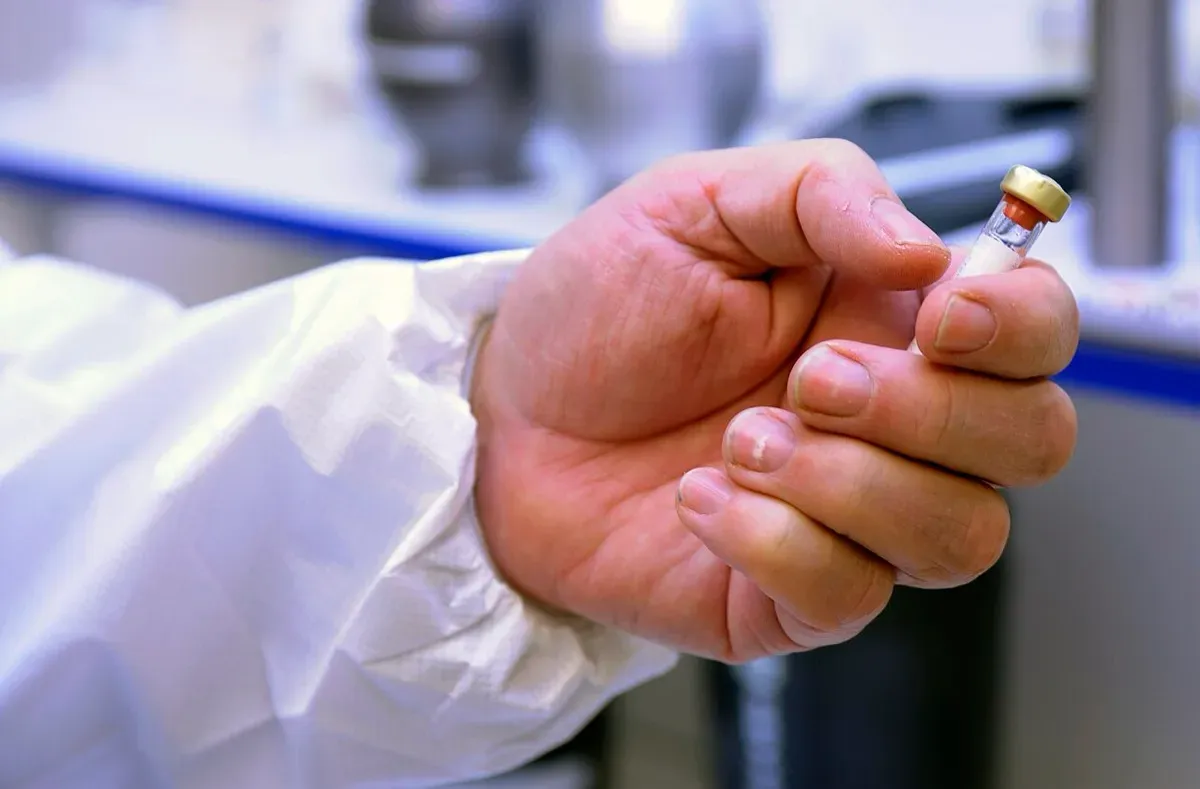
Technetium-99m is the most widely used diagnostic isotope in the world. A BARC technical document estimates that it is used in approximately 85% of nuclear medicine diagnostic imaging procedures (BARC): bone scans, heart perfusion studies, kidney function tests, thyroid and lung scans, and sentinel lymph node mapping for cancer surgery. In Europe alone, radioisotopes are used to diagnose or treat about 9 million patients a year, and Europe accounts for more than 20% of the global technetium-99m market (Euratom Supply Agency).
The difficulty is physics. Technetium-99m has a half-life of about six hours and cannot be stockpiled. It is made from its parent, molybdenum-99, with a half-life of about 66 hours, which is produced by irradiating uranium targets in research reactors. The Euratom Supply Agency warns that the world relies on an unsustainably low number of production reactors, many built in the 1950s and 1960s, and recalls a 2008 to 2010 crisis in which many patients had tests cancelled or delayed.
For India, the problem had an extra layer. Older Indian generators relied on low specific activity molybdenum made by neutron capture, which yields roughly 1 curie per gram, against about 20,000 curies per gram for fission molybdenum, according to BARC. Low specific activity needs bulky gel or solvent-extraction systems that are harder for hospitals to use. High specific activity material for compact column generators largely had to be imported.
The product
COLTECH is BRIT’s flagship generator. It contains high specific activity fission molybdenum-99, above 37 TBq per gram, adsorbed on a small acidic alumina column. Both ends of the system have sterile microbiological filters. A hospital radiopharmacy passes saline through the column and, in about a minute, collects clear sodium pertechnetate solution ready to prepare technetium radiopharmaceuticals (BRIT).
The generator comes in four sizes: 11.1, 18.5, 22.2 and 37 GBq. Each package contains one generator in a Type A transport package, an elution kit and an insert. BRIT also offers GELTECH, a zirconium molybdate gel generator, when COLTECH is not available, and molybdate solution for solvent-extraction systems.
The generator is only half the product. BRIT makes about 20 technetium cold kits, processing around 3,000 vials a week in a GMP-accredited Class A laboratory. Mixed with the eluted technetium, these kits produce injectables such as MDP for bone imaging, MIBI for myocardial perfusion, DTPA and DMSA for kidney studies, macro-aggregated albumin for lung perfusion and HYNIC-TOC for neuroendocrine tumour imaging.
How it works
Production starts with low enriched uranium targets irradiated in BARC’s research reactors at Trombay. BARC’s documentation names both Dhruva, a 100 MW heavy-water reactor that reached criticality in 1985, and Apsara-U, a 2 MW pool reactor commissioned in 2018, with a design target of 300 curies of fission molybdenum a week. The targets are processed in the Fission Molybdenum Plant at BRIT, which was set up with technology support from INVAP of Argentina (PIB, 28 April 2022).
The extracted molybdenum is loaded onto alumina columns, sealed into shielded generators and dispatched across the country. Hospitals must have their facilities and users authorised by the Atomic Energy Regulatory Board before BRIT accepts an order (BRIT). As molybdenum decays inside the column it creates technetium-99m, which the hospital washes out each morning. A generator calibrated on Monday serves a department through the week, until the next delivery.
Timeline
| Date | Milestone |
|---|---|
| 8 August 1985 | Dhruva research reactor reaches criticality at Trombay |
| September 2018 | Apsara-U research reactor reaches criticality |
| 27 April 2022 | Argentine delegation reviews the BRIT and INVAP fission Mo-99 project at BARC |
| 11 May 2023 | Fission Molybdenum-99 Plant dedicated to the nation by the Prime Minister on National Technology Day |
| 29 December 2023 | DAE year-end review says the plant makes India one of the few countries producing fission Mo-99 |
| Ongoing | COLTECH generators supplied weekly; cold kits produced weekly |
Impact and numbers
- Self-reliance: with the plant, India became one of the few countries in the world able to produce medical-grade high specific activity Mo-99 using low enriched uranium targets, according to the government (PIB, 29 December 2023).
- Exports: the government says the Mo-99 will meet domestic demand and allow exports to neighbouring countries.
- Output: BRIT’s Mo-99/Tc-99m products totalled 662 curies in 2021-22, 693 in 2022-23, 268 in 2023-24, 283 in 2024-25 and 550 in 2025-26, against a stated capacity of 50 curies a week, according to a written reply in the Lok Sabha (PIB, 12 August 2026).
- Reliability: BRIT met about 90% of confirmed orders in normal operations; during reactor or processing shutdowns it imported Mo-99, including 516 curies from Belgium and Russia in 2025-26.
- Scale of kits: around 3,000 cold-kit vials processed every week, covering 20 kit types.
- Non-proliferation: the use of low enriched uranium targets aligns with the international move away from highly enriched uranium in isotope production, which the EU also supports.
Honest caveats. Self-reliance is not yet complete. The same parliamentary reply lists shortfalls of up to 19 of 52 weekly Mo-99 batches in a single recent year, caused by unforeseen reactor or processing shutdowns and a lack of imported backup, and imports in 2025-26 were almost as large as domestic output. BRIT does not publish the number of hospitals served. Production depends on Dhruva, now four decades old, and BARC’s sanctioned Isotope Production Reactor is only expected to start around 2035.
What’s next
India’s next step is capacity and redundancy. The government has said it intends to export molybdenum once domestic demand is met. Over the longer term, BARC has administrative and financial sanction for an Isotope Production Reactor with a capacity of 0.5 million curies, expected to start production around 2035, which would reduce the strain on Dhruva and Apsara-U. Until then, reliable imported backup during outages remains essential. For patients, the gains will show up as more reliable access to routine scans outside the largest cities.
Why it matters for Europe / green buyers
Europe and India face the same structural risk: a vital diagnostic tool depends on a handful of ageing reactors and just-in-time logistics. The EU’s SAMIRA action plan and its European Observatory on the Supply of Medical Radioisotopes exist precisely because of that fragility. India’s fission Mo-99 plant is a reminder that sovereign capacity in medical isotopes is a health security issue, not just a nuclear one, and a potential partner in diversifying global supply.
For hospitals and health ministries, the useful questions are where the molybdenum originates, whether it is produced from low enriched uranium, how many reactor sources back the supplier, and what the contingency plan is during reactor outages.
Sources & image credits
- Board of Radiation and Isotope Technology, “SPECT” radiopharmaceuticals product page (COLTECH TCM-1, GELTECH, cold kits): https://britatom.gov.in/en/product/radiopharmaceuticals/spect
- Press Information Bureau, “Year End Review of the Department of Atomic Energy”, 29 December 2023: https://www.pib.gov.in/newsite/erelcontent.aspx?relid=251886
- Press Information Bureau, “High-level delegation from Argentina visits BARC to review bilateral cooperation on nuclear energy and ongoing collaboration for Molybdenum-99 production”, 28 April 2022: https://www.pib.gov.in/PressReleasePage.aspx?PRID=1821020
- BARC Reactor Group, “Facilities” (Dhruva and Apsara-U data, fission moly production): https://www.barc.gov.in/group/74_s36.pdf
- Euratom Supply Agency, “Supply of medical radioisotopes”: https://euratom-supply.ec.europa.eu/activities/supply-medical-radioisotopes_en
- BRIT, “Ordering Procedure”: https://britatom.gov.in/en/support/ordering-procedure
- Press Information Bureau, “Parliament question: Domestic self-sufficiency in critical medical radioisotope supply”, 12 August 2026: https://www.pib.gov.in/PressReleasePage.aspx?PRID=2298191&lang=1®=3
Images:
- “Drytec Technetium Generator (02210375)” by IAEA Imagebank, licensed CC BY-SA 2.0 (https://creativecommons.org/licenses/by-sa/2.0), via Wikimedia Commons: https://commons.wikimedia.org/wiki/File:Drytec_Technetium_Generator_(02210375)_(8468527888).jpg

_(8468527888).jpg)