The problem
Over 10,000 hospitals worldwide use radioisotopes to diagnose or treat about 35 million patients a year, 9 million of them in Europe, according to the Euratom Supply Agency (ESA). A fast-growing part of this is radioligand or targeted radionuclide therapy: a molecule that seeks out a tumour carries a radioactive atom that destroys cancer cells from the inside, while sparing most healthy tissue.
Lutetium-177 is the workhorse isotope for these therapies. It emits short-range beta particles for treatment and gamma rays that allow imaging, with a half-life of about 6.6 days. The classic way to make it, by irradiating lutetium-176, produces “carrier-added” material that contains stable lutetium and an impurity, lutetium-177m, with a half-life of about 160 days. That impurity complicates storage and disposal of hospital waste for months. Europe’s supply also depends on a small number of ageing research reactors, a fragility the EU has tried to address since the 2008 to 2010 isotope shortage.
The product
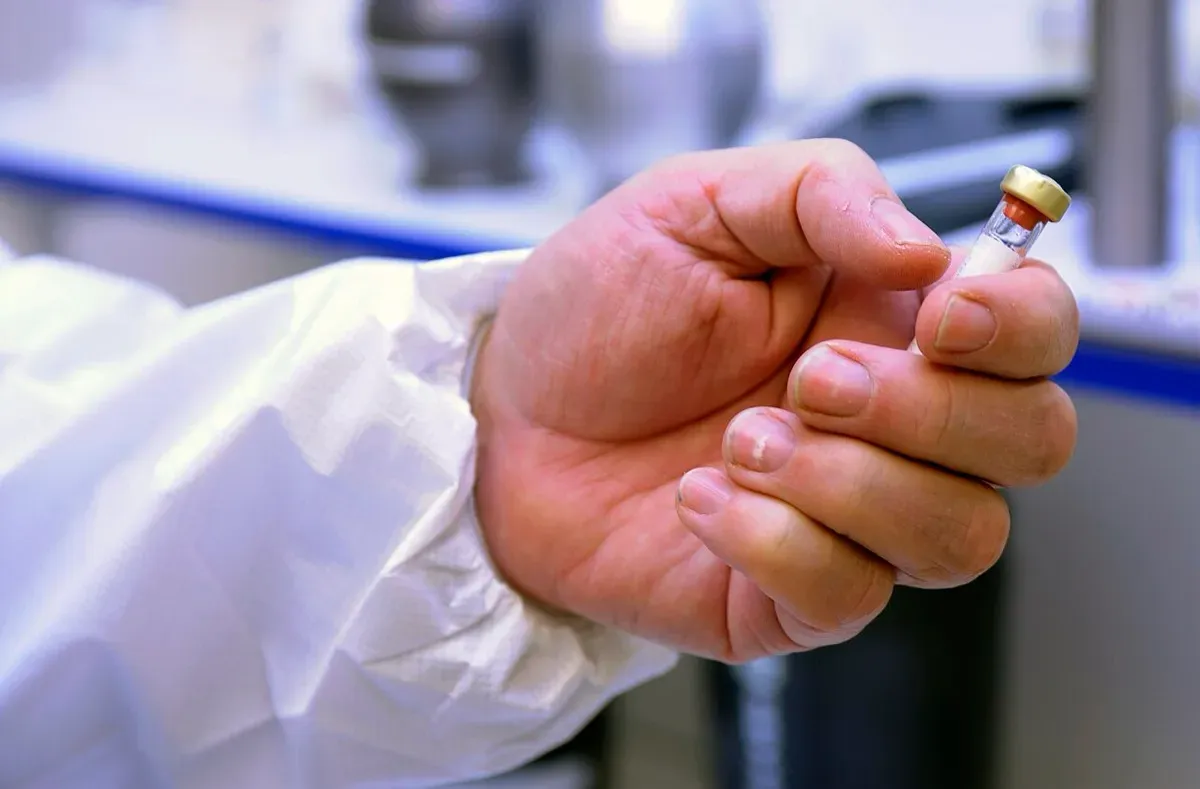
EndolucinBeta is ITM’s answer. It is a radiopharmaceutical precursor: a sterile solution of lutetium-177 chloride that is not given to patients directly but used to radiolabel authorised carrier molecules. The European Medicines Agency granted EU-wide marketing authorisation on 6 July 2016, with ITM Medical Isotopes GmbH as holder (EMA EPAR). ITM also holds a US Drug Master File with the FDA for the same isotope.
ITM supplies the isotope to pharmaceutical partners, clinics and its own pipeline. It has signed, for example, a supply agreement with Radiopharm Theranostics for programmes targeting PD-L1, HER2 and B7-H3 in solid tumours.
How it works
ITM uses the indirect production route developed with the Technical University of Munich. Highly enriched ytterbium-176 targets are irradiated with neutrons. Ytterbium-176 captures a neutron, becomes ytterbium-177, and decays within hours to lutetium-177. Because lutetium is a different element from the ytterbium target, it can be separated chemically, giving lutetium-177 with very high specific activity and essentially no stable lutetium “carrier” (TUM Radiochemistry Munich).
The practical benefit is purity. A 2023 study in EJNMMI Radiopharmacy and Chemistry found that lutetium-177m levels in non-carrier-added products were far lower than in carrier-added material, though traces can still appear because ytterbium targets are enriched to more than 99% rather than 100% (PMC10628054). Lower 177m content means simpler waste handling for hospitals.
The whole chain runs on a tight clock. Every day, about a tenth of the lutetium-177 decays away, so irradiation, chemical separation, quality control, sterile filling and shipment have to be planned backwards from the treatment date. Patients are typically treated in several cycles weeks apart, which means a clinic depends on a reliable weekly flow of isotope rather than a stockpile. That is why ITM spreads irradiation across several reactors and has invested in its own large GMP processing capacity: a single reactor shutdown should not cancel a patient’s therapy.
A high neutron flux also improves efficiency. ITM says irradiation in the high-flux reactor of the Institut Laue-Langevin gives a high yield and minimises use of scarce ytterbium-176 (ITM, 16 June 2025).
Timeline
| Date | Milestone |
|---|---|
| 2009 | ITM begins collaboration with the Institut Laue-Langevin on isotope production |
| 6 July 2016 | EndolucinBeta receives EU marketing authorisation |
| 13 October 2022 | New n.c.a. Lu-177 production line approved in Garching, multiplying capacity |
| 4 January 2024 | NOVA facility receives its radioactive material handling licence and reaches operational readiness |
| 18 October 2024 | Licence renewal and new supply agreement with NTP using the SAFARI-1 reactor |
| 16 June 2025 | ILL agreement extended, with priority access to half its irradiation capacity |
| 7 July 2026 | Phase 3 COMPETE results for ITM’s own Lu-177 drug published in The Lancet |
| 7 August 2026 | FDA complete response letter for ITM-11, citing manufacturing and facility items, not efficacy or safety |
Impact and numbers
- Capacity: NOVA could serve up to several hundred thousand patients a year, according to ITM (4 January 2024).
- Clinical evidence: in the COMPETE trial of 309 patients with gastroenteropancreatic neuroendocrine tumours, ITM’s lutetium-177 edotreotide (ITM-11) gave a median progression-free survival of 23.9 months against 14.1 months for everolimus, with fewer severe treatment-related side effects (18% against 40%).
- Supply resilience: three reactor sources on two continents (Germany, France and South Africa) rather than reliance on one.
- Waste: very low lutetium-177m content compared with carrier-added material, reducing long-term storage of contaminated hospital waste.
Honest caveats. EndolucinBeta is an isotope precursor, so its clinical value depends on the targeting drugs it is combined with. ITM’s own lead drug, ITM-11, received an FDA complete response letter in August 2026 over manufacturing and third-party facility issues; the agency raised no concerns about clinical data, and ITM intends to resubmit (ITM, 10 August 2026). Production still depends on research reactors, and enriched ytterbium-176 is itself a constrained material.
What’s next
ITM aims to resubmit its US application for ITM-11 and is running a second Phase 3 trial, COMPOSE, in more aggressive tumours. On the supply side, its strategy is to keep adding irradiation sources and to fill NOVA’s capacity with partner programmes as more lutetium-based drugs reach the market.
Policy is moving in the same direction. The EU’s SAMIRA action plan, part of Europe’s Beating Cancer Plan, aims to secure the supply of medical radioisotopes, and in September 2026 the Commission adopted a communication on a European Radioisotope Valley Initiative (ESA). European producers with licensed, operating capacity are well placed in that framework.
Why it matters for Europe / green buyers
Nuclear technology is usually discussed in terms of electricity. ITM shows a different side: a tangible, European-made nuclear product that treats cancer, with a manufacturing route designed to cut long-lived radioactive waste at the point of use.
For hospital procurement teams and radiopharmacies, the practical questions are clear. Is the isotope non-carrier-added, and what is the documented lutetium-177m content? How many reactor sources stand behind the supply? What happens during planned reactor outages? For policy makers, ITM is a case study in why research reactors, enriched isotope supply and GMP processing capacity count as strategic health infrastructure.
Sources & image credits
- European Medicines Agency, EndolucinBeta EPAR (authorisation 6 July 2016): https://www.ema.europa.eu/en/medicines/human/EPAR/endolucinbeta
- ITM, “ITM Announces Operational Readiness for NOVA Facility, the World’s Largest Lutetium-177 Production Site”, 4 January 2024: https://www.itm-radiopharma.com/news/press-releases/press-releases-detail/ITM_Announces_Operational_Readiness_for_NOVA_Facility,_the_Worlds_Largest_Lutetium-177_Production_Site-664/
- ITM, “ITM and ILL Extend Collaboration on the Manufacturing and Supply of Medical Lutetium-177 Radioisotope”, 16 June 2025: https://www.itm-radiopharma.com/news/press-releases/press-releases-detail/itm-and-ill-extend-collaboration-on-the-manufacturing-and-supply-of-medical-lutetium-177-radioisotope-729/
- ITM, “ITM and NTP Strengthen Global Radioisotope Production Capacities”, 18 October 2024: https://www.itm-radiopharma.com/news/press-releases/press-releases-detail/ITM_and_NTP_Strengthen_Global_Radioisotope_Production_Capacities_by_Renewing_their_Technology_License_Agreement_and_Signing_a_Manufacturing_and_Supply_Agreement_for_n.c.a._Lutetium-177-676/
- ITM, “ITM Multiplies Production Capacity for its n.c.a. Lutetium-177”, 13 October 2022: https://www.itm-radiopharma.com/news/press-releases/press-releases-detail/itm-multiplies-production-capacity-for-its-nca-lutetium-177-389/
- ITM, “ITM Receives Complete Response Letter for 177Lu-edotreotide (ITM-11)”, 10 August 2026: https://www.itm-radiopharma.com/news/press-releases/press-releases-detail/itm-receives-complete-response-letter-for-177lu-edotreotide-itm-11-763/
- ITM, “Primary Results from the Phase 3 COMPETE Trial Published in The Lancet”, 7 July 2026: https://www.globenewswire.com/news-release/2026/07/07/3322956/0/en/ITM-Announces-Primary-Results-from-the-Phase-3-COMPETE-Trial-Published-in-The-Lancet-Comparing-Lu-edotreotide-ITM-11-vs-Everolimus-in-Advanced-GEP-NETs.html
- Radiochemistry Munich (TUM), “Production of n.c.a. 177Lu”: https://www.rcm.tum.de/en/rcm/research/production-of-nca177lu/
- “Evaluation of the 177mLu-concentration in in-house produced 177Lu-radiopharmaceuticals and commercially available Lutathera”, EJNMMI Radiopharmacy and Chemistry, 2023: https://pmc.ncbi.nlm.nih.gov/articles/PMC10628054/
- Euratom Supply Agency, “Supply of medical radioisotopes” (patient numbers, SAMIRA, ERVI): https://euratom-supply.ec.europa.eu/activities/supply-medical-radioisotopes_en
Images:
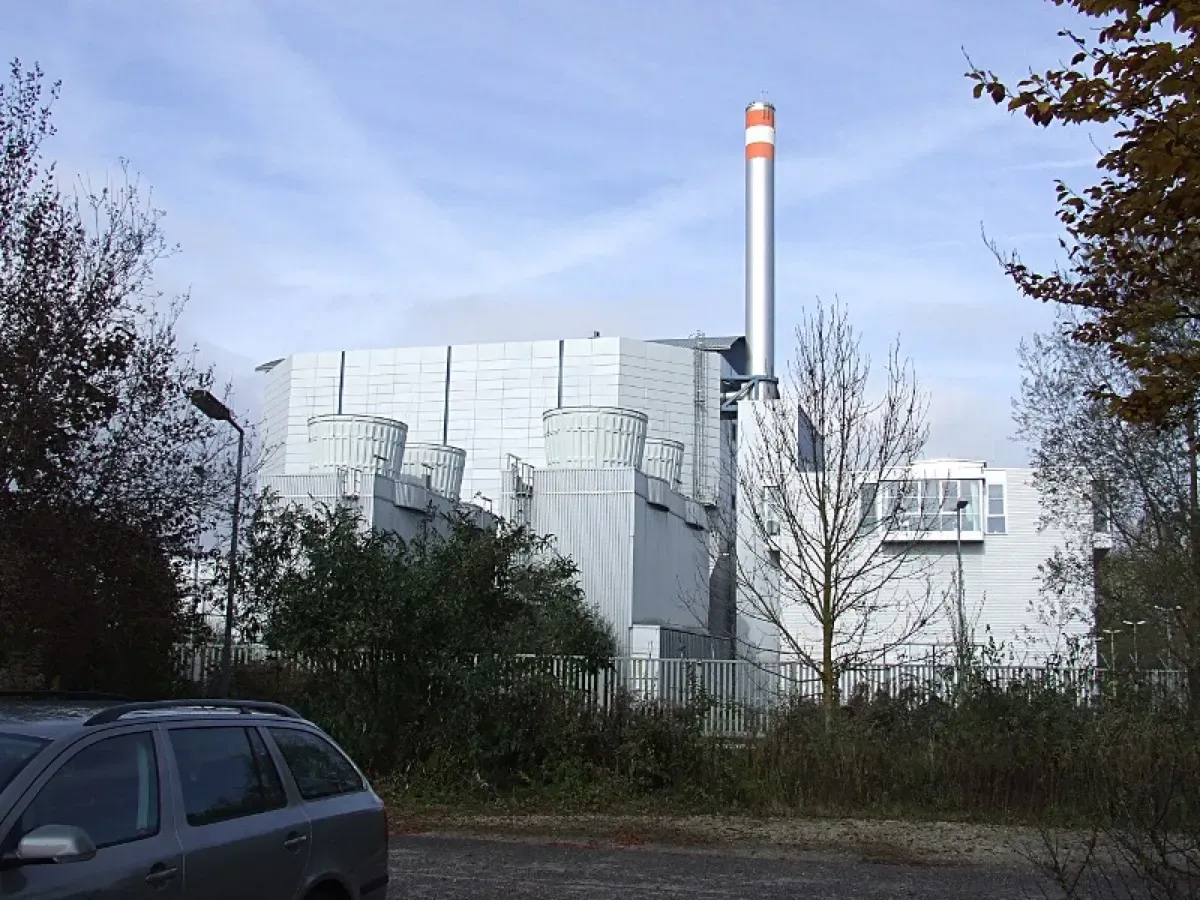
- “Tum frm2” (FRM II research reactor, Garching) by Mario Schmalfuß, licensed CC BY-SA 3.0 DE (https://creativecommons.org/licenses/by-sa/3.0/de/deed.en), via Wikimedia Commons: https://commons.wikimedia.org/wiki/File:Tum_frm2.jpg