The problem
Dark asphalt absorbs up to 95% of the sunlight that hits it. On a summer afternoon it can reach well over 60 °C, and it releases that heat into the air through the evening. Roads and car parks cover a large share of most cities, so they are a big part of the “urban heat island” that makes cities hotter than their surroundings.
The heat is not shared equally. In Los Angeles, as in many cities, low-income neighbourhoods have fewer trees, more pavement and fewer air conditioners. Pacoima, in the north-east San Fernando Valley, is one of the hottest and most heavily paved areas of the city, with freeways, industry and an airport nearby. Many residents work outdoors or live in older homes without central air conditioning, so a hot street is not just uncomfortable but a health risk. Planting trees is the long-term answer, but trees take decades to give full shade and need water that Southern California often lacks. A coating that can be applied in a day, by the same crews that maintain roads, is attractive to city budgets.
The product
StreetBond DuraShield SR is a pavement coating from GAF’s StreetBond range. It is a two-part, waterborne epoxy-modified acrylic, applied over existing asphalt or concrete with sprayers or squeegees (StreetBond).
According to GAF:
- the SR Gray colour has an initial solar reflectance of about 0.34, compared with about 0.05 to 0.10 for fresh black asphalt;
- it protects the asphalt from UV and heat, which can extend its life;
- it can help projects meet LEED heat island credits;
- it can be used on streets, playgrounds, basketball courts and car parks.
In the GAF Cool Community Project, run with Los Angeles non-profit Climate Resolve, GAF coated streets, schoolyards, courts and parking lots in a ten-block area of Pacoima in summer 2022 (GAF).
How it works
- Clean: the existing pavement is swept and washed, and cracks are repaired.
- Coat: two or more layers of DuraShield SR are applied, sometimes with a primer.
- Cure: the coating cures in hours, and traffic can return the same day.
- Reflect: the lighter surface reflects more sunlight back to the sky, so less is absorbed as heat.
- Cool: the cooler surface warms the air above it less, during the day and into the evening.
Timeline
| Date | Milestone |
|---|---|
| 30 Jul 2019 | Middel et al. measure earlier reflective pavement in Los Angeles |
| 2020 | Middel et al. publish “Solar reflective pavements: a policy panacea to heat mitigation?” |
| Summer 2022 | GAF and Climate Resolve coat over 700,000 sq ft in Pacoima |
| 2022 to 2023 | Year-long field measurements by Haider Taha (Altostratus) |
| 11 Apr 2024 | Peer-reviewed results published and announced |
Impact and numbers
- Heatwave air: up to 1.9 °C (3.5 °F) cooler air in the coated area during extreme heat; up to 1.2 °C (2.1 °F) on typical sunny days; up to 0.3 °C (0.5 °F) at night (GAF).
- Typical afternoon: air temperatures averaged 0.2 °C lower in direct comparisons and 1.2 °C lower using a difference-of-difference method; surface temperatures averaged 2.6 °C lower, with maximum reductions of 9.2 °C (Taha, Environmental Research Communications, 2024).
- Albedo: the coating raised surface reflectance by about 0.12 to 0.22.
- Heat island: the study estimates the project offset 25 to 50% of the local heat island during temperature peaks.
- Pedestrian comfort: the study reports mean radiant temperature reductions of about 0.9 to 1.3 °C on average, with no expected harm to glare or air quality.
Honest caveats. The Pacoima study was funded by GAF, the coating’s maker, though it was peer reviewed and carried out by an independent consultant (Climate Resolve). The headline “up to” numbers are best cases; average afternoon air cooling was much smaller. Earlier research on a different reflective coating in Los Angeles found surfaces 4 to 6 °C cooler but mean radiant temperature, a measure of the heat people feel, 4 °C higher at midday, because sunlight bounced back up onto pedestrians; air was only about 0.5 °C cooler and night cooling was negligible (Middel et al., Environmental Research Letters, 2020). Coatings wear down under traffic and get dirty, so reflectance falls and recoating is needed. Pacoima’s result came from coating almost a quarter of a whole area; a few streets will do much less. Trees provide shade, which reflective paint cannot.
What’s next
GAF and Climate Resolve are using Pacoima as a model for other US cities, and Los Angeles and Phoenix continue to expand cool pavement programmes. The key questions for the next projects are how long reflectance lasts under traffic, how often recoating is needed and at what cost, and how to combine coatings with street trees and shade so that people walking actually feel cooler (Smart Cities Dive).
Why it matters for Europe / green buyers
Europe’s cities are paving over less but are heating up fast, and summer heat already kills tens of thousands of people in bad years. The EU Nature Restoration Regulation, Regulation (EU) 2024/1991, puts the emphasis on green space and tree canopy rather than hard surfaces (EUR-Lex), and that is the right priority. Reflective coatings could still help in squares, schoolyards, car parks and cycle paths where trees cannot grow. Buyers should ask for measured reflectance after a year of wear, test results for slip resistance, and evidence on pedestrian comfort, not just surface temperature.
In India, cool roofs are already part of heat action plans, starting with Ahmedabad’s plan in 2013 and cool roof programmes in Telangana and other states. Cool pavements are newer. Indian cities have large areas of concrete and asphalt and intense sun, but also dust, heavy traffic and monsoon wear that would reduce reflectance quickly. Lessons from Pacoima suggest starting with schoolyards, bus depots and market squares, and always pairing coatings with shade.
Sources & image credits
- GAF, “Peer-reviewed study demonstrates effectiveness of cool pavement coatings” (11 Apr 2024): https://www.gaf.com/en-us/about-us/news-press-releases/2024/peer-reviewed-study-demonstrates-effectiveness-of-cool-pavement-coatings
- GAF, “GAF Cool Community: solving for urban heat islands”: https://www.gaf.com/en-us/about-us/community/cooling-urban-heat-islands
- Taha H., “Micrometeorological effects and thermal-environmental benefits of cool pavements: findings from a detailed observational field study in Pacoima, California”, Environmental Research Communications 6, 035016 (2024): https://iopscience.iop.org/article/10.1088/2515-7620/ad2a8e
- Climate Resolve, “Peer-reviewed study on GAF and Climate Resolve initiative demonstrates effectiveness of cool pavement coatings in mitigating extreme heat” (2024): https://climateresolve.org/peer-reviewed-study-on-gaf-and-climate-resolve-initiative-demonstrates-effectiveness-of-cool-pavement-coatings-in-mitigating-extreme/
- Smart Cities Dive, “Results are in for a Los Angeles cool pavement experiment” (2024): https://www.smartcitiesdive.com/news/los-anageles-cool-reflective-pavement-study-results-pacoima-extreme-heat/714420/
- Middel A. et al., “Solar reflective pavements: a policy panacea to heat mitigation?”, Environmental Research Letters 15, 064016 (2020): https://iopscience.iop.org/article/10.1088/1748-9326/ab87d4
- StreetBond, “DuraShield” product page: https://www.streetbond.com/product/durashield
- EUR-Lex, Regulation (EU) 2024/1991 on nature restoration: https://eur-lex.europa.eu/eli/reg/2024/1991/oj/eng
Images:
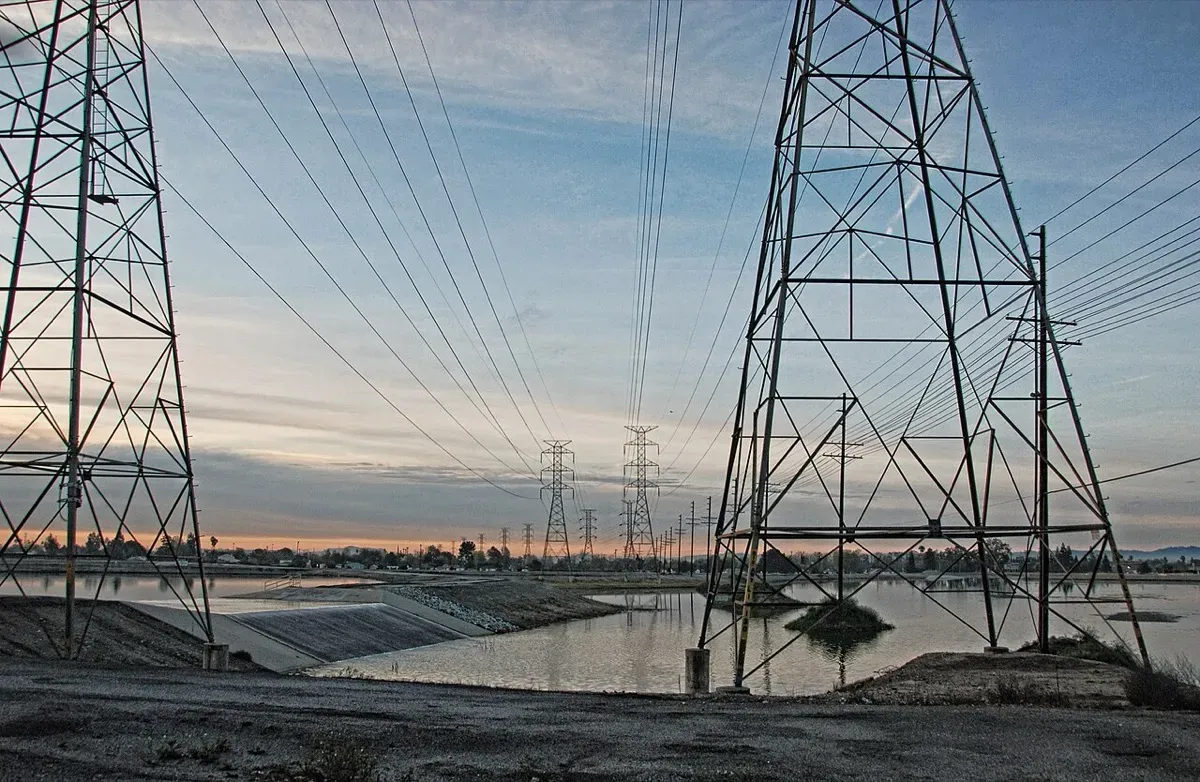
- “Power Lines in Pacoima” by Chris Yarzab, 2011, licensed under CC BY-SA 3.0 (https://creativecommons.org/licenses/by-sa/3.0), via Wikimedia Commons: https://commons.wikimedia.org/wiki/File:Power_Lines_in_Pacoima.jpg