The problem
Battery-electric aircraft are limited by weight. H2FLY’s CEO Ralph Müller says this currently restricts their range to about 160 to 190 km, and that “whenever you want to fly longer ranges or pull higher payloads, liquid hydrogen fuel cells make the most sense” (New Atlas).
But hydrogen is bulky. Stored as compressed gas, it needs heavy, thick-walled tanks. As a cryogenic liquid it is much denser, yet it must be kept extremely cold, insulated against boil-off and handled safely. Before 2023, the combination of liquid hydrogen with a fuel cell had never been flown with a pilot on board.
The product
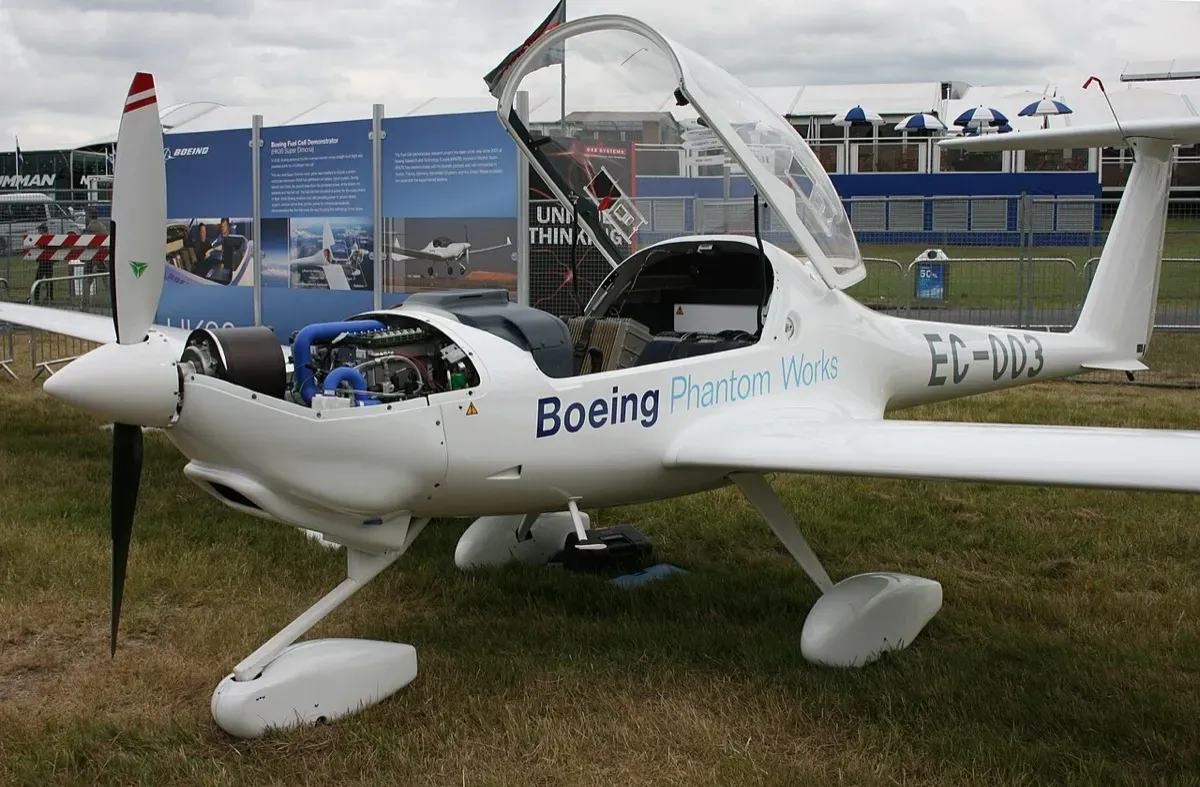
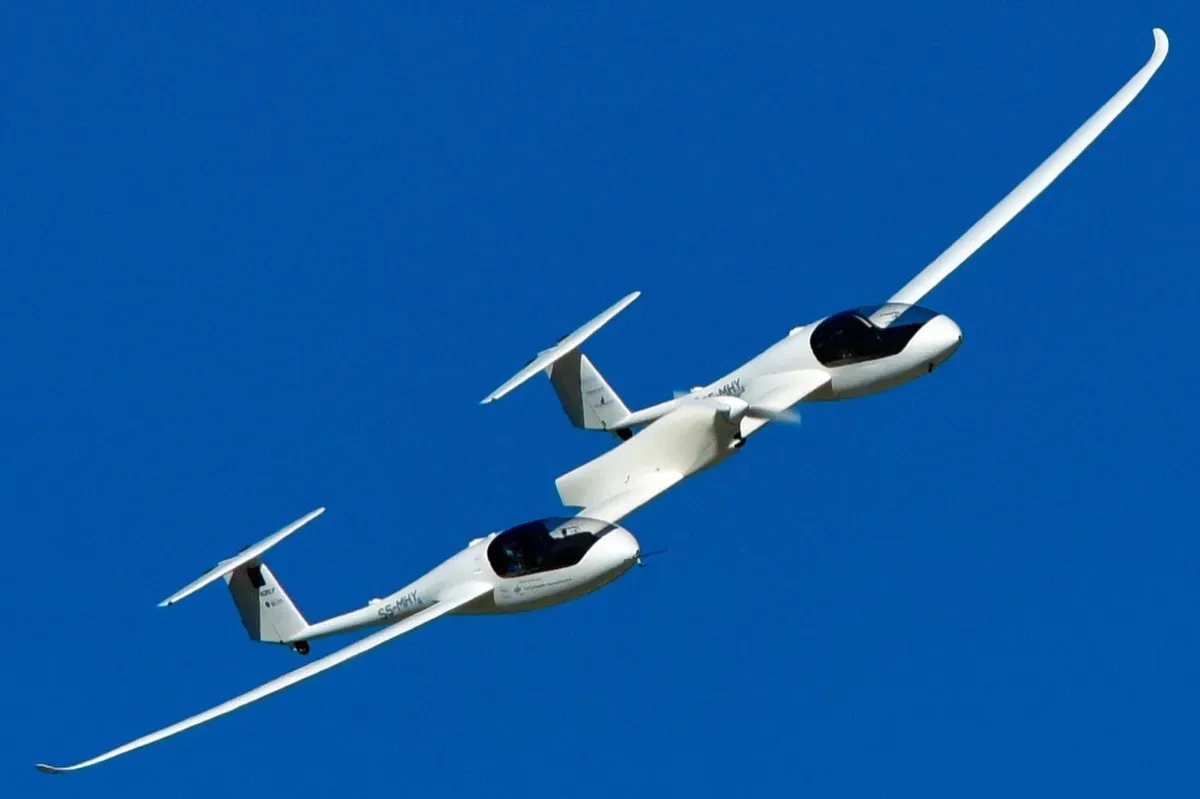
The HY4 is a four-seat demonstrator with two fuselages, each carrying two people. When it first flew officially from Stuttgart Airport on 29 September 2016, it was the world’s first four-seat passenger aircraft powered solely by a hydrogen fuel cell system. Its specifications (DLR):
- an 80 kW electric motor, maximum speed about 200 km/h, cruising speed 145 km/h;
- maximum weight 1,500 kg;
- a powertrain of hydrogen storage, a low-temperature fuel cell and a lithium battery for take-off and climb peaks;
- a range of 750 to 1,500 km depending on speed, altitude and load.
H2FLY, a spin-off of the German Aerospace Center (DLR) and the University of Ulm founded in 2015 by five engineers, operated the aircraft and handled its certification for flight. It now develops integrated fuel cell and liquid hydrogen tank systems for aircraft makers and operators, including the H2F-175, a 175 kW fuel cell system (H2FLY).
How it works
- Store: hydrogen is carried as a cryogenic liquid in an insulated tank.
- Vaporise: the liquid is warmed into gas before it reaches the fuel cell.
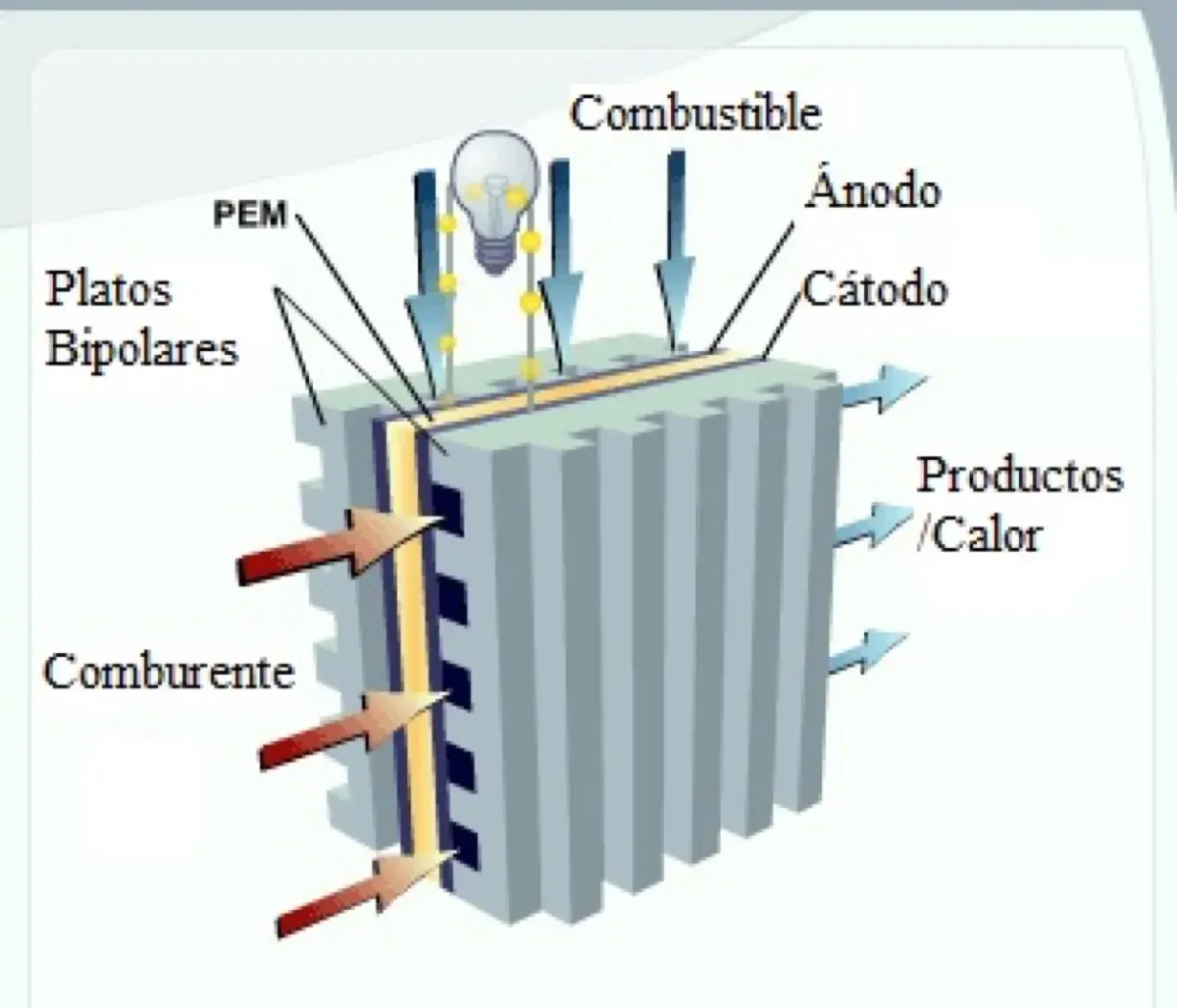
- Convert: the fuel cell combines hydrogen with oxygen from the air to make electricity.
- Boost: a battery adds power for take-off and climbing.
- Fly: an electric motor turns the propeller.
- Emit: water is the only by-product.
Timeline
| Date | Milestone |
|---|---|
| 2015 | H2FLY founded by DLR and University of Ulm engineers |
| 29 Sep 2016 | HY4 first official flight from Stuttgart Airport |
| 2021 | Joby Aviation acquires H2FLY |
| 7 Sep 2023 | First piloted flight of a liquid hydrogen powered electric aircraft, Maribor, Slovenia |
| 24 Jun 2024 | H2FLY fuel cells power Joby’s 523-mile hydrogen-electric demonstrator flight |
| End 2026 | Third generation of the H2F-175 fuel cell system due |
Impact and numbers
- Liquid hydrogen flights: H2FLY completed four flights on liquid hydrogen from Maribor, including one of over three hours. Results suggested that liquid instead of gaseous hydrogen doubles HY4’s maximum range from 750 km to 1,500 km. The flights closed Project HEAVEN, a European-government-supported consortium led by H2FLY with Air Liquide (which built the tank), Pipistrel, DLR, EKPO Fuel Cell Technologies and Fundación Ayesa (H2FLY).
- Scaling up: on 24 June 2024, Joby’s hydrogen-electric vertical take-off demonstrator flew 523 miles (about 840 km) above Marina, California, with water as the only by-product, using a liquid hydrogen tank and an H2FLY fuel cell system (Joby).
- Defence backing: Joby’s hydrogen-electric programme was supported through its partnership with the US Air Force’s Agility Prime programme, and Joby says most of the design and certification work on its battery-electric air taxi carries over to hydrogen.
- Records: H2FLY says HY4 crossed 7,000 feet and made the first hydrogen-electric cross-country flight.
- Next generation: a third generation of the 175 kW H2F-175 is planned by the end of 2026, with less weight and volume (Aviation Week; FlightGlobal).
Honest caveats. HY4 is a research demonstrator, not a product airlines can buy, and none of H2FLY’s systems is certified. CEO Ralph Müller expects certification readiness around 2028 or 2029 and service around 2032, and warned that certification “typically takes longer than expected” (Aviation News). He also put the price of liquid hydrogen at EUR 10 to 20 per kg today, falling only as production scales. Hydrogen is only clean if made with renewable power, as DLR noted in 2016. H2FLY’s own website still lists a Dornier 328 fuel cell demonstrator with Deutsche Aircraft planned for 2025, but no public report confirms that it has flown. Most of H2FLY’s current projects are confidential work for aircraft makers, so outside verification is limited. H2FLY is a subsidiary of a US company, Joby, whose main business is battery-electric air taxis.
What’s next
Under the EU Goliath project, H2FLY plans liquid hydrogen refuelling tests at three European airports, using its own refuelling unit and a rebuilt HY4 with its own tank. For the German BALIS 2 project, it will demonstrate a 300 to 350 kW two-module system for eVTOLs or as a redundant system for CS-23 aircraft. Müller expects smaller aircraft, from cargo drones and eVTOLs to 9-seat CS-23 types, to lead, because they need less capital to develop and certify. He predicts that by 2045 a growing number of 100-plus seat aircraft will be fully electric, most of them driven by liquid hydrogen fuel cells, with hydrogen liquefied on site at airports (New Atlas).
Why it matters for Europe / green buyers
HY4 is a European story from start to finish: German research, a Slovenian aircraft maker, a French gas company and EU and German public funding. The EU Transport Commissioner called the 2016 flight in line with the EU’s strategy for low-emission mobility. Europe’s remaining challenge is infrastructure: airports will need liquid hydrogen supply, and H2FLY’s airport refuelling tests are aimed at exactly that. For regional airlines and airports weighing hydrogen, the HY4 campaign gives real flight data on liquid hydrogen range and handling, not just simulations.
India targets 5 million tonnes of green hydrogen production a year by 2030 under its National Green Hydrogen Mission, with pilot projects in steel, mobility and shipping so far (PIB). Aviation is not yet among them, which leaves room for Indian airports and regional operators to learn from Europe’s liquid hydrogen trials.
Sources & image credits
- H2FLY, “About us”: https://www.h2fly.de/en/about-us
- H2FLY, “H2FLY and partners complete world’s first piloted flight of liquid hydrogen powered electric aircraft” (Sep 2023): https://www.h2fly.de/en/press-releases/h2fly-and-partners-complete-world-s-first-piloted-flight-of-liquid-hydrogen-powered-electric-aircraft
- DLR, “Zero-emission air transport: first flight of four-seat passenger aircraft Hy4” (29 Sep 2016): https://www.dlr.de/en/latest/news/2016/20160929_zero-emission-air-transport-first-flight-of-four-seat-passenger-aircraft-hy4_19469
- Joby Aviation, “Joby demonstrates potential for emissions-free regional journeys with landmark 523-mile hydrogen-electric flight” (11 Jul 2024): https://ir.jobyaviation.com/news-events/press-releases/detail/101/joby-demonstrates-potential-for-emissions-free-regional
- New Atlas, “Interview: H2Fly chief talks future of hydrogen-electric aviation” (30 Jun 2026): https://newatlas.com/aircraft/interview-h2fly-future-hydrogen-electric-aviation/
- Aviation News, “INTERVIEW: H2Fly CEO says smaller hydrogen-electric aircraft could be certified by 2032” (30 Sep 2026): http://www.aviationnews-online.com/article/interview-h2fly-ceo-says-smaller-hydrogen-electric-aircraft-could-be-certified-by-2032
- Aviation Week, “H2Fly builds a growing role in enabling hydrogen ecosystem for aviation” (21 May 2026): https://aviationweek.com/aerospace/emerging-technologies/h2fly-builds-growing-role-enabling-hydrogen-ecosystem-aviation
- FlightGlobal, “H2Fly bullish on fuel cell performance as development accelerates” (29 Apr 2026): https://www.flightglobal.com/aero-friedrichshafen/2026/04/h2fly-bullish-on-fuel-cell-performance-as-development-accelerates/
- Press Information Bureau, National Green Hydrogen Mission factsheet: https://www.pib.gov.in/PressReleasePage.aspx?PRID=2189126
Images:
- “HY4 2016-09-29 ueber Flughafen Stuttgart” by DLR, Felix Oprean, licensed under CC BY 3.0 DE (https://creativecommons.org/licenses/by/3.0/de/deed.en), via Wikimedia Commons: https://commons.wikimedia.org/wiki/File:HY4_2016-09-29_ueber_Flughafen_Stuttgart.jpg