The problem
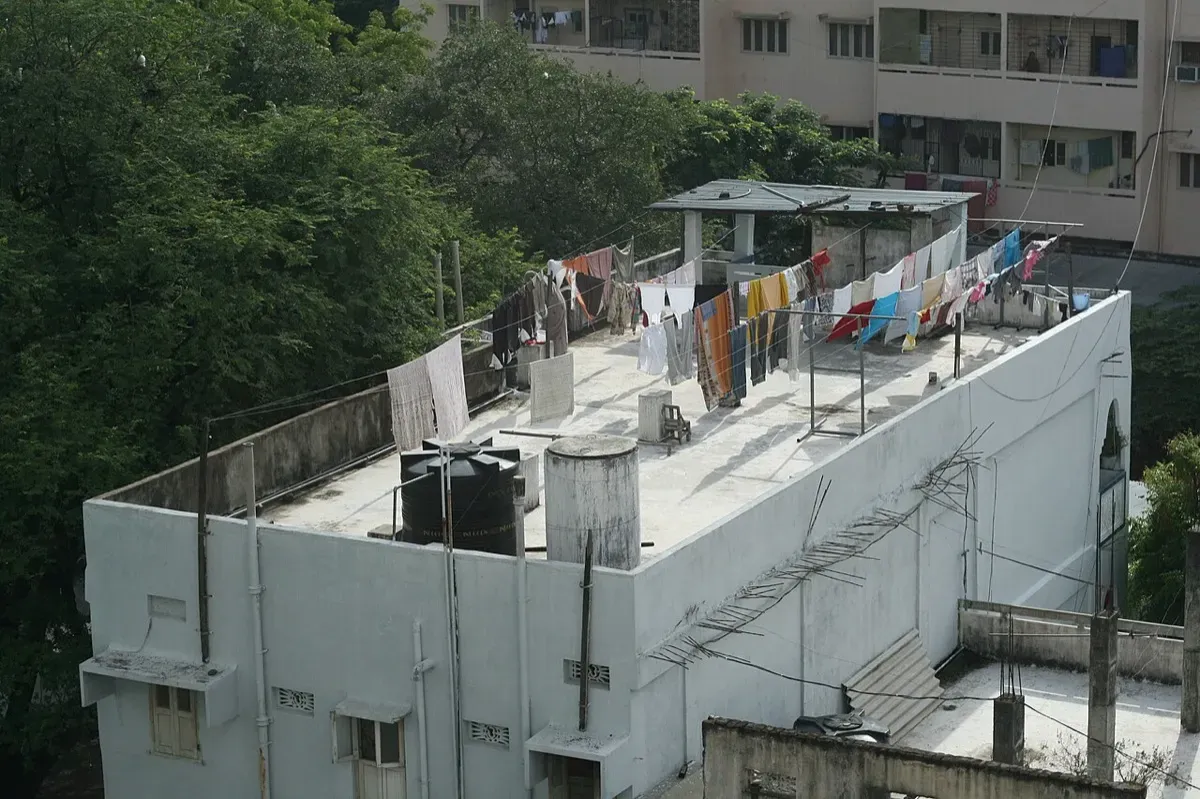
Indian summers are getting longer and harsher, and flat concrete and metal roofs turn homes, schools and factories into ovens. NRDC notes that the UN climate panel’s 2022 report highlighted cool roofs in India as a promising way to cope with rising heat across Asia. In cities, the heat island effect makes things worse, and more air conditioners raise power demand and emissions.
Cool roofs are one of the cheapest answers. NRDC reports research showing they can keep indoor air 2.1 to 4.3°C cooler than ordinary roofs, depending on roof type and material.
The product
Thermacool comes from the Indian Institute of Technology Bombay. Thermogreen Cool Coat Pvt. Ltd., headquartered in New Delhi, says it partnered with IIT Bombay to commercialise the “Cool Paint Innovation”, and that Thermacool 0.3C and 0.3M are patented IIT Bombay products. Its team lists Professor Anand S. Khanna as additional director for technical work and R&D, and astronaut Wing Commander (retired) Rakesh Sharma as a mentor.
The coating is designed to reflect near-infrared sunlight, in the 750 to 1,250 nanometre range, which the company says carries about 52% of the sun’s energy. It combines high reflection with a thermal insulation layer, which the company calls a “dual heat-barrier”. It can be applied to concrete or metal with minimal preparation, usually in two to four days.
Thermogreen’s claims are specific. It says the coating has a solar reflectance index of 102 on concrete, approved by CEPT University using an ASTM method, cuts rooftop temperatures by 15 to 20°C and indoor temperatures by 4 to 8°C, and saves 25 to 40% of cooling power. It says corrosion, salt spray and alkali tests were done by IIT Bombay’s corrosion science division and that Thermacool 0.3C is approved by the GRIHA Council, India’s green building rating body.
IIT Bombay’s research office also lists a cool roof coating from its metallurgy department that uses near-infrared reflecting pigments, a reflectance of at least 65% and dark colours such as black, brown and green. It says that coating has been approved by the Central Public Works Department and used on the roof of India’s new Parliament building. Public sources do not make clear whether that listing is the same as the Thermacool products.
How it works
- Clean. The roof surface is cleaned and lightly prepared.
- Coat. Layers of coating are applied to concrete or metal sheet.
- Reflect. Pigments bounce back much of the near-infrared part of sunlight.
- Insulate. Filler particles slow heat flowing into the building.
- Cool. The roof surface stays cooler, so less heat reaches the rooms below.
- Maintain. Coatings must be cleaned and periodically renewed to keep reflectance.
Timeline
| Date | Milestone |
|---|---|
| 2017 | NRDC and partners start a cool roof pilot in Hyderabad, including low-income homes |
| 20 Jun 2020 | Indian Railways plans a trial of a roof coating developed with IIT Bombay on isolation coaches |
| 1 Apr 2023 | Telangana Cool Roof Policy 2023 to 2028 takes effect |
| 3 Apr 2023 | K.T. Rama Rao formally launches the policy in Hyderabad |
| TBV | Thermacool 0.3C GRIHA approval; exact date not published |
Impact and numbers
The best documented public trial is from Indian Railways. In June 2020, when railway coaches were converted into COVID-19 isolation wards, the Times of India reported that the railways had tried heat-reflective paint and found inside temperatures could fall by up to 2.2°C. A further trial of “another coating developed in association with IIT, Mumbai” was set for 20 June 2020. The results of that trial have not been published by the railways.
Policy is now creating a market. Telangana’s Cool Roof Policy, launched on 3 April 2023, makes cool roofs mandatory for government, commercial and non-residential buildings and for homes on plots of 600 square yards or more, and links compliance to occupancy certificates. NRDC says the state aims for 300 square kilometres of cool roofs and expects 600 million kWh of electricity savings a year after five years. The Hindu reported that coatings or tiles cost about ₹300 per square metre.
Thermogreen says its coating is used in schools, defence hangars, industrial sheds, warehouses, cold stores, airports and railway stations. Its website estimates that a coated 1,000 square foot roof saves about 7 kWh a day for one 1.5 tonne air conditioner, which is a company calculation.
Honest caveats
Thin independent evidence. The SRI, temperature and power savings figures all come from Thermogreen. We found no published independent field study of Thermacool, and the railway trial results are not public.
Unclear product identity. IIT Bombay’s own listing describes a dark-coloured coating with at least 65% reflectance, while Thermacool claims an SRI of 102, which normally needs a very bright white surface. Buyers should ask which formulation they are getting and for its test certificate.
Overclaiming. Thermogreen’s website links its coating to reducing global warming “substantially”. A cool roof cuts heat and electricity use for one building. It does not cool the planet in any measurable way, and treating local albedo changes as climate engineering blurs a real debate. The European Commission’s scientific advisers have warned that presenting sunlight reflection as a ready solution could undermine efforts to cut emissions.
Equity and maintenance. The heat burden falls hardest on low-income households in tin and concrete homes, which are mostly outside mandatory rules. Coatings also lose reflectance as dust settles and need renewing.
Targets differ. NRDC describes Telangana’s 300 square kilometre goal as a 2028 target; The Hindu quoted the minister giving 2030.
What’s next
Telangana was the first state to make cool roofs a policy requirement. If others follow, that will reward suppliers who can show certified, aged reflectance values, not just lab numbers. Thermogreen’s challenge is to publish independent field data to match its claims.
Why it matters for Europe and green buyers
For Europe, India shows how a simple building rule can turn a niche product into a mass market. Southern European cities facing record heatwaves could copy Telangana’s link between cool roofs and building permits, while insisting on independent, aged reflectance ratings and avoiding claims that roofs “fight” global warming.
For India, cool roofs are among the cheapest heat-health measures available. Home-grown coatings from IIT research labs could help builders meet new rules at about ₹300 per square metre, if quality is verified. Around the world, from Ahmedabad to Athens, reflective roofs are a practical adaptation tool, and honest, standard testing is what will separate good products from greenwash.
Sources & image credits
- Thermogreen Cool Coat Pvt. Ltd., “About Thermacool”. https://www.thermacool.in/about
- Thermogreen Cool Coat Pvt. Ltd., “Thermacool features”. https://www.thermacool.in/features
- IIT Bombay, Industrial Research and Consultancy Centre, “Cool Roof Coating”. https://rnd.iitb.ac.in/node/1777
- Times of India, “Bamboo chicks, bubble-wraps, coolers: How Railways trying to keep isolation coaches cool”, Jun 2020. https://timesofindia.indiatimes.com/india/bamboo-chicks-bubble-wraps-coolers-how-railways-trying-to-keep-isolation-coaches-cool/articleshow/76473182.cms
- NRDC, “Telangana Announces a Groundbreaking Cool Roof Policy”, 3 Apr 2023. https://www.nrdc.org/bio/prima-madan/telangana-announces-groundbreaking-cool-roof-policy
- The Hindu, “K.T. Rama Rao launches Telangana Cool Roof Policy”, 3 Apr 2023. https://www.thehindu.com/news/national/telangana/kt-rama-rao-launches-telangana-cool-roof-policy/article66694386.ece
- European Commission, “Solar radiation modification technologies cannot fully address climate change, and responsible research on impacts is needed”, 9 Dec 2024. https://research-and-innovation.ec.europa.eu/news/all-research-and-innovation-news/solar-radiation-modification-technologies-cannot-fully-address-climate-change-and-responsible-2024-12-09_en
- Wikimedia Commons, “Hyderabad 009 Building rooftop”. https://commons.wikimedia.org/wiki/File:Hyderabad_009_Building_rooftop.jpg
Images: “Hyderabad 009 Building rooftop”, Jamin Gray, Hyderabad, India, 31 Aug 2007, CC BY-SA 2.0, via Wikimedia Commons. Illustrative; does not show Thermacool.