
The problem
Oil, gas, chemical and hydrogen sites contain “Ex zones”, areas where explosive gases, vapours or dusts may be present. Inspections there are dangerous and tightly regulated, yet they must happen often. Small leaks of methane, one of the most potent greenhouse gases, need to be found and fixed quickly, and regulators are tightening the rules.
Offshore, the problem gets worse. Inspection depends on helicopter schedules, weather windows and bed space. Many platforms now run with no crew at all, so every visit costs time and money. Skilled inspectors are also getting harder to hire as the workforce ages.
Ordinary robots cannot simply be sent in, because their batteries, motors and electronics could themselves become a source of ignition.
The product
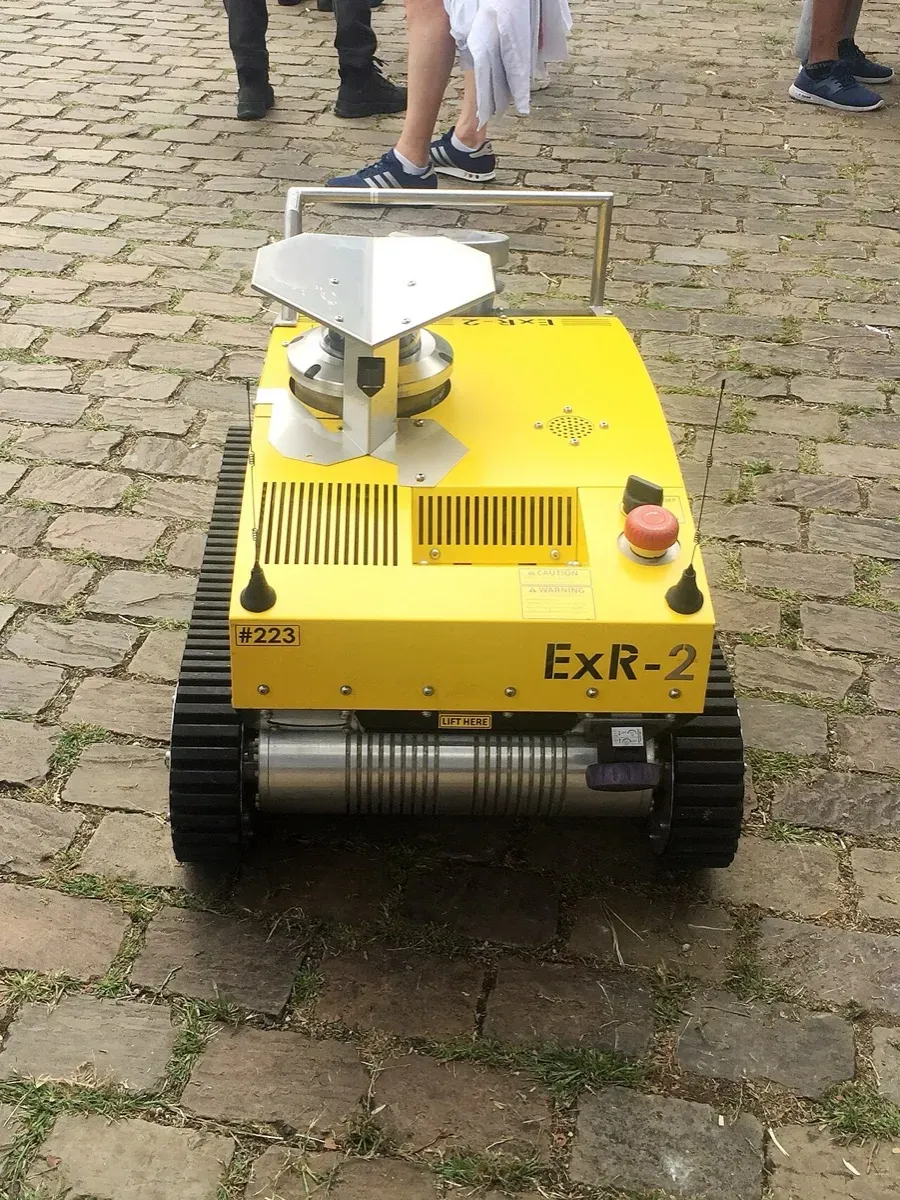
The ExR-2.5 is a wheeled inspection robot built to operate safely in potentially explosive atmospheres. It is designed for ATEX and IECEx Zone 1 areas and is UL-listed for hazardous locations in North America.
It carries visual, thermal and acoustic cameras and lights, and can be fitted with gas sensors for methane, hydrogen sulphide, hydrogen and volatile organic compounds, as well as pipe thickness monitoring. Compared with the earlier ExR-2, ExRobotics says the 2.5 adds a high-performance LiDAR system, artificial intelligence and better thermal and audio sensing. Operators plan missions and review results through software from partner Korial. The company sells robots and also offers fleets as a service, and says its designs are protected by patents in countries including the US, UK, Canada, Australia, the Netherlands, Norway, Singapore and Brazil.
How it works
- Plan. Engineers set a route and inspection points, often using a digital twin.
- Patrol. The robot drives the route on its own, day or night.
- Inspect. It reads gauges, takes thermal images and listens for abnormal sounds.
- Sniff. Gas sensors check for methane, hydrogen and other leaks.
- Report. Data goes to onshore engineers, who can take manual control.
- Recharge. The robot returns to an Ex-certified induction charging dock.
Timeline
| Date | Milestone |
|---|---|
| 2017 | ExRobotics founded in the Netherlands |
| Sep 2024 | ExR-2 shown at the World Port Days in Rotterdam |
| Before 2026 | ExR-2 completes six months of twice-daily rounds on an unmanned Shell offshore platform |
| Nov 2025 | First tranche of up to €7 million growth round, led by FORWARD.one |
| 22 to 24 Jun 2026 | North American launch of the UL-certified ExR-2.5 in Houston |
| Jun 2026 | UL Solutions issues its first UL 6260 certification to the ExR-2.5 |
Impact and numbers
The clearest case study comes from a normally unmanned Shell platform 175 km offshore and 16 km from the nearest manned facility, described in Offshore Magazine. The platform had no safe zones, no workshop and no resident maintenance staff. After a new pump module was commissioned, an IECEx Zone 1 certified ExR-2 carried out twice-daily rounds, inspecting 20 points of interest across narrow corridors and steel grid flooring in salt spray and heavy weather. A human supervisor oversaw missions from more than 1,000 km away. After each mission, pressures, temperatures, vibration readings and visual and thermal images went to onshore engineers. If there was a shutdown or anomaly, the robot could inspect the equipment immediately, so engineers could decide whether anyone needed to travel from the nearest manned installation. The case study reports six months of maintenance-free operation, and says daily human visits would not have been practical or affordable.
UL Solutions says its new UL 6260 programme evaluates robots for fire, explosion, electric shock and mechanical hazards, including batteries under fault conditions, to confirm they do not become an ignition source. ExRobotics was the first company certified. Chief executive Mark Mildon says the certificate gives customers confidence in robotic solutions. Ex-certified robots can also keep working when gas is present, locating and documenting a leak instead of triggering an immediate evacuation, which helps operators tell transient alarms from genuine risks and avoid unnecessary shutdowns.
On emissions, FORWARD.one says the robots can perform automated methane detection rounds several times a day, helping operators meet stricter standards. The investor also reports that ExRobotics is close to cash flow break-even.
Honest caveats
Fossil fuel customers. ExRobotics’ core market is oil, gas, LNG and petrochemicals, and its lead investor describes the oil and gas sector as its focus. Better inspection helps cut methane leaks, but it also helps keep fossil assets running.
Inconsistent numbers. In November 2025 FORWARD.one cited more than 100 deployments; by June 2026 ExRobotics claimed more than 1,000. Its website also claims “more than two decades of experience”, while The Robot Report says the company was founded in 2017. The figures may count different things and have not been independently verified.
Small company. The growth round was only partly closed at announcement, and the company does not publish full accounts.
Robots supplement people. Offshore Magazine notes that autonomous inspection is not a replacement for offshore crews, but one layer alongside fixed detectors and aerial monitoring.
What’s next
ExRobotics is using its funding to expand robot fleets, software and manufacturing. It is also targeting hydrogen, where reliable gas detection matters as the hydrogen economy grows, and chemical plants. With UL certification in hand, North America is the next big market: the company launched the certified ExR-2.5 at the Energy Drone and Robotics Summit in Houston, pitching it at operators facing ageing assets and a shrinking pool of skilled inspectors.
Why it matters for Europe and green buyers
For Europe, ExRobotics is a Dutch product, backed by the Rotterdam Port Fund, that brings safer inspection to the industrial sites the energy transition still depends on, including the hydrogen plants Europe wants to build. Frequent automated methane checks support the EU’s tightening rules on methane emissions.
For India, with large refineries, LNG terminals and new green hydrogen projects, certified robots could reduce worker exposure in hazardous zones. For the world, moving routine inspections from people to robots saves lives and finds leaks sooner.
Sources & image credits
- UL Solutions, “UL Solutions Issues Its First Certification for a Remotely Operated Robot Designed for Hazardous Locations”, 24 Jun 2026. https://www.ul.com/news/ul-solutions-issues-its-first-certification-remotely-operated-robot-designed-hazardous
- ExRobotics, “North America’s first UL Certified inspection robot for hazardous industrial environments”, Jun 2026. https://www.exrobotics.com/news/north-americas-first-ul-certified-inspection-robot-for-hazardous-industrial-environments
- The Robot Report, “ExRobotics launches UL-certified inspection robot for hazardous environments”, Jun 2026. https://www.therobotreport.com/exrobotics-launches-ul-certified-inspection-robot-for-hazardous-environments/
- FORWARD.one, “ExRobotics closes the first tranche of €7 million growth capital”, Nov 2025. https://www.forward.one/news/exrobotics-closes-the-first-tranche-of-eu7-million-growth-capital-to-accelerate-deployment-of-autonomous-inspection-robots
- ExRobotics, home page. https://www.exrobotics.com/
- ExRobotics, “Products: ExR-2.5”. https://www.exrobotics.com/products
- Offshore Magazine, “Inspection robots complete six months of offshore missions”. https://www.offshore-mag.com/business-briefs/equipment-engineering/article/55362594/inspection-robots-complete-six-months-of-offshore-missions
- Wikimedia Commons, “ExR-2 Inspection Robot (01)”. https://commons.wikimedia.org/wiki/File:ExR-2_Inspection_Robot_(01).jpg
Images: “ExR-2 Inspection Robot (01)”, S.J. de Waard, 6 Sep 2024, CC BY-SA 4.0, via Wikimedia Commons. Shows the product.
.jpg)