The problem
A sewer is one of the most hostile workplaces in any city. It is dark, cramped, full of sludge and often filled with toxic gases such as hydrogen sulphide. In India, cleaning it has long meant sending a person down a manhole, often without breathing equipment, and the work falls heavily on Dalit communities.
The Indian government told the Lok Sabha in 2026 that 498 sanitation workers died while cleaning sewers and septic tanks between January 2019 and June 2026, citing data from the National Commission for Safai Karamcharis. The yearly toll fell from 132 in 2019 to 47 in 2025, with 16 in the first half of 2026. Hazardous manual cleaning is banned by law, yet the deaths continue. Under the government’s NAMASTE scheme, launched in 2023 to mechanise sanitation, more than 89,000 sewer and septic tank workers have been identified, and in 2025 the national commission received 842 complaints about unpaid wages, denial of safety equipment and caste bias.
The product
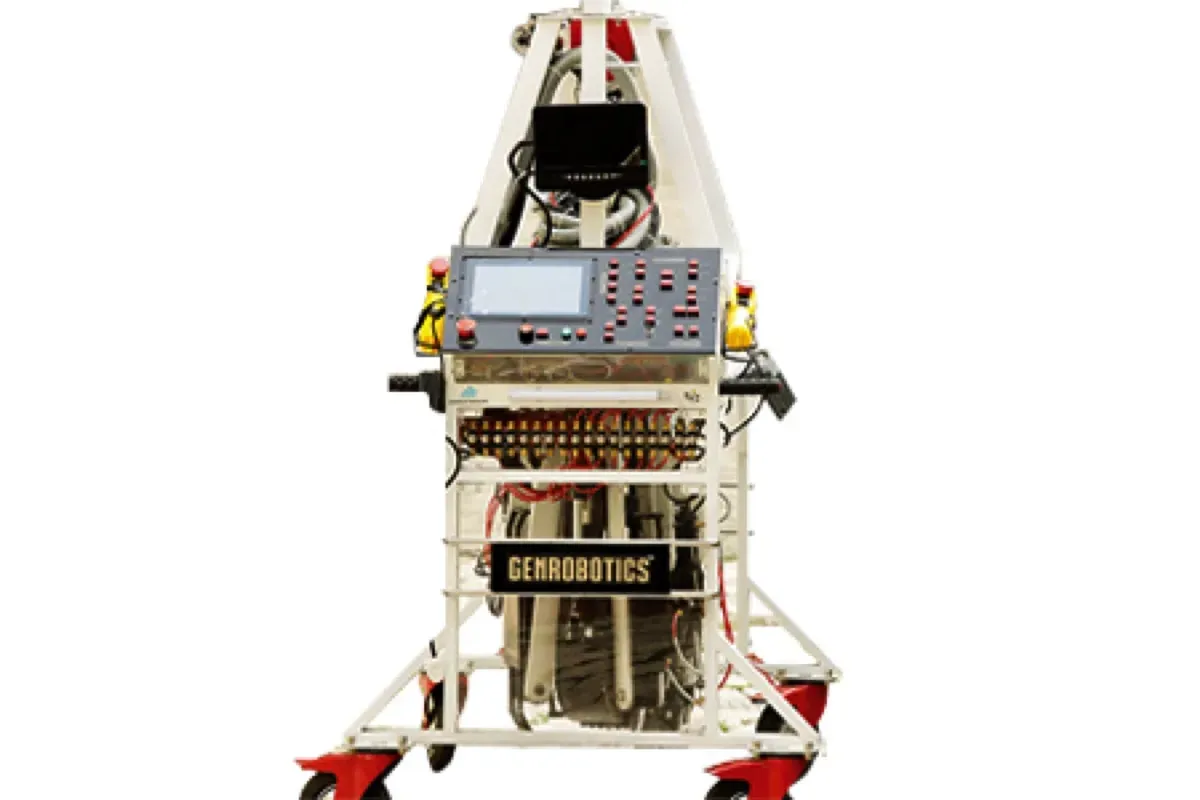
Bandicoot is a robot designed so that nobody has to enter a manhole. Zoho, which invested in the company, describes it as the world’s first robotic scavenger. Its creators, led by Vimal Govind MK, began working on it after reading about the deaths of two sanitation workers, and an autorickshaw driver who tried to save them, in Kozhikode in 2015.
The robot is lowered into the manhole from a vehicle-mounted unit. Inside, it scans the walls to assess shape and depth, then deploys mechanical legs and an extendable arm to grab silt, mud, sand, plastic, fatbergs and industrial debris. Each grab can lift up to 250 kg, and each unit can clean about 10 manholes or 500 m of sewer line a day, according to the company. Units work at depths of 10 to 12 m, resist corrosion and chemical exposure, and carry high-resolution cameras and toxic gas detection so operators can work safely from the surface.
The newer Bandicoot Mobility+ adds a 1,000 litre waste collection unit and a detachable robot that fits gullies as narrow as 80 cm.
How it works
- Arrive. A truck carrying the Bandicoot unit parks over the manhole.
- Lower. The robot descends into the sewer from the integration unit.
- Sense. Cameras and gas sensors check conditions inside.
- Grab. Legs brace the robot and the arm scoops up waste.
- Lift. A tray collects the waste and moves it to a holding chamber.
- Dispose. Waste goes to a sewage treatment plant.
Timeline
| Date | Milestone |
|---|---|
| 2015 | Deaths of two sanitation workers in Kozhikode inspire the founders |
| 2017 | Genrobotics founded |
| 2022 | Zoho invests ₹20 crore |
| 2023 | Around 250 Bandicoots deployed in 18 states and 3 union territories |
| Mar 2026 | Ahmedabad orders seven units in a ₹17 crore contract with five years of maintenance |
| Mar 2026 | ₹80 crore contract from Singapore’s water agency PUB |
| Jul 2026 | HLL Lifecare agrees to supply 100 Bandicoots across Maharashtra |
| 2026 | More than 275 deployments across 23 states |
Impact and numbers
Bandicoot has spread from Kerala across much of India. Genrobotics says it has exceeded 275 deployments and supports more than 180 urban local bodies in 23 states. In Rajkot, the municipal corporation took three Mobility+ units. In Ahmedabad, seven units will clean sewers across all seven municipal zones under a ₹17 crore contract including five years of operation and maintenance; Govind estimates the fleet will cover 87.5 km of sewer lines a month.
The Ahmedabad order is part of the city’s infrastructure upgrade ahead of the 2030 Commonwealth Games. The biggest order yet comes from Maharashtra, where government enterprise HLL Lifecare will supply 100 Bandicoot robots to municipalities under an agreement with a state development corporation.
The company is also growing financially. Genrobotics told Inc42 that FY26 revenue rose 35% to ₹43.7 crore and profit after tax nearly tripled to ₹2.6 crore. Sanitation provides about 60% of revenue. It is seeking ₹150 crore in a Series B round to expand manufacturing. Abroad, it has won an ₹80 crore contract from Singapore’s national water agency, PUB, for nearly 44 robots, including its Wilboar robots for cleaning tunnels and pipelines.
Genrobotics also says its #MissionRobohole programme has retrained hundreds of former manual scavengers as robot operators.
Honest caveats
Robots alone are not enough. Deaths fell but did not stop as robots spread. The government told Parliament in March 2026 that it has no measurable indicators of improved efficiency from mechanising sewer cleaning, and stakeholders told the Economic Times that multi-pronged efforts are needed.
Cost. Bandicoots cost ₹10 lakh to ₹40 lakh, a large outlay for small municipalities.
Ambitious targets. Govind has said that more than one lakh robots would be needed to end manual scavenging in India, far beyond today’s fleet. Genrobotics projects revenue of ₹219.9 crore in FY27, more than five times FY26. These are company forecasts.
Defence and other work. Genrobotics is developing autonomous rovers for reconnaissance and hazard neutralisation for defence customers, alongside medical and space robotics. This story covers only Bandicoot.
What’s next
Genrobotics plans to spend 80% to 90% of new capital on factories, doubling its Kerala manufacturing space to 60,000 sq ft and adding units in Uttar Pradesh and Hyderabad. Over five years it aims for 5 lakh sq ft of factory space and ₹1,600 crore in annual revenue. Govind says government adoption takes time because it needs pilots and validation, “but once trust is established, the scale comes rapidly”. The Maharashtra rollout will be the test of that claim.
Why it matters for Europe and green buyers
For Europe, where sewer networks are mostly mechanised but confined spaces still kill workers, Bandicoot shows how low-cost robotics can take people out of the most dangerous jobs. It is also a reminder that green city infrastructure includes the sewers that protect rivers and public health.
For India, Bandicoot is a home-grown answer to a national shame, built and made in the country. For the world, where billions still lack safe sanitation, robots that keep sewers flowing without risking lives support both clean water and decent work.
Sources & image credits
- Business Standard, “Nearly 500 sewer, septic tank cleaning deaths since 2019, Centre tells LS”, Aug 2026. https://www.business-standard.com/india-news/sanitation-workers-sewer-septic-tank-cleaning-deaths-since-2019-126080500881_1.html
- The Hindu, “No evidence of increased efficiency due to mechanisation of sewer cleaning, Centre tells LS”, 17 Mar 2026. https://www.thehindu.com/news/national/no-evidence-of-increased-efficiency-due-to-mechanisation-of-sewer-cleaning-centre-tells-ls/article70753876.ece
- The Economic Times, “Manhole vs Machine: Can manhole-cleaning robots eradicate manual scavenging?”, 19 Mar 2023. https://economictimes.indiatimes.com/news/india/manhole-vs-machines/articleshow/98760046.cms
- Genrobotics, “Genrobotics Deploys Three Bandicoot Mobility+ Robots in Rajkot”, 2026. https://www.genrobotics.com/press-release/bandicoot-mobility-robot-in-rajkot
- The Times of India, “Ahmedabad: Now, Bandicoot robots to enter sewers so workers don’t have to”, Mar 2026. https://timesofindia.indiatimes.com/city/ahmedabad/ahmedabad-now-bandicoot-robots-to-enter-sewers-so-workers-dont-have-to/articleshow/129686370.cms
- Onmanorama, “HLL to deploy 100 robotic scavengers in Maharashtra”, 23 Jul 2026. https://www.onmanorama.com/news/india/2026/07/23/hll-to-deploy-100-robotic-scavengers-in-maharashtra.html
- Inc42, “Zoho-Backed Genrobotics’ Revenue Jumps 35% YoY In FY26, Eyes ₹150 Cr Series B Round”, 2026. https://inc42.com/buzz/zoho-backed-genrobotics-posts-%E2%82%B92-6-cr-profit-in-fy26-eyes-%E2%82%B9150-cr-series-b-round/
- Zoho, “Zoho Corp. invests in Genrobotics”, 2022. https://www.zoho.com/news/zoho-invests-in-genrobotics.html
- Wikimedia Commons, “Bandicoot Robot”. https://commons.wikimedia.org/wiki/File:Bandicoot_Robot.jpg
Images: “Bandicoot Robot”, Prince mamman, 2019, CC BY-SA 4.0, via Wikimedia Commons. Shows an early version of the product.